The Rule That Changed Everything-What Changed, Why It Matters And What It Means For The Future of Trekking In Nepal
Nepal's restricted areas were like guarded gates for years. Only people who traveled in groups, with licensed guides, and through registered agencies could get in. These rules set strict limits on the trekking experience, making sure that every trip into a remote valley was watched over and controlled.
But the structure has become less rigid since the changes. Now, solo hikers can use these trails that were once only open to groups. This is a quiet revolution in access. But even though the doors are open, the foundations of control are still firmly in place, reminding us that change here is gradual, not radical.
Freedom With Boundaries
At first glance, it looks like a return to unrestricted adventure, but in reality, it's a careful balance between freedom and supervision. The new rules let people hike alone, but only if they have a licensed guide with them. This is a constant link between freedom and responsibility.
This isn't the wild, unregulated trekking of years past. It's a carefully planned version of freedom, where being alone is safe. Nepal hasn't given up its protective stance; it's just changed it into something that is more flexible but just as strong.
Why This Change Happened
Every time a policy changes, there is a story behind it that is shaped by economic pressures, what travelers want, and competition from around the world. Nepal's choice to relax restrictions shows that more people are becoming aware of the modern adventurer, who is independent, spontaneous, and doesn't want to be held back by strict group rules.
The need to change quickly became clear as solo travelers started to look for other places to go. At the same time, local trekking companies and tourism professionals saw the missed chances that were hidden in old rules. So, this change isn't just about getting in; it's also about staying alive, growing, and Nepal's place in a competitive global tourism market.
The Economics Behind Trekking
Trekking in Nepal has never been just about the mountains; it's also about people's jobs, the economy, and a carefully planned revenue. Restricted area permits, which cost a lot more than regular trekking fees, act as both a gatekeeping tool and a way to make money.
Nepal keeps the financial system stable by letting people hike alone while still requiring guides and agencies to be involved. The outcome is a system that makes it easier for people to get to places, but guides, agencies, and remote communities that rely on tourism for survival still make money.
Safety vs Freedom: The Eternal Debate
Safety is never a small issue in the vast and unpredictable Himalayas. Even experienced trekkers can be in danger in high altitudes when the weather changes quickly, and on routes that are hard to reach.
Nepal's requirement for guides shows that they know this: freedom without help can quickly turn into danger. The new rules try to ease this tension by letting trekkers be alone while making sure help is always close by. It is a fragile compromise that recognizes both the appeal of freedom and the need for safety.
Cultural Protection: The Silent Priority
There is another, quieter worry that goes beyond the physical challenges of trekking: keeping culture alive. Nepal's restricted areas are not just far-off places; they are living museums of old ways of life, where communities have stayed mostly the same for generations.
Unregulated tourism could upset this fragile balance by bringing in outside factors that slowly wear away cultural identity. Nepal protects these areas by keeping access under control. This way, visitors become respectful witnesses instead of troublemakers. The rules protect not only the land but also the stories and traditions that are a part of it.
Environmental Concerns: A Fragile Ecosystem
The Himalayas are beautiful, but they are also fragile. Every step you take, every piece of trash you leave behind, and every path that isn't well-maintained affects an ecosystem that can take years or even decades to heal.
Nepal's trekking rules act as a shield, limiting the damage that tourism does to the environment by controlling who can go where and how. The country walks a fine line between welcoming travelers and protecting its natural heritage by making it easier to get in while keeping things in order. It serves as a reminder that adventure can be too much to handle if you don't keep it in check.
The Political Undercurrent
No policy exists in a vacuum, and Nepal's trekking reforms are subtly shaped by the country's larger political situation. Major political parties are divided, and their priorities are always changing. This makes change both necessary and hard.
Tourism is one of Nepal's most important industries, and it is often where policy changes happen faster than in other areas. So, the easing of trekking rules is not just a way to boost the economy; it also shows how governance, negotiation, and national direction are all working together.
A Step Toward Safer Tourism
Some people see the new rules as a way to make things less strict, but they can also be seen as a step toward safer, smarter tourism. Nepal accepts flexibility without giving up control by letting solo trekkers into a controlled system.
Safety and sustainability are becoming more important in adventure tourism around the world, and this approach fits with that. It's a change toward a model that values quality over quantity, making sure that every trip into the mountains is not only memorable but also well-planned.
What This Means for Trekkers
These changes give trekkers both chances and clarity. People who want to go on adventures alone can now go to once-off-limits places without having to form groups. This makes planning easier and more accessible.
At the same time, the need for guides means that the experience stays safe and supported. This balance changes what people expect from travel by offering a mix of independent and guided travel, which is a reflection of how modern exploration is changing.
The Future of Trekking in Nepal
Nepal's trekking industry is quietly changing as the country moves forward. Adventure used to be completely unregulated, but now it's becoming more structured and planned, with safety, sustainability, and respect for other cultures as top priorities.
This change doesn't take away the magic of trekking; instead, it puts it in a new light that is better for the problems of today's world. The future of trekking in Nepal lies not in unrestricted freedom, but in thoughtful exploration that honors both the traveler and the land.
The Bigger Picture: Freedom Redefined
In the end, Nepal's new trekking rules are all about changing what freedom means when you're on an adventure. It's not about being completely independent anymore; it's about finding a balance between being alone and getting help, exploring and being responsible, and having access and keeping things safe.
This new idea of freedom is quieter, more purposeful, and more attuned to the real world and the people who live there. It reminds us that real adventure isn't just about where we go, but also about how we choose to enjoy it.
The Mountain Still Decides
In the end, policies and permissions don't change the Himalayas; they stay the same: huge, quiet, and out of human control. No matter how well you plan a trek, the mountains will always have their own rules, and travelers must learn to follow them.
The changing rules in Nepal may affect the trip, but they don't define it. In this timeless landscape, where the earth meets the sky, the mountain always has the last word.
A Complete List Of Restricted Areas In Nepal
There are 15 officially designated restricted trekking areas in Nepal. These areas are carefully protected because they are near the border, have fragile ecosystems, and have a long history of cultural significance. These are not normal places to go trekking. They are living landscapes where time slows down, traditions stay the same, and only people who want to go there and follow the rules can get in. These areas make up a network of controlled exploration, from the wind-carved deserts of Mustang to the hidden valleys of the far west. Every permit is not just permission to enter, but also a promise to respect what is inside.
Upper Mustang, which is often called the last forbidden kingdom, is at the center of this limited network. The ancient walled city of Lo Manthang still preserves Tibetan Buddhist culture in its purest form. Upper Dolpo is just as far away and mysterious as it is. It is a high-altitude wilderness with turquoise lakes and barren landscapes. Villages are spread out like whispers across vast emptiness, and life there follows rhythms that modern life hasn't changed. The first ten days in these two areas cost about $500 for a permit, which shows how exclusive they are and how much work it takes to protect them.
As you go west and north, the remote districts of Humla, Mugu, and Bajhang open up. These are some of the least explored parts of Nepal, where trails are rough, there isn't much infrastructure, and the trip itself is an adventure into the wild. The Limi Valley in Humla, in particular, gives you a rare look at a world that feels more like Tibet than modern Nepal. Because it is so far away, you need to plan carefully and get weekly permits to visit.
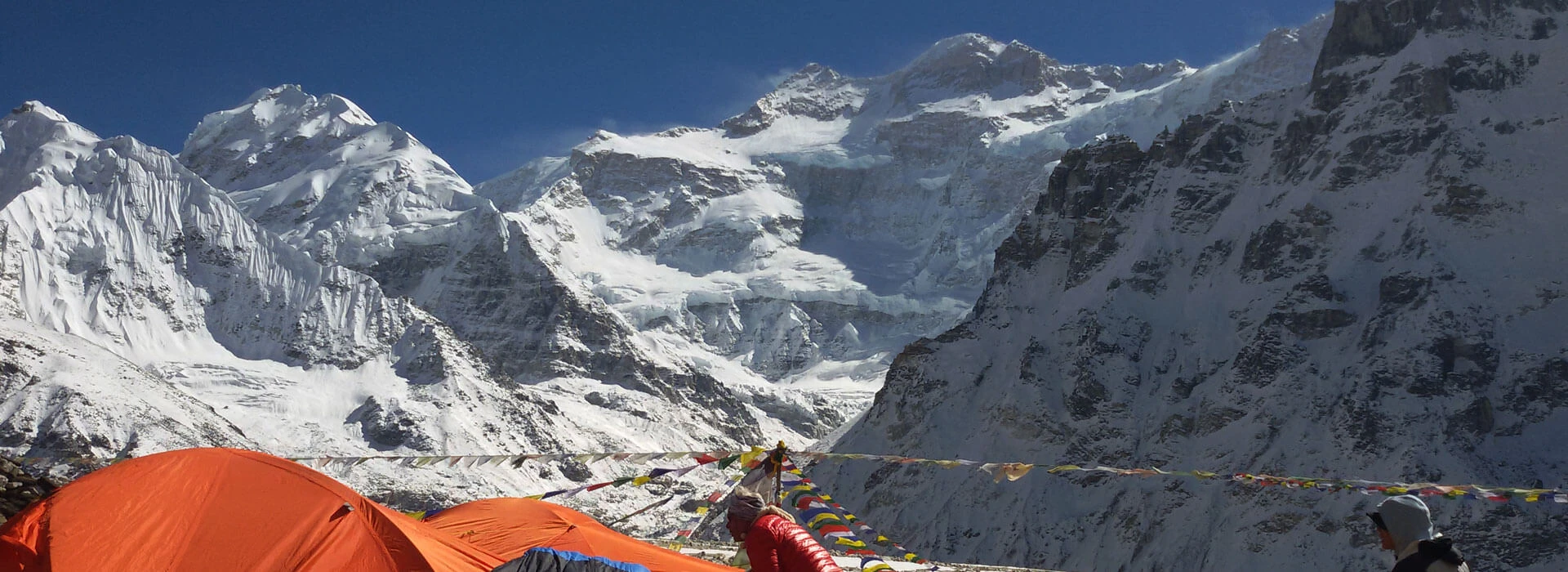
The limited areas of the Taplejung and Kanchenjunga regions in eastern Nepal, as well as parts of Sankhuwasabha, protect delicate mountain ecosystems and culturally rich border villages. These areas are less expensive to get permits for, but they require a lot of endurance and commitment because treks here can last for weeks through untouched terrain beneath the towering peaks of Mount Kanchenjunga (8,586 m / 28,169 ft).
The Manaslu region, Tsum Valley, and Nar-Phu Valley in Manang are all close to central Nepal. They are all restricted areas that are easy to get to and feel real. Many people think these areas are the best place to start restricted trekking because they have beautiful Himalayan scenery and preserved Tibetan-influenced cultures. Seasonal permit prices, which range from $75 to $100 per week during peak seasons, help keep the region's delicate balance while controlling the number of trekkers.
Some areas that are otherwise popular, like parts of Solukhumbu (the Everest region), Rasuwa (near Langtang), and Dolakha, have even stricter rules. In these areas, certain wards and rural municipalities need special permits because they are close to international borders or are sensitive to the environment. These hidden restricted areas in well-known trekking areas serve as a reminder to travelers that Nepal's mountains are not completely open; they are made up of layers of access and protection zones.
Lower Dolpo is also different because it combines accessibility and restriction in a way that makes it a little cheaper but just as interesting as Upper Dolpo. Here, deep valleys, old monasteries, and traditional ways of life all exist together in a controlled environment that keeps tourism from overwhelming the area's fragile identity.
These 15 restricted areas make up a patchwork of Nepal's most untouched, raw, and culturally preserved landscapes. Trekking through them is not just a trip through mountains; it is also a trip through history, identity, and isolation. To get into these areas, you need a Restricted Area Permit (RAP), which only registered trekking agencies can give you. This makes it clear that these are not just places to visit; they are places to approach with care, preparation, and respect.
In short, restricted areas in Nepal aren't walls; they're carefully controlled invitations to see the Himalayas in their most natural and unaltered state.
A Step By Step Guide For Planning A Trek Under The New Rules
Planning a trek in Nepal under the new 2026 rules is no longer about making decisions on the spur of the moment or going on adventures at the last minute. It is a well-thought-out process that balances freedom and responsibility. Choosing the right destination is the first step in the journey, and this choice affects everything that comes after it. Your choice should depend on your fitness level, how much time you have, how much money you have, and how much you like being alone. You might want to go to the remote deserts of Upper Mustang, the rough trails of Manaslu Circuit, or the hidden culture of Nar Phu Valley. Restricted areas need more planning than regular treks, so it's important to be clear at this point. It's not just about where you want to go, but also about whether you're really ready to go there.
The next step is to get in touch with a registered trekking agency in Nepal, like Nepal Nomad, which is now the only way to get to most trekking areas. Even for solo trekkers, the new rules say that you can't plan your trip without the help of an agency. The agency is your logistical backbone; it takes care of permits, guides, transportation, and making sure you follow all government rules. It's very important to pick a trustworthy agency because they are also in charge of your safety, including getting you out of a dangerous situation if necessary. This step turns your trip from an idea into a real expedition that is recognized by the government.
After you hire an agency, you will need to hire a licensed trekking guide (in most cases, your agency will provide you with one). This is a requirement of Nepal's current trekking system. Even though solo trekking is now allowed in some areas, it is still done in a way that can best be described as "guided independence." Your guide is more than just someone to follow; they are also a vital companion who knows the area, keeps an eye on your health at high altitudes, understands local customs, and is your first line of support when things go wrong. In places where the route ends, and the weather can change at any time, this human connection is very important.
After this, the focus moves to processing permits, which is one of the most important administrative steps in the planning process. You may need a mix of permits, such as the Restricted Area Permit (RAP), national park or conservation area permits, and sometimes a TIMS card, depending on where you want to go. Your agency gives out these permits, but you need to show them documents like your passport, visa information, travel insurance, and final itinerary. It may seem bureaucratic, but the process has a bigger goal: to make sure that every trekker who goes into sensitive areas is accounted for, can be found, and is ready.
Once you have your permits, you need to finalize and register your itinerary, which will show where you will be going each day. Restricted trekking is different from flexible backpacking routes because you have to follow a set plan for safety and environmental reasons. This doesn't mean your trip isn't exciting anymore; it just means that your route is known, which makes it easier to respond quickly in case of an emergency. At this point, the details of your trip, like where you'll stay, what you'll eat, and how you'll get around (by plane to remote airstrips or long overland drives) are also set.
Then, preparation becomes more personal. You get your body, mind, and things ready for the trip ahead. It's important to get your body ready for long days of walking at high altitudes, your mind ready for being alone and living simply, and your gear ready for extreme weather. In areas with limited resources and where help isn't always available right away, your preparation is your safety net. This includes getting full travel insurance that covers high-altitude trekking and helicopter evacuation, which is a must-have and not an optional extra.
Finally, as your departure date gets closer, you enter the last phase: getting ready to go to Nepal. When you arrive, your agency will usually give you a briefing, double-check your permits, introduce you to your guide, and make sure that all the logistics are in order. This is where the abstract plan becomes real, and you go from getting ready to waiting. Now that everything is in place, you can start your journey with confidence, from the busy streets of Kathmandu to the quiet trailheads of the Himalayas.
In short, trekking in Nepal under the new rules is no longer about being completely free. Instead, it's about structured exploration, where every step is supported, every risk is thought about, and every experience is made better by being prepared. It may seem like the process is more formal than it used to be, but in the end, it makes the mountains safer, more sustainable, and more meaningful to visit. The journey starts long before you set foot on the trail.