What It’s Really Like to Travel in Tibet in 2026/2027
Tibet is a land of 1,000 years of history wrapped in a 21st century shell and that contrast is most acutely felt in its raw sensory reality. But on any trending Tibet expedition, the adventure starts not with monuments but with light itself: bright, almost surreal, as if the sky has been deepened into a richer hue of blue by the thin mountain air. Higher than 4,000 meters, 13,123 ft, there is less atmosphere to filter the light, so the visual intensity makes the indigo sky look more painted than natural. The colours of the Tibetan trinity hold sway over every horizon on this high altitude canvas: the crimson robes of monks, the golden roofs of monasteries and the whitewashed stone walls that gleam in the Himalayan sun. Here, in Lhasa, that ancient palette now coexists with a quiet modern cadence, where centuries old alleys meet silent electric buses and LED-lit squares monks photographing rituals with smartphones while standing in spaces that have held the same prayers for a thousand years.
In Tibet sound is not silence, it is a form of meditation. The prayer flags at the passes snap in the wind, their rhythmic fluttering the voice of the plateau. Monasteries like Sera Monastery with philosophical debates echoing off the courtyard walls punctuated by sharp hand claps layered over deep, guttural chants that feel less like sound and more like vibration rising from the earth itself. Even the long horns of Tibetan ritual, the dungchen, do not play melody; they resonate like tectonic waves, felt more in the chest than heard by the ear, shaping the emotional pulse of any Himalayan expedition.
The land speaks in scent as well as in sight and sound. In traditional sang rituals, every morning starts with the burning of juniper, which produces a clean, pine-like smoke symbolizing purification and renewal. The warm, dark smell of yak butter lamps in monasteries rises up and has seeped into the wooden pillars for hundreds of years. Away from the cities, particularly on high routes to the Everest regions, the scent drops to near-nothingness, a dry, mineral clarity of stone and altitude that is almost medicinal.
Touch shows up yet another contrast. The sun at this altitude strikes with the bitterness of a bite, and the cold winds cut through the layers of clothing, so that one is constantly balancing between exposure and protection. You walk the kora around sacred sites like Jokhang Temple, fingers grazing prayer wheels that have been polished smooth by millions of pilgrims, each revolution bearing centuries of devotion. Breathing becomes a consciousness of its own thin air pressing lightly on your chest, telling you that altitude is not merely geography but experience itself. In the quieter corners of the Tibet tour from Lhasa old town cultural walking experience every step seems just a little heavier and yet profoundly present.
But perhaps the most powerful dimension is human. Tea houses are the heart of Tibetan life, where butter tea is refilled endlessly and conversations flow between generations. The pilgrims who come after prostrating hundreds of kilometers have sun-worn faces and a quiet radiance, devotion in every movement. In 2026/2027, Tibet, tradition and modernity coexist harmoniously. Young Tibetans in modern streetwear scroll through digital feeds, while elders wrapped in woolen chubas share the same timeless space. This is not a frozen museum of culture, but a living, breathing world where faith, technology and landscape merge into one continuous story.
The Future of Tibet Travel: Sustainable Tourism and New Travel Patterns
Tibet is no longer a remote and difficult frontier. It is fast becoming one of the most highly organized, high-tech and closely monitored travel regions on earth. For those contemplating a Tibetan plateau adventure, the 2026-2027 route is marked by engineering innovations, digital transformation and smarter high altitude logistics that are changing the way travelers reach, transit and experience the plateau.
1. The Railway Revolution: More Than the Sky Road
The expansion of China’s railway network is one of the most transformative changes in modern Tibet travel. The legendary entry route of the classic Qinghai–Tibet Railway still exists, but the Sichuan–Tibet Railway (STR) is creating a new era.
The Chengdu-Lhasa corridor is one of the most complex engineering projects of the world. High-speed Fuxing trains already link Chengdu with Ya’an, and Nyingchi with Lhasa, while the demanding middle stretch between Ya’an and Nyingchi remains under construction, with most projections pointing to completion in the early 2030s. These trains are not only fast, they are built to survive at altitude.
A new feature is the use of oxygen-enriched cabins, which enable passengers to start acclimatization at speeds of 160, 200 km/h (99, 124 mph). This greatly reduces the physiological shock of a sudden increase in altitude.
From a logistics perspective, experts increasingly recommend entering Tibet via Nyingchi (around 2,900 meters, 9,514 ft), instead of flying directly into Lhasa at 3,650m, 11,975 ft. This route is fast becoming a preferred gateway for smoother Nepal to Tibet overland style itinerary planning by the professional operators
2. The Digital Infrastructure of the Smart Plateau
By 2026-2027, Tibet Autonomous Region is turning into a fully connected smart plateau. Even places that are far-flung are connected into a high-speed digital ecosystem.
5G coverage is expanding to extreme environments, such as trekking corridors near Everest Base Camp and pilgrimage routes (e.g., the Kailash Kora). This allows for real-time weather monitoring, GPS tracking and quick emergency response, greatly enhancing safety on treks.
Another major change is the rise of cashless travel. Take Alipay and WeChat Pay, for example. They are so essential that even remote tea houses in western Tibet rely on them. Better integration with global cards makes international transactions easier. Logistics have never been smoother.
The Tibet Travel Permit system is also changing. Digital QR-based tracking systems are gradually replacing the traditional physical permit for quick clearance at checkpoints, especially at major border entry points like Gyirong.
3. The Rise of Hotel Rooms: Oxygen is the New Luxury
Tibet’s hospitality industry is quietly being revolutionized by altitude health requirements. Hotels in Lhasa, Shigatse and Nyingchi are now standardizing oxygen-diffusion systems, shifting oxygen support from a luxury upgrade to a baseline expectation. This is changing the comfort level at altitude for all itineraries.
Boutique heritage lodges, such as Songtsam, are springing up in remote valleys, combining cultural authenticity with modern comfort. Meanwhile, eco-glamping around sensitive areas such as Namtso Lake and Everest Base Camp is a strong indication of the trend towards sustainable, low impact, removable accommodation systems.
4. Access routes in Tibet: the changing transportation (2026/2027)
Besides the Electric G318 corridor, transportation in Tibet has become a multi-tiered system. Air travel remains the fastest and most accessible way in, with regular flights from the main Chinese hubs to Lhasa and Nyingchi. Of these, Nyingchi Mainling Airport is becoming the preferred choice for entry, as it is lower (about 2,900 meters / 9,514 ft) and therefore easier to acclimatize to and less risky in terms of altitude sickness. Most journeyers combine flight routes with well-thought-out itineraries that balance comfort, altitude acclimatization, and logistics of permits.
Rail travel adds another dimension. The Qinghai–Tibet Railway is still a legendary route, and the expanding Sichuan–Tibet Railway offers faster, more modern links from Chengdu. The modern trains with their oxygen-enriched cabins and panoramic windows enable passengers to acclimatize slowly to the dramatic transition from lowlands to high plateau. But for the most immersive option, overland journeys still rule, especially along the G318 highway, which is now an electric vehicle-supported corridor with improved infrastructure and charging stations. It is one of the most visually powerful transitions on earth, from green valleys to passes above 5,000 meters (16,404 ft). Similarly, overland transportation includes a range of vehicles from 4WDs, Hiace vans, and Coaster buses to larger tourist coaches, with options available from A/C to non-A/C depending on comfort and budget. This route is a favorite for experiential travel. The Nepal-Tibet route via Gyirong is also a major gateway for overland expeditions.
For the more spiritual, the trekking and pilgrimage routes are still the spiritual heart of Tibet. Walking circuits such as the kora around Jokhang Temple or the sacred paths of Mount Kailash offer a slower, more reflective form of travel, where the movement itself becomes meditation. In cities, local transport has also been greatly modernized, with electric buses, sharing taxis and app-based systems becoming common, especially in urban hubs like Lhasa, while traditional walking routes continue to be vital in maintaining the authentic pace of Tibetan life.
5. Seasonal Changes: The Boom of Winter Tibet Tours
One of the biggest trends is the growing popularity of Tibet as a winter travel destination.
Government-backed incentives like reduced hotel rates and free or discounted entry to places like the Potala Palace are boosting off-season tourism. Winter (November to March) is thus becoming a strategic choice for seasoned travelers looking for lesser crowds and clearer Himalayan views.
Better modern infrastructure, improved road clearance and sophisticated cold-weather gear have converted previously inaccessible routes into all-year-round access, making Tibet a true four-season destination.
6. Sustainability and entry rules
Tourism management in Tibet is more and more controlled and precise. Access to major sites such as the Jokhang Temple is increasingly regulated by timed visits, QR booking systems and visitor caps to protect cultural heritage.
At the same time, border infrastructure along the Nepal-Tibet corridor, especially the Kyirong route, is being considerably upgraded. With upgrades to the roads on the Nepal side, travel time is being reduced and comfort improved, making overland access much more efficient than in previous decades.
Essentially, Tibet’s travel scene is entering a new era where tradition and transformation exist in remarkable balance. A once remote and logistically difficult place is becoming more accessible with the help of advanced rail networks, better highways and smarter air connectivity, while retaining the depth of its cultural and spiritual identity. Digital systems, cashless economies and live permit tracking are easing movement across the plateau, and modern hospitality is adapting to the realities of high-altitude travel without losing its authenticity. Yet for all this progress, Tibet remains deeply rooted in its traditions: monasteries, pilgrimages, mountain routes continue to shape the soul of the journey. The result is a destination that is both timeless and changing, where each visitor encounters not just a place but a well-tended universe courageously moving into the future.
Tibet Tour Highlights: Famous Landmarks & Hidden Gems
Tibet is not just a place of sightseeing; it is a place of scale, silence and spiritual presence. From the ancient palaces of Lhasa to the remote valleys of the Himalayas, where time appears to have stood still, each place combines natural grandeur with cultural depth. These Himalayan landmarks are not just points on the map but the living expressions of history, faith and geography evolved over centuries. Following are the places you get to witness in the Tibet sightseeing tour package.
Place/Route | Location | Highlights |
Lhasa | Central Tibet | Spiritual heart of Tibet, pilgrimage culture, Barkhor circuit, monasteries, living Tibetan traditions |
Potala Palace | Lhasa | UNESCO World Heritage site, former Dalai Lama residence, iconic Himalayan architecture |
Jokhang Temple | Lhasa | Holiest Tibetan temple, major pilgrimage destination, spiritual center of Buddhism |
Yamdrok Lake | Central Tibet | Sacred turquoise lake, panoramic Himalayan views, spiritual water body |
Everest Base Camp (North Side) | Tingri Region | Closest accessible view of Mount Everest from Tibet side, extreme altitude experience |
Namtso Lake | Northern Tibet | One of the highest sacred lakes in the world, dramatic landscapes, pilgrimage site |
Shigatse | West Central Tibet | Second-largest city, gateway to Everest, Tashilhunpo Monastery |
Nyingchi | Eastern Tibet | Lower altitude region, green valleys, acclimatization gateway |
Kharta Valley Trek | Eastern Tibet (Everest region) | Remote valleys, glacier views, traditional Tibetan villages, classic Everest approach landscapes |
Simikot Kailash Trek | Nepal–Tibet border region | Trans-Himalayan trekking route, remote wilderness, cultural transition zone |
Kailash Mansarovar Yatra | Western Tibet (Ngari region) | Sacred circumambulation of Mount Kailash, spiritual pilgrimage for multiple religions, high-altitude devotion journey |
These attractions are not simply destinations, but experiences of scale, silence and spirituality that change what it means to travel. Each site, from sacred lakes reflecting endless skies to ancient monasteries carved into mountainsides, offers a moment of stillness in a vast and powerful landscape. Travelling through Tibet is not about the number of places you visit, but how much each place resonates with you long after the journey has ended.
Understanding Tibet Travel Authority: Permits, Protocols and Visa Rules
Tibet is one of the most heavily regulated tourist destinations in the world. Not that it is difficult to reach, but because of its terrain, cultural sensitivity and strategic position, there needs to be a very organized system of entry. Here, the mode of travel is very different to most other international destinations. Travel is not on an individual basis but on an agency basis, with permits and a raft of administrative approvals. If you are planning a Visit Tibet trip, this legal framework is not optional; it is the foundation of the whole experience. Visas, internal permits, cultural protocols . . . every movement is choreographed by a system that is trying to balance tourism, preservation and regional security.
Individual journeyers are not permitted to apply for Tibet permits; all approvals must be coordinated through the Tibet Tourism Bureau (TTB) by a licensed Tibetan travel agency. This means that any entry into the region must be done in an organized tour.
The primary document for entry is the Tibet Travel Permit (TTP). It is the gateway pass to Tibet and if you don't have the original physical copy you can't board a flight or train to Lhasa. A digital QR based system is being tested to streamline the checkpoints but physical permits are still vital. Travelers should send copies of their passports and a valid Chinese visa at least 20 to 30 days before arrival.
If you want to travel outside Lhasa, you will need an Aliens’ Travel Permit (PSB Permit) for places such as Everest Base Camp and Shigatse. Usually local authorities are quick to issue this during the trip. However, sensitive border areas such as Mount Kailash or Eastern Tibet require additional Military or Border Permits, which take a bit longer to process (10 to 14 days extra) and should be planned well in advance.
Tibet travel permit and visa process 2026 are also very dependent on the country of entry and it is here that travel planning becomes most sensitive and strategic. For travellers coming in through mainland China such as Beijing, Chengdu or Xi’an the process is relatively straighter forward. You will need a standard Chinese Tourist Visa (L-Visa), but one important rule is that when you apply for the visa, you must never mention Tibet as your primary destination. Applicants should instead include mainland cities like Chengdu or Beijing, as Tibet is handled separately through the Tibet Travel Permit system. The separation of two systems makes this route relatively more flexible and popular among international voyagers for a Tibet trip as it avoids direct administrative conflict between visa approval and Tibet entry clearance.
Kathmandu to Lhasa tour visa requirements, on the other hand, is much stricter, and follows a completely different framework. Even if you already have a Chinese visa, travelers entering Tibet from Nepal cannot use it. Instead they have to obtain a special Group Tourist Visa from the Chinese Embassy in Kathmandu which is arranged only through licensed travel agencies. This visa is issued as a group paper document instead of a passport sticker and all globe-trotters must enter and exit together as part of the same organized group. The application process will require you to stay in Kathmandu for a minimum of three working days while your documents are being processed and verified.
Tibet also has restrictions on politically, culturally and security sensitive materials. The following items are prohibited: political images, restricted literature or digital content concerning sensitive movements. Foreign tourists will mostly be banned from using drones, and even professional filming equipment may require prior authorization.
Tibetan Buddhist practices must be honored. Always walk in a clockwise direction around religious sites. Photography is generally not allowed inside of sacred chapels and modest dress covering shoulders and knees is required. Touching someone’s head or pointing feet toward religious objects is disrespectful.
Similarly, Tibet’s tourism policy is heading towards sustainability and restricted access. Future regulations could also involve environmental deposits for trekking zones such as Mount Kailash and strict guide-only access outside urban areas. As the tourism industry expands, this is a win/win for the environment and the culture.
The Tibet travel-authority system is not intended to limit tourism, but to manage it with precision and respect for a fragile high-altitude environment. Every trip, whether you enter through mainland China or Nepal, is governed by structured visas, layered permits and strict cultural protocols. The system is getting more digital, more organized, more efficient but it’s still very much in control. For globe-trotters, the trick is not to ignore the rules, but to know them. When the framework is clear, the way opens into one of the most extraordinary and spiritually rich journeys on earth where planning is as important as the destination itself.
Top Monasteries in Tibet You Must Visit: A Spiritual Travel Guide
Tibetan monasteries are not only places of worship but living institutions of philosophy, art, debate and devotion. They dot the landscape of valleys, cities and high altitude cliffs, and are the spiritual backbone of Tibetan civilization. Monasteries are the best insight into daily practice of faith on a journey across Tibet, where prayer, education and community life form a seamless tradition.
Monastery | Location | Highlights |
Jokhang Temple | Lhasa | Holiest site in Tibet, major pilgrimage destination, spiritual heart of Tibetan Buddhism |
Sera Monastery | Lhasa | Famous monk debates, philosophical learning, vibrant monastic life |
Drepung Monastery | Lhasa | Once the largest monastery in the world, major Gelugpa institution |
Ganden Monastery | Lhasa | One of the earliest Gelug monasteries, scenic mountain location |
Tashilhunpo Monastery | Shigatse | Seat of the Panchen Lama, grand religious complex |
Sakya Monastery | Western Tibet | Fortress-style architecture, ancient Buddhist manuscripts |
Tholing Monastery | Ngari (Western Tibet) | Historic ruins, early Buddhist revival center |
Palpung Monastery | Eastern Tibet (near Nyingchi) | Kagyu tradition, artistic heritage, meditation culture |
Benchen Monastery | Eastern Tibet | Meditation retreats, peaceful monastic environment |
Rongbuk Monastery | Everest Region | Highest monastery in the world, near Everest Base Camp |
Drak Yerpa Monastery | Near Lhasa | Cliffside meditation caves, ancient retreat site |
Tibetan monasteries are the living heart of the spiritual identity of the plateau. They are sites of philosophical debate, of lived prayers, of an uninterrupted tradition for centuries. From the grand monastery complexes of Lhasa to the remote meditation caves in the cliff sides, this Tibet monastery and pilgrimage tour takes you through each layer of Tibetan Buddhism. These monasteries are more than just a cultural experience; they are an interaction with a lifestyle where spirituality is part of every breath, every action and every second of life.
Across Tibet to the Sacred Axis: The Kailash Mansarovar Yatra
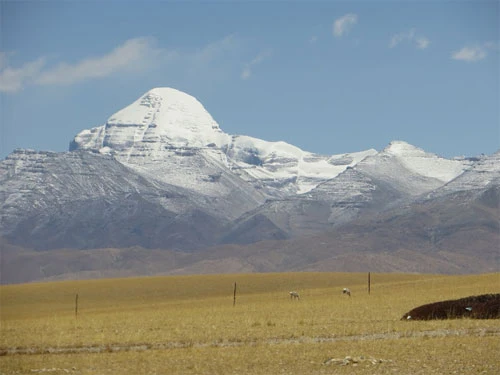
The journey to Mount Kailash and Lake Mansarovar begins with an acknowledgement of its unique position in human history as the Axis Mundi, or the spiritual center of the world. From the isolated, remote Transhimalayan region of Tibet raises a symmetrical pyramid of black rock and from it flows four of Asia's greatest rivers: the Indus, the Brahmaputra, the Sutlej and the Karnali. Unlike other famous peaks Kailash has never been climbed, such is its sanctity that to tread its slopes is considered sacrilege in many cultures. For over three thousand years it has guided the seekers. Ancient Vedic texts and Tibetan scriptures describe it as the physical link between this Earth and the realms of heaven.
Mount Kailash is the eternal abode of Lord Shiva, the ‘Mahadeva’ or Great God, to Hindus. Shiva is not only a God of Destruction in the western sense but also the Destroyer of Ego and Ignorance, the ultimate state of Vairagya or total detachment. He is envisioned as the Adiyogi, the first yoga teacher, on the summit, in eternal, silent meditation. The mountain itself is conceived as an expression of Shiva’s own stillness and power.
For Hindus, a journey to Mount Kailash is not simply travel, it is one of the most sacred pilgrimages in the world. Revered as the earthly abode of Lord Shiva, Kailash has been worshipped for thousands of years as the cosmic center of the universe, where divine energy and creation converge. Ancient texts like the Puranas describe it as the spiritual axis (Meru), and its significance is deeply woven into Hindu cosmology, culture, and devotion. Pilgrims undertake the Kora, a 52 km, 32 mile circumambulation around the mountain, believing that completing it washes away the sins of a lifetime and brings spiritual liberation (moksha). Rituals such as prayer offerings, silent meditation, and bathing in the nearby sacred waters of Lake Mansarovar are integral to this journey, symbolizing purification of body and soul. More than a physical trek, visiting Kailash is seen as a profound inner pilgrimage, an act of surrender, faith, and connection to the divine.
The mountain is known as Kang Rinpoche (Precious Jewel of Snow) in the Buddhist tradition and is the home of Chakrasamvara (Demchok), the god of supreme bliss. The mountain has a famous history, being associated with the 11th century yogi-poet Milarepa, who is said to have defeated a priest of the native Bon religion in a contest of spiritual power in order to establish Buddhism there. The 52-kilometer trek around the mountain is the Buddhist way to enlightenment and the cleansing of the mind. Similarly, Jains also regard the site as Ashtapada, the site where their first Tirthankara, Rishabhdeva, attained spiritual liberation. The Bon followers believe that the site is the seat of all spiritual power and circumambulate the mountain in a counter-clockwise direction.
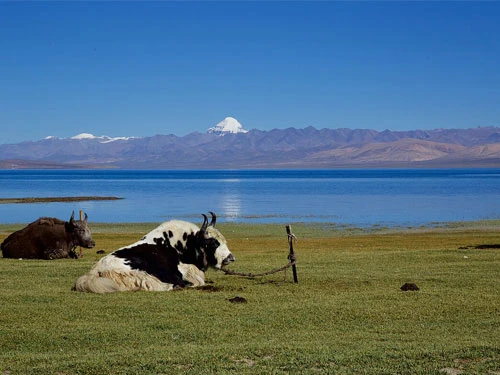
Similarly, for the non-pilgrim curious explorers, the journey to Mount Kailash and Lake Mansarovar is still a deeply rewarding one, a meeting with a landscape where nature, history and culture exist in rare harmony. Even without religious devotion, the sheer visual power of Kailash, a perfectly symmetrical, snow-crowned peak rising in isolation commands a quiet reverence; while the vast, mirror-like waters of Mansarovar reflect skies so clear they feel almost unreal. The region has been a meeting point of civilizations for centuries and is sacred to Hindus, Buddhists, Jains and followers of the Bon tradition, thus culturally deep beyond faith alone. Visitors can walk part of the kora or stand on the edge of the lake and be enveloped in a silence that is both humbling and expansive. It is a place where history is not held in monuments, but lives in the wind, the rituals and the enduring presence of the land itself offering every traveller, believer or not, a rare chance to experience something timeless and deeply human.
Kora of Mount Kailash: The Sacred Path to Liberation
The sacred circumambulation of Mount Kailash is called the Kora, and exists in two different forms: the Outer Kora and the much more restricted Inner Kora, each with different levels of spiritual meaning and physical challenge.
The Outer Kora, a 52 km, 32 mile circuit around the base of the mountain, is the traditional and most widely permitted pilgrimage route. This route crosses the high altitude Dolma La Pass (5,630 m, 18,471 ft) and usually takes three days to complete. It is open to pilgrims and international travellers (with proper permits) and it is a powerful act of devotion, believed to cleanse the sins of one lifetime. For many Hindus, Buddhists, Jains, and Bon practitioners, the completion of a single Outer Kora is a profound spiritual achievement.
In contrast, the Inner Kora is a deeply sacred and exclusive route that brings pilgrims much closer to the mountain’s inner sanctum, including areas near the south face of Kailash. This route is not normally open to foreign travelers and is only permitted on very strict conditions, usually for very dedicated pilgrims who have done many Outer Koras (traditionally 13 or more). Physically, the Inner Kora is much more demanding, technically challenging and spiritually intense, often featuring steep unmarked terrain and areas of high risk.
The restriction is not only for safety, but also for the sanctity of the mountain. Mount Kailash is deemed too holy to be submitted or even casually approached, and to preserve its delicate ecology and deep spiritual importance, the Inner Kora is off-limits. The Outer Kora is a pilgrimage of devotion, the Inner Kora a discipline of spiritual mastery for those who have gained the right through faith, discipline and tradition.
The Sacred Waters of Mansarovar: A Ritual of Purification
Next to the mountain is Lake Mansarovar, the highest freshwater lake in the world, representing the essential female energy or Shakti that balances the male energy of Kailash. In Hindu tradition this lake first existed in the mind (Manas) of Lord Brahma before becoming manifest on the physical plane. The turquoise waters are freezing, but it is said that bathing in them cleanses the human consciousness of all the worldly delusions accumulated over many lives. The lake is a stark counterpoint to its neighbor, Rakshas Tal, a salty, crescent-shaped body of water associated with darkness and the demon-king Ravana, symbolizing the eternal duality of light and shadow, good and evil, within the human soul.
The journey is itself a poignant metaphor for the spiritual growth of the individual. It is supposed to be physically and mentally grueling. It is the death of the old self and the birth of a new, awakened consciousness. The pilgrimage culminates with the crossing of the Dolma La Pass, at an altitude of more than 5,600 meters. This high-altitude crossing is a threshold between a person’s past karma and a future of spiritual clarity, and pilgrims often leave personal items or locks of hair at the pass, symbolizing the shedding of former identities. The thin air, the isolation, the sheer majesty of the landscape compel a state of total surrender, and the pilgrim realizes that the true Kailash, the seat of ultimate truth, is not just a mountain in Tibet but a state of being in their own heart.
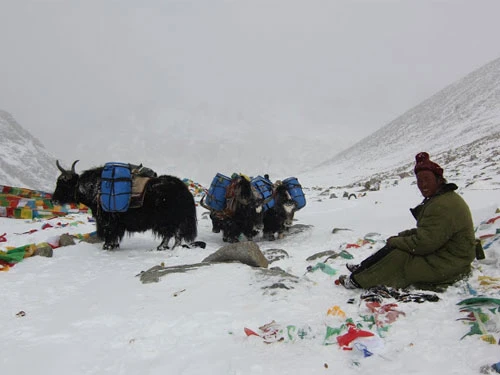
To reach Kailash Mansarovar via Tibet, visitors must adhere to a very regimented protocol that begins long before arrival. Due to the sensitive border area surrounding Mount Kailash, independent travel is not allowed. You must book an organized tour with a licensed agency to receive the required Tibet Travel Permits, Alien’s Travel Permits and military clearances. The most popular starting point for pilgrims is Lhasa, where they spend several days at 3,650 meters acclimatizing and visiting the Potala Palace. From Lhasa, a multi-day drive across the Tibetan plateau takes you through Shigatse and Saga (and the long drive to the small outpost of Darchen). At Darchen you begin the three-day hike around the mountain, with local porters and yaks. It requires great physical stamina and a calm spirit to complete the holy circle.
Understanding Tibetan Etiquette: Safe and Respectful Travel Practices
Travel in Tibet is not just about altitude and landscapes, it is about responsibility, awareness and respect for a fragile high altitude world where human health, cultural integrity and environmental balance are deeply intertwined. Trust in your plateau journey begins by understanding how your body reacts to extreme altitude. Tibet is a true high altitude desert and the main problem is not only sickness but the rate of adaptation. Good operators designing a Tibet Travel Guide 2026 itinerary now adhere to the “3-night Lhasa rule,” guaranteeing travelers spend a minimum of 72 hours in Lhasa before heading up to Everest or remote areas.
Progressive acclimatization is important, as safe itineraries also follow the “sleep low, climb slow” principle, with no more than 300 to 500 meters (9,843 ft) of elevation gain per night, above 3,000 m, 9,843 ft. Medical preparedness is also important. Many travelers consult their doctors for advice on preventive medications such as acetazolamide (Diamox) before arriving. Locally, traditional herbal remedies such as Rhodiola (Hong Jingtian) are used to aid oxygen efficiency. However, hotels that provide too much supplemental oxygen can interfere with natural acclimatization, so the best advice is to use it in moderation oxygen when resting, but natural breathing during the day. The extreme dryness of the plateau also creates what travelers often refer to as the “Lhasa cough.” It is essential to stay hydrated, with a recommendation of 3 to 4 liters of water per day, even when you don’t feel thirsty.
Ethical travel is the standard of any Tibet expedition beyond health, where tourism is not merely movement but economic respect. Supporting Tibetan owned businesses keeps tourism dollars in the local community. By staying in locally operated accommodations, eating in family-run restaurants and choosing guides from the region, we help create a more authentic and responsible travel ecosystem. In places such as the Barkhor circuit, purchasing handicrafts directly from artisans instead of large commercial outlets helps to preserve traditional craftsmanship. Even the customs around tipping in 2026/2027 reflect structured respect, with standard gratuities for guides and drivers handed over at the end of the journey as a sign of appreciation rather than obligation.
Cultural safety is just as important. Tibet is a very spiritual society and everything you do has significance. Travellers should be careful about sensitive political topics and avoid discussions that might endanger the local guides. “Photography should always be respectful. Asking permission is essential etiquette, not optional courtesy, before taking someone’s picture.” Inside monasteries you must walk in a clockwise direction around such holy places as the Jokhang Temple, and photography is often not allowed in internal sanctums unless expressly permitted. Cultural gestures matter too: stepping over people, pointing feet towards religious objects or walking counter-clockwise around stupas are considered inappropriate within Tibetan Buddhist tradition.
Environmental responsibility is another piece of the trust in travel jigsaw. Tibet, known as the “Third Pole,” contains one of the world’s largest freshwater reserves, and its ecosystem is very sensitive. Good travelers avoid single-use plastics, bring filtered bottles that can be reused and adhere to the “leave no trace” rules, especially in vulnerable areas like Everest Base Camp. Wildlife should be viewed from a distance, without disturbing them, as Tibetan antelope and black-necked cranes are very sensitive to human interaction.
Ultimately, real trust in a Lhasa tour or any high altitude journey comes from transparency. The reality of the Himalayas is that the weather is unpredictable, the roads can close at any time, permits can change. A credible travel framework doesn’t promise perfection. It prepares travelers for change. In Tibet, trust is not built on certainty but on awareness, preparation and respect for a land where nature, culture and spirituality still dictate the rhythm of travel.
Guardians of the Plateau: Tibet’s 8,000-Meter Giants
Tibet is a great open land shaped by the wind and the earth seems to go on forever to the heavens. Some of the greatest mountains known to man are here. These are the 8,000 meter giants, the silent titans that define the outermost edges of possibility, physical and spiritual.
The king of them all is Mount Everest (8,848.86 m / 29,031 ft) and its North Face is a stark and immense wall from the Tibetan side. Everest here displays a different personality, colder, more austere, stripped of the crowds and shrouded in a raw, almost cosmic silence. It is less a summit than a presence, commanding reverence from all sides. The giant is approached from the Tibetan side along a structured overland route passing through Lhasa, Shigatse, Tingri and finally the Rongbuk Monastery and the North Base Camp. In Tibet, unlike Nepal’s trekking-style approach, there is no independent hiking trail to Everest Base Camp. If your itinerary includes restricted areas in Tibet, travelers must apply for a Tibet Travel Permit and other restricted area permits. Travel outside designated areas is not free and even a short walk around Everest Base Camp is monitored and restricted. More of a controlled observation than an exploration, the experience has strict boundaries in place to protect both security and environment.
To the west is Cho Oyu (8,188 m, 26,864 ft), usually considered the most approachable of the 8,000ers, but no less awe-inspiring. Its vast, glaciated slopes offer a passageway between Nepal and Tibet, a mountain both welcoming and humbling, an introduction to the rarefied world above 8,000 meters.
Beyond the great Himalayan arc is Lhotse (8,516 m, 27,940 ft), attached to Everest itself, sharing not only geography but destiny. Its tremendous south face is legendary but from Tibet its ridges and icy flanks show a quieter, more hidden strength, a shadow standing next to a king. Lhotse is not accessible as a trekking destination directly from the Tibetan side, but can be seen from authorized viewpoints along the Everest trail. Its presence is a strong, distant one, lived in the context of controlled movement, not direct approach.
Above this impressive figure towers Makalu (8,485 m, 27,838 ft), a near perfect pyramid of rock and ice. Makalu is remote and uncompromising, a solitary cathedral of stone, untouched and fiercely independent. It is the wild, untamed spirit of the Himalaya. The Tibetan approach to Makalu is little-visited and has no trekking infrastructure for independent travelers, unlike the more popular parts of the Himalayas. It is one of the most restricted high-mountain environments in the region, with only fully supported expedition teams entering its valleys.
These mountains, collectively, are more than a geographical cluster; they are a realm of extremes, where air thins into nothingness and human ambition encounters its ultimate test. In Tibetan belief, mountains are not just inert masses of rock, but living deities, protectors of the land and gateways to higher consciousness. In that sense, these 8,000-meter behemoths are not obstacles to overcome, but presences to revere.
To stand in their shadow is to feel profoundly small, but also deeply connected to the earth, to the sky and to something far beyond both.
Jokhang Temple And Sera Monastery: The Spiritual and Intellectual Heart of Tibet
Two of Tibet’s most iconic institutions, the Jokhang Temple and Sera Monastery perhaps best embody the spiritual and intellectual essence of Tibet. Together they form a living balancing act that is characteristic of Tibetan Buddhism, one of devotion and pilgrimage, the other of study and philosophical inquiry. These two sacred sites, situated in the heart of Lhasa, are not only monuments of the past, but also vibrant centers of faith and scholarship that continue to shape Tibetan identity today.
The Jokhang Temple, widely considered to be the most sacred temple in Tibet, stands at the center of Lhasa. One of the most revered Buddha statues in Tibetan Buddhism, it is said to have been built in the 7th century under the reign of King Songtsen Gampo, having been brought as part of ancient matrimonial alliances that signified cultural and spiritual unity across regions. This fusion is reflected in the temple’s architecture, which combines Tibetan building styles with Nepalese and Indian artistic motifs. Golden roofs gleam atop dark wooden beams while inside dimly lit chapels glow with butter lamps that have burned continuously for centuries. The air is heavy with the smell of incense, prayer and silence, broken only by the soft whispers of pilgrims.
What’s truly extraordinary about Jokhang is not just the building, but the living devotion that surrounds it. The Barkhor circuit turns the whole area around the temple into an unbroken pilgrimage passage, where the faithful walk in ceaseless kora, performing full-body prostrations and spinning prayer wheels. Pilgrims from all over Tibet are arriving here after long journeys, sometimes lasting weeks or months, to this sacred center. Jokhang is not experienced as a historical site, but as the beating heart of Tibetan spirituality, where faith is expressed through movement, repetition and deep personal devotion.
A short distance away, but with a totally different energy, is Sera Monastery, one of Tibet's great monastic universities and a centre of Buddhist education. It was founded in the 15th century, and was once home to thousands of monks, and remains an important institution of the Gelug tradition. Sera’s intellectual energy and expressive dynamism stand opposed to Jokhang’s quiet reverence. Its most famous feature is the daily monk debates, when monks sit in open courtyards and engage in heated philosophical discussions. They are not mere performances; these are tough exercises in logic, interpretation and understanding of Buddhist teachings. They feature sharp claps with the hands, animated gestures and rapid exchanges.
The monastery sits on a hillside outside Lhasa, its whitewashed buildings and prayer halls merging into the natural landscape. From the courtyards there are panoramic views over the valley, a reminder of the expanse of the Tibetan plateau. The murals, scripture and assembly halls inside have preserved centuries of scholarly tradition. Sera is not merely a silent place of prayer; it is a living classroom, a place where knowledge is constantly tested, honed, and passed down through the generations.
Jokhang Temple and Sera Monastery together are the two basic pillars of Tibetan Buddhism: devotion and wisdom. Jokhang is the emotional and spiritual heart of Tibetan life, where faith finds expression in pilgrimage and ritual. Sera is the analytical and philosophical side, wanting to understand through study and debate. One is expressed in silence and prayer, the other in dialogue and reasoning, but both are intimately bound up with the Tibetan world view.
In short, these two sacred places are not separate worlds, but complementary forces that define the Tibetan experience. Jokhang anchors the soul with devotion, while Sera sharpens the mind with inquiry. Together they reveal a culture where spirituality is not a passive belief but a lived, active practice intensely emotional and profoundly intellectual all at once.
Hidden Tibet: Sacred Valleys, Wildlife & Starry Skies Beyond Lhasa
Beyond the well-known landmarks of Lhasa, Tibet opens up a quieter, more intimate world that feels untouched, sacred and very much alive. The real magic of any modern, well-thought-out Tibetan plateau escape often kicks in when you step off the well-trodden path and into territories where monasteries cling to cliffs, valleys whisper ancient stories, and the night sky feels just within grasp.
Drak Yerpa is one of the most amazing hidden sites. It is a cliffside meditation complex carved into limestone caves just outside of Lhasa. It was once a retreat for great Tibetan masters and feels like a spiritual eagle’s nest perched high above the valley, silent, powerful, and timeless. Further east is Tsedang in the Yarlung Valley, known as the cradle of Tibetan civilization. Legend says that early Tibetan kings built the Yumbulagang Palace, a fairytale fortress rising above the valley floor, here, the birthplace of Tibetan identity.
For those wanting the opposite experience, Nyingchi presents a very different face to Tibet; green, lush and almost alpine in feel. Often referred to as the “Swiss Tibet,” the region transforms in spring with blooming peach blossoms, thick forests and views of the vast Yarlung Tsangpo Grand Canyon, one of the deepest canyons on Earth. It’s not so much the high desert plateau as a secret Himalayan Eden.
Modern travel in Tibet requires a different kind of preparation, too. A responsible Tibet adventure in 2026–2027 comes with a digital survival mindset: VPNs installed before you arrive for global connectivity, translation apps that can instantly read menus and signs, and e-SIM solutions that make communication easier in remote regions. This is the new travel reality across the plateau, a mixture of ancient landscape and modern dependency.
Wildlife is another layer in the living ecosystem of Tibet. The great plains are home to the elegant Tibetan Kyang (wild ass), the holy black-necked crane and the ubiquitous yak often referred to as the true engine of life on the plateau. Visiting nomadic tents gives a rare glimpse into traditional survival systems where yak milk, hair and labor sustain entire communities.
Language is part of the experience as well. Basic Tibetan words, such as “Tashi Delek” (hello and blessings), “Thu-je-che” (thank you) and “Sim-po-du” (this food is delicious), unlock doors to true human connection, turning transactional meetings into meaningful ones.
And as night falls on the high Himalaya Tibet reveals its ultimate secret: the sky itself. At elevations above 5,000 meters (16,404 ft), far from city lights, the Milky Way stretches with startling clarity across the horizon. The stars are almost 3-D, hanging over peaks like Everest Base Camp (North Side). By 2027, astrophotographers and travelers alike are increasingly calling it one of the most surreal night-sky experiences on Earth, where silence, altitude and infinity merge in a moment.
Ultimately, this hidden layer of Tibet is not just an extension of geography, it is the soul of the plateau, revealed only to those who are willing to look beyond the obvious and slow down enough to really see it.
Where Mountains Dance: Festivals and Traditions of Tibet
Tibet’s cultural identity is not something that exists in museums. It is lived, it is celebrated, it is practiced every day in a cadence of celebrations and ingrained traditions that shape life on the plateau. Understanding these celebrations is a must on any authentic Tibet journey, to grasp the soul of the land. These festivals are not isolated events; they are spiritual calendars, tying people, nature and faith into one continuous stream of devotion.
Losar is the most important festival in Tibet to celebrate the start of a new year in the lunar calendar. The event normally occurs in late February or early March (2026: Feb 17, 2027: Feb 6 approx.). In the days leading up to the celebration, families clean and de-clutter their homes, symbolically sweeping away misfortune and making room for new blessings and prosperity. One of the most interesting customs is Guthuk, a special noodle soup served on New Year’s Eve with dough balls containing hidden symbols like wool for a kind heart, chili for a sharp tongue, or charcoal for negative traits. The evening is a mix of laughter, stories and reflection. On the first day of Losar, as the dawn breaks, families get up early to collect the “first water” from rivers, believed to bring blessings for the year ahead.
Saga Dawa is also one of the most spiritually important times of Tibetan Buddhism, falling generally in May or June. It marks the birth, enlightenment and parinirvana of Buddha and is a month filled with the sacredness of compassion, prayer and merit-making. Many Tibetans abstain from meat at this time and concentrate on giving and on pilgrimage. One of the most powerful rituals takes place near Mount Kailash when the Tarboche flagpole is lowered and replaced with a new one filled with prayer flags. It is thought that the upright position signifies the spiritual and agricultural good luck of the coming year.
The Shoton Festival, usually in August, marks the end of the monastic summer retreat. In the old days, lay people would give yogurt to monks who returned from meditation as a sign of nourishment and gratitude. Its most famous moment is the Great Thangka Unveiling at Drepung Monastery, when a giant sacred silk painting is unveiled at sunrise on a hillside. The festival also includes Tibetan opera (Ache Lhamo), with masked dancers re-telling ancient spiritual tales, while families tuck into festive picnics on the grounds of Norbulingka Palace.
The Palden Lhamo Festival is often celebrated in the autumn and honors the fierce female protector deity of Lhasa. It is an unofficial “women’s festival,” a day for women to dress up in their best traditional clothes and go to the temple to pray for strength, protection and blessings. The air is filled with prayers and offerings and heavy with spiritual energy, especially around sacred places such as the Jokhang Temple, where the atmosphere is one of both devotion and celebration.
And, outside of the festivals, Tibet’s living traditions provide the emotional bedrock of everyday life. Kyangchak, the full-body prostration, is one of the most powerful expressions of devotion. Pilgrims walk long distances, sometimes hundreds of kilometers, lying flat on the ground then standing up again and walking, step by step. This physical prayer is the purification of the body, speech and mind, and is the ultimate symbol of humility and spiritual surrender.
Another meaningful tradition is the Khata, a white silk scarf, denoting respect, purity and goodwill. It is given during greetings, visiting temples and at ceremonies. To get a Khata is a blessing, while to give it to sacred objects or elders is a sign of gratitude and respect.
In monasteries throughout Tibet thousands of butter lamps burn continuously, fuelled by the butter of yaks. The flickering flame is the light of wisdom illuminating ignorance. Offering butter for the lamps is thought to accrue spiritual merit for the self and one’s ancestors. Likewise, mantras are borne on the wind in prayer flags, called Lungta. The five colors stand for the elements: blue (sky), white (air), red (fire), green (water) and yellow (earth). It is believed that with every gust of wind prayers spread across the universe. Prayer wheels are inscribed with “Om Mani Padme Hum.” They turn physical movement into spiritual practice. Each rotation is equivalent to countless repetitions.
Some traditions, such as sky burial (Jhator), remain very sacred and private. This practice represents Buddhist teachings of impermanence and compassion, with the body returned to nature in a final act of generosity. It is not a spectacle but a deep spiritual philosophy which speaks of the cycle of life and existence.
Meanwhile, tea houses are the social heart of Tibetan life. People sit for hours over sweet milk tea or salted butter tea, talking, telling stories and sharing their daily lives. Hospitality is important, and cups are always refilled; in the traditional etiquette, a full cup shows satisfaction and drinking it invites more tea.
Tibetan festivals and traditions are not seasonal attractions. They are living expressions of identity that still influence life from one generation to the next. From the boisterous Losar festivities to the solemn pilgrimage trails, every ritual is a mirror of a worldview steeped in faith, impermanence and harmony. On a modern-day trip across the plateau, these traditions remain unchanged in spirit and offer travellers not simply cultural observation but a rare opportunity to witness a civilization where spirituality is not separate from life, it is life itself.
Taste and Rest in Tibet: A Guide to Food and Mountain Hospitality
In Tibet, food and rest are not luxuries, they are medicine. To survive and truly thrive on the “Roof of the World,” your acclimatization is a process that takes place in the high-altitude reality with every meal and every night of sleep. On a modern high-altitude Tibet trip, you especially experience the fascinating combination of ancient nomadic survival cuisine and rapidly evolving high-tech hospitality.
Tibetan Food Culture The Taste of the Plateau
Tibetan food is designed to give you stamina, heat, and energy in one of the harshest climates on the planet. It is embedded in the barley, the dairy and the meat, the foods that sustain life at extreme altitude and in the cold.
Tsampa, roasted barley flour, is the national staple of the Tibetan diet. It has a nutty, earthy flavor and is traditionally mixed with yak butter tea to create a thick, energy-dense dough. It is simple, portable, and is perfect for high-altitude survival.
Another signature dish is Momo, Tibetan dumplings with yak meat, cabbage or chives stuffing. In modern Lhasa, there are variations of fusion cuisine, including some filled with cheese and spiced vegetables, showing a slight change in the city’s food culture.
Another staple comfort food, especially after long days of travel in the cold mountain air, is thukpa, a hearty noodle soup containing vegetables or meat. It is warm, filling and available in all the towns and monasteries.
Yak meat itself is a primary protein source, leaner, and a little sweeter than beef. It is eaten in many ways, dried like a jerk, slow cooked in stews, or eaten in simple grilled preparations throughout highland settlements.
Tea culture is also important. Po Cha (yak butter tea) isn't just a drink, it's a nutrition system, salty, rich and high in calories. It may sound strange at first but the locals see it as a key source of hydration and energy in the thin air. In contrast, Lhasa sweet milk tea is the social heart of urban life, sipped and talked over for long stretches in traditional teahouses.
Lhasa is also seeing the rise of new culinary trends, with Tibetan-Western fusion restaurants serving such dishes as yak burgers, barley pasta, and innovative takes on local ingredients. There is also a growing vegetarian movement, with improved greenhouse farming and Buddhist dietary influence, especially around monasteries such as Jokhang Temple.
Accommodation in the spiritual Land
Tibet's accommodation has become two worlds: modern comfort in towns and the bare essentials in remote landscapes. This contrast defines the travel experience of any well-organized Tibet itinerary in 2026 and 2027.
Luxury hotels in cities like Lhasa and Shigatse have elevated altitude acclimatization to an art form. High-end properties such as the St. Regis Lhasa, InterContinental-style heritage hotels and Songtsam lodges have centralized oxygen diffusion systems that subtly enrich the air in rooms to help prevent altitude sickness during sleep. This greatly enhances travel comfort for international travelers at high elevations.
Meanwhile, boutique heritage hotels provide a more intimate cultural experience than the luxury chains. Traditional homes have been restored with carved wooden interiors, Tibetan textiles and courtyard architecture, providing travelers with a more personal setting in which to experience local design and atmosphere.
The Songtsam concept, a series of boutique lodges scattered across culturally rich and scenic regions, is one of the most influential hospitality models in Tibet today. These features are more of slow travel, mindfulness and immersive cultural experiences than fast tourism and they are a preferred choice for the high-end travelers who want depth rather than speed.
But head out into the countryside, to places like Everest or remote pilgrimage routes, and the accommodation is a lot more basic. Traveler accommodations near Everest Base Camp (North Side) are typically simple tented guesthouses or monastery-run lodges. functional rather than comfortable: basic beds, heavy blankets, limited sanitation, and minimal heating. Facilities are shared and electricity may be irregular.
Necessary Logistical Details
While the accommodation along the Mount Kailash circuit is even more basic, with stone guesthouses and dormitory-style rooms along the route. Necessity outweighs comfort, and travellers will need to be prepared for basic infrastructure, with little water and very simple heating.
With growing tourism demand, there has also been the emergence of eco-glamping concepts in some remote areas in 2026/2027, with insulated tents and improved heating and more sustainable infrastructure while maintaining environmental sensitivity.
At high altitude, heating and sleeping conditions are crucial. Electric blankets (known locally as Dian Re Tan) are common in non-premium hotels and should always be requested if available. The first days above 3500 meters (11,482 ft) should not be focused on comfort adjustments. Travelers should also focus on rest and gradual acclimatization.
Many doctors suggest you don’t shower right away when you arrive at a high altitude, since the sudden temperature change and exposure of your pores can make you more prone to illness. In the first stage of travel, hydration, rest and slow acclimatization are much more important.
There’s another logistical reality: booking structure. Most of the accommodation in Tibet cannot be booked independently on global platforms. Instead, all bookings go through licensed travel agencies operating within the framework of permit-managed itineraries. Planning is not a stand-alone process, it is an integrated system.
In Tibet, food and accommodation are not separate components of travel, but part of the survival rhythm of the plateau itself. From the energy-charged barley meals to the oxygen-assisted luxury hotels, every experience is a testament to the equilibrium between ancient necessity and modern adaptation. On a well-planned trip to the plateau, an understanding of this system makes travel more than just sightseeing, it makes it an awareness of how life works at extreme altitude. Ultimately, Tibet is not just a place to feed and shelter travelers but a place to learn to slow down, adapt and live differently, even if only for a while, above the clouds.
Beyond Travel: The Lasting Spirit of Tibet
Leaving Tibet is never a clean departure; it feels more like carrying a landscape inside you than exiting one. Long after the roads have fallen behind you and the altitude drops, something of the plateau persists: the silence of vast horizons, the weight of thin air in memory, the strange calm of being so near the sky. A journey across the Tibetan plateau is rarely remembered as a list of places; it is a change of perception, where distance, time and even breath feel a little different than before.
A journey across Tibet is remembered less for its geography than for its emotional rhythm. The stone cliff monasteries, the slow turning of prayer wheels, the endless movement of pilgrims around sacred circuits such as those in Lhasa, all create an atmosphere in which life feels both ancient and immediate. Even with today’s electric buses rolling down the streets of our cities, and people planning their journeys with digital maps, the spiritual undercurrent of the land never fades away. It is under every experience in silence. As if the plateau itself remembers everything.
For many travelers, especially those on a carefully mapped Tibet route, the most powerful realization comes not at a landmark but in the silence between destinations. You sense a subtle shift in emotion when you stand at high passes looking towards endless ridgelines, or watching the light change over monasteries such as Potala Palace. Tibet is not a loud or flamboyant place. It changes your sense of perspective by its silence, its scale and its simplicity.
The experience also lingers because it challenges the body while calming the mind. The thin air makes you conscious of every breath. The vast landscapes take away the urgency of daily life. The contrast creates not only a visual, but a physical memory that stays in your posture; rhythm and breath long after you get home. The simplest moments, like tea at a roadside house, or a quiet walk around sacred spaces like the Jokhang Temple, acquire an unexpected depth in memory.
In the end, Tibet doesn't feel like a destination reached, it feels like a presence continuing. Whether it was a planned trip or a long overland route such as the Kathmandu-Lhasa overland crossing, what remains is not just what was seen, but what was felt. The plateau gradually becomes a touchstone in memory. An example of immobility in a rushing world, of silence in ceaseless noise and a place where the earth feels nearer to the sky than anywhere else on Earth.
Tibet Travel FAQs: Everything You Need to Know Before You Go
1. Do you need a permit to travel to Tibet?
Yes, all foreign travelers are required to apply for a Tibet Travel Permit (TTP) issued by the Tibet Tourism Bureau before entering Tibet. You can't apply for this permit yourself, it must be arranged through a licensed Tibetan travel agency. Without this document you will be refused access to flights and trains to Lhasa, and it is checked several times during your journey.
2. Is Tibet open for independent travel?
No, foreign visitors are not permitted to travel independently in Tibet. You will be required to book your trip through an authorized travel agency. You will be required to be accompanied by a licensed guide at all times when visiting attractions or traveling between cities. This rule helps to comply with regional regulations and to control tourism in sensitive areas.
3. What is the visa process for going to Tibet?
How you get a visa depends on how you are coming in. If you are coming from mainland China you need a normal Chinese tourist visa (L visa). However, if you are coming in from Kathmandu, you have to apply for a special Group Tourist Visa through the Chinese Embassy, which overrides any existing Chinese visa you may have. Your travel agency will do most of this but you will have to give them your passport details and travel plans in advance.
4. Tibet Travel Permit Processing Time
Generally, the processing time of Tibet Travel Permit is 10 to 15 working days from the day the documents are handed in. However, if your trip includes restricted areas like Mount Kailash or Everest Base Camp, you will have to get additional permits, and the whole process might take 3 to 4 weeks. It’s a good idea to plan your trip 1 to 2 months ahead.
5. What other permits are needed in Tibet?
In addition to the TTP, you may need an Aliens’ Travel Permit for travel outside of Lhasa such as Shigatse and Everest Base Camp, and Military or Border Permits for sensitive areas such as Mount Kailash or Nyingchi. These are organised by your guide on the trip, but are compulsory for access to many key destinations.
6. Are there any restrictions on what you can take into Tibet?
Yes, Tibet has very strict rules about sensitive items. Political materials, including photos of the 14th Dalai Lama are strictly prohibited and may be subject to confiscation or punishment. Drones are generally not allowed and professional film equipment may require special permits.
7. Can you go to Kailash Mansarovar?
Yes, foreigners can visit Mount Kailash and Lake Mansarovar but they can visit only as a part of the organized tour with all necessary permits. This area is close to international borders and has religious importance, further approvals are needed. It’s a logistically complex journey but one that is hugely rewarding.
8. Why do you need a travel guide for Tibet?
There is also a requirement to have a licensed guide for logistical support. Tibet is heavily restricted for travel, has lots of checkpoints and language issues. Permits, transportation, hotel check-ins are all taken care of by your guide. They ensure you follow local customs and regulations for a smoother and legally compliant journey.
9. Is there any seasonal or policy change to Tibet travel?
Yes, the Tibet travel policy can be adjusted based on political conditions or festivals or government regulations. Some months (like March) may have temporary closures to foreign tourists due to a combination of political sensitivity and increased security measures. This period marks the anniversary of the 1959 Tibetan Uprising, making it a sensitive time when authorities limit foreign access, especially in key areas like Lhasa. Additionally, important religious activities take place in monasteries during this month, drawing large numbers of local pilgrims. To maintain stability and allow these events to proceed without disruption, permits are usually paused or delayed, so travelers are advised to avoid planning trips to Tibet in March. When planning your travel, it is vital to keep abreast through your travel agency.
10. What are the most important rules for tourists in Tibet?
You must respect the local culture and rules. Listen to your guide always, do not engage in sensitive political discussions, dress modestly when visiting monasteries, and adhere to religious customs like walking clockwise around sacred sites. These are not just legalities. They are key to making your travel experience meaningful and respectful.