Where Is Bhutan and What Makes Its Location So Unique?
Bhutan sits tucked into the Eastern Himalayas, a landlocked country in South Asia bordered by India to the south, east, and west and by the Tibet Autonomous Region of China to the north. Roughly the size of Switzerland, it occupies one of the most geographically dramatic stretches of the Himalayan range, with the capital city, Thimphu, set in a valley toward the country's western edge.
Within that relatively small footprint, elevation shifts dramatically, from warm subtropical plains near the Indian border to alpine peaks exceeding 7,000 meters in the north, including Gangkhar Puensum, widely considered the world's highest unclimbed mountain. That range in altitude creates a striking diversity of climates and ecosystems within just a few hours' drive, from dense jungle to pine forest to high altitude tundra, a variety few countries of Bhutan's size can match.
Most visitors arrive by air into Paro, home to Bhutan's only international airport, typically connecting through Kathmandu, Delhi, Kolkata, Bangkok, or Singapore, since no direct long haul routes currently serve the country.
Despite its modest size, Bhutan remains one of the world's least visited yet best preserved destinations, and its geography has played no small part in that. Wedged between two of the world's most populous nations, Bhutan's mountainous terrain and deliberate isolation kept large scale outside influence at bay for centuries, allowing its culture, traditions, and natural environment to develop largely on their own terms. That same isolation is a big part of what makes Bhutan worth visiting in the first place.
Why Bhutan Should Be on Every Traveler's Bucket List?
Plenty of destinations promise something unforgettable. Bhutan is one of the few that actually delivers on it, and the reasons come down to four things that set it apart from almost anywhere else in the world.
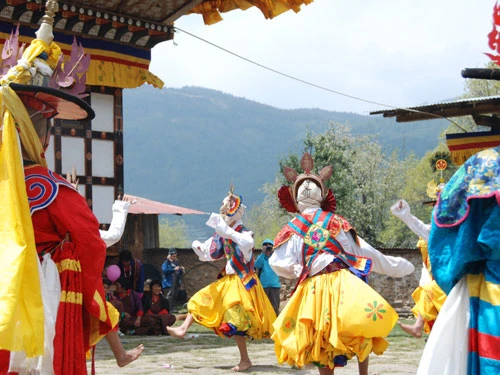
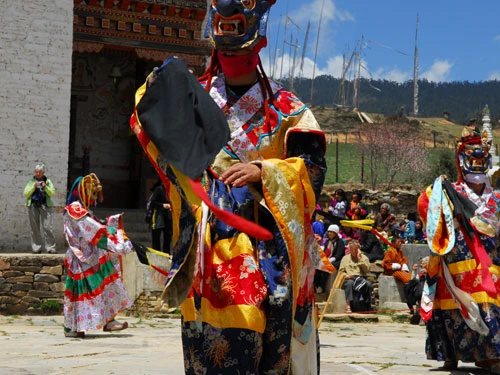
A Living Buddhist Kingdom. Bhutan's spirituality isn't confined to museums or ruins. Monasteries perched on cliffsides and tucked into forested valleys remain active places of worship, where monks carry out the same daily rituals practiced for centuries, from morning prayer to the slow, deliberate choreography of Cham mask dances performed at annual festivals. Prayer flags ripple over mountain passes, stupas mark village crossroads, and pilgrims circle sacred sites in quiet, unhurried devotion. The rhythm of religious life continues in the background of everyday activity, not staged for visitors but simply how the country still functions, which is precisely what makes witnessing it feel so different from a typical cultural stop elsewhere in Asia.
Nature at Its Purest. Few countries pack this much natural variety into such a small footprint. Himalayan peaks give way to pine forest, glacial valleys, and dense subtropical jungle within a single day's drive, home to snow leopards, red pandas, and black necked cranes among species found almost nowhere else on earth. National parks and protected areas cover a striking share of the country, a direct result of Bhutan's constitutional commitment to keeping at least sixty percent of its land forested for good, a promise unmatched by almost any other nation. The result is a country that markets itself as carbon negative, not as a slogan, but as a measurable, ongoing fact, and traveling through it means moving through genuinely untouched landscapes rather than curated nature reserves.
A Culture Preserved Through Time. Bhutan's festivals like Paro Tshechu Festival,Bumthang Tangbi Festival, dzongs, and traditional architecture haven't been reconstructed for tourism. Tshechus still draw entire communities dressed in handwoven gho and kira, fortress monasteries still double as centers of local government exactly as they did centuries ago, and daily customs, from national dress requirements to traditional building codes, remain largely intact rather than performed for cameras. All of it traces back to Gross National Happiness, the guiding philosophy that has maintained a balance between cultural preservation and economic growth since the 1970s, influencing everything from architectural regulations to the structure of tourism itself. Only a few countries have managed to modernize while keeping this much of their identity fully intact.
Meaningful Travel Experiences. What ties it all together is a style of travel built for depth rather than speed. Hiking through remote valleys, visiting villages where daily life continues much as it always has, sampling home cooked Bhutanese cuisine, and simply slowing down all shape a very different kind of trip than a checklist of famous sights. Photographers find themselves drawn back again and again by the light, the color, and the sheer scarcity of crowds at even the most significant sites. Add a genuine commitment to responsible tourism, built into the country's high value, low impact model rather than bolted on as an afterthought, and the result is a country that rewards patience and curiosity more than almost any other destination in the Himalayas.
Individually, each of these reasons would be enough to justify a trip. Together, they explain why Bhutan tends to leave a deeper impression than almost anywhere else a tourist has been and why so many visitors describe it less as a destination checked off and more as a place they contemplate long after they've left.
What First Time Visitors Often Don't Expect About Bhutan
Most guides tell first time visitors what to see in Bhutan. Fewer explain what it actually feels like to be there, and some of the most memorable moments are unrelated to sightseeing.
Many first time visitors are surprised that Thimphu, Bhutan's capital and one of the country's larger cities, has no traffic lights at all, relying instead on a white gloved traffic officer directing cars from a small pedestal at the city's busiest intersection. Past attempts to install traffic lights reportedly didn't last, quietly removed after locals found the officer's presence more fitting. It's an easy detail to miss on paper, but a striking one to witness firsthand, and it says something real about how Bhutan approaches modernization on its own terms rather than copying what other capitals do by default.
You will learn that forests cover more than 70% of the country, a figure enshrined in the constitution, which mandates that at least 60% of Bhutan's land remain forested permanently. Combined with extensive hydropower and a small population relative to its land area, that forest cover is a major reason Bhutan holds the rare distinction of being carbon negative, absorbing significantly more carbon dioxide than it produces, a status very few countries anywhere in the world can claim.
Similarly, visitors can witness how present Buddhism is in ordinary daily life rather than confined to temples and festivals. Traditional dress, the gho for men and the kira for women, is still commonly worn in schools, government offices, and formal settings, not as a costume for tourists but as standard, everyday attire. Bhutan's dzongs reflect that same blending of the sacred and the practical, functioning simultaneously as active monasteries and as the administrative seat of local government, a dual purpose that has continued largely unchanged for centuries.
Many are also surprised to discover that Bhutan deliberately limits how many tourists it welcomes each year, prioritizing quality over quantity through its high value, low impact tourism model rather than chasing visitor numbers the way most countries do. Every visitor travels with a licensed guide and a pre arranged itinerary, which sounds restrictive until it becomes clear how much it protects, from uncrowded monasteries to festivals that still feel like community events rather than tourist performances. That same instinct extends well beyond tourism, showing up in policies that treat cultural preservation and environmental protection as government priorities rather than side considerations.
Perhaps most surprising of all, Bhutan was the last country in the world to legalize television and the internet, holding off until June 1999 out of concern for how quickly outside media might reshape its culture. For a country that feels, in so many ways, wonderfully out of step with the rest of the world, it's a detail that somehow makes complete sense once you're actually there.
Top Places to Visit in Bhutan
Every region of Bhutan offers a different lens on the kingdom's culture, history, spirituality, and natural beauty, and no single valley tells the whole story on its own. Moving between a handful of these destinations, rather than settling for just one, is what turns a trip to Bhutan into a genuinely complete picture of the country.
Paro: Where Every Journey Into Bhutan Begins
Home to Bhutan's only international airport, Paro is where nearly every visitor's trip starts, and it earns that role well beyond logistics. The cliffside Tiger's Nest Monastery, Rinpung Dzong, the National Museum, and some of the country's finest traditional architecture all sit within this single valley, framed by scenery that sets the tone for everything that follows.
Thimphu: A Capital Balancing Tradition and Modern Life
Bhutan's capital blends centuries of tradition with genuinely modern city life. The towering Buddha Dordenma, the National Memorial Chorten, and Tashichho Dzong sit alongside local markets, museums, and handicraft workshops, making Thimphu the clearest place to see how Bhutan modernizes without losing its identity.
Punakha: The Valley of Bhutan's Grandest Dzong
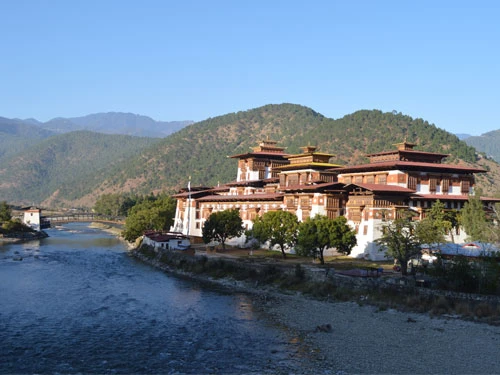
Once Bhutan's capital, Punakha centers on its dzong, an architectural landmark set at the confluence of the Pho Chhu and Mo Chhu rivers and reached by a traditional suspension bridge. Beyond the fortress, fertile valleys, traditional farming villages, and a notably milder climate make this one of the country's most scenic stops.
Bumthang: Bhutan's Spiritual Heartland
Widely regarded as the spiritual center of the country, Bumthang holds an unusually dense concentration of sacred monasteries and ancient temples, including Jakar Dzong. Considered the birthplace of many Buddhist legends, including those of Guru Rinpoche (Padmasambhava) and the revered Buddhist saint Pema Lingpa, the valley is also home to some of Bhutan's most significant local festivals, such as the Jambay Lhakhang Drup, Tamshing Phala Choetpa, and the Tangbi Mani Festival, as well as its quietest, most peaceful landscapes.
Gangtey and Phobjikha Valley: A Sanctuary for Nature and Stillness
This glacial valley offers a different rhythm entirely, defined by wide open wetlands rather than dramatic peaks. Gangtey Monastery overlooks the valley floor, gentle nature walks wind past farmhouses, and the valley's protected status as the wintering ground for endangered black necked cranes makes it a favorite for photographers and nature lovers alike.
Haa Valley: Bhutan's Best Kept Secret
Still largely overlooked by mainstream itineraries, Haa Valley rewards travelers looking for something less visited. Authentic villages, genuine hiking opportunities, striking alpine scenery, and local traditions largely untouched by tourism make it one of the more rewarding detours for anyone willing to go slightly off the usual route.
Trongsa: The Historic Crossroads of the Kingdom
For centuries, Trongsa controlled all overland travel between western and eastern Bhutan, and Trongsa Dzong still dominates the town from its dramatic cliffside perch. Rich royal history and some of the most scenic mountain roads in the country make it a natural, memorable stop on any longer journey east.
Together, these destinations reveal very different sides of Bhutan, from festival energy and royal history to quiet valleys and untouched villages. Traveling beyond a single town or valley is what ultimately reveals the country's full cultural richness and natural diversity, rather than just one chapter of it. Knowing where to go is only half the picture, though. What actually happens in these places, the traditions witnessed, the festivals joined, the meals shared, is what shapes how a trip to Bhutan is remembered.
The Best Experiences to Have in Bhutan
Bhutan isn't a place you tick off a sightseeing list; it's a place you feel your way through. Yes, the Himalayan scenery is spectacular and the monasteries are jaw dropping, but the moments that actually stay with travelers long after they've left are quieter than that: a bowl of chili and cheese stew shared with a farming family, the low rumble of monks chanting before dawn, and a masked dancer spinning through a dzong courtyard while an entire village looks on. The Land of the Thunder Dragon's true appeal is not just what you see, but what you can do. Here are some of the best things to do in Bhutan, and the experiences worth building a trip around.
Experience Bhutanese Culture & Traditions
Traditional Architecture and Dzongs
Bhutan's Dzongs, which serve as fortress monasteries and administrative centers, showcase the country's traditional architecture. The original construction of Dzongs features thick whitewashed walls, intricately carved wooden windows, and the absence of nails or written plans. Punakha Dzong, set at the meeting point of two rivers, and Paro's Rinpung Dzong are the two most photographed, but nearly every district has its own.
National Dress (Gho & Kira)
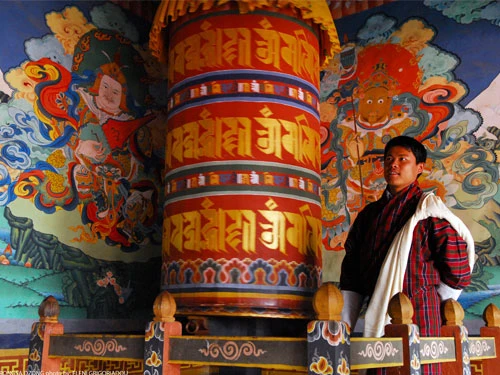
Bhutan is one of the only countries where national dress is everyday wear, not a costume for special occasions. Men wear the knee length gho and women the ankle length kira, and both are still required for school, government offices, and formal events. You can easily start a conversation by observing how people wear these garments and asking about them.
Buddhist Customs and Daily Rituals
Vajrayana Buddhism shapes the daily rhythm here: butter lamps are lit each morning, incense is burned at roadside shrines, and prayer flags are strung across valleys to carry mantras on the wind. Visitors who slow down enough to notice these small, repeated acts get a much richer sense of the country than those who only visit the big sites.
Local Markets and Handicrafts
Thimphu's weekend market is the best place to see Bhutanese life outside the monastery walls, with farmers selling red rice, chilies, and yak cheese alongside stalls of hand woven textiles. Bhutanese weaving, particularly intricate kishuthara patterns, is considered a national art form, and buying directly from weavers supports a centuries old craft.
Village Life
A short walk off the main tourist circuit lands you in farming villages where life still runs on the seasons like rice paddies, chili peppers drying on rooftops, and cattle being led home at dusk. Villages like Sopsokha near Punakha or the Phobjikha Valley offer an unscripted look at rural Bhutan.
Taken together, these everyday traditions are what make Bhutan feel lived in rather than preserved for visitors, and they set the tone for everything else on a first trip.
Witness Bhutan's Vibrant Festivals
What Tshechus Are
A Tshechu is a religious festival held on the tenth day of a month in the Bhutanese lunar calendar, timed to the birthday of Guru Rinpoche, the eighth century saint credited with bringing Buddhism to Bhutan. Every district holds its own, usually in the courtyard of its dzong, and locals travel for days to attend, dressed in their finest clothes and jewelry, often camping out with packed lunches for the full event.
Masked Cham Dances
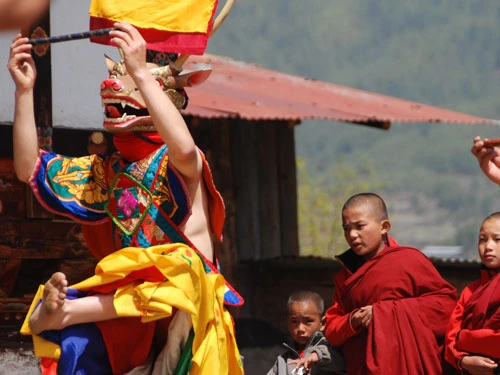
The centerpiece of every Tshechu is the Cham, a series of masked dances performed by monks and, at some festivals, laypeople. Dancers dressed as wrathful deities, animals, and historical figures spin and stomp to the sound of long horns, cymbals, and drums, retelling stories from Buddhist mythology and Bhutanese history.
Religious Significance
These aren't performances for tourists; they're acts of worship. Bhutanese believe that simply watching the Cham dances brings merit and blessings, which is part of why entire communities turn out.
Best Festivals to Experience
For a first Bhutan trip, a few stand out:
- Punakha Tshechu (held in late February): smaller and set against Punakha Dzong's dramatic river confluence backdrop.
- Paro Tshechu (held in late March to early April): one of the largest and most colorful, ending with the pre dawn unfurling of a giant sacred Thongdrel tapestry.
- Thimphu Tshechu (held in late September): the capital's festival, which is big, accessible, and well set up for visitors.
- Jakar Tshechu (held in mid October): set in the culturally rich Bumthang Valley.
- Jambay Lhakhang Drup (held in late October): famous for its fire ceremony and a symbolic naked dance performed at midnight.
Exact dates shift every year with the lunar calendar and are usually confirmed only months in advance, so check with a licensed Bhutanese operator before booking flights, or look into a dedicated Bhutan festival tour timed around a specific Tshechu.
Tips for Respectful Participation
Dress modestly; sit where locals direct you (seating is often segregated by status); don't point your feet at the dancers or the dzong; and keep photography discreet, as some sections of a festival aren't meant to be photographed at all. A local guide will tell you which is which.
Timing a trip around one of these Tshechus, even loosely, tends to turn a good Bhutan itinerary into a genuinely memorable one.
Savor Authentic Bhutanese Cuisine
Ema Datshi: Bhutan's unofficial national dish is chili peppers stewed in melted cheese, usually served with rice. It's fiery, addictive, and served at nearly every meal – a clear measure of how much Bhutanese food revolves around heat.
Phaksha Paa: Pork stir fried with dried red chilies and radish or spinach, often smoky from strips of dried pork skin cooked into the dish. It's a homestyle staple that is more commonly found at farmhouse meals than in restaurants.
Red rice: Bhutan's staple grain is nuttier and slightly chewier than white rice, grown at high altitude, and the base for nearly every meal in the country.
Suja (butter tea): Salted, buttery tea is churned rather than steeped; it's more a savory soup than a beverage. It's an acquired taste for most visitors, but a cup offered in someone's home is a genuine gesture of hospitality worth accepting.
Local dining etiquette: Meals are often eaten with hands or a spoon, seated on the floor around a low table, and it's polite to let elders or hosts serve themselves first. Refusing food outright can seem rude; a small taste goes a long way.
Regional specialties: Bumthang is known for buckwheat noodles and pancakes, while the lowland south leans on more rice and tropical produce. Trying regional variations is a good excuse to eat your way across the country.
Between the chili, the cheese, and the butter tea, Bhutanese food is as much a part of the cultural experience as any temple or festival.
Explore Bhutan's Spiritual Heritage
Tiger's Nest Monastery
Paro Taktsang, clinging to a cliffside 900 meters above the valley floor, is Bhutan's most iconic sight and, for most visitors, its most memorable hike: a steep two to three hour climb rewarded by one of the most photographed monasteries in the world. A dedicated Tiger's Nest hiking guide covers the trail, timing, and what to expect in more depth.
Ancient Monasteries
Beyond Tiger's Nest, sites like Kurjey Lhakhang and Kyichu Lhakhang (among the oldest temples in the country) offer a quieter, less crowded way into Bhutan's religious history.
Prayer Wheels
Spun clockwise to release the mantras inscribed inside, prayer wheels line temple walls and roadside shrines everywhere: some hand turned, some powered by rivers.
Meditation
Several monasteries and retreat centers offer short meditation sessions or teachings for visitors, a chance to sit with the same practices that have shaped Bhutanese life for centuries.
Sacred Sites
Caves where Guru Rinpoche is said to have meditated, sacred lakes, and remote hermitages dot the country; many reachable only on foot, which is part of the point.
None of these sites are curated for visitors; they are simply where Bhutanese life and belief continue to overlap, which is exactly what makes them worth seeking out.
Discover Bhutan's Natural Beauty
Hiking: From the short climb to Tiger's Nest to multi day treks like the Druk Path or Jomolhari, Bhutan's trails range from casual to serious mountaineering.
Valleys: The Phobjikha, Paro, and Punakha valleys each have a distinct character, like glacial farmland, terraced rice paddies, and riverside dzongs, are worth slowing down in rather than rushing through.
National parks: Protected areas like Jigme Dorji National Park link much of the country into connected wilderness corridors, safeguarding species from snow leopards to red pandas across some of the last untouched habitat in the Himalayas.
Wildlife: Phobjikha Valley draws rare black necked cranes every winter, and the valley even hosts a festival in their honor (held each November); a good example of how conservation and culture overlap here.
Scenic drives: The winding mountain roads between Thimphu, Punakha, and Paro are attractions in their own right, cutting through pine forest, over high passes strung with prayer flags, and past terraced hillsides.
Photography: Between the dzongs, the dramatic light in the valleys, and festival color, Bhutan rewards photographers at nearly every turn; golden hour on the drive into Punakha Valley is a particular highlight.
Whether on foot, behind a camera, or simply looking out a car window, Bhutan's landscapes are rarely a backdrop; they tend to be the main event.
Connect with Local Communities
Farmhouse Stays
Staying with a Bhutanese family like sleeping in a traditional wooden home, eating what they eat, sometimes trying a hot stone bath is one of the most direct ways to understand daily life beyond the temples.
Traditional Crafts
Weaving, wood carving, paper making, and Thangka painting are still taught and practiced across the country; several workshops welcome visitors to watch or even try a technique.
Archery
Bhutan's national sport is part game, part social event such as matches with singing, dancing, and good natured trash talk between teams. Watching (or attempting) a match is one of the more fun, low key ways to spend an afternoon.
Local Hospitality
Bhutanese hospitality tends to be understated but genuine; an offered cup of tea, an invitation to sit, and a willingness to explain a ritual you're curious about.
Rural Experiences
Helping with a harvest, learning to make momos, or just walking through a village at dusk – these small, unplanned moments are often what travelers remember most once the big sights have blurred together.
All in all, Bhutan is not defined by the places visited, but by the moments experienced along the way. Whether it is sharing a meal with a local family, witnessing centuries old traditions, or finding peace in the Himalayan landscape, these experiences reveal the true spirit of the Last Himalayan Kingdom and create memories that last a lifetime.
Everything You Need to Know Before Visiting Bhutan
Bhutan runs on rules most destinations do not have: a licensed guide for every trip, a nightly government fee, and a booking process that starts well before landing in Paro. None of it is complicated once the basics are clear. This guide answers the questions first time visitors ask most often, from visas and costs to packing and altitude, so deciding when and how to visit Bhutan feels straightforward from the start.
Do You Need a Visa to Visit Bhutan?
Yes. Almost every nationality needs a visa arranged in advance, and there is no visa on arrival for most travelers. The process is simpler than it sounds because a licensed Bhutanese tour operator handles it as part of booking a trip. Independent, operator free travel is not permitted for most foreign visitors, so the visa application and the trip booking happen together.
The standard visa fee is a one time USD 40 per person, paid alongside the sustainable development fee before arrival. Once a licensed operator submits the application with a passport scan and photo, approval typically takes five to seven working days and arrives as a visa clearance letter. At check in for the flight into Bhutan, you must present that letter, and the physical visa will be stamped upon arrival.
Indian, Bangladeshi, and Maldivian nationals follow a different, lighter process. Indian citizens do not need a visa at all; they travel on a permit instead, arranged online or on arrival with just a passport or voter ID. Bangladeshi and Maldivian nationals can usually get a visa on arrival.
For everyone else, the requirements are consistent: a passport valid for at least six months beyond the travel dates, a recent passport style photo, and a confirmed booking with a licensed operator who will act as a sponsor for the application. There is no embassy interview and no lengthy paperwork beyond that. Because the tour operator files everything, most travelers find the visa step is the easiest part of planning, not the hardest. For a full walkthrough of the process, a dedicated Bhutan visa guide covers each step in more detail.
How Much Do Bhutan Packages Cost?
Bhutan operates on a high value, low volume tourism model, so costs are higher than many neighboring destinations, but they are also predictable. Every international visitor pays a Sustainable Development Fee of USD 100 per person, per night (reduced from USD 200 through August 2027), plus a one time USD 40 visa fee. Indian nationals pay a separate, much lower rate of roughly INR 1,200 per person, per night, instead of the standard SDF.
On top of the SDF, travelers pay a tour package rate that covers accommodation, meals, a licensed guide, private transport, and entry fees. Standard 3 star packages typically range from USD 180 to 250 per person per night, depending on group size, with solo travelers paying more and groups of three or more paying less per head. Combined with the SDF, most travelers should budget roughly USD 250 to 350 per person per day for a comfortable standard trip.
Luxury travel raises that figure considerably. Upgrading to 4 or 5 star properties, including brands like Aman, Six Senses, or COMO, can push daily costs to USD 500 or more per person. A 5% GST on tourism services took effect in January 2026 and adds a small percentage on top of package rates, though it does not apply to the SDF itself.
The package rate does not include international flights, tips for guides and drivers (commonly USD 8 to 12 per day for guides, less for drivers), and personal spending. For a fuller breakdown of what a trip actually costs day to day, a dedicated Bhutan travel cost guide goes into more detail.
What Is the Best Time to Visit Bhutan?
Spring and autumn are widely considered the best windows to visit Bhutan, and for good reason. March through May brings blooming rhododendrons, clear mountain views, and some of the country's biggest festivals, including the Paro Tshechu. September through November offers similarly crisp skies, comfortable daytime temperatures, and the Thimphu Tshechu, Bhutan's largest festival.
Winter, from December to February, is colder and quieter, with snow at higher elevations, but it also means fewer crowds, lower rates at some hotels, and excellent visibility for Himalayan peaks on clear days. It suits travelers more interested in scenery and solitude than festivals.
Summer, June to August, coincides with the monsoon. Rain is frequent, trekking trails can be muddy, and mountain views are often obscured by clouds, but the valleys turn a deep green, and it is the least crowded season overall.
The right season ultimately depends on priorities: festivals and photography favor spring and autumn, budget and quiet favor winter, and lush landscapes with fewer tourists favor summer despite the rain. A closer look at Bhutan's seasons is worth reading for anyone still deciding when to go.
How Many Days Are Enough for Bhutan?
Seven days is typically regarded as the ideal duration for a first visit. That length allows time in the three most visited valleys, Paro, Thimphu, and Punakha, including the hike to Tiger's Nest Monastery, without feeling rushed between long drives.
A shorter trip of four to five days works well for travelers focused on the highlights: Paro, Thimphu, and the Tiger's Nest hike, possibly with a day added for Punakha's dzong and river valley. It is a reasonable option for those with limited time or connecting Bhutan to a longer regional trip.
Travelers with ten days or more can extend into central Bhutan, particularly the Bumthang Valley, known for its temples and quieter pace, or add a multi day trek like the Druk Path. Because flights and the one time visa fee are fixed costs, longer trips also tend to lower the average daily spend. For a first visit that balances depth and pace, most travel planners recommend building an itinerary around seven to nine days.
How Can Travelers Get Around Bhutan?
Private transport arranged through a licensed tour operator is the standard way to get around Bhutan, and it comes included in most tour packages. A dedicated driver and vehicle, along with an assigned guide, typically handle transport between cities and to attractions for the length of the trip, which removes the need to navigate public transport independently.
Roads between major towns like Paro, Thimphu, and Punakha are paved but winding, following mountain passes, so travel times can be longer than the distance suggests. Domestic flights connect a few destinations, offering a faster alternative to road travel for longer itineraries, particularly for reaching Bumthang in central Bhutan.
Public buses exist and are used by locals, but they are uncommon among tourists since the guided, private vehicle model is built into nearly every visitor's booking. Within towns, walking is often the easiest way to explore compact centers like Thimphu, while excursions to monasteries such as Tiger's Nest involve a walking or hiking component regardless of how the rest of the day is arranged.
Is Bhutan Safe for Solo Travelers?
Bhutan is considered one of the safest destinations in Asia for solo travelers, including women traveling alone. Violent crime is rare, and the guided tour structure means solo visitors are rarely without support: a licensed guide and driver accompany most itineraries from arrival to departure.
That built in structure removes many of the usual solo travel concerns, such as navigating transport or accommodation alone in an unfamiliar country. The trade off is less spontaneity than backpacking in a country with looser tourism rules, since routes and stays are largely set in advance through the tour operator.
Basic precautions still apply: keep valuables secure, respect local customs around dress and behavior at religious sites, and communicate openly with the assigned guide about pace and preferences. Solo travelers should expect to pay a higher nightly package rate than those traveling in pairs or groups, since guide and transport expenses are not split. Overall, though, solo travel in Bhutan tends to feel more supported than risky.
Is Bhutan Suitable for Families with Children?
Bhutan works well for families, partly because its guided tour structure takes much of the logistical uncertainty out of traveling with kids. A private guide and driver mean flexible pacing, and itineraries can be adjusted around nap times, shorter walks, or a child's stamina in a way that group tours elsewhere often cannot accommodate.
Financially, Bhutan is also more accommodating to families than it first appears. Children aged five and under are exempt from the Sustainable Development Fee entirely, and those between six and twelve receive a fifty percent discount, which meaningfully lowers the cost of a family trip.
Activities like archery, traditional crafts, and farmhouse visits tend to appeal to children, and hotels used by tour operators are generally comfortable and family friendly. The main consideration is altitude and hiking: the Tiger's Nest trail is steep and can be tiring for younger children, though options like horseback riding partway up the trail or simply visiting the viewpoint instead of the monastery itself make it manageable. Overall, with some itinerary adjustments, Bhutan suits families reasonably well.
What Currency Is Used in Bhutan?
The official currency is the Bhutanese Ngultrum (BTN), which is pegged one to one with the Indian Rupee. Indian rupees are widely accepted alongside ngultrum for everyday purchases, though it is worth carrying some local currency for smaller vendors and rural areas.
US dollars and other major currencies are not generally used for day to day spending but are relevant for government fees; the Sustainable Development Fee and visa fee are paid in USD as part of the booking process, in advance of arrival. Once in the country, ATMs are available in larger towns like Thimphu and Paro, and credit cards are accepted at hotels, larger shops, and some restaurants, though cash remains useful in smaller towns and villages. Exchanging currency at banks or authorized counters in Thimphu or Paro is straightforward for travelers who prefer to carry cash.
Can English Be Spoken in Bhutan?
English is widely spoken and understood throughout Bhutan, particularly in tourist areas. It has been the medium of instruction in schools since the 1960s, so most Bhutanese under middle age speak it fluently, alongside Dzongkha, the national language.
Guides, hotel staff, and most people working in tourism communicate comfortably in English, and signage in cities like Thimphu and Paro frequently appears in both English and Dzongkha. Communication is rarely a barrier for visitors, even outside major towns, though a guide's presence on most trips means language is almost never an issue in practice. Learning a few basic Dzongkha greetings is appreciated but entirely optional.
Can SIM Cards and Internet Be Easily Accessed in Bhutan?
Yes. Local SIM cards from Bhutan Telecom or TashiCell are available at Paro International Airport on arrival and in shops in Thimphu, and the process is quick with a passport for registration. Prepaid data packages are affordable and cover most towns and tourist areas with reasonable 4G speeds.
Wi Fi is widely available at hotels, guesthouses, and many cafes in Thimphu and Paro, though connectivity becomes patchier in remote valleys, at higher elevations, and along trekking routes. Coverage is generally reliable enough for messaging and light browsing throughout a standard itinerary, but travelers heading into central or eastern Bhutan, or on multi day treks, should expect gaps in service and plan accordingly.
Is Travel Insurance Required for Bhutan?
Travel insurance is not officially mandatory to obtain a Bhutan visa, unlike some destinations that require proof of coverage before entry. That said, nearly every tour operator and travel guide strongly recommends it, and in practice most visitors arrive with a policy in place.
The reasoning is straightforward: Bhutan's terrain includes remote valleys and high-altitude trekking routes, medical facilities outside Thimphu and Paro are limited, and emergency evacuation, if needed, can be costly without coverage. A policy that includes medical treatment, emergency evacuation, and trip cancellation is the standard recommendation, particularly for travelers planning treks or visiting during monsoon season when flight delays are more common.
Because all tourists book through a licensed operator, many operators ask for insurance details as part of the booking process even though it is not a government requirement. Travelers should check that any policy explicitly covers high altitude activity if trekking is part of the itinerary, since some standard policies exclude trekking above a certain elevation. Given the cost of the trip overall, insurance is a relatively small additional expense for meaningful protection.
What Should You Pack for Bhutan?
Layering is the most important packing principle for Bhutan, since temperatures shift with altitude and time of day, often dramatically within a single trip. A mix of breathable base layers, a warm mid layer such as a fleece, and a waterproof or windproof outer shell covers most conditions, particularly in spring, autumn, and winter.
Sturdy, broken in walking shoes are essential for the hike to Tiger's Nest and other day walks, even for travelers not planning a formal trek. A daypack for water, snacks, and layers on excursions is equally useful.
Modest clothing matters throughout the trip, especially at dzongs and monasteries, where shoulders and knees should be covered and shoes removed before entering certain areas. Bringing one slightly more formal outfit is worth considering for travelers attending a Tshechu or visiting government buildings.
Practical extras include a reusable water bottle, sunscreen, and sunglasses for high altitude UV exposure; a basic first aid kit with any personal medication; a universal power adapter; and a portable charger, since outlets can be limited on multi day treks. Cash in small denominations, both ngultrum and Indian rupees, is useful for tips, souvenirs, and rural stops. Travelers visiting during monsoon season should add a compact umbrella or rain jacket, and those trekking at higher elevations should pack for near freezing nighttime temperatures even in warmer months.
Is Altitude Sickness a Concern in Bhutan?
Altitude is a genuine consideration in Bhutan, though less severe than in parts of Nepal or Tibet for most standard itineraries. Paro sits at around 2,200 meters and Thimphu at around 2,300 meters, altitudes that rarely cause serious symptoms but can bring mild headaches or fatigue for a day or two as the body adjusts.
The bigger concern is for travelers adding treks or visits to higher passes, such as Dochula Pass at around 3,100 meters, or multi day treks like the Druk Path, which climbs well above 3,500 meters. At those elevations, altitude sickness becomes a more realistic risk, with symptoms ranging from headache and nausea to more serious complications if ascent is too rapid.
Staying hydrated, ascending gradually where possible, avoiding alcohol in the first day or two, and telling a guide immediately about any symptoms are standard precautions. Guides on trekking routes typically have the experience to recognize early signs of altitude sickness. Travelers with pre existing heart or lung conditions should consult a doctor before planning a Bhutan itinerary that includes higher elevations or trekking.
Your Journey to Bhutan Begins Here
Few places ask travelers to slow down the way Bhutan does. It is a country measured less in landmarks and more in moments: prayer flags catching wind over a mountain pass, a shared meal in a farmhouse kitchen, the quiet weight of standing below Tiger's Nest for the first time. Bhutan's decision to limit tourism rather than expand it has kept its valleys uncrowded and its traditions intact, which is precisely what makes a visit feel different from almost anywhere else. For travelers willing to embrace its pace and its rules, the reward is a country that still feels genuinely lived in, not staged for visitors passing through.
Once the appeal is clear, the next question is usually practical: how to turn interest into an actual itinerary. Because every trip to Bhutan runs through a licensed local operator, the choice of who plans it shapes the entire experience, from the pace of each day to the depth of what gets explained along the way. Nepal Nomad designs Bhutan travel packages built around this idea, pairing wellpaced routes through Paro, Thimphu, and Punakha with guides who know the country beyond the standard stops. For travelers ready to move from research to planning, that kind of local grounding tends to matter more than any single attraction on the list.