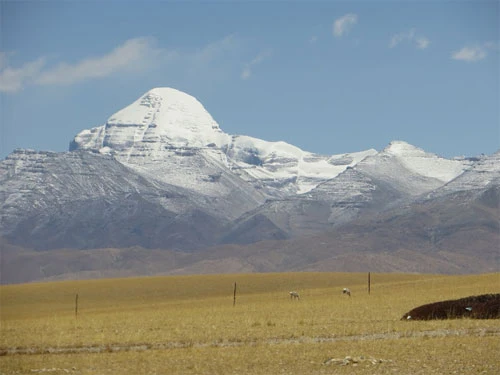
The Kailash Mansarovar Yatra is one of the most sacred and spiritually transforming journeys on earth. It takes travelers deep into the remote Tibetan region of China, where the hallowed Mount Kailash and the holy Lake Mansarovar rise in profound isolation under the vast Himalayan sky. More than a trek across high altitude landscapes, this extraordinary Mount Kailash pilgrimage tour is of great spiritual importance for Hindus, Buddhists, Jains and followers of the ancient Bon tradition. Believed by Hindus to be the sacred abode of Lord Shiva, the journey is not simply about reaching a destination, but about experiencing a powerful blend of devotion, endurance, culture, and inner transformation in one of the most mystical regions on Earth.
At the core of this holy pilgrimage is Mount Kailash, a flawlessly formed mountain that remains unclimbed out of reverence rather than impossibility. The Kailash Parikrama or Kora is a profoundly spiritual journey and worshippers believe that by walking around the mountain they purify their souls and wash away lifetimes of karma. The sacred circuit is around 52 km (32 miles) long and is usually walked in 2 to 3 days, passing through rugged valleys and the high-altitude Dolma La Pass at 5,630 m (18,471 ft), where prayer and endurance become one. It is close to Lake Mansarovar, which is believed to be spiritually pure. It reflects the sky of the Himalayas and is visited by pilgrims all over the world who come to bathe in its ritual waters, meditate and think quietly.
Most Kailash Yatra journeys from Nepal start in Kathmandu and travel overland to the border at Kodari–Nyalam into Tibet and then on towards the sacred region. The route involves long road journeys and short trekking sections, and in some cases travelers shorten the approach with a helicopter-assisted segment (typically via the Simikot/Hilsa route) to reduce physical strain and travel time — though it’s worth noting this refers to access logistics, not emergency rescue capability near Kailash itself, which remains very limited. The best time to do the yatra is between May and mid-October, as this is when the weather in the Himalayas is most stable and the mountain passes are open, making it the best window for the Kailash Mansarovar Yatra.
The trek is physically challenging but spiritually rewarding. High altitudes above 4,500 m (14,764 ft), thin air and remote terrain require careful preparation, acclimatization and reasonable fitness.
The Kailash Mansarovar Yatra package is ultimately more than a trek across mountains and borders. It is a pilgrimage of silence, devotion and self-discovery; one of the Himalayas’ most venerated spiritual experiences. By choosing Nepal Nomad Trekking for your Kailash Yatra you will have expert local guidance, smooth travel arrangements and dedicated support for this incredible journey to Mount Kailash and Lake Mansarovar, whether you choose a traditional overland expedition or a helicopter assisted itinerary.
The highest plateau in the world, the splendid drive all over the Tibetan Plateau is the diverse Himalayan Panorama from the North; The Kailash Yatra
- Kailash Yatra is a holy pilgrimage to Mount Kailash in Tibet which is regarded as the spiritual center of the universe.
- The pilgrimage comprises the holy Lake Mansarovar, which is believed to cleanse sins and grant spiritual liberation.
- Mount Kailash is 6,638 m, 21,778 ft high and is sacred so has never been climbed.
- The Kailash Kora is a 52 km circumambulation trek around the sacred mountain.
- The highest point of the pilgrimage is Dolma La Pass at 5630 m, 18,471 ft.
- Kailash Yatra requires special Tibet permits and organized guided travel.
- The route can mostly be accessed via Nepal or Lhasa in Tibet.
- Hindus, Buddhists, Jains and Bon followers consider the journey sacred.
- The best season for Kailash Yatra is May to mid-October.
- The extreme altitude and remote terrain make the pilgrimage physically demanding.
- Lake Mansarovar is among the highest fresh water lakes in the world.
- In Hindu tradition, Mount Kailash is the abode of Lord Shiva.
- This area is within a restricted zone and independent travel is not allowed.
- The journey is a blend of spiritual devotion and one of the most challenging high altitude treks.
- Kailash Yatra is a once in a lifetime journey of faith and transformation.
Four Religions, One Mountain: The Deep Symbolism of the Kora
Mount Kailash is not just another mountain rising from the barren Tibetan Plateau. For millions of people throughout Asia, it is the spiritual center of the universe, the “Axis Mundi,” where heaven, earth, and the divine are thought to meet. This sacred peak stands alone, perfectly symmetrical and unclimbed out of deep reverence, a presence that transcends geography and feels almost mythical. The mountain is sacred to four ancient spiritual traditions: Hinduism, Buddhism, Jainism, and Bon. What makes the Kailash Tour truly extraordinary is that it is revered by all four faiths at the same time. Few places on Earth combine so many beliefs in one landscape of devotion, making it one of the most important multi-faith spiritual journeys in the Himalayas.
For Hindus Mount Kailash is the eternal abode of Lord Shiva and Goddess Parvati. It is believed that Shiva sits in deep meditation on the mountain, beyond ego, beyond time and worldly attachment. Pilgrims walk the 52 kilometre (32 mile) Kora, or Kailash Parikrama, as a means of surrender, purification and spiritual awakening. Every arduous step through the cold winds and high passes is believed to wash away the sins of a lifetime. It is believed that completing one Kora cleanses negative karma, and doing more than one provides even greater spiritual merit, leading the soul to Moksha, or liberation from the endless cycle of birth and rebirth.
In Tibetan Buddhism, the mountain is called Kang Rinpoche, “Precious Snow Jewel.” Buddhists believe that Kailash is the home of Demchok (Chakarasamvar), a deity that symbolizes supreme bliss and enlightenment. The Kora is a profound inner transformation for Buddhist devotees. The arduous journey here becomes a meditation in motion, where physical pain, silence, prayer flags, mantras and devotion all become one spiritual experience. The crossing of the sacred Dolma La Pass at around 5,630 meters (18,471 ft) is particularly symbolic. The pass is where pilgrims leave behind their old self, past suffering, ignorance and attachment before descending spiritually renewed into a new stage of life, symbolizing death and rebirth.
Jains revere the mountain as Ashtapada, the spot where the first Tirthankara, Rishabhdeva, attained enlightenment and final liberation. Thus the mountain symbolises the highest spiritual purity and aloofness from worldly desire. Jain worshippers regard the journey not as travel but as a means to self-realization, discipline and inner awakening. In the silence that surrounds Kailash, many believe one gets closer to understanding the very nature of existence.
At the same time, followers of the ancient Bon religion, Tibet’s pre-Buddhist spiritual tradition, worship Kailash as the “Nine-Story Swastika Mountain,” the center of all spiritual energy and cosmic power. According to Bon practitioners, the mountain is the abode of divine powers and ancient wisdom predating Buddhism. Bon pilgrims walk the sacred circuit in an anti-clockwise direction, unlike Hindus and Buddhists who traditionally perform the Kora clockwise. But whatever their ritual, whatever their belief, all those who come to Kailash know one thing: this is no ordinary mountain. It’s a portal between the physical and spiritual realms.
The power of the Kailash Kora is that it can transform suffering into devotion. The thin air, freezing winds, rocky trails and high altitude test every travellers physically and mentally. But these hardships are embraced, not shunned. The journey is a moving meditation, where exhaustion strips away pride, distraction and ego. Prayer wheels spin, mantras resound through the vacant valleys, and vibrant prayer flags dance against the austere Himalayan sky. Here is a bleak and unforgiving land, where pilgrims come not for comfort. They come for meaning, for cleansing, for a bridge to something far beyond themselves.
For many, the Kailash Mansarovar trek is not just a trek or a religious journey. It’s an intensely personal experience of faith, of impermanence, of humility and of the silence of the Himalayas.”
Understanding the Real Cost of the Kailash Mansarovar Yatra In 2026-2027
A standard trek to Mount Kailash 2026-2027 is much more than just a trekking package. The total cost reflects the enormous logistical, political, environmental and high altitude challenges of reaching one of the most remote sacred destinations on Earth. Unlike regular Himalayan treks, almost everything along the route through Tibet is strictly controlled and well organized. If you want to see the holy circuit around Kailash, organized expeditions is the only realistic and legal way to do so.
Package Type | Typical Price |
Budget Kailash Yatra | $1,800 to $2,300 |
Standard Kailash Mansarovar Tour | $2,300 to $3,000 |
Luxury or Private Kailash Yatra | $3,200 to $4,500 |
Helicopter Kailash Yatra | $3,800 to $5,500 |
Important Note: The cost of a Kailash Mansarovar Yatra varies depending on the route, group size, accommodation standard, transportation, permit fees, and whether you choose an overland or helicopter-assisted itinerary. Private departures and customized tours generally cost more than scheduled group departures.
The most popular package is standard Kailash Mansarovar tour packages that offer premium overland trips with better hotels, smaller groups and upgraded transport naturally cost more, while basic group departures are comparatively more economical.
The complicated system of permits and cross-border documentation to enter Tibet and to get to the Kailash region is a large part of the package cost. Generally this includes Tibet Travel Permit, Military Permit, conservation fees, restricted-area permissions, and the special Chinese Group Visa through authorized agencies. Since independent travel is not allowed in this region of Tibet, these administrative procedures are one of the most important and unavoidable aspects of the expedition.
The package also includes the demanding transportation network needed to cross the vast Tibetan Plateau. Travelers are typically carried in oxygen-equipped 4WD vehicles, Hiace vans, Coaster buses to larger tourist coaches, with options available from A/C to non-A/C depending on comfort and budget, tourist coaches or support jeeps, all built for rugged high-altitude terrain and very long days behind the wheel. The logistical framework of the tour also includes internal transfers between the gateway cities of Kathmandu, Kerung or Lhasa and the small settlement of Darchen, the starting point of the Kailash Kora.
Another big expense is the human support system running behind the scenes. All organized departures are led by licensed Tibetan guides, professional drivers, kitchen staff and experienced high-altitude support crews responsible for navigation, food preparation, safety coordination and group management in remote terrain above 4,500 meters (14,764 ft). The standard package structure is a core expedition team whereas personal yaks, horses or porters during the Kora are often optional extras.
The overall cost also includes accommodation and meals throughout the journey. Most itineraries combine comfortable hotels in the urban centres such as Kathmandu, Lhasa or Kerung with much more basic guesthouses, dormitory lodges or traditional mud-brick teahouses around the Kailash circuit itself. In the Tibet section, three meals a day are normally provided, a major logistical task as fuel, vegetables, supplies and cooking essentials often have to be transported hundreds of kilometres across the barren plateau terrain.
Safety infrastructure within organized departures is equally important. Because of the very high altitude and volatile weather conditions around Lake Mansarovar and the Kailash area, most regular packages are equipped with emergency oxygen cylinders, first-aid kits, altitude sickness preparedness, and communication coordination systems for remote areas where medical access is still very limited. Some operators also have portable hyperbaric chambers for further high-altitude emergency response.
Environmental and heritage conservation fees are another unavoidable component of the total cost. Visitors help to fund grassland preservation programs, national park upkeep, trail management, and waste-control systems that safeguard the delicate ecosystem of the region surrounding Mount Kailash and Lake Mansarovar. In an area so spiritually and environmentally sensitive, these fees help manage the pressure of tourism and protect the sacred landscape for future generations.
At the end of the day, the cost of the Kailash Yatra is not about luxury, but about accessibility, logistics, safety, altitude management, the complex Kailash Trek Permit process, and the vast coordination required to operate a carefully planned Kailash Yatra Itinerary in one of the most remote corners of the Himalayas.
Best Time to Visit Kailash: Weather and the Full Moon Experience
Choosing the right season for Kailash Mansarovar Yatra is one of the important parts of planning a successful expedition. The Kailash area is not a lower Himalayan trekking route, but is deep within the high Tibetan Plateau at altitudes often exceeding 4,500 m, 14,764 ft. The weather here is extreme and unpredictable and altitude plays a big role. Timing is important for safety , visibility , acclimatization and the overall spiritual experience .
The Kailash Trek season has a relatively short travel window, generally from May to mid-October. Outside of these months, western Tibet is subject to harsh winter conditions, frozen ground, violent winds and heavy snowfall that often completely close roads and mountain passes. In winter temperatures can drop far below freezing point, making the area one of the most inhospitable in the Himalayas.
Spring Season (May to June): The Classic Kailash Window
For many travellers, the best time to visit Mount Kailash and Lake Mansarovar is in late spring and early summer. May and June see the winter snow begin to retreat from the trails, while temperatures remain fairly consistent and the skies are surprisingly clear. Great visibility is often a feature of this season with the four symmetrical faces of Kailash visible against deep blue Tibetan skies.
Springtime feels crisp and dry, spiritually vibrant in the air. White mountain tops contrast sharply with the golden-brown plateau below, rivers begin to flow more vigorously, and snow still clings to surrounding ridges.
This period also corresponds to the famous Saga Dawa Festival, one of the holiest Buddhist festivals in Tibet. The festival is celebrated near the Tarboche prayer flag site down below Kailash and it signifies the birth, enlightenment and parinirvana of Buddha. Tens of thousands of Tibetan pilgrims come together, raise giant poles with prayer flags, chant, and perform huge prayer ceremonies. It’s one of the most potent cultural moments of the entire Kailash season.
Summer Season (July to August) The Monsoon Shadow Time
In July and August, heavy monsoon rains fall on Nepal and most of the Indian Himalayas, but the Tibetan Plateau is in a natural rain-shadow zone. This implies that the Kailash area itself is quite dry even in the peak of summer.
For those who are looking at Kailash trek weather conditions in summer, this is the warmest period with daytime temperatures usually fluctuating between 10°C and 15°C (50°F and 59°F). The more temperate climate can also make the trek physically easier, especially around Lake Mansarovar and lower parts of the Kora.
But the main problem with summer is usually not Tibet itself but getting there. Weather delays can affect flights from Kathmandu and overland roads through Nepal can be subject to landslides, mud or traffic disruptions caused by monsoon conditions at times.
This time of year can also be cloudier and so distant mountain views can sometimes be blocked. However, the softer skies and changing weather patterns make for a unique atmospheric on the plateau, with dramatic light, fast moving clouds and changing colors over the sacred landscape.
Autumn Season (September to Mid-October) The Photographer’s Season
Autumn is the most visually spectacular season for Mount Kailash Trek photography and clear sky experience for many photographers and seasoned travelers. When the summer moisture has sunk away, the air is wonderfully clean and transparent. Dust settles out of the air, visibility is almost infinite, and the skies go to incredibly deep blues rarely seen elsewhere on Earth.
The plateau begins to change colour in autumn. The valleys and plains are reflected with a golden and copper hue while the snow covered summit of Kailash stands out more sharply and dramatically against the crisp sky. The sunrise and sunset in this season are particularly amazing around Lake Mansarovar and the North Face of Kailash.
The trade-off, though, is cold. From September on, temperatures start to fall rapidly, especially at night and near the high Dolma La Pass crossing. It happens more often when the wind gets stronger and the wind chill drops below zero. That’s why it’s so important to have the right clothes for cold weather.
The Full Moon Experience at Kailash
Beyond the seasons and weather, many plan their trips around the full moon, or Purnima, as it is spiritually called. For a long time, the Hindus, Buddhists, Jains, and Bon followers have believed that the sacred energy around Kailash is amplified during the full moon phase.
To those doing a full-moon parikrama around Mount Kailash, the atmosphere can seem almost surreal. The icy slopes of Kailash are bathed in the silver moonlight against the dark Tibetan sky, giving the mountain an almost luminous quality. Some pilgrims will walk parts of the Kora in the dark of night, guided only by the moonlight bouncing off the snow, prayer flags and rocky paths.
During this period the spiritual climate becomes more distinct. Pilgrims recite mantras deep into the night, monasteries buzz with activity and the sacred landscape surrounding Kailash and Mansarovar feels unusually alive with ritual and devotion.
One of the most powerful moments is to spend a full moon night next to the Lake Mansrovar. In ancient wisdom, the hours before dawn, especially around Brahmamuhurta, around 3:00 AM, are considered spiritually potent, when divine beings are believed to descend to the waters of the lake. Literally or symbolically, there is a stillness and silence about Mansarovar under a full moon that is unforgettable, and unlike any other place in the Himalayas.
Meanwhile full moon departures are also the busiest. Permits become more competitive, guesthouses fill up fast and routes can feel crowded with devotees from all over Asia. Those looking for solitude and quieter trekking conditions may want to avoid peak lunar dates.
Kailash Weather: Be prepared for anything
Weather on the Plateau is very unpredictable, no matter what season it is. One of the things that changes rapidly on the high altitude Kailash expedition is the climate. It is quite possible to start the morning in Darchen in sunshine and light layers, only to be met with snow, freezing winds and near whiteout conditions hours later as you cross Dolma La Pass.
Temperatures can vary widely during the day, especially above 5,000 meters (16,404 ft). Wind chill, altitude exposure, and sudden storms make preparation essential regardless of the month.
For this reason, travellers should always pack as if they are preparing for winter conditions. Proper thermal layers, insulated jackets, waterproof gloves, UV protection, sturdy trekking boots, and a high-quality windproof outer shell are not optional luxuries in Kailash, they are critical for both safety and comfort in one of the world’s most extreme pilgrimage environments.
Kailash Yatra Permit And Visa Guide for Indians, NRIs, Nepalis And Foreigners
Securing the proper documentation for a Mount Kailash Trek Permit is a highly regulated, multi-layered process that requires expert planning. Solo exploration is not allowed because of the sacred mountain’s location in the sensitive border area of Tibet. All adventure travelers and devotees must book through a licensed agency, with a certified guide and registered transportation.
Here is the necessary, updated, regulatory breakdown on how to navigate the paperwork for this ultimate bucket-list pilgrimage
Indian Passport Holders (Yatris): The Indian Ministry of External Affairs (MEA) advises that Indian citizens travelling via private Nepal-route tours must have their Chinese visa and Tibet entry permit fully approved and stamped by the Chinese Embassy in New Delhi before leaving India, with no alternative issuance point recognized for this route. This guidance was reinforced in a June 2026 MEA advisory issued after a group of pilgrims travelling through unregistered private operators became stranded in Kathmandu without the required documents. It’s worth distinguishing this from the official government-organized Yatra batches, which cross into China via the Nathu La Pass in Sikkim and follow a separate process; the New Delhi visa requirement applies specifically to those booking independently through Nepal. Because routing rules in this space have shifted more than once in recent years, confirm the current requirement directly with your operator or the nearest Chinese embassy before booking flights, and verify your operator is officially registered before departure.
Foreign Passport Holders and NRIs: As a foreign national, you are subject to Tibetan travel laws, even if you have Overseas Citizen of India (OCI) status. OCI cards are not a visa replacement. However, China’s expanded 2026 Visa-Free Policy allows citizens of over 50 eligible countries to enter the country visa-free for up to 30 days. You will still need to obtain the four mandatory regional permits separately: Tibet Travel Permit (TTP), Alien’s Travel Permit (PSB), Military Pass and Foreign Affairs clearance.
Nepal Pathways and Timelines: If you are starting your Kailash Mansarovar Tour from Nepal then a special Chinese group visa is processed collectively. Bilateral rules apply for Nepalese passport holders which require extra embassy coordination and 5 to 10 days of turnaround time.
Important Safety Note: To climb Mount Kailash, a physical fitness screening is required. You need to have high altitude medical evacuation coverage up to 6,000 meters on your travel insurance as you will be trekking above 5,000 meters, crossing the grueling Dolma La Pass at 5,630 meters. To make sure you have a smooth, stress free slow-travel experience book 30 to 60 days in advance so your operator can lock in the military and border defense passes.
Kailash Mansarovar Permit Fees for Indians, Nepalis And Foreigners
Nationality | Main Visa Requirement | Approx. Cost | Visa Processing Time | Important Note |
Indian Citizens | China Group Visa via New Delhi | USD 900 to 1,500 | 3 to 5 working days for visa, 2 to 3 weeks for Tibet permits | Additional scrutiny may occur during India–China political tensions |
NRIs with Indian Passport | Same as Indian citizens | USD 900 to 1,500 | Similar to Indian applicants | Treated legally as Indian citizens |
NRIs and OCI with Foreign Passport | Chinese Tourist Visa or China Group Visa | USD 1,000 to 1,800 | 5 to 10 working days | OCI card does not replace Tibet permit requirements |
Nepali Citizens | Special Chinese visa process | USD 800 to 1,400 | 5 to 10 working days | Rules may change frequently due to bilateral regulations |
US, UK, EU, Australia, Canada Travelers | Chinese Tourist Visa or China Group Visa | USD 1,000 to 2,000 | 4 to 7 working days after documents submitted | Most common international traveler category |
Southeast Asian Travelers | Chinese Tourist Visa | USD 900 to 1,700 | 4 to 7 working days after documents submitted | Usually similar process as Western travelers |
Choosing Your Kailash Yatra Route: Kathmandu vs. Lhasa vs. Ali
This package follows the classic overland journey from Kathmandu; which is generally considered to be the most traditional and spiritual way to approach Mt. Kailash. But one must know that there is not a single route to Kailash. The mountain can also be approached from Lhasa or straight from Ali in western Tibet, depending on your budget, available time, acclimatization preference and travel style.
The route you choose will heavily influence your entire experience, from the sights and cultural immersion to the altitude acclimatization, permit requirements, level of comfort and even the emotional rhythm of the experience itself. For many travelers, preparing physically for the trek is as important as choosing the right Kailash Yatra Route.
The Kathmandu Route The Traditional Overland Journey
The overland Kailash Yatra from Nepal continues to be the most preferred option, especially amongst foreign travelers, and Indian yatris. The route starts in Kathmandu and then gradually heads north to the border between Nepal and Tibet at Kerung.
That dramatic environmental transition is one of the reasons this route is so iconic. Travelers begin the trip among the green hills, temples and river valleys of Nepal before gradually entering the stark high-altitude landscapes of Tibet.
This route is often preferred for the overland Mount Kailash tour from Kathmandu via Kerung border experience as it combines cultural immersion, scenic variation and comparatively lower overall costs. Kathmandu also makes an easy international gateway with good flight connections from all over Asia
The road, however, is not without its difficulties. As you arrive in Tibet, the altitude gain may seem quite steep and increase the risk of Acute Mountain Sickness (AMS), especially for slow acclimatizers. In the Nepal section, roads can sometimes be delayed in monsoon months due to rain or landslides.
The Lhasa Route: A Cultural and Acclimatization Expedition
If you have time and a bigger budget, then starting your trip in Lhasa is often considered the most rewarding way to experience Tibet itself. This route usually starts with a flight (or the famous Qinghai-Tibet railway journey) into Lhasa from mainland China.
Lhasa takes a more gradual approach than the faster route through Nepal. Most travelers spend a few days in the Tibetan capital to acclimatize and to visit famous sights like Potala Palace and Jokhang Temple before driving west across the plateau.
The road journey to Kailash takes you through vast valleys, ancient monasteries, glacier landscapes and often includes a detour to the Tibetan side of Mount Everest. Many travellers regard it as the ultimate Lhasa to Mount Kailash overland cultural expedition rather than just a trek.
Acclimatization is the biggest advantage of this route. Starting in Lhasa at about 3,650 m, 11,975 ft, the body has several days to gradually acclimatize to the higher altitudes, which makes the final approach to Kailash physically safer and often more comfortable.
Its main disadvantages are time and expense. Domestic flights, permit co-ordination and the long overland travel across Tibet make this a much longer and more expensive journey.
The Ali Route: The Quickest Path to Mount Kailash
The Ali route is the fastest way to get to Kailash if you want to do it efficiently. Ali, also known as Shiquanhe, is the administrative capital of the Ngari region and houses Ngari Gunsa Airport, one of the highest airports in the world.
Instead of spending days driving across Tibet, you arrive first in Lhasa and then take a domestic flight directly to Ali. From there the drive to Darchen is pretty short so travelers get to the Kailash region in a remarkably short period of time.
It is a good choice for those seeking a more leisurely or time-sensitive journey. It removes the need for the physically demanding multi-day crossing of the Tibetan plateau and significantly reduces the travel distance
But this route’s speed is also its greatest liability. Flying straight to such extreme altitude is very taxing to the body, particularly if the acclimatization in Lhasa has been insufficient. Consequently, the Ali route is often regarded as the most risky in the context of altitude sickness.
Flights into Ali can be erratic too. The strong winds, rapidly changing mountain weather and thin air conditions often cause delays or cancellations, especially during unstable weather periods.
What is the best way?
In the end, there is no single “best” way to get to Kailash only the way that best suits your priorities.
For those looking for the most traditional, cost-effective, and spiritually immersive overland adventure, the Kathmandu route is the choice. But if you want to explore more culture, acclimatize more slowly and experience more of Tibet, Lhasa is generally the place to go. For the traveler who has limited time and a higher budget, Ali can bring maximum efficiency.
Regardless of the path chosen, every route eventually leads toward the same destination: the silent presence of Kailash rising above the Tibetan Plateau, where the physical journey gradually transforms into something far more personal and profound.
How Difficult Is the Kailash Yatra? Fitness, Altitude and Preparation Guide
The Kailash Yatra is generally rated as a moderate to difficult high altitude pilgrimage. The greatest challenge is not the distance but the extreme altitude. The sacred Kailash Kora is only 52 km (32 miles) long and is usually walked in three days, but much of the trail is above 5,000 m (16,404 ft) where the oxygen level is considerably lower than at sea level. The physical challenge of thin air, unpredictable mountain weather and long days of walking make the journey demanding.
The most difficult part is the ascent to the Dolma La Pass (5,630 m / 18,471 ft), the highest point of the pilgrimage. The walk is steep, the ground rocky and the low oxygen makes even a slow walk feel exhausting. However, the trek does not need technical climbing skills or mountaineering experience. If you are in reasonable good health, have a reasonable level of fitness and allow adequate time for acclimatisation, you can successfully complete the Kailash Yatra.
How to Prepare?
Begin your preparations three to four months before you leave. Boost your cardiovascular fitness, fast-paced walking, hiking, jogging, cycling, swimming, or stair climbing are all great choices. Building stronger legs and core muscles will help with stability on uneven trails, and stretching or yoga can help increase flexibility and reduce muscle fatigue.
As altitude is the biggest challenge, learning to walk at a slow and steady pace is as important as building fitness. Try to do some controlled breathing techniques, keep well hydrated and don’t rush the trek. If possible, try to do some hiking at moderate elevations prior to your trip, so you can get used to thinner air.
Who can join Kailash Yatra?
The Kailash Yatra can be undertaken by most healthy adults who are reasonably fit. You don’t need to be an experienced trekker but you should be comfortable walking for several hours a day on uneven terrain. You should consult your doctor if you have heart disease, serious respiratory conditions, uncontrolled high blood pressure or other serious medical concerns before planning the journey.
Tips for Walking the Kailash Kora
- Walk slowly and keep a steady pace.
- Continue drinking lots of water on the trek.
- Give your body enough time to adjust to the new environment.
- Always obey your guide’s instructions.
- Eat regular meals to keep your energy levels up.
- Listen to your body, and don’t ignore the symptoms of altitude sickness.
Ultimately, the Kailash Yatra is a test of stamina, not speed. If well prepared, patient and respectful of the altitude, you can safely undertake one of the world’s most sacred pilgrimages and experience an unforgettable journey through the stunning scenery of the Tibetan Plateau.
The 3-Day Kailash Kora: A Journey Around the Sacred Mountain
Typically, a full Kailash Yatra from Nepal requires about 13 days, including travel through Tibet and acclimatization. The heart of the pilgrimage is the sacred 3-day Kailash Kora, a 52 km (32-mile) circuit around Mt. Kailash that combines physical endurance, spirituality and breathtaking Himalayan scenery.
You will start in Darchen at around 4,670 m (15,321 ft), the traditional start point of the Kora. You will be passing through wide glacial landscapes, ancient prayer stones and dramatic mountain scenery on your way to the magnificent North Face of Mount Kailash as you walk the sacred Lha-Chu Valley. The first day’s walk is around 20 km (12.4 miles) and ends at Dirapuk Monastery with one of the most spectacular views of the sacred mountain.
Most difficult and most spiritually meaningful is the second day. You will walk approximately 18 km (11 miles) to Dolma La Pass (5,630 m / 18,471 ft), the highest point. The climb is physically demanding because of the altitude, but Tibetan Buddhists and Hindus believe the pass represents death, rebirth and spiritual transformation. On the descent you will pass the sacred Gauri Kund, a beautiful emerald lake which is believed in Hindu tradition to be the bathing place of Goddess Parvati.
Your second night is spent near Zutulpuk Monastery, renowned for its connection with the great Tibetan yogi Milarepa. The peaceful surroundings provide the perfect setting to reflect on the extraordinary journey through one of the world's most sacred landscapes.
The last day is relatively easy, following the Zhong-Chu Valley back to Darchen through open plains, streams, prayer walls and dramatic Himalayan scenery. This is much more than a mountain trek as completion of the Kailash Kora is said to wash away the karma of a lifetime. Whether you are making the pilgrimage for faith, culture or personal growth, the Kailash Kora provides a powerful experience of devotion, self-discovery and spiritual renewal that stays with you long after you get home.
Mount Kailash vs. Tibet Everest Base Camp: Which Tibetan Adventure Should You Choose?
Although both of these epic paths venture deep into the roof of the world, a Kailash Mansarovar Yatra and a Tibet Everest Base Camp Tour offer completely distinct, unforgettable paths. The journey to Mount Kailash is a rigorous, transformative pilgrimage that focuses on the sacred, multi-day foot trek around the holy peak.
The route to Everest, however, is a visually stunning, vehicle-supported slow-travel experience that puts adventure seekers directly in front of the sheer immensity of the world’s tallest mountain. The decision is ultimately yours: do you want to embark on a physically demanding spiritual journey through pristine alpine emptiness, or a deeply comfortable, culture-rich overland trip through the historic towns and golden monasteries of the Tibetan Plateau?
Feature | Mount Kailash Trek | Tibet EBC Tour |
Primary Purpose | Sacred pilgrimage and spiritual journey | Scenic overland adventure and mountain sightseeing |
Duration | 13 to 15 days | 8 to 10 days |
Max. Altitude | 5,630 m (18,471 ft) at Dolma La Pass | 5,200 m (17,060 ft) at Everest North Base Camp |
Walking Requirement | 52 km (32 miles) Kailash Kora over 3 days | Minimal walking |
Difficulty Level | Moderate to Challenging | Easy to Moderate |
Accommodation | Basic guesthouses and pilgrim lodges | Hotels and comfortable guesthouses |
Acclimatization | Essential due to trekking at high altitude | Gradual overland acclimatization |
Main Highlight | Mount Kailash, Lake Mansarovar & Kailash Kora | North Face of Mount Everest & Tibetan Plateau |
Best For | Pilgrims, trekkers & spiritual seekers | Families, photographers & cultural travelers |
Ultimately, whether you answer the spiritual call of Kailash or seek the dramatic vertical wilderness of Everest, both journeys will immerse you in the raw beauty and deep faith of the Tibetan Plateau.