The Call of Mount Kailash: A Sacred Himalayan Journey for Indian Devotees Via Nepal

  • Duration13 Days
  • DestinationTibet
  • Difficulty Level Challenging
  • Max Altitude 5,630 m (18,471 ft)- Dorma La Pass
  • Group Size 2
  • Starts Kathmandu
  • Ends Kathmandu
  • Activity Trekking and Tour
  • Best Season May- August

The Kailash Mansarovar Yatra via Nepal is more than a bucket-list expedition. For Indian devotees, it is a revered summons from the tectonic heart of the Himalayas; a pilgrimage that exists at the meeting point of myth, geography, and lived faith. Mount Kailash is the eternal abode of Mahadev, a peak that transcends geography, where the energy of the universe is said to converge under cobalt Himalayan skies. For centuries, the journey to Kailash has been a spiritual homecoming for Indian devotees, grounded in the belief that one true darshan of the sacred pyramid can dissolve lifetimes of accumulated karma and awaken the soul to its divine nature.

Your spiritual immersion begins in the incense-soaked heart of Kathmandu, a city that serves as the revered portal to the mystic world of Shiva. The journey opens with a traditional Pashupatinath darshan, where Indian pilgrims offer their first prayers and perform the Sankalpa; a solemn vow of spiritual intent. This ceremony creates a profound bridge between Pashupatinath and Kailash, linking Shiva's earthly home in Nepal with His transcendental cosmic seat in Tibet. As you leave the lush emerald valleys of Nepal and ascend toward the windswept Tibetan Plateau, the landscape transforms: the noise of modern life recedes, replaced by a stark and monastic silence that prepares the devotee for what lies ahead.

The two jewels at the centre of this odyssey are Lake Mansarovar and Mount Kailash itself. For the Indian yatri, a holy dip in the crystal waters of Mansarovar is a ritual of spiritual rebirth; a cleansing of the soul that carries prayers directly to the divine, and a prelude to the Kailash Parikrama. The three-day circumambulation is the spiritual climax of the entire journey: 52 kilometres of high-altitude terrain, sacred geography, and inner transformation, culminating in the crossing of Dolma La Pass at 5,630 metres, where each laboured breath becomes an unspoken prayer.

This itinerary is designed for Indian passport holders and managed by Nepal Nomad, a Kathmandu-based operator with specialist experience in Kailash Mansarovar pilgrimages. Every logistical element, from the Tibet Travel Permit and Chinese Group Visa to the Nepali kitchen crew, oxygen support, and medical team, is coordinated so that yatri can focus entirely on the spiritual experience rather than bureaucratic complexity. It is a journey that takes much from the body, but returns everything to the soul.

  • Embark on a 13-day sacred Himalayan journey from Kathmandu across Nepal into Tibet.
  • Stand before Mount Kailash, the eternal abode of Mahadev, revered across Hindu, Buddhist, Jain, and Bon traditions.
  • Experience the mirror-still waters of Lake Mansarovar at dawn; a moment pilgrims describe as a spiritual rebirth.
  • Complete the legendary Kailash Parikrama (Kora), a 52-kilometre sacred circumambulation said to erase lifetimes of karma.
  • Cross the Dolma La Pass at 5,630 m, the spiritual and physical high point of the entire circuit.
  • Begin the journey with a Sankalpa Puja and Maha Aarti at Pashupatinath Temple, Kathmandu.
  • Travel across the Tibetan Plateau via Kerung, Saga, and Darchen with a dedicated support crew.
  • Enjoy familiar vegetarian Indian meals prepared by a professional Nepali kitchen team at every altitude.
  • Explore ancient Tibetan monasteries, prayer-flag passes, and remote highland settlements en route.
  • Travel with all permits, documentation, and logistics managed specifically for Indian passport holders.
  • Connect with the Adi Shankaracharya tradition, a sacred legacy woven into the Kailash pilgrimage for over a millennium.
  • Return to Pashupatinath on the final day to close the sacred circle where the pilgrimage began.

Kailash Mansarovar Yatra Cost for Indian Devotees

The cost of a Kailash Mansarovar Yatra via Nepal for Indian nationals depends on the route chosen, the comfort level, the mode of transportation, and the length of the itinerary. For most Indian sekkers, this is not a routine travel expense but a once-in-a-lifetime spiritual investment. The Nepal route remains the most preferred option, offering a combination of cultural familiarity, reliable logistics, and comparative value when set against the Indian government quota route or the Lhasa fly-in option.

Standard Package Prices

Route Option

Average Cost Per Person (INR)

Duration

Best For

Overland via Kerung (Rasuwagadhi border)

INR 1,85,000 – 2,45,000

12–15 days

Pilgrims wanting gradual acclimatisation and immersive overland experience

Helicopter-assisted via Simikot–Hilsa

INR 2,75,000 – 3,75,000

10–12 days

Devotees with limited time or concerns about the physical demands of long road travel

Premiu, direct Lhasa flight + overland to Kailash

INR 4,50,000+

12–15 days

Travellers seeking a more immersive Tibetan cultural journey with better accommodation


What the Standard Package Includes

Most standard Kailash Mansarovar packages for Indian password holders cover the core logistical requirements for safe entry into Tibet and completion of the revered circuit:

Included Item

Details

Tibet Travel Permit (TTP)

Arranged through licensed Tibetan tour operator via Nepal Nomad

Chinese Group Visa

Processed at the Chinese Embassy, Kathmandu requires passport submission

Restricted Area Permits

Alien's Travel Permit, Military Area Permit, Foreign Affairs Permit

CIPSC coordination

China-India Pilgrim Service Center fees and official logistics

Transport in Tibet

Private Land Cruisers or coaches with Tibetan drivers

Kathmandu hotel

Twin-sharing basis, typically 3 nights

Tibet guesthouses/lodges

Throughout the overland and trekking sections

Full-board vegetarian meals

Prepared by dedicated Nepali kitchen crew throughout Tibet

Nepali tour leader

Accompanies the group from Kathmandu

Licensed Tibetan guide

Mandatory for travel within the TAR

Oxygen cylinders

Emergency oxygen at key overnight halts

Basic first-aid medical support

Including pulse oximeters and first-aid kits

Kailash Parikrama logistics

Three-day Kora arrangement, yak/porter support per package terms

Entry and conservation fees

Mansarovar and Kailash region environmental charges

Airport transfers

Pickup and drop-off at Tribhuvan International Airport, Kathmandu


Out-of-Pocket and Hidden Expenses

Beyond the fixed package price, Indian devotees should budget for personal expenses not covered by the standard tour fee. The three-day Kailash Parikrama generates the largest additional cost, as many pilgrims hire a pony, yak, or personal porter to help cross the challenging Dolma La Pass. An emergency contingency fund is strongly recommended, since weather and road conditions in the Himalayas can cause unexpected overnight stays near Kerung, Hilsa, or Simikot.

Expense Category

Estimated Cost (INR)

Notes

Pony or yak hire during Kora

INR 25,000 – 45,000

Paid in Chinese Yuan (RMB) on site; arrange via guide

Personal porter for Dolma La

INR 12,000 – 20,000

To carry your daypack on the most demanding trekking day

High-altitude travel insurance

INR 5,000 – 15,000

Mandatory; must cover evacuation to at least 6,000 m

Emergency contingency fund

INR 40,000 – 60,000

For weather delays, border closures, unplanned extra nights

Tips for guides, cooks, drivers

INR 5,000 – 10,000

Customary and strongly recommended

Personal snacks, beverages, laundry

INR 3,000 – 8,000

Hot showers, charging fees, bottled water, shopping

International roaming / Chinese SIM

INR 1,500 – 4,000

Standard Indian SIM cards do not work in Tibet

Camera/video permits (if applicable)

As notified by authorities

Check with your tour leader before departure


For most Indian families, the true value of the Kailash Mansarovar Yatra cannot be measured in rupees alone. Viewed through the lens of devotion, the investment is less an expense than an offering toward one of the most revered spiritual journeys on Earth.

Visa and Permit Guide for Indian Passport Holders

The administrative path to Mount Kailash for Indian nationals is, in its own way, as carefully managed as the journey across the Tibetan Plateau itself. Indian citizens undertaking the Kailash Mansarovar Yatra operate under a special arrangement between the Chinese and Indian governments. Unlike most international visitors to Tibet, Indian Shiva devotees are classified as yatris and their permits are processed through the China-India Pilgrim Service Center (CIPSC) in coordination with the Foreign Affairs Office of Tibet; a mechanism that is entirely distinct from the procedure followed by NRIs or holders of US, UK, or Canadian passports, who are classified as standard foreign tourists with comparatively simpler and more flexible permit requirements.

Required Documents at a Glance

Document

Issued By

Notes

Tibet Travel Permit (TTP)

Tibet Tourism Bureau (TTB), Lhasa

Foundation document; required before any other permits or visas can be processed

Chinese Group Visa

Chinese Embassy, Kathmandu

Issued on a separate sheet of paper, not in the passport; minimum group of 5 required

Alien's Travel Permit (ATP)

Public Security Bureau (PSB)

Required for restricted prefectures including Shigatse

Military Area Entry Permit

Chinese military authorities

Required for areas near international borders

Foreign Affairs Permit

Foreign Affairs Office, Tibet

Final clearance for Ngari prefecture, where Kailash is located


The Tibet Autonomous Region cannot be entered on a standard Chinese tourist visa. Every yatri must obtain the Tibet Travel Permit first, and the entire process must be coordinated by a registered Nepali tour operator working in conjunction with a licensed Tibetan agency. The TTP is never issued to individuals; it is a group permit, listing all members of the pilgrimage on a single document. This means the entire group must enter Tibet together, travel together, and exit together, following exactly the approved itinerary.

Indian passport holders do not receive a Chinese visa sticker in their passport. Instead, the Chinese Group Visa is issued on a separate sheet of paper which is why Kathmandu is a compulsory starting point for this Yatra. The original passport must be physically submitted to the Chinese Embassy in Kathmandu for a minimum of three working days. Biometric procedures (fingerprint and facial recognition) have been in place in recent years, and most yatris are required to appear in person at the Chinese Visa Centre in Kathmandu to complete these formalities. The entire permit application process should begin at least 45 days before departure.

Important note: any existing valid Chinese visa in a pilgrim's passport is typically cancelled or rendered inactive when the Indian pilgrim Group Visa is issued. Yatris holding current Chinese visas should inform their tour operator before the permit process begins to avoid complications. Similarly, government employees, military personnel, and individuals working in sensitive sectors may be required to submit a No-Objection Certificate (NOC) or departmental clearance as part of the application. A medical fitness declaration confirming suitability for high-altitude conditions is also commonly required by Chinese authorities.


Best Season for the Kailash Mansarovar Yatra: Month-by-Month Guide

The right time for the Kailash Mansarovar Yatra is not merely a matter of convenience or weather forecasts. For the Indian devotees, it means entering the sacred landscape when the abode of Shiva feels at its most spiritually accessible and visually alive. The travel season runs from May to September. Outside this window, the Tibetan Plateau is locked in deep winter, with violent winds, heavy snow, and temperatures that regularly fall below -30°C, making the Dolma La Pass crossing impassable and permit issuance suspended.

Month

Weather

Crowds

Kailash Visibility

Key Event

Best For

May

Cold nights (-10°C); clear days

Moderate

Excellent, snow-capped clarity

Saga Dawa Festival

Darshan seekers; strong Kailash views

June

Warm days (15–20°C); mild nights

High

Very good

Summer Solstice, long daylight

Families, elderly pilgrims, first-timers

July

Warm in Tibet; monsoon in Nepal

Very high

Partially clouded afternoons


Those who can handle Nepal transit delays

August

Similar to July; lush landscapes

Very high

Variable mystical cloud cover


Vibrant scenery; highest footfall

September

Cooling (-5°C at night); crisp air

Falling

Outstanding post-monsoon clarity

Clear night skies over Mansarovar

Photographers, meditators, photographers


Month-by-Month Breakdown

May: The Sacred Opening of the Yatra Season

The Kailash Mansarovar travel season opens in May, and it is one of the most spiritually auspicious months for Hindu devotees. Nights are still cold, dropping to -10°C, but daytime skies are crystalline, offering sweeping panoramic views of the snow-capped Himalayan giants and the iconic dark pyramid of Mount Kailash in extraordinary clarity. The air is crisp and invigorating, demanding, but rewarding.

The defining spiritual event of May is the Saga Dawa Festival, one of the most important Buddhist celebrations in Tibet. A great ceremonial prayer pole is erected at Tarboche, near Kailash, and monks, ascetics, Tibetan nomads, and devotees from across the Himalayas converge for prayers, rituals, and circumambulation. For Indian devotees, timing a visit to coincide with Saga Dawa deepens the spiritual experience considerably. The holy bath at Lake Mansarovar in May may involve floating ice, making it an act of deep devotion and considerable courage.

June: The Most Comfortable Window

June is widely regarded as the most comfortable and balanced month for the Kailash Mansarovar pilgrimage. Daytime temperatures on the Tibetan Plateau reach 15°C to 20°C ; the warmest of the season, making the 52-kilometre Kailash Parikrama considerably less physically taxing than in the colder shoulder months. This is particularly true for families, elderly pilgrims, and those making their first visit to high altitude.

The Summer Solstice in June creates longer daylight hours, giving trekkers additional time to complete the demanding Dolma La Pass crossing without the pressure of racing the sunset. Guesthouses are available but tend to fill up quickly, so booking in advance is essential. June departures are recommended for those whose primary concern is physical comfort and predictable weather.

July and August: The Monsoon Paradox

July and August present an interesting paradox for Indian spiritual seekers. On the Tibetan side of the mountains, conditions are surprisingly dry: Tibet sits in the rain shadow of the Himalayas and receives comparatively little monsoon rain, leaving the plateau sunny, dramatic, and remarkably open beneath towering skies. Lake Mansarovar gleams an intense emerald green, the grasslands are lush, and the air feels vivid and alive.

The challenge lies on the Nepal side of the journey. Monsoon rains frequently disrupt flights between Nepalgunj and Simikot for the helicopter-assisted route, causing delays and itinerary changes. The overland route via Kerung can face landslide risks near the Rasuwagadhi highway during heavy rain periods. The ones who makes it through to Tibet are rewarded with some of the most vibrant mountain scenery of the year. Mount Kailash is often partially shrouded in afternoon cloud, lending an almost mystical quality to the pilgrimage and allowing each clearing to feel like a divine revelation.

September: The Golden Season of Clarity

September is considered by many experienced pilgrims to be the finest month of the year for the Kailash Yatra. As the monsoon withdraws, the Himalayan atmosphere becomes exceptionally transparent. Rainfall washes dust and haze from the sky, leaving unparalleled visibility across the Tibetan Plateau both Kailash and Lake Mansarovar are seen with stunning clarity, often reflected in perfectly still water. The crowds of peak season are beginning to thin, adding a profound sense of solitude and meditative quiet to the Kora route.

Temperatures are starting to fall again as winter approaches, but conditions remain comfortable for most during the day. September evenings over Mansarovar offer some of the most spectacular night skies of the year; cold, clear, and filled with constellations. Many Shiva bhakts believe September is the best time to witness the mysterious Jyotir, the divine lights said to appear above the sacred lake in the pre-dawn hours of Brahmamuhurta.

The Full Moon (Purnima) Phenomenon

For countless Hindus, standing by Lake Mansarovar or at the foot of Mount Kailash on the sacred night of Purnima, the full moon, is the ultimate dream. Ancient belief holds that the gods themselves descend to bathe in the holy waters of Mansarovar on full moon nights, an idea that makes Full Moon departures among the most sought-after of the entire season. Pilgrims planning to time their Yatra with Purnima should book at least four to six months in advance.

However, Purnima dates are also the busiest and most expensive of the season, with guesthouses at capacity and longer queues at military checkpoints. Experienced devotees often recommend arriving two or three days after the full moon: the crowds begin to thin, but the moon still shines brightly over the holy ground, preserving much of the mystique without the intensity of peak occupancy. The 2026 Yatra season carries special astrological significance as the Year of the Horse, in which one circuit of Kailash is traditionally believed to carry the merit of twelve ordinary years.


Essential Packing List for Indian Pilgrims

Preparing for the Kailash Mansarovar Yatra is far more than filling a bag. It is a Sankalpa in itself, a sacred act of discipline that balances ancient Himalayan wisdom with modern high-altitude preparedness. Above 4,500 metres, even simple tasks like walking to the dining tent, eating a meal, or climbing a short flight of steps become significantly harder. Everything you carry, and every habit you build before departure, becomes part of your survival system on the road to the abode of Lord Shiva.

Physical Preparation

Begin cardiovascular training at least two to three months before departure. Brisk walking, stair climbing, jogging, cycling, or swimming for 30–45 minutes daily builds the endurance needed for long drives and the demanding Kailash Parikrama at high altitude. Weekend hikes with a 5 kg daypack simulate Kora conditions and prepare the body for carrying gear on uneven terrain.

Pranayama techniques particularly Anulom Vilom and Kapalbhati are highly recommended by experienced Himalayan guides. These Vedic breathing practices improve lung efficiency, strengthen respiratory control, and increase oxygen circulation in the body. Many yatris consider them one of the most effective natural defences against altitude sickness. Mental flexibility is equally important: weather delays, rough roads, and primitive accommodation are normal realities of this journey. A calm, adaptable mindset reduces stress, conserves oxygen, and keeps the spirit focused on the purpose of the pilgrimage.

Clothing and Gear

Category

Essential Items

Notes

Base layer

2–3 sets of thermal underwear (upper and lower)

Merino wool recommended, warm, breathable, and odour-resistant

Mid layer

Fleece jacket or wool sweater

Traps body heat; worn over thermals during trekking

Outer layer

Heavy down feather jacket; waterproof, windproof shell jacket

Down jacket rated to -15°C; shell for icy winds and sudden snow

Trousers

Warm trekking trousers (2 pairs)

Avoid denim: heavy when wet, restricts circulation at altitude

Headwear

Woollen cap with ear flaps; wide-brimmed sun hat; neck buff or scarf

Ear flaps essential for Dolma La winds; sun hat for high-UV afternoons

Gloves

Two pairs; inner thermal liners + outer waterproof mitts

Inner pair for dexterity; outer pair for protection in snowfall or wind

Footwear

Broken-in waterproof trekking boots with ankle support; thick woollen socks (4–5 pairs)

Never use new boots on the Kora: blisters at altitude are a real risk

Accessories

Trekking poles (adjustable); polarised UV400 sunglasses; SPF 50+ sunscreen; heavy lip balm

Poles crucial for Dolma La descent; UV radiation at altitude is severe

Sleepwear

Lightweight thermal set; thin sleeping bag liner

Guesthouses have blankets but temperatures inside can drop sharply overnight


Health and Medical Kit

Item

Purpose

Notes

Diamox (Acetazolamide)

Altitude sickness prevention and treatment

Consult your doctor before departure; start in Kathmandu or Nepalgunj

ORS sachets + electrolyte tablets

Hydration and electrolyte balance

Dehydration accelerates AMS: drink 4 litres of water daily

Antacids + digestive medicine

Altitude affects digestion; food and water changes cause stomach issues

Pack for the full duration of the trip

Painkillers (paracetamol, ibuprofen)

Headaches, muscle aches from trekking

Ibuprofen may also help mild AMS symptoms

Throat lozenges + cough syrup

Cold, dry Tibetan air causes throat irritation and Khumbu Cough

Wear a buff or scarf to protect the airways

Muscle spray + crepe bandages

Joint and muscle support on steep terrain

Particularly useful for the Dolma La descent

Pulse oximeter (personal)

Monitor blood oxygen saturation

Medical team provides group monitoring; personal device adds peace of mind

Portable oxygen canister (2–3)

Short-term relief at extreme altitude

Most useful on the Dolma La ascent and at Derapuk

Personal medications

Any existing conditions (diabetes, BP, thyroid)

Carry a minimum 20-day supply to allow for delays

SPF 50+ sunscreen + heavy moisturiser

Tibetan Plateau UV exposure is extreme; altitude causes severe skin dryness

Reapply every 2 hours, even on overcast days


Spiritual and Personal Items

Category

Items to Pack

Puja kit

Small idol or photo of Ishta Devta; Rudraksha mala; Kumkum and Chandan; small bottle of Ganga Jal; camphor, dhoop sticks, mishri, dry fruits for offering

For Mansarovar Snan

Separate set of clothes for the holy dip; quick-dry towel; waterproof bag to keep dry clothes clean

Nutrition and energy

Dry snacks: roasted chana, makhana, dates, nuts, energy bars, dark chocolate; insulated vacuum thermos for warm water

Electronics

High-capacity power bank (batteries drain fast in cold); camera; spare memory cards; universal adapter

Documents (carry 2 copies each)

Passport; Chinese Group Visa; Tibet permits; travel insurance policy with emergency numbers; emergency contacts

Miscellaneous

Ziplock bags (keep documents dry); small padlock for guesthouse rooms; cash in Chinese Yuan exchanged in Kathmandu


Preparing for the Kailash Mansarovar Yatra is ultimately about entering one of the most sacred landscapes on Earth with humility, discipline, patience, and devotion. Every prayer offered before departure, every step of physical training, every item thoughtfully packed becomes part of the spiritual preparation itself.


From the Temples of Nepal to the Throne of Shiva: Why Indians Visit Kailash

To an Indian devotee, the road to Mount Kailash is not a series of flights, roads, and border crossings but a continuum of spiritual arc across the sacred geography of the Himalayas. It begins in the ancient temple courtyards of Pashupatinath and ends in the silent, overwhelming presence of Mahadev under the icy skies of Tibet. This sacred path is often called the Ultimate Shiva Circuit; a transformative odyssey that guides the seeker from Shiva's earthly manifestation as Pashupati to His eternal cosmic form at Kailash. Undertaking the Kathmandu to Kailash Mansarovar Yatra for Indian pilgrims is not simply about reaching a mountain; it is about moving slowly from the noise of worldly life into the stillness of the divine.

The spiritual road to Kailash begins on the holy banks of the Bagmati River in Kathmandu, where temple bells ring out in courtyards heavy with incense and saffron-clad sadhus sit by sacred fires under the watchful eye of Pashupatinath. Indian visitors have revered this temple for centuries as the actual gateway to Kailash. Here Shiva is worshipped as Pashupati; Lord of All Living Beings, guardian of earthly existence, and protector of the Himalayan realm. Many yatris take a Sankalpa, a solemn vow of spiritual intent or join Rudri Path recitations before beginning the ascent into Tibet. The ritual bath in the Bagmati, the sight of the golden pagoda roof, and the chants from the ghats feel almost like a spiritual permission from Shiva himself before the devotee enters the higher realms of the Himalayas.

Crossing north from Kathmandu toward the Tibetan border, you enter the Himvat Khanda of the ancient scriptures, the sacred Himalayan belt of the Puranas, one of the holiest landscapes on Earth. The transformation here is slow but profound. Nepal's lush green hills gradually give way to stark cliffs, glacial rivers, and vast windswept valleys where civilisation begins to dissolve into raw Himalayan wilderness. The thinning air reduces life to its essentials. For the Indian devotee, this Himalayan odyssey becomes a form of Tapasya; an austerity that slowly calms the senses, humbles the ego, and prepares the soul for the divine encounter that waits beyond the Tibetan Plateau.

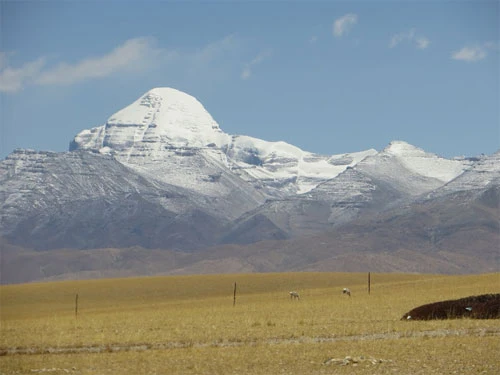
And then, finally, the first sight of Kailash. The sacred mountain looms over the bleak landscape in impossible symmetry more a cosmic axis between heaven and earth than a natural formation. Here Shiva is not the manifest protector worshipped in temples below; He is Mahadev, the Adiyogi, the eternal ascetic seated in infinite meditation outside of time itself. The four great faces of Kailash, aligned with the four cardinal directions, are perceived as a divine Mandala, radiating cosmic energy across the Himalayas. Each step of the Kailash Parikrama is believed to dissolve lifetimes of karma. Crossing the sacred Dolma La Pass is not merely a physical feat but a symbolic rebirth; a passage from the old self into spiritual awakening. In that thin air, where even breathing requires conscious effort, many pilgrims report feeling closer to the divine than at any other moment in their lives.

But perhaps the most beautiful aspect of this journey is the return. After the Parikrama, the devotee descends back through Nepal carrying the stillness of Kailash slowly into the human world. Many return to Pashupatinath to offer prayers of gratitude, and in that moment, the sacred circle is complete. The devotee understands that Pashupatinath and Kailash were never two destinations but two manifestations of the same eternal presence; one grounded in humanity, the other suspended in the silence of the cosmos. For the Indian seeker, this completed spiritual passage leaves something far greater than memories. It transforms the way of seeing existence itself.


The Stairway to Heaven: Crossing the Dolma La Pass

The Dolma La Pass at 5,630 metres is far more than a high-altitude crossing in the sacred geography of the Kailash Parikrama. It is the spiritual zenith of the entire pilgrimage; a place where physical endurance, devotion, karma, and divine grace converge in the icy stillness of the Trans-Himalayan sky. Indian pilgrims often call it the Stairway to Heaven, not because of its height, but because of what it represents: a passage of the soul from the world of illusion toward spiritual enlightenment. Every devotee who walks this holy pass carries prayers, burdens, memories, and silent hopes, believing that on these windswept slopes, Mahadev and Goddess Tara keep watch over those who walk with faith.

The approach to Dolma La begins at one of the most emotionally charged stretches of the Kora; a barren, rocky expanse called Shiva-tsal, the 'place of the dead.' Here, fluttering prayer flags beat in the high Himalayan wind as pilgrims pause for a deeply symbolic act of surrender. Many leave behind a small personal item: a piece of clothing, a lock of hair, or a handful of earth. This ritual represents the death of the old self; a deliberate release of past karmas, ego, and emotional burdens before the final ascent. There is a haunting quality to the atmosphere at Shiva-tsal, a sense of profound peace in the heart of a landscape stripped bare of everything except spirit. For many Indian hindus, this is the single most transformative experience of the entire Yatra.

The ascent beyond Shiva-tsal is steep, rough, and physically demanding, typically taking four to six hours over uneven boulders, frozen streams, and oxygen-scarce ground. At nearly 5,630 metres, the air holds roughly half the oxygen of sea level. Each breath becomes a conscious act of willpower. In the sacred philosophy of the Yatra, however, this suffering is not punishment but Tapasya; a sacred austerity through which the devotee purifies both body and soul. Each slow, weighted step on the frozen Himalayan soil is a devotion offered to Mahadev, each laboured breath an unspoken chanting of Om Namah Shivaya. The plateau silence deepens the experience: no cities, no distractions, only the crunch of boots on stone, the flutter of Lungta prayer flags, and the distant murmurs of fellow pilgrims climbing steadily upward.

The summit of Dolma La is one of the most visually and spiritually overwhelming sights on Earth. Thousands of colourful prayer flags whip wildly in the freezing wind, a sacred burst of colour against the stark Himalayan sky. The pass is named after Dolma; the Tibetan form of Goddess Tara, a compassionate manifestation of the Divine Mother Shakti, revered across both Hindu and Buddhist traditions. Arriving here is deeply emotional for most Indian seekers. Some weep quietly. Others hold hands in gratitude to the mountain. Many simply go still, overcome by weariness, relief, and a sense of ineffable divine presence that words cannot adequately convey.

As the descent begins, another sacred vision appears below the pass: the shimmering turquoise waters of Gauri Kund, the Lake of Compassion, where Goddess Parvati is said to have bathed and meditated. Seen from above, the lake glows like a jewel hidden beneath cliffs of ice and rock; almost surreal in the stark mountain landscape. If the climb to Dolma La is the fire of penance and spiritual struggle, Gauri Kund is divine grace and healing. Pilgrims who reach the pass often describe seeing the lake's holy waters as receiving the blessings of the Divine Mother herself; a final consecration before the descent into the valley that heralds the end of the Kora.


Kailash via Nepal: Five Reasons This Is the Preferred Route for Indian Pilgrims

No route to Mount Kailash can ever be considered easy; no path to 5,000 metres above sea level earns that description. But the Nepal corridor has emerged as the most preferred and manageable option for the majority of Indian pilgrims, chosen for its rare combination of cultural familiarity, logistical efficiency, gradual acclimatisation, and robust support systems.

1. Cultural and Emotional Continuity

One of the greatest advantages of the Nepal route is the immediate sense of cultural continuity it offers Indian travellers. Nepal does not feel like a distant foreign country but like an extension of the same Himalayan spiritual civilisation. In Kathmandu, bhaktas are immediately at ease: Hindi is widely understood, Hindu-Buddhist traditions provide a familiar religious atmosphere, and the food, rituals, and temple culture resonate deeply with Indian devotees.

This connection is further cemented by the opening visit to Pashupatinath Temple. The Sankalpa Puja and Maha Aarti performed in this spiritually charged environment helps pilgrims transition mentally from their everyday Indian routine into a devotional frame of mind before they reach the demanding conditions of the Tibetan Plateau. The emotional and cultural buffer that Kathmandu provides is unique to this route and cannot be replicated via direct entry into Tibet.

2. Flexible Transport: Overland and Helicopter Options

The Nepal corridor offers genuine transport flexibility that alternative routes do not. Pilgrims can choose the traditional overland route via the Rasuwagadhi–Kerung border, which provides a gradual, immersive transition from Nepal into Tibet over several days. Alternatively, the helicopter-assisted route via Nepalgunj, Simikot, and Hilsa allows you to reach the Tibetan border region in a fraction of the time, preserving energy and stamina for the Kailash Parikrama itself.

The helicopter option is particularly valued by elderly devotees and those with limited time, who can bypass the long overland days without compromising the spiritual experience at Kailash and Mansarovar. This range of options from the traditional to the expedited makes the Nepal route uniquely accommodating for Indian families of all ages and physical conditions.

3. Gradual Acclimatisation and a Safer Altitude Profile

The Nepal route provides one of the safest and most natural acclimatisation profiles available for the Kailash Yatra. Pilgrims ascend gradually from the Kathmandu Valley at 1,400 metres through mid-hill terrain and into the Tibetan Plateau, giving the body time to adjust to steadily decreasing oxygen levels. This step-by-step elevation gain significantly reduces the risk of Acute Mountain Sickness compared to routes that involve rapid ascent by flight to high-altitude starting points.

By the time travellers reach Lake Mansarovar at 4,558 metres, their bodies have typically adjusted enough to manage the final challenge of Dolma La Pass at 5,630 metres. The mantra of high-altitude travel 'climb high, sleep moderate' is naturally built into this overland itinerary, reducing the incidence of serious altitude illness among organised groups following this route.

4. Dedicated Nepali Kitchen and Sherpa Support

Nutrition and support are decisive factors in completing the Kailash Yatra safely. Most reputable Nepal-based operators travel with a dedicated Nepali kitchen crew that prepares familiar, pure vegetarian Indian meals throughout the Tibetan sector. Dishes like dal, rice, vegetables, khichdi, soups, and hot masala chai maintain the body's energy levels and provide emotional comfort that is disproportionately important at high altitude, where appetite decreases and morale can suffer.

In addition to kitchen support, experienced Nepali Sherpas and guides ensure safety across the most challenging stretches of the Kora, particularly the Dolma La Pass crossing. With deep knowledge of terrain, weather patterns, and altitude response protocols, the Sherpa support team transforms what would otherwise be a daunting solo effort into a managed, collectively shared spiritual experience.

5. Kathmandu as a Complete Pilgrimage Base

Kathmandu is the main operational hub for virtually all Kailash Mansarovar Yatra packages from Nepal. The city has everything an Indian pilgrim needs before entering Tibet: specialist trekking gear shops, oxygen supplies, high-altitude medications, currency exchange, and emergency support services. More critically, the entire Tibet permit and visa process for Indian nationals is managed in Kathmandu through experienced agencies with long-standing relationships with Chinese consular authorities.

This results in smoother permit documentation, fewer processing errors, and professional management of the entire travel chain from airport arrival to border crossing to return departure. For Indian citizens navigating a complex, tightly regulated permit system, having a trusted Kathmandu base that handles these logistics is not a luxury but an essential pillar of a successful Yatra.
Itinerary

Expand AllClose All

Your Kailash Mansarovar Yatra begins the moment you land at Tribhuvan International Airport in Kathmandu; a city where ancient temples, sacred rivers, and Himalayan devotion blend seamlessly into everyday life. A Nepal Nomad representative will welcome you at the airport and transfer you to your hotel in the heart of the city. After the journey from India, the remainder of the day is yours to rest, explore the local streets, or absorb the spiritual atmosphere of the Kathmandu Valley at your own pace.

In the evening, the expedition team conducts a comprehensive tour briefing covering the overland route into Tibet, high-altitude health protocols, permit requirements, and practical guidelines for Indian travellers on the Kailash Mansarovar Yatra. This is also the opportunity to meet your fellow yatris who will share every mountain pass, every meal, and every prayer for the next thirteen days. Many people describe this first evening as the true beginning of the spiritual journey, even before a single step has been taken toward the mountain.

  • Max. Altitude:Altitude1,400 m / 4,593 ft
  • Accommodation:Hotel in Kathmandu
  • Time:Arrival day
  • Meals:Dinner
  • Walking Distance:Local transfers only

Today is devoted entirely to divine blessings and final preparation before you step into the remote Himalayan landscapes of Tibet. The centrepiece of the day is a visit to Pashupatinath Temple, one of the holiest Shiva temples in the world and a site of immense significance for Hindu pilgrims. Perched on the sacred Bagmati River, the temple complex fills with the sound of Vedic chants, the fragrance of incense, and the warm glow of oil lamps that have burned in devotion for centuries. Here, yatris seek the blessing of Lord Pashupatinath, earthly guardian and first manifestation of Shiva on the pilgrimage circuit before proceeding toward His transcendental cosmic abode at Kailash.

The afternoon is reserved for the Sankalpa; the formal vow of spiritual intent that marks the official commencement of the Yatra along with last-minute practical preparations: checking personal gear, confirming warm clothing layers, verifying travel permits, and exchanging currency into Chinese Yuan for use in Tibet. In the evening, you return to Pashupatinath to witness the Maha Aarti on the banks of the Bagmati River. As priests perform synchronised rituals with blazing lamps, conch shells, and devotional hymns, the air fills with an atmosphere of collective devotion that moves many to tears. The Maha Aarti before the Kailash Yatra is considered especially auspicious; a final consecration of body, mind, and spirit before the ascent into the sacred Himalayas.

  • Max. Altitude:1,400 m / 4,593 ft
  • Accommodation:Hotel in Kathmandu
  • Time:Full-day spiritual preparation
  • Meals:Breakfast, lunch, dinner
  • Walking Distance:Approx. 15 km sightseeing

Today marks the real start of the overland Himalayan adventure as you bid farewell to the spiritual valleys of Kathmandu and drive north toward the mountain settlement of Syabrubesi. The road follows the roaring Trishuli River through deep gorges, terraced hillsides, cascading waterfalls, and traditional villages where prayer flags flutter above hillside monasteries. This is one of the most scenic drives in Nepal; a gradual transition from city energy to the raw drama of the high Himalayan frontier, offering glimpses of rural Nepali life that remain largely unchanged by the modern world.

The road climbs steadily as the landscape becomes more dramatic and the lush green hills give way to towering Himalayan ridges disappearing into drifting clouds. By late afternoon or evening you arrive in Syabrubesi, a quiet mountain town near the Nepal–Tibet border set against a backdrop of forested hills and fast-flowing mountain rivers. This charming settlement is the last significant town on the Nepal side; a calm, restorative place to rest, drink plenty of fluids, and mentally prepare for the border crossing into Tibet that awaits in the days ahead.

  • Max. Altitude:1,400 m to 1,460 m / 4,593 ft to 4,790 ft
  • Accommodation:Guesthouse in Syabrubesi
  • Time:Approx. 6 to 8 hours drive
  • Meals:Breakfast, lunch, dinner
  • Walking Distance:Approx. 122 km / 76 miles

One of the most anticipated days of the expedition arrives as you drive from Syabrubesi toward the Nepal–Tibet border and the peaceful Tibetan town of Kerung. The journey follows the Bhote Koshi River gorge through spectacular mountain terrain sheer cliffs, roaring rivers, dense forests, and waterfalls tumbling down the Himalayan slopes. Arriving at the Rasuwagadhi border crossing, you complete immigration and customs formalities on both the Nepal and Chinese sides before crossing the Friendship Bridge into Tibet. This is the moment the Yatra crosses from one world into another.

As the road climbs onto the Tibetan Plateau, the scenery changes dramatically. Nepal's green hills give way to wider valleys, rugged mountain terrain, and the vast open spaces that define Tibet's legendary wilderness. The air becomes noticeably thinner and colder with every kilometre of altitude gained. By evening you reach Kerung, a quiet Tibetan border town surrounded by stark hills and distant snow-capped peaks. The overnight stay in Kerung is an important acclimatisation step, the body's first sustained exposure to significant altitude and pilgrims are advised to drink plenty of water, eat lightly, and rest well in preparation for the long drives across the plateau that begin tomorrow.

  • Max. Altitude:1,460 m to 2,800 m / 4,790 ft to 9,186 ft
  • Accommodation:Guesthouse in Kerung
  • Time:Approx. 5 to 7 hours including border formalities
  • Meals:Breakfast, lunch, dinner
  • Walking Distance:Approx. 90 km / 56 miles

Today's journey carries you deeper into the vast Tibetan Plateau as you drive from Kerung to the high-altitude settlement of Saga. This is one of the most visually dramatic legs of the entire pilgrimage; the landscape gradually revealing the enormous scale and silence of Tibet's legendary wilderness. Wide valleys, rough mountain passes, and miles of open country unfurl in every direction, the horizon merging with a sky that feels impossibly large. Beyond windswept plains, herds of yaks and Tibetan sheep graze in scenes that appear entirely untouched by time.

With altitude steadily increasing from 2,800 metres at Kerung to 4,640 metres at Saga, this is a day for vigilant self-monitoring. Pilgrims should drink frequently, eat modestly, and avoid exertion beyond what the drive itself demands. The medical team will typically check oxygen saturation levels at the evening halt. Saga, perched on the banks of the Brahmaputra River in western Tibet, is an important acclimatisation point; a transit town between the Himalayan frontier and the sacred region of Kailash. Resting well here sets the physical foundation for the days of higher altitude that follow.

  • Max. Altitude:2,800 m to 4,640 m / 9,186 ft to 15,223 ft
  • Accommodation:Guesthouse in Saga
  • Time:Approx. 6 to 8 hours drive
  • Meals:Breakfast, lunch, dinner
  • Walking Distance:Approx. 230 km / 143 miles

One of the most emotionally and spiritually significant days of the entire holy expedition arrives as you make the long drive from Saga to the sacred shores of Lake Mansarovar. After days of travel across the high Tibetan Plateau through open plains, shimmering rivers, and stark mountain ridges, the anticipation among pilgrims is almost palpable. As the vehicle nears the Kailash region, the landscape grows increasingly mystical: herds of wild Tibetan antelope cross the road, turquoise alpine lakes shimmer across the barren plateau, and the distant outline of Mount Kailash begins to appear on the horizon for the first time.

The journey culminates with the first sight of Lake Mansarovar; a moment that reduces many to tears. The sacred lake's deep blue waters, reflecting the vast Himalayan sky with prayer flags fluttering along its shores, is a vision of breathtaking beauty and profound spiritual power. For Hindus, reaching Mansarovar is considered a blessing earned across multiple lifetimes. Weather permitting, devotees pause along the shore for prayers and a symbolic purification; some performing a ritual dip or bucket snan in the sacred waters. The silence of the lake at dusk, with the silhouette of Kailash glowing beyond the horizon, is a moment that stays with for the rest of your lives.

  • Max. Altitude:4,640 m to 4,558 m / 15,223 ft to 14,954 ft
  • Accommodation:Guesthouse at Mansarovar
  • Time:Approx. 8 to 10 hours drive
  • Meals:Breakfast, lunch, dinner
  • Walking Distance:Approx. 450 km / 280 miles

The morning begins with a deeply spiritual experience on the sacred shores of Lake Mansarovar. You wake before dawn to witness the extraordinary sight of the lake's surface turning from deep black to indigo to golden as the Himalayan sunrise illuminates the water. This is the time for personal prayer, meditation, and the sacred rituals that many devotees have planned for years: the Shraddha and Tarpan rites offered to ancestors on the shores of Mansarovar, the holy dip in the icy waters, and the quiet offering of Ganga Jal to the lake. For Jain pilgrims, this shore is a sacred tirtha; for Buddhists, the lake is the mind of Gautama himself; for Hindus, it is where the gods descend to bathe at full moon. The atmosphere at dawn is one of the most spiritually charged of the entire Yatra.

After breakfast, a short drive of approximately 40 kilometres leads to Darchen; the small Tibetan village at the foot of Mount Kailash that serves as the base camp and administrative starting point for the Kailash Kora. As the vehicle approaches Darchen, the full north face of Kailash begins to reveal itself: symmetrical, solitary, and towering above the plateau like a dark divine pyramid. The afternoon in Darchen is devoted to Kora preparation, organising personal trekking gear, arranging ponies or porters if needed, confirming group logistics with the Tibetan guide, and resting before the three most demanding days of the entire pilgrimage begin at dawn.

  • Max. Altitude:4,558 m to 4,670 m / 14,954 ft to 15,322 ft
  • Accommodation:Guesthouse in Darchen
  • Time:Approx. 2 to 3 hours drive
  • Meals:Breakfast, lunch, dinner
  • Walking Distance:Approx. 40 km / 25 miles

Today marks the beginning of the Kailash Parikrama, one of the most profound pilgrimages in the world. After an early breakfast in Darchen, a short drive leads to Yamadwar, the 'Gateway of the God of Death' in Hindu belief. For the devotee, crossing Yamadwar is a symbol of shedding worldly attachments and entering the sacred spiritual realm in the divine presence of Mount Kailash. The atmosphere here is deeply emotional, prayer flags snap in the Himalayan wind, fellow pilgrims chant quietly, and the silence of the surrounding wilderness amplifies the significance of this threshold. Many stop to offer final prayers before stepping onto the Kora path.

The trek from Yamadwar to Derapuk begins gently through a broad valley carved beneath the towering North Face of Mount Kailash. The trail crosses rugged landscapes of dramatic cliffs, glacier-fed streams, and barren valleys filled with an overwhelming spiritual silence. Yatris, monks, yaks, and Tibetan prayer mani stones line the route, creating an atmosphere unlike anywhere else in the Himalayas. With every kilometre, the North Face of Kailash grows larger and more majestic dominating the sky ahead in dark, snow-streaked beauty. You arrive at Derapuk in the late afternoon to their most immediate, direct view of the mountain yet: camp is pitched directly opposite the North Face, and in the evening, as the last light turns the rocky summit shades of gold and violet, many devotees simply sit in silence and offer prayers to the mountain they have journeyed so far to reach.

  • Max. Altitude:Derapuk 4,900 m / 16,076 ft
  • Accommodation:Basic guesthouse at Derapuk
  • Time:Approx. 6 to 8 hours
  • Meals:Breakfast, lunch, dinner
  • Walking Distance:Approx. 12 km drive + 18 km trek / 11 miles trek

This is the most demanding and spiritually the most intense day of the entire Kailash Mansarovar Yatra. The trek begins before dawn with a steep climb over rocky, high-altitude terrain toward the mythical Dolma La Pas; the highest point of the circumambulation route. Along the way, you pass through Shiva-tsal, where it is traditional to leave behind a personal item as a symbolic offering of the old self. The atmosphere here is deeply charged: prayer flags flutter in the early morning dark, and the silence is broken only by the crunch of boots on stone and the quiet chanting of fellow travellers. Each breath at this altitude is an act of willpower and a form of devotion.

The summit of Dolma La Pass, draped in thousands of colourful prayer flags whipping in the freezing wind, is one of the most visually and emotionally overwhelming moments of the entire pilgrimage. Named after Dolma, Goddess Tara in her Tibetan form the pass is believed to be protected by the Divine Mother herself, who guides pilgrims safely through this most spiritually charged of passages. Many bhaktas weep here; others are too exhausted and moved to speak. After a brief rest and prayers at the summit, the descent begins, passing the shimmering turquoise Gauri Kund, Lake of Compassion, where Goddess Parvati is said to have meditated before dropping through narrowing gorges into the quieter valley of Jutulpuk. Arrival here, in a deep canyon surrounded by towering cliffs, brings a sense of profound relief and quiet inner transformation. The most demanding day is complete.

  • Max. Altitude:4,900 m to 5,630 m to 4,760 m / Dolma La Pass at 18,471 ft
  • Accommodation:Basic guesthouse at Jutulpuk
  • Time:Approx. 10 to 12 hours trek
  • Meals:Breakfast, lunch, dinner
  • Walking Distance:Approx. 22 km trek / 13.6 miles

After the emotionally and physically intense high-altitude circuit, the morning begins in the tranquil valley of Jutulpuk, where murmuring streams and canyon winds mark the last moments near the sacred base of Mount Kailash. The Kora is complete. Many sit quietly at breakfast, reflecting on the enormity of what they have experienced over the past three days. The Parikrama has stripped away comfort, certainty, and ego and in that stripping, many describe finding something they had spent their whole lives searching for.

After breakfast, vehicles retrace the route back to Saga across the wide Tibetan landscapes. The return journey across the plateau has a pensive, contemplative mood. Travellers silently absorb the vastness of the landscape, assimilating the deep experiences of the sacred circuit. The Ngari highland corridor desolate, unspoiled, and immense keeps the spirit in a reflective, meditative space even while the body gradually recovers from the altitude and exertion. Short stops for rest, refreshments, and acclimatisation monitoring punctuate the long drive, and by evening the arrival at Saga offers physical relief and the first real sense of descent from the sacred high country.

  • Max. Altitude:4,760 m to 4,640 m / 15,617 ft to 15,223 ft
  • Accommodation:Guesthouse in Saga
  • Time:Approx. 8 to 10 hours drive
  • Meals:Breakfast, lunch, dinner
  • Walking Distance:Approx. 370 km / 230 miles

The return from the Tibetan Plateau begins in earnest as the convoy departs Saga and heads back toward the Himalayan frontier town of Kerung. The drive retraces the route through open highland valleys and Brahmaputra basin terrain before the landscape begins to shift, the vast, arid plateau gradually giving way to greener valleys, meandering riverbeds, and the distant outline of the Himalayan wall rising ahead. As altitude drops from 4,640 metres to 2,800 metres over the course of the day, the air becomes noticeably richer and breathing perceptibly easier: a physical relief that feels almost symbolic after days at the roof of the world.

This is a time for quiet thought. The road passes through lonely nomadic settlements, grazing lands, and wide valleys shaped by wind and geological time, landscapes that feel unchanged by any century. Short stops for refreshments and rest gives time to absorb the changing scenery and adapt gradually to lower altitudes. By evening, you reach Kerung: a comfortable and familiar threshold between two worlds, set among steep hills and river valleys just inside the Tibetan side of the border. One sleep separates the pilgrims from Nepal and the homeward journey toward Kathmandu.

  • Max. Altitude:4,640 m to 2,800 m / 15,223 ft to 9,186 ft
  • Accommodation:Guesthouse in Kerung
  • Time:Approx. 6 to 8 hours drive
  • Meals:Breakfast, lunch, dinner
  • Walking Distance:Approx. 230 km / 143 miles

The final return leg begins from Kerung as you cross the Nepal–Tibet border for the last time, completing immigration and customs formalities before descending into the lush, familiar landscapes of Nepal. After the stark arid grandeur of the Tibetan Plateau, the sight of Nepal's green hillsides, cascading waterfalls, and terraced fields along the Trishuli River valley feels almost surreal; a gentle reintroduction to a warmer, greener world. The road descends through deep gorges and dense forest, the air growing warmer and heavier with oxygen at every bend.

As the terrain changes from high-altitude desert to verdant Himalayan foothills and eventually to the cultivated valleys approaching Kathmandu, this final drive is a time of deep reflection. The memories of Kailash's North Face, the icy winds at Dolma La, the stillness of Mansarovar at dawn, and the prayers shared with fellow travellers at Shiva-tsal begin to settle into something permanent; a quiet transformation that most pilgrims describe as the truest souvenir of the Yatra. By late afternoon or evening, the convoy arrives back in Kathmandu, completing an extraordinary overland circuit through one of the most sacred and demanding landscapes on Earth.

  • Max. Altitude:2,800 m to 1,400 m / 9,186 ft to 4,593 ft
  • Accommodation:Hotel in Kathmandu
  • Time:Approx. 6 to 8 hours including border formalities
  • Meals:Breakfast, lunch, dinner
  • Walking Distance:Approx. 140 km / 87 miles

On the final morning of the Kailash Mansarovar Yatra, many pilgrims rise early for one last visit to Pashupatinath Temple before their flight home. Returning to the sacred banks of the Bagmati River after thirteen days in the high Himalayas is deeply moving. The same temple bells, the same incense, the same golden pagoda roof but experienced now through entirely different eyes. Devotees offer prayers of sincere gratitude to Lord Shiva for the strength, protection, and blessings that made the entire journey possible. The silent darshan at Pashupatinath on this final morning is not merely a ritual; it is the closing of a sacred circle that began here thirteen days ago.

The return to Pashupatinath is understood by most as the true completion of the Ultimate Shiva Circuit, the realization that Pashupatinath and Kailash are not two destinations but two expressions of the same eternal presence: one rooted in humanity and earthly devotion, the other suspended in the cosmic silence of the Trans-Himalayan sky. After breakfast and a transfer to Tribhuvan International Airport, pilgrims depart Kathmandu carrying something that cannot be packed into a bag; an inner stillness, a widened sense of existence, and the profound understanding that Mahadev was present in every step, every breath, and every moment of the journey under the sacred shadow of the Himalayas.

  • Max. Altitude:1,400 m / 4,593 ft
  • Accommodation:N/A: departure day
  • Time:Departure day
  • Meals:Breakfast
  • Walking Distance:Departure day
What's Included
  • Airport pickup and drop-off in Kathmandu
  • Hotel accommodation in Kathmandu (twin-sharing)
  • Guesthouses and lodges throughout Tibet
  • Full-board vegetarian meals throughout the Yatra
  • Tibet Travel Permit and all required TAR permits
  • Chinese Group Visa arranged via Kathmandu
  • CIPSC coordination and official pilgrim logistics
  • All transport in Tibet, private Land Cruisers or coaches
  • Experienced Nepali tour leader throughout
  • Licensed Tibetan guide: mandatory for TAR
  • Emergency oxygen cylinders at key overnight halts
  • Basic first-aid support with pulse oximeters
  • Three-day Kailash Parikrama arrangement
  • Kailash Mansarovar conservation and entry fees
  • Immigration and border formality assistance
  • All applicable government taxes and service charges
What's not Included
  • International and domestic airfare from India to Kathmandu
  • Nepal entry visa fees (not required for Indian citizens)
  • Personal high-altitude travel and medical insurance
  • Emergency helicopter evacuation costs not covered by insurance
  • Pony, yak, or personal porter hire during the Kailash Parikrama
  • Personal expenses: laundry, internet, phone calls, hot showers, charging
  • Extra hotel nights due to weather, flight, or permit delays
  • Tips for guides, drivers, cooks, and Sherpa staff
  • Personal medical expenses and hospitalisation costs
  • Soft drinks, bottled juices, and mineral water
  • Costs from natural disasters, landslides, or political disruptions
  • Camera and video permit fees (if applicable)
  • Personal trekking gear, clothing, and footwear
  • Snacks, energy bars, and personal food supplies
  • Any services not listed under 'Included'
  • Early return costs or unused services due to voluntary departure
Good to Know

In the Footsteps of Adi Shankaracharya: The Sage's Path to Kailash

The modern Indian yatri's journey to Mount Kailash is not only a personal pilgrimage but a profound connection to the spiritual lineage of Adi Shankaracharya , the 8th-century philosopher-sage who revived the Vedic foundations of India and established the four great Mathas at the four corners of the subcontinent. To follow the path of Shankara is to engage in more than a physical walk; it is an intellectual and devotional quest to the very source of Advaita Vedanta, the non-dualist philosophical tradition that holds all existence as expressions of a single divine consciousness.

According to sacred tradition, Shankaracharya journeyed to the Trans-Himalayan heights to encounter Lord Shiva himself after establishing his four Mathas. It is said that at the foot of the sacred mountain, the Precious Snow Jewel, the great teacher received five Spatika (crystal) Lingams, which he subsequently consecrated at sacred sites across India. For the devotee undertaking the Kailash Kora, each step of the Parikrama resonates with the footsteps of Shankara himself, transforming the circuit into a living classroom of ancient wisdom. The pilgrimage becomes, in this light, a form of Jnana, spiritual knowledge, as much as Bhakti.

Shankaracharya's own Yatra demonstrated the triumph of spirit over body: he walked thousands of miles from the tropical south to the freezing peaks of the north, driven not by physical ambition but by the fire of devotional seeking. Modern logistics through Nepal ease the journey considerably, but the crossing of the Tibetan Plateau and the ascent to Dolma La Pass at 5,630 metres remains genuinely arduous. For the bhakta, the physical hardship is itself a teaching; a direct embodiment of Shankara's core instruction that the material world is Maya (illusion), and that the only enduring reality is the divine consciousness represented by the unmoving peak of Kailash.

The divine journey also functions as a living link between India's great pilgrimage sites. Just as Shankaracharya connected the shrines of the Himalayas to those of the southern plains, the modern-day pilgrim connects their home temple from Kashi to Rameshwaram, from Tirupati to Vaishno Devi with the supreme headquarters of Kailash. When the yatri meditates on the banks of Lake Mansarovar, they enter a contemplative space sanctified by centuries of Indian saints and scholars. The silence of Kailash is, in this tradition, the same primordial silence from which the Upanishads were born. To walk in the footsteps of Adi Shankaracharya is to seek Moksha, liberation, while still inhabiting the physical body. The devotee returns to India not with photographs alone, but with a piece of that Shankara-like clarity: the realisation that the Mahadev sought at the roof of the world abides also within their own heart.

Altitude Sickness (AMS) Management and Safety Protocols

Medical Disclaimer: The information below reflects general high-altitude protocols followed on organised Kailash Yatra expeditions. It is not a substitute for professional medical advice. All pilgrims should consult their own physician before booking, particularly those with pre-existing medical conditions.

For Indian passpot holders ascending from the plains of India to the Tibetan Plateau often above 4,500 metres in a matter of days, altitude management is not a safety formality but the deciding factor between a successful Yatra and a potentially life-threatening medical emergency. At these extreme elevations, atmospheric oxygen levels drop to roughly 50–60% of what the body is accustomed to at sea level. Simple activities like walking, eating, or climbing a short flight of stairs become noticeably taxing. Every well-organised Kailash Mansarovar Yatra operates within a comprehensive altitude safety framework designed to protect all pilgrims throughout the expedition.

Acclimatisation Strategy

The standard 13-day Kailash Mansarovar itinerary is structured to allow gradual acclimatisation before the physically demanding Kora begins. The core principle, climb high, sleep moderate is built into the overland route, which ascends in stages from Kathmandu through Kerung, Saga, and Mansarovar before reaching the Kora starting point at Darchen. Acclimatisation rest days are not optional wellness breaks but essential physiological preparation for the extreme altitude of Dolma La Pass.

Pilgrims are advised to take short walks at altitude during acclimatisation stops while returning to sleep at lower elevations where possible. This process encourages the body to produce additional red blood cells, improving oxygen delivery and reducing the risk of Acute Mountain Sickness. Hydration is equally non-negotiable: the '4-Litre Rule' drinking a minimum of four litres of water daily throughout the Tibet section is one of the simplest and most effective defences against AMS.

Medical Support and Monitoring

Protocol

Details

Twice-daily health checks

Morning and evening monitoring of SPO2 (oxygen saturation) and heart rate using pulse oximeters for each pilgrim

Clinical thresholds

SPO2 repeatedly below 70%, or resting heart rate above 110 bpm, triggers immediate supplemental oxygen and potential evacuation protocol

Diamox (Acetazolamide) support

Monitored use of the most commonly prescribed altitude medication; pilgrims advised to begin the course in Kathmandu

Emergency oxygen cylinders

Large cylinders at support vehicles and key overnight halts (Mansarovar, Derapuk); portable canisters for Dolma La ascent

No-Fasting Rule

Medical teams prohibit vrat or fasting at high altitude; the body requires sustained caloric intake to adapt to low oxygen levels

Lung protection

Pilgrims advised to wear buffs or scarves over face to prevent 'Khumbu Cough' severe high-altitude respiratory irritation

Emergency evacuation

Serious cases (HAPE or HACE) trigger immediate descent by vehicle to Taklakot or the Nepal border; helicopter from Hilsa/Simikot if required

Satellite communication

Groups carry satellite phones or special Chinese roaming SIMs to maintain contact with Kathmandu operations team and emergency services


The most critical advice experienced Himalayan guides give is simple: do not be a 'silent pilgrim.' Many worshippers conceal symptoms such as headache, nausea, dizziness, or breathlessness out of fear of missing their Kailash darshan. At altitude, silence can be genuinely dangerous. Any headache that does not resolve with water, food, and rest should be reported to the medical team immediately. No spiritual reward is worth endangering a human life and the divine darshan of Mahadev is meaningful only to the devotee who returns home safely to share it.

Indian Vegetarian Meals on the Tibetan Plateau

Food on the cold, oxygen-starved plains of the Tibetan Plateau is far more than simple nourishment. Every hot meal during the Kailash Mansarovar Yatra is a source of physical energy, emotional comfort, and mental stability. Appetite decreases naturally above 4,500 metres while the body burns more calories adapting to thin air and freezing temperatures. For Indian pilgrims, proper nutrition is one of the behind-the-scenes keys to successfully completing the Kailash Parikrama and one of the most reassuring features of a well-organised Nepal-based tour.

Nepal Nomad's Kailash Mansarovar expeditions travel with a fully equipped mobile kitchen and experienced Nepali chefs who specialise in preparing Indian vegetarian food under extreme Himalayan conditions. Cooking at altitude requires specific expertise: water boils at lower temperatures, food takes longer to cook, and digestion slows significantly. The kitchen crew adjusts meals accordingly keeping dishes easily digestible, moderately spiced, and calorie-rich to sustain energy across long drives and demanding trekking sections.

Meal

Typical Menu Items

Notes

Breakfast

Poha, Upma, Puri-Bhaji, porridge, parathas; tea, coffee, or herbal drinks

Warm, familiar dishes to start cold mornings and fuel long drive or trekking days

Lunch

Vegetarian thali: rice, dal, seasonal vegetables, chapatis, pickles, occasional curd

Simple yet calorie-rich; intentionally light to prevent sluggishness at altitude

Evening snacks

Ginger tea, lemon tea, biscuits, roasted chana, makhana, energy snacks

Critical for recovery from fatigue; warm drinks support hydration in dry Tibetan air

Dinner

Khichdi, soups, noodles, pasta, warm vegetable broth; garlic soup on high-altitude nights

Lighter and easily digestible; garlic soup widely used to support circulation at altitude

Special dietary needs

Jain meals (no onion/garlic) arranged with prior notice; Sattvic-style cooking available

Request in advance; kitchen crew has experience with a wide range of Indian dietary practices


The spiritual purity of the Yatra is reflected in the kitchen itself. All meals on Indian pilgrimage departures follow strict vegetarian standards, with meat and eggs prohibited within the expedition kitchen to maintain the sacred atmosphere associated with the abode of Lord Shiva. Hygiene is maintained rigorously throughout: cooking water is purified or boiled, utensils are carefully sterilised, and food preparation areas are kept as clean as possible despite the harsh environmental conditions. Boiled drinking water is continuously available, as sustained hydration is one of the most important defences against altitude sickness. In many ways, the mobile kitchen becomes the quiet emotional heart of the Kailash Yatra itself.

Why Travel Insurance Is Essential for the Kailash Mansarovar Yatra

Behind the devotion, the prayers, and the emotional anticipation of the Kailash Yatra lies a harsh practical reality: this is one of the most physically demanding, geographically remote pilgrimages on Earth. The journey passes through inhospitable Tibetan Plateau terrain and extreme altitudes above 5,600 metres, where medical facilities are limited and emergency response is complex. For Indian pilgrims, specialised travel and medical insurance is not merely recommended; it is an essential lifeline that protects the journey itself and the family waiting at home.

Coverage Type

Why It Matters

Key Requirement

High-altitude medical coverage

Most standard Indian health plans are invalid above 3,000–4,000 m; Lake Mansarovar is at 4,558 m and Dolma La at 5,630 m

Policy must explicitly cover trekking or pilgrimage to at least 6,000 m

Emergency helicopter evacuation

HAPE or HACE can become life-threatening within hours; no advanced medical facilities in remote Ngari; helicopter cost USD 5,000–10,000

Guaranteed or cashless helicopter evacuation must be included

Hospitalisation in Kathmandu

Evacuation from Tibet typically ends at Kathmandu hospitals; ICU, oxygen therapy, specialist consultations are major expenses

Coverage should include Kathmandu-based hospitalisation

Medical repatriation to India

Critically ill patients may need to return to India under medical supervision

Check that policy covers repatriation from Nepal and Tibet

Trip cancellation / interruption

Border closures, permit delays, flight cancellations are common in this region; non-refundable deposits at risk

Policy should cover cancellation due to natural disasters, border closures, or permit denial

Document and theft cover

Lost permits or stolen passport in Tibet can cause serious logistical complications in the highly regulated Tibetan travel system

Policy should cover emergency document replacement and embassy costs


Before purchasing any policy, every Indian pilgrim should verify three non-negotiable terms: the policy must cover high-altitude pilgrimage or trekking to a minimum of 6,000 metres; it must include guaranteed or cashless helicopter evacuation; and it must be valid in both Nepal and the Tibet Autonomous Region of China. If any one of these conditions is absent, the policy may prove worthless at the moment it is needed most. Carry multiple physical copies of the full policy, emergency helpline numbers, passport scans, and permit copies; one in your daypack, one in main luggage, and one with your Yatra leader. Under the shadow of Mount Kailash, faith leads the pilgrimage. Preparation and protection ensure the devotee's safe return home.

The Call of Mount Kailash: A Sacred Himalayan Journey for Indian Devotees Via Nepal FAQs

  • Chinese authorities generally require pilgrims to be between 18 and 70 years old. Candidates slightly above the upper limit may be considered if they pass a medical fitness assessment administered through the CIPSC. Fitness is ultimately more important than age: Mahadev's path requires a heart as strong as its faith.

  • An original Indian passport with a minimum of six months' validity from the travel date is mandatory for the Tibet section of the journey. The Chinese Group Visa can only be processed against a valid passport. A Voter ID or Aadhaar card is sufficient for the Nepal portion of the trip (entering Nepal is visa-free for Indian citizens) but is not accepted for entry into Tibet.

  • The Chinese Group Visa stamping process requires your original passport to be held at the Chinese Embassy in Kathmandu for a minimum of three working days. This waiting period is also the traditional time for the Sankalpa performing prayers at Pashupatinath and Budhanilkantha as the spiritual commencement of the pilgrimage.

  • The 52-kilometre Parikrama is physically demanding, particularly the ascent to Dolma La Pass at 5,630 metres. Ponies, personal porters, and yak support can be arranged at Yamadwar (Darchen) for those who cannot walk the full circuit. These services are an out-of-pocket expense paid in Chinese Yuan, approximately 2,500 to 3,000 Yuan, and should be arranged through your Tibetan guide in advance to ensure availability.

  • Yes. A dedicated Nepali kitchen crew travels with the group, serving pure vegetarian meals from Poha and parathas at breakfast to Dal-Chawal-Subji at dinner throughout the Tibet section. Jain meals (without onion and garlic) can be arranged with advance notice. The food is designed to feel familiar and comforting even at the roof of the world.

  • The tradition of a holy dip is central to the pilgrimage, but current environmental regulations in the Mansarovar conservation area often restrict direct entry into the lake. Most yatris perform a Bucket Snan filling a vessel with the sacred water and bathing on the shoreline. This ritual is considered spiritually equivalent to full immersion and significantly safer given the frigid water temperature.

  • Personal expenses in Tibet snacks, laundry, pony hire, charging fees must be paid in Chinese Yuan (RMB). Exchange Indian Rupees (INR) or US Dollars (USD) for Yuan in Kathmandu before the border crossing; exchange rates and availability are more reliable there than at the border or inside Tibet.

  • Standard Indian SIM cards do not function in Tibet even with international roaming packages activated. Most yatris purchase a Chinese SIM card at the Kerung border or rely on the limited Wi-Fi available in guesthouses at Darchen. Connectivity is erratic throughout the Kailash region experienced pilgrims consider this a welcome invitation to a digital fast in the presence of Mahadev.

  • Every organised group travels with a medical support team carrying oxygen cylinders and pulse oximeters. If a pilgrim's oxygen saturation drops significantly or AMS symptoms become severe, the protocol is immediate descent to a lower altitude by vehicle. In serious cases involving HAPE or HACE, emergency evacuation to Kathmandu is arranged. This is why specialised high-altitude travel insurance with helicopter evacuation coverage is strongly recommended and effectively mandatory.

  • The mysterious moving lights above the lake are most commonly reported during the Full Moon (Purnima) and during the clear pre-dawn hours of September, the Brahmamuhurta period, roughly 3:30 to 5:30 AM. Science classifies these as atmospheric refractive phenomena at high altitude. For the devotee, they are the darshan of celestial beings descending to bathe in the holy waters of Mansarovar.

Extend Your Trip
You May Also Like