
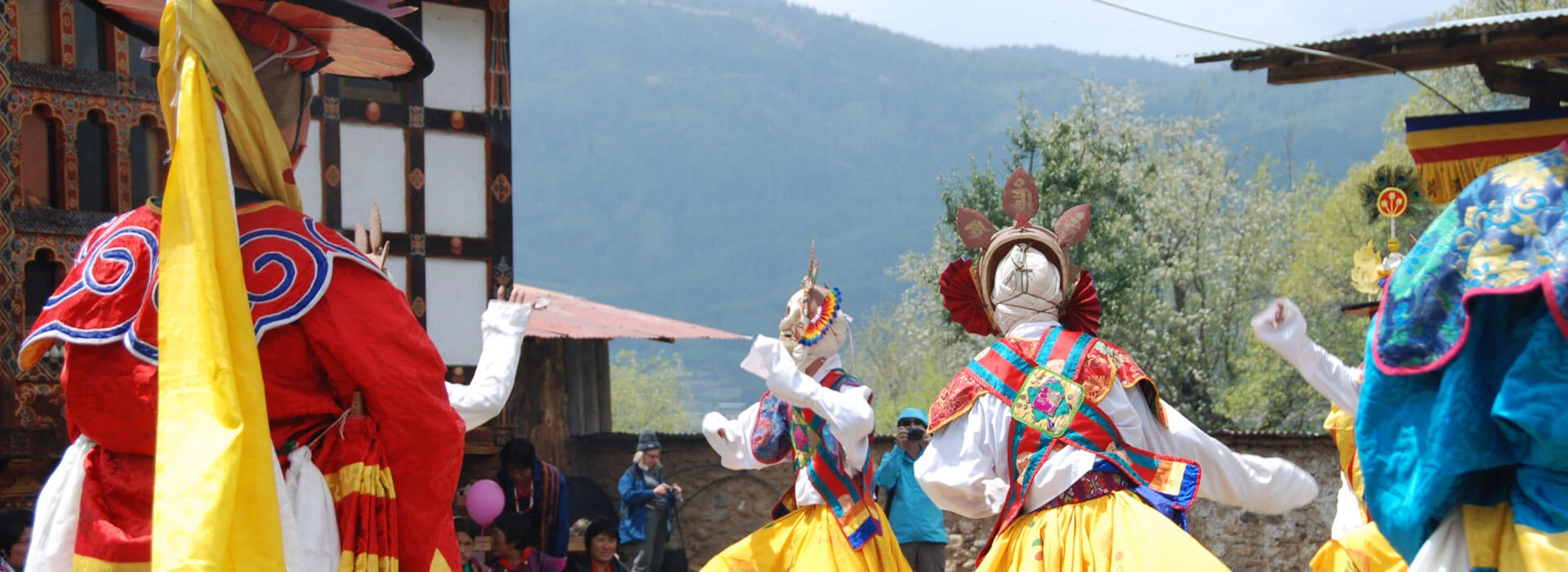
Short on time but eager to experience the magic of Bhutan? This 4 Day Bhutan Short Tour from Kathmandu takes you from Nepal's vibrant capital across the eastern Himalayas to western Bhutan, where the country's two most important cultural valleys, Paro and Thimphu, offer an authentic introduction to the Kingdom of the Thunder Dragon. Designed for first time visitors, couples seeking a peaceful Himalayan getaway, families with teenagers or older children who enjoy history, culture, and moderate hiking, solo travelers who prefer the safety and convenience of a fully guided journey, and travelers already exploring Nepal, this itinerary combines Bhutan's iconic monasteries, breathtaking mountain scenery, and living Buddhist traditions into one seamless four day experience. Rather than rushing across the country, it focuses on Bhutan's cultural heart, allowing you to experience its heritage, landscapes, and way of life without feeling hurried.
Your journey begins with a spectacular Himalayan flight from Kathmandu to Paro, one of the most breathtaking flights in the world, passing Everest and a run of snow-capped peaks that set the scene for everything that follows. Each stop, from the tranquil streets of Thimphu to the sacred cliffs of Tiger's Nest Monastery, showcases another side of Bhutan's distinctiveness, shaped by ancient traditions, colorful monasteries, unspoiled landscapes, and the philosophy of Gross National Happiness.
Planning a trip to Bhutan isn't simple; it requires meticulous coordination of visa requirements, permits, flights, accommodation, transportation, and guided sightseeing. This is where Nepal Nomad Trekking makes the journey easy. As a trusted Kathmandu based Himalayan travel specialist, it takes care of every essential arrangement before you leave, so all you need to do is enjoy the experience from the moment your adventure begins.
It's a short tour, but it doesn't feel rushed. You'll explore cultural sites, see spectacular dzongs, meet friendly locals, taste traditional Bhutanese food, and hike to the rewarding Tiger's Nest Monastery, perched 3,120 m (10,236 ft) above the Paro Valley. Every day is carefully balanced to deliver a meaningful blend of cultural discovery, scenic beauty, and moments of quiet reflection.
Whether you're planning a memorable long weekend escape, your first Himalayan adventure, or a brief cultural break from Kathmandu, this Bhutan Short Tour offers an enriching experience with no logistical stress. Hand every detail to Nepal Nomad Trekking and enjoy the landscapes, the living heritage, and the sense of calm that runs through Bhutan. No visit is complete without the hike to Tiger's Nest Monastery. Perched on a dramatic cliff above the Paro Valley, this legendary site is not just a photo stop but a spiritual journey, past fluttering prayer flags and through crisp, pine-scented air, arriving somewhere many describe as nothing short of magical.
Best of all, this short tour is designed for comfort and ease: selected accommodations, a private vehicle and local expert guide, visa support and smooth travel arrangements, and a time efficient itinerary, so you experience the trip, not the logistics.
Whether you're craving a bucket list adventure, a cultural deep dive, or a mindful Himalayan escape, this 4 day Bhutan trip delivers memories that last well beyond the four days themselves.
- Enjoy a breathtaking Himalayan flight from Kathmandu to Paro with magnificent views of Mount Everest and surrounding peaks.
- Discover the cultural heart of Bhutan's peaceful capital, Thimphu, including the towering Buddha Dordenma and Tashichho Dzong, the seat of Bhutan's government since 195
- Time permitting, visit the National Memorial Chorten and Thimphu's weekend market for a closer look at everyday Bhutanese life.
- Explore Paro Valley's ancient monasteries and traditional Bhutanese architecture, and take in the scenic beauty and rich heritage of the valley.
- Hike to the iconic Tiger's Nest Monastery (Paro Taktsang), dramatically perched at 3,120 m (10,236 ft) above the valley.
- Discover the history, culture, and traditions of Bhutan at Rinpung Dzong and the National Museum (Ta Dzong).
- Travel through beautiful valleys, pine forests, and charming villages, taking in Bhutan's tranquil scenery.
- Relish authentic Bhutanese food alongside Indian and international dishes throughout your stay.
- Enjoy comfortable accommodation, private transport, and a licensed Bhutanese guide for the full trip.
- Discover the unique blend of Buddhist spirituality, Himalayan scenery, and warm Bhutanese hospitality in just four unforgettable days.
Why the 4 Days Bhutan Short Tour Makes Perfect Sense
Not everyone has the luxury of spending a week or two exploring Bhutan, and fortunately, you don't have to. A 4 Day Bhutan Short Tour from Kathmandu is built around Paro and Thimphu, the two valleys that hold Bhutan's oldest temples, its working fortress monasteries, and the country's most photographed landmark, without the days of driving that a longer circuit through Punakha or Bumthang requires. Whether you're adding Bhutan onto a Nepal holiday or making the most of a short vacation, this itinerary delivers a genuine, unrushed introduction to the Last Himalayan Kingdom in four days.
Why Start Your Bhutan Tour from Kathmandu?
Kathmandu is the most convenient and popular gateway to Bhutan, offering one of the only direct international routes into Paro International Airport. The flight takes roughly an hour, but it's far more than a transfer: on a clear morning, the Kathmandu–Paro route is widely regarded as one of the most scenic scheduled flights in the world. Around 15 to 20 minutes after takeoff, passengers can pick out a sequence of the world's highest peaks through the window, including Everest, Lhotse, Makalu, Cho Oyu, and Kangchenjunga, before the aircraft banks into the narrow Paro valley for landing.
For those already exploring Nepal, embarking on this Kathmandu to Bhutan Tour starting from the capital city also eliminates unnecessary transit, making it easy to combine two remarkable Himalayan destinations into a single holiday.
Is Four Days Enough to Experience Bhutan?
For first time visitors, yes, and it helps to be specific about what that actually means: which experiences a four-day trip genuinely delivers, which ones it doesn't, and why that trade off works for most itineraries rather than feeling like a compromise.
A four day trip concentrates on the cultural and spiritual heart of Bhutan instead of attempting to cover the entire country, putting your time into Paro and Thimphu, the two valleys that hold the kingdom's most concentrated history. In Paro, that means Rinpung Dzong, the 17th-century “fortress on a heap of jewels” that still functions as the district's monastic and administrative seat, and Kyichu Lhakhang, one of Bhutan's oldest temples, built in the 7th century by the Tibetan emperor Songtsen Gampo and still visited daily by pilgrims spinning its prayer wheels. In Thimphu, the itinerary typically takes in Tashichho Dzong, the seat of Bhutan's government since 1952, and the Buddha Dordenma, a 169-foot (51.5 m) gilded bronze statue overlooking the valley that houses more than 125,000 smaller Buddha figures inside its base.
What Will You Experience in Just Four Days?
A short Bhutan tour isn't a checklist of two city names. It's a specific set of experiences that a longer, more scattered itinerary can actually dilute:
Flying beside Everest: the Kathmandu–Paro flight is part of the experience, not just transit. On a clear morning you'll see Everest, Lhotse, Makalu, Cho Oyu, and Kangchenjunga in sequence before the descent into Paro Valley.
Monasteries that are still in use: you'll stand inside Kyichu Lhakhang, a 7th century temple still visited daily by pilgrims, walk the courtyards of Rinpung Dzong, take in Thimphu's Tashichho Dzong and the Buddha Dordenma, and make the climb to Tiger's Nest itself, sites that span thirteen centuries of continuous religious practice.
Gross National Happiness, explained on the ground: your guide will unpack Bhutan's development philosophy in context, not as an abstract policy, but as something visible in how towns are planned and how unhurried daily life actually looks.
Local food beyond the hotel buffet: stopping at a small local eatery for ema datshi, Bhutan's famous chili and cheese stew, or a plate of handmade momos in Thimphu or Paro offers a far more authentic taste of Bhutan than dining exclusively at tourist hotels.
Prayer flags underfoot: the pine forest trail up to Tiger's Nest is strung with them the entire way, a small, constant detail that ends up in most visitors' photos more than the monastery itself.
A living sense of traditional life: Thimphu's weekend market puts you alongside farmers selling produce from the same valleys you've been driving through, a more genuine window into daily life than any single monument.
What Will You Miss on a Short Bhutan Tour?
Most tour pages skip this question. Here's the honest version: a four day trip does not reach Bumthang, Bhutan's spiritual heartland and home to temples like Jambay Lhakhang and Kurjey Lhakhang; Phobjikha Valley, the glacial valley where black necked cranes winter near Gangtey Monastery; or Eastern Bhutan, the least-visited and most traditional part of the country around Trashigang and Mongar.
That's a real trade off, not a minor one, and it's worth knowing before you book. Each of those regions sits a full day's drive or more beyond Paro and Thimphu, which is exactly why they don't fit into four days without turning the whole trip into transit. Reaching them properly, rather than rushing through, is what a 7 day or longer Bhutan itinerary is for.
Why that's okay: a short tour that skips these regions entirely and does Paro and Thimphu properly will almost always beat a four day trip that tries to touch all five and does none of them justice. Most guests who take this short tour end up planning a return trip specifically for Bumthang or Phobjikha, once they've already fallen for the country on a first visit rather than trying to see everything in one pass.
Why 4 Days Works for Most Itineraries
The short tour isn't a compressed version of the full country; it's a complete experience of a specific, concentrated part of it: Bhutan's oldest temples, its most iconic hike, and its capital, all within the two valleys that hold the highest density of what people actually come to Bhutan for. For a first visit, especially one added onto a Nepal trip, that's a far better fit than a rushed attempt to cover ground the country was never designed to be seen quickly.
Destinations like Bumthang and Phobjikha Valley genuinely need a longer itinerary to reach and appreciate properly, but this short tour captures the experiences that convince many first time visitors to come back for a second, longer trip.
Is the Tiger's Nest Hike Difficult?
The highlight of the trip is the hike to the legendary Tiger's Nest Monastery (Paro Taktsang). Perched on a cliff face at 3,120 m (10,236 ft), this sacred site is said to mark the spot where Guru Rinpoche meditated after arriving on the back of a flying tigress. For many guests, this single hike becomes the defining memory of the entire trip.
The hike itself is considered moderate and manageable for most people with a reasonable level of fitness. The round trip usually takes 4 to 5 hours along a well maintained trail through pine forest strung with prayer flags.
The climb is steady rather than technical, with several rest points along the way, including a popular cafeteria roughly halfway up that offers a clear view across the valley to the monastery itself. Those who want extra assistance can hire a horse for the lower section of the ascent. With a comfortable pace and a few breaks, most hikers complete the climb and agree the views make every step worthwhile.
Family Vacation in Bhutan: What to Expect
A Bhutan Family Tour from Kathmandu works surprisingly well, but it helps to know what a family day on this itinerary actually looks like before you book, rather than assuming it's built the same way as a beach or theme park holiday.
What a Family Day Actually Looks Like
Day 2 in Thimphu is the most naturally family friendly day on the itinerary. Alongside Buddha Dordenma and Tashichho Dzong, the day includes stops at Simply Bhutan, a hands on living museum where kids can try traditional dress, archery, or a local game rather than just look at exhibits, and the National Institute for Zorig Chusum, where students train in Bhutan's 13 traditional crafts and visitors can watch woodcarving, painting, and weaving in progress. Both are genuinely engaging for kids and teens, not just a stop adults will appreciate more.
The Tiger's Nest hike is particularly challenging for younger kids.
The one part of the trip that needs real planning around age is the Tiger's Nest hike on Day 3, a 4 to 5 hour round trip that's manageable for most teens but genuinely demanding for younger children. Families have a few practical options here: teens and older kids can do the full hike while a parent or grandparent stays back with younger children in Paro town or at Kyichu Lhakhang, a much shorter and flatter visit; younger children who are still keen to try can go partway up to the cafeteria viewpoint and turn back, which still delivers a real view of the monastery; or a horse can be arranged for the lower section of the ascent for anyone who wants the summit without the full climb. None of these require changing the itinerary itself, just deciding as a family which version of Day 3 fits.
Meals for Picky Eaters
Standard hotel meals on this tour are buffet style, mixing Continental, Indian, and Chinese dishes with milder Bhutanese options, so children who aren't ready for chili-forward local food still have plenty to eat. If a child has specific dietary needs or preferences, Nepal Nomad Trekking can flag these requirements in advance so hotels and restaurants know ahead of time, rather than improvising at the table.
Rooms and Logistics for Families
Family or connecting rooms, or two rooms booked next to each other, can typically be arranged at the 3 star hotels used on this itinerary; it's worth flagging your family's size and preferred sleeping arrangement when booking so your operator can confirm availability at each hotel rather than assuming it on your behalf. The guide and private vehicle are dedicated to your group for the entire trip, so your family's schedule does not need to be coordinated with anyone else's.
Why Families Choose This Trip
For many families, this family friendly Bhutan tour works precisely because it isn't purely a checklist of monuments: kids get a hands on craft demonstration, teens get a genuinely challenging hike with a real payoff at the top, and the whole family gets several unstructured hours each evening in a small, walkable town rather than a packed schedule. It's a trip built around a shared experience the whole family can discuss afterward, not just photos taken in the same place at the same time.
Who Else Is This Bhutan Short Tour Best Suited For?
4 Day Bhutan Short from Kathmandu. The Bhutan Holiday Package is ideal for anyone who wants to experience Bhutan's most iconic attractions without committing to a longer holiday. Whether you're seeking cultural discovery, scenic Himalayan landscapes, or a peaceful escape, this itinerary offers a balance of sightseeing, comfort, and convenience, and its carefully planned pace suits a wide range of visitors.
First Time Visitors to Bhutan
This tour is built for two overlapping kinds of first timers: travelers drawn specifically to Buddhist culture and monastic life, who want real time inside living temples rather than a rushed photo stop, and Himalayan bucket listers checking Bhutan off after Nepal or Tibet, who want the country's signature sights without a two-week commitment. By focusing on Paro and Thimphu, you'll visit Tiger's Nest Monastery, the Buddha Dordenma, and two of Bhutan's most historically significant sites: Rinpung Dzong, the 17th-century fortress still used as Paro's administrative and monastic seat, and Kyichu Lhakhang, one of the country's oldest temples, dating to the 7th century.
Busy Professionals with Limited Vacation Time
This 4 Days Bhutan Tour is also for people who get one real trip a year and want it to count, not several short weekend hops. That includes expats and professionals based in Delhi, Singapore, Bangkok, or Dubai who can reach Kathmandu on a direct regional flight and turn a long weekend into a genuine Himalayan trip, as well as travelers already in Nepal on business who can extend by just four days rather than planning a separate holiday later. With a direct flight from Kathmandu and every arrangement professionally managed, you can take in Bhutan's highlights, including a full day in each of Paro and Thimphu, without losing days to transit.
Couples Seeking a Himalayan Escape
This Bhutan Tour from Nepal is for couples who want a trip built around conversation and shared discovery rather than nightlife or beach time, honeymooners and anniversary travelers in particular, along with couples in their 40s, 50s, and beyond who prefer a slower, more contemplative style of travel over an adventure heavy itinerary. Paro and Thimphu offer a mix of quiet monastery courtyards, mountain views, and valley towns small enough to explore on foot together, and the pace of this tour, guided sightseeing by day and unstructured evenings in town, leaves room for quieter moments alongside the cultural stops.
Solo Travelers Seeking a Safe and Hassle Free Bhutan Experience
This includes first time solo international travelers who want the structure and reassurance of a licensed guide rather than figuring out logistics alone, as well as solo women travelers specifically, a group for whom Bhutan is consistently ranked among Asia's safest destinations, given the country's low crime rate and the fact that a guide accompanies you throughout the trip (female guides can be requested directly). It also suits solo travelers drawn to a slower, more reflective kind of trip, closer to a digital-detox retreat than a backpacker circuit. That combination makes Bhutan one of the more comfortable solo Himalayan destinations, with private transportation and accommodation arranged in advance.
Those Combining Nepal and Bhutan
This Kathmandu to Bhutan Tour is a natural add on for trekkers who've just finished Everest Base Camp or the Annapurna Circuit and want a lower-key, culturally rich finale rather than flying straight home, as well as travelers running a broader South Asia itinerary through India and Nepal who can fold Bhutan in without a separate trip. The direct Kathmandu–Paro flight, one of the world's most scenic scheduled routes, means you can experience two Himalayan kingdoms in a single trip without complicated transfers.
If your goal is to experience Bhutan's culture, landscapes, and spirituality within a manageable timeframe, this itinerary offers one of the best introductions available.
Why Book Your Bhutan Tour with Nepal Nomad Trekking?
Planning a Bhutan tour involves far more than booking flights and hotels. Every international visitor must obtain a processed Bhutan e-Visa, pay the mandatory Sustainable Development Fee (SDF) in advance, travel with a licensed Bhutanese guide, and use approved transportation throughout the journey, as independent sightseeing beyond designated areas is not permitted.
When you book a Bhutan family tour from Kathmandu with Nepal Nomad Trekking, the team manages every logistical detail before you even board your flight. The team arranges every aspect of the journey, from Bhutan visa processing and SDF payment to airport transfers, carefully selected accommodation, private transportation, and experienced licensed Bhutanese guides, for a smooth and stress free travel experience. This leaves you free to focus on Bhutan's breathtaking landscapes, centuries-old monasteries, vibrant culture, and the unforgettable hike to Tiger's Nest instead of paperwork and travel logistics.
Families traveling with older children or teenagers particularly appreciate the convenience of a fully organized itinerary. Private vehicles eliminate the need to navigate unfamiliar public transport, while flexible sightseeing schedules allow for comfortable rest breaks and a more relaxed pace throughout the journey. Nepal Nomad Trekking also works with quality hotels that offer family friendly rooms whenever available and can arrange adjoining rooms, extra beds, or other suitable accommodation for families traveling together. Parents can request child friendly meal options in advance, and the team gladly adjusts the sightseeing pace where possible to keep younger travelers comfortable.
Solo travelers and couples benefit just as much from the personalized service, knowledgeable local guides, and seamless coordination that make exploring Bhutan both safe and enjoyable. One dedicated team coordinates the entire journey from Kathmandu to Bhutan and back, handling every logistical detail behind the scenes so you can simply immerse yourself in the experience.
Why Nepal Nomad Trekking's Guides Make the Difference
A licensed Bhutanese guide, certified by the country's Department of Tourism, leads every Bhutan tour. To qualify, guides must complete formal training, pass the National Competency Assessment (NC II), and demonstrate extensive knowledge of Bhutanese history, Buddhism, culture, geography, sustainable tourism, visitor safety, and customer service.
Bhutan runs a three level professional certification system that lets guides progress from Cultural Tour Guide (Level I) to Senior Guide (Level III) through additional experience and further competency assessments. Many guides also specialize in cultural heritage, trekking, wildlife, birdwatching, photography, festival experiences, or adventure tourism, which lets them tailor their commentary to different travelers' interests.
Fluent in English and Dzongkha, with many speaking additional international languages, Bhutan's professional guides do far more than explain monuments. They provide cultural context, share local stories, facilitate meaningful interactions with local communities, and help visitors understand Bhutan's unique philosophy of Gross National Happiness, turning every journey into something far more enriching than independent sightseeing could offer.
How Much Does a 4 Day Bhutan Short Tour from Kathmandu Cost in 2026?
Understanding the Bhutan Short Tour cost confuses many first time visitors, because the number you see quoted rarely breaks down what you're actually paying for. Before getting into figures, it helps to separate three things that get bundled together in most brochures: the government fee everyone pays regardless of operator, the ground package that varies by operator and comfort level, and the flight, which is its own line item entirely.
Experience vs. Cost: What Are You Actually Paying For?
A Bhutan trip reads as expensive next to a typical Southeast Asia itinerary, but the comparison isn't really fair. Bhutan's per night cost isn't a base rate you build up from with optional extras; it already bundles your hotel, all meals, a licensed guide, a private vehicle, and every entry fee for the sites on your itinerary. Pricing out a comparable 4 days in most countries would mean paying for each of those separately, likely landing in a similar range, minus a guide who can actually explain what you're looking at inside a 7th-century temple. The SDF specifically funds free healthcare and education for Bhutanese citizens and the country's carbon-negative conservation programs, so a portion of every night's fee is doing something beyond covering your own trip.
The Sustainable Development Fee (SDF)
The SDF is a flat government fee charged per person, per night spent in Bhutan, separate from anything your tour operator charges. It currently sits at US$100 per night for most international visitors, a reduced rate locked in through August 31, 2027 (it was previously US$200, and is expected to rise again after that date). For a 4 day trip with 3 nights inside Bhutan, that's US$300 per person in SDF alone, paid in advance as part of your visa application, not something you settle on arrival.
Private vs. Group Tours: What Changes the Price?
The SDF and visa fee are fixed no matter how you book. What moves is the ground package rate, because a guide and vehicle cost the same whether one person or four people are using them. Traveling solo generally means paying the full per night package rate on your own; joining or forming a group of two or more splits that cost, which is why most operators quote a noticeably lower per person rate for pairs and small groups than for solo travelers.
Private tours, meaning your own dedicated guide and vehicle rather than a shared one, are the standard in Bhutan regardless of group size; there generally isn't a large group coach tour version of this trip the way there might be elsewhere, since the country's tourism model is built around small, guided groups.
Is a Luxury Upgrade Worth It?
If you want to elevate part of the trip, the most common upgrade is swapping one or two of your standard 3 star nights for a stay at a 5 star property like Amankora or COMO Uma in Paro. These lodges typically run at a significant premium over the standard package rate per night, reflecting their scale (Amankora's lodges hold only a handful of suites each) and full-service spas and dining. Because pricing varies by lodge, season, and availability, this is best arranged as a custom quote rather than a fixed number, ask your operator to price a specific night's upgrade once your dates are set.
Illustrative 4 Day / 3 Night Cost Estimate (2026)
The figures below are a realistic planning estimate built from current 2026 market rates, not a fixed quote. Exact pricing depends on season, hotel selection, and group size; ask for a firm quote once you have travel dates in mind.
Cost Component | Solo Traveler | 2+ Travelers (per person) |
SDF (3 nights × US$100) | US$300 | US$300 |
Visa fee (one time) | US$40 | US$40 |
Ground package (hotel, meals, guide, vehicle) – 3 nights | ~US$735 (~$245/night) | ~US$540–600 (~$180–200/night) |
Kathmandu–Paro round trip flight | ~US$450–550 | ~US$450–550 |
5% GST on package | ~US$37 | ~US$27–30 |
Estimated Total | ~US$1,560–1,660 | ~US$1,340–1,520 |
This excludes personal spending, tips (typically US$8–12/day for your guide and driver), and any luxury upgrades.
The Value, in Short
A 4 day Bhutan trip will almost always cost more per day than a comparable trip to a neighboring country, but it's rarely comparing like for like: the price already includes your guide, driver, hotel, and every meal, with no separate line items to track once you've paid. For a first Bhutan visit built around Paro and Thimphu, that predictability, along with the fact that a meaningful share of what you pay funds Bhutan's own healthcare, education, and conservation programs, is a large part of what you're actually paying for.
A Short Journey That Leaves a Memorable Imprint
A 4 day Bhutan short tour from Kathmandu isn't a shorter version of a longer holiday; it's an itinerary built around what matters most. In four days, you'll take in Himalayan scenery from the air and on foot, walk through Bhutan's oldest temples and its newest landmark, hike to one of the world's most iconic monasteries, and come away with a real sense of a country where tradition, spirituality, and Gross National Happiness continue to shape everyday life.
For anyone short on time but eager for meaningful experiences, this journey offers far more than a quick getaway. It's an unforgettable first encounter with one of the world's most extraordinary destinations.
When Is the Best Time for a Bhutan Short Tour from Kathmandu?
Does the Season Matter on a 4 Day Tour?
Less than you'd think, and more than you'd expect, depending on what you're optimizing for. A longer Bhutan itinerary that crosses Dochula Pass toward Punakha or pushes on to Phobjikha genuinely lives or dies by the season, since those routes can be affected by winter snow or monsoon landslides at altitude. A 4 day short tour built around Paro and Thimphu never crosses a high pass, so that specific risk mostly doesn't apply to you.
What is relevant, and what most short tour guides fail to mention, is that a 4 day trip offers effectively zero flexibility. On a 10 day itinerary, a weather delay to your Kathmandu–Paro flight is an inconvenience you can absorb. On a 4-day trip, the same delay can consume 25% of your entire schedule, as there is no extra day available to reschedule the Tiger's Nest hike or a Thimphu sightseeing day. That makes the season you choose less about temperature and more about how reliably that flight actually lands on time, which is precisely why the breakdown below leans as much on flight reliability as it does on weather.
Which Season Matches Your Travel Style?
Spring (March to May)
Spring is when Paro comes into bloom, rhododendrons and magnolias against the valley's pine slopes, with daytime temperatures climbing from around 12°C in March to 17°C by May. Paro Tshechu, one of Bhutan's largest festivals, is also expected to take place at Rinpung Dzong from 29 March to 2 April 2026, closing with the pre dawn unfurling of a giant sacred tapestry, the Guru Thongdrel. If your dates align with it, the festival is arguably the single best week of the year to be in Paro.
The trade off: this is peak season. Flights and hotels fill up months in advance, particularly during the festival dates, and rainfall increases as May approaches, so if spring is your preferred time, make sure to book early.
Summer (June to August)
This is Bhutan's monsoon, and it's the one season where a 4 day trip needs real caution. July alone averages roughly 550 mm of rainfall in Paro, and low cloud cover over the Paro Valley is the single biggest cause of Kathmandu– Paro flight delays and cancellations, since the approach requires clear visual conditions between the surrounding peaks. For a longer trip, a day's delay is a shrug; for a 4-day trip, it can mean losing the Tiger's Nest hike entirely.
The upside is real, too: fewer tourists, softer rates, and a lush, deep green landscape. If you do travel in summer, build in a spare day in Kathmandu before your Bhutan flight, and expect the Tiger's Nest trail to be muddy underfoot.
Autumn (September to November)
Autumn is widely considered Bhutan's best season, especially for a short trip, as it is the most reliable time to visit. Once the monsoon clears through September, skies turn consistently clear, humidity drops, and daytime temperatures settle into a comfortable 15–22°C. This is also the window for Thimphu Tshechu, expected around 21–23 September 2026 at Tashichho Dzong, one of the country's largest festivals. By October and November, the odds of a clear, on schedule Everest flyby and an unobstructed view from Tiger's Nest are about as excellent as they get.
Like spring, autumn is peak season, so the same booking ahead advice applies. For a 4 day trip built around flight reliability and clear mountain views, autumn is the season to prioritize if your dates are flexible at all.
Winter (December to February)
The weather is cold, but it is dry and strikingly clear. Daytime highs in Paro run roughly 9–15°C, with nights well below freezing, and Thimphu is colder still. Winter may be cold, but it compensates with excellent visibility: dry air often results in clear, unobstructed views of the Himalayas, and with significantly fewer visitors, booking hotels and guides on short notice becomes much easier.
The one real risk for a short trip isn't Bhutan itself; it's Kathmandu. Tribhuvan International Airport is prone to morning fog delays in winter, which can push back your Paro departure before you've even left Nepal. If you're traveling in December through February, an early morning flight and a same day arrival buffer are worth planning around.
Best Time Based on Your Travel Goals
Rather than one single "best month," here's how the season question breaks down by what actually matters to you:
If Your Priority Is… | Go In | Why |
The clearest mountain views (flight + Tiger's Nest) | Late Sept–Nov | Driest air of the year right after monsoon; the most reliable window for a clear Everest flyby |
Catching a major festival | Late Mar–early Apr or late Sept | Paro Tshechu (~29 Mar–2 Apr 2026) or Thimphu Tshechu (~21–23 Sept 2026) |
Fewer crowds and better rates | Dec–Feb | Cold but dry and clear; hotels and guides are far easier to book on short notice |
Lowest risk of a flight related schedule crunch | Oct–Nov | Past monsoon, before winter fog season in Kathmandu; the most operationally reliable stretch of the year |
The lowest possible cost, and you can be flexible with dates | Jun–Aug | Monsoon means fewer visitors and softer rates, but build in a buffer day given flight delay risk |
Recommendation
For most travelers booking a 4 day short Bhutan tour, late September through November is the safest overall choice: the clearest skies of the year, the most dependable flight schedule, comfortable hiking weather for Tiger's Nest, and the option to catch the Thimphu Tshechu if your dates align. Spring, particularly around Paro Tshechu in late March/early April, is a close second and arguably the better pick if a festival is the whole reason you're going; just book several months out.
If your dates are fixed and happen to fall in the summer monsoon or the depths of winter, the trip is still very doable; just build in one buffer day around your Kathmandu–Paro flight rather than scheduling back to back with zero slack. On a trip of this duration, that single buffer day matters more than almost anything else you can plan for.
Festival dates follow the Bhutanese lunar calendar and can shift by a few days year to year; confirm exact 2026 dates with your operator closer to booking.
Is It Difficult to Obtain a Bhutan Visa?
Many visitors assume visiting Bhutan involves complex paperwork, but that's rarely the case. For a Bhutan Short Tour package, your visa and entry permits are typically processed by your tour operator, making the journey remarkably straightforward.
The Biggest Misconception
The idea that a Bhutan visa is hard to get is probably the single most common myth about traveling here, and it's almost entirely backward. There's no embassy interview, no need to justify your itinerary or prove your finances case by case, and no queuing because Bhutan doesn't run a walk in visa system at all. Once your documents and fees are submitted correctly, approval is close to a formality, not a hurdle.
What actually creates the reputation for difficulty is something else entirely: Bhutan's visa is tied to a fee based system (the visa charge plus the daily Sustainable Development Fee) and a centralized online process, rather than an in person application. That's a different kind of process than most travelers are used to, not a harder one. The real “gate” into Bhutan is the cost and coordination, not the paperwork.
Why Bhutan Controls Tourism This Way
Bhutan runs tourism through a “High Value, Low Volume” policy, deliberately limiting mass tourism to protect its culture, environment, and infrastructure rather than opening the border to unrestricted arrivals. Every visa is processed through the Department of Immigration's centralized online portal, and approval is electronically linked to your passport before you ever board a flight. That centralization is precisely what makes the process predictable: no discretionary officer is deciding your case on the spot, no backlog to sit in, and no risk of a same day rejection at the airport. The system controls how many people visit, not whether a genuine traveler with complete documents gets in.
Why Most Travelers Don't Apply Themselves
Since Bhutan dropped its requirement to book through a single licensed tour operator in 2022–2023, it's technically possible to submit a Bhutan e-Visa application yourself through the government portal. In practice, almost no one does, and not because it's forbidden, but because of the sequencing. Your visa can't be approved until your Sustainable Development Fee and visa fee are both confirmed as received; your documents have to be formatted and submitted the first time correctly, and your Visa Clearance Letter needs to exist as a printed document before Drukair or Bhutan Airlines will even issue your boarding pass in Kathmandu. Miss a step, and the fix isn't a quick resubmission; it's a delay that can threaten your flight.
Since the ground package (hotel, guide, vehicle) is typically arranged through an operator anyway, most travelers simply let that same operator handle the visa and SDF submission as part of the booking, rather than running a parallel, time sensitive process on their own.
How Nepal Nomad Trekking Handles It
When you book through Nepal Nomad Trekking, the visa process happens in the background of your trip planning rather than as a separate task for you to manage:
- You send a digital scan of your passport's photo page and a passport size photo.
- The team submits your application through the official Bhutan Department of Immigration portal.
- Your Sustainable Development Fee and one time visa fee are paid and confirmed on your behalf.
- Once approved, you receive your visa clearance letter well ahead of departure, ready to print.
- From your side, it comes down to sending two documents and a payment; everything after that is handled.
Documents You Actually Need
- A clear digital color scan of your passport's photo page
- A passport valid for at least six months beyond your departure date from Bhutan
- One recent passport size digital photograph
- If you have travel insurance, please include the details of your policy, even though it is not mandatory since April 2024.
That's the complete list for most nationalities. There's no bank statement, no proof of employment, no covering letter, and no interview; the kind of requirements that make other countries' tourist visas genuinely difficult don't apply here.
Approval Happens Before You Ever Leave Home
This is the detail that surprises most first time visitors: your Bhutan visa is approved and electronically linked to your passport before departure, not stamped on arrival after an on-the spot decision. Once your documents and fees clear, typically within 3 to 7 working days, you'll have a visa clearance letter in hand well before you fly. You'll need a printed copy at check in in Kathmandu, since Drukair and Bhutan Airlines staff won't issue a boarding pass without it, and the physical stamp goes into your passport when you land at Paro. By the time you arrive at the airport, the only thing left to do is confirm what was already approved weeks earlier. All you need to do when you get to the airport is confirm what was approved weeks ago.
Visa processing times and documentation requirements can change; confirm current details with your operator when booking.