A Mani Rimdu Festival Trek offers something few Himalayan journeys can: a chance to walk into the Khumbu not just for mountain views, but for one of the world's most significant living Buddhist celebrations. Over twelve days, the trail leads from Lukla through Namche Bazaar and up to Tengboche Monastery, timed precisely around three sacred days of masked dances, ancient ritual, and monastic ceremony rarely witnessed by outside visitors in such an intimate setting.
Tengboche Monastery, the largest in the Khumbu region, sits at the heart of the journey, and reaching it in time for the festival's public celebration matters as much as any summit or viewpoint elsewhere in Nepal. For travelers wanting to explore the monastery and its surroundings beyond festival dates, the Tengboche Trek and a dedicated guide to Tengboche both offer a closer look at its history, architecture, and everyday monastic life.
Namche Bazaar plays its own essential role along the way, both as a proper acclimatization stop before the altitude climbs further and as a genuinely lively introduction to Sherpa mountain culture. Travelers wanting to spend more time exploring the town itself, its markets, bakeries, and surrounding viewpoints, will find a dedicated look at everything it offers on the Namche Trek.
What makes this journey genuinely rare is the combination it offers: real Himalayan trekking paired with three full days immersed in a festival rooted in the Nyingma school of Tibetan Buddhism, celebrating the triumph of Buddhism over the ancient Bon religion through sand mandala construction, sacred Cham dances, and blessings passed down through generations. Autumn's clear skies and stable weather make the timing especially rewarding, delivering both strong mountain visibility and the festival's most significant days in the same short window.
For travelers drawn to culture as much as altitude, a Mani Rimdu Festival Trek offers a version of the Khumbu most itineraries never touch, one built entirely around witnessing a living tradition, not just passing through the landscape that surrounds it.
- A rare chance to witness the Mani Rimdu Festival, one of the most significant Buddhist celebrations in the Himalayas
- Three full days of public ceremonies at Tengboche Monastery, including sacred masked Cham dances
- The intricate creation of a sand mandala, built grain by grain over several days by resident monks
- A dramatic scenic flight into Lukla, one of the most thrilling short flights in the world
- Namche Bazaar's lively market streets and teahouse culture, with a built-in acclimatization stop
- Tengboche Monastery itself, the largest in the Khumbu region, framed by Everest, Lhotse, and Ama Dablam
- A living tradition rooted in the Nyingma school of Tibetan Buddhism, celebrating the triumph of Buddhism over the ancient Bon religion
- Front-row access to Sherpa community life during one of the year's most spiritually important gatherings
- Autumn's clearest Himalayan skies, ideal for both trekking and photography
- Swinging suspension bridges, pine forests, and mountain trails woven throughout the journey to and from Tengboche
- Experienced guides familiar with the festival's customs, rituals, and appropriate visitor etiquette
- A genuinely rare combination of high-altitude trekking and living Himalayan religious tradition, rarely available on a standard itinerary.
What Is the Mani Rimdu Festival? History and Significance
Every autumn, deep in the Khumbu, monks and Sherpa communities gather for one of the most significant Buddhist celebrations in the Himalayas. The Mani Rimdu Festival 2026 marks the latest chapter in a tradition stretching back generations, a sacred Tibetan Buddhist ceremony rooted in the Nyingma school, honoring the teachings of Guru Rinpoche, also known as Padmasambhava, credited with bringing Buddhism to Tibet.
At its heart, the festival commemorates a specific spiritual victory: the triumph of Buddhism over the ancient Bon religion that predated it across the Himalayan region. Through prayer, ritual, and elaborate masked dance, monks reenact this struggle each year, a living reminder of how Buddhism took root and flourished across Sherpa communities in Nepal's Solu Khumbu district.
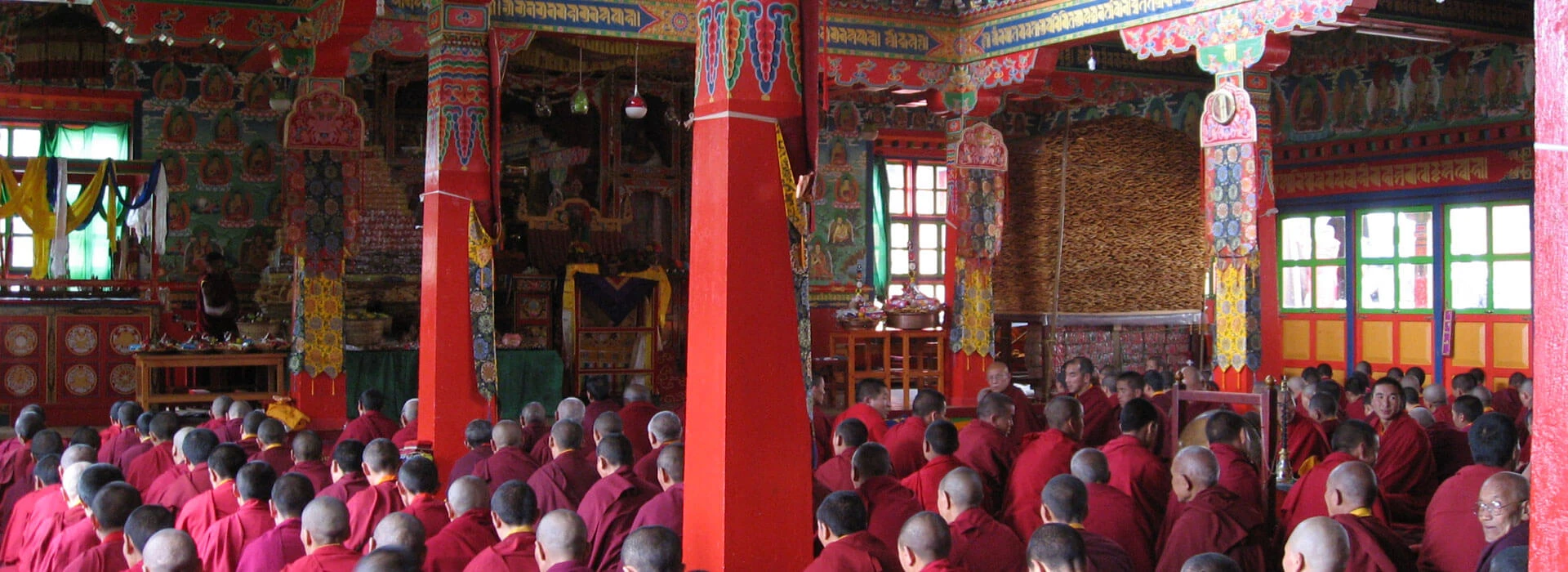
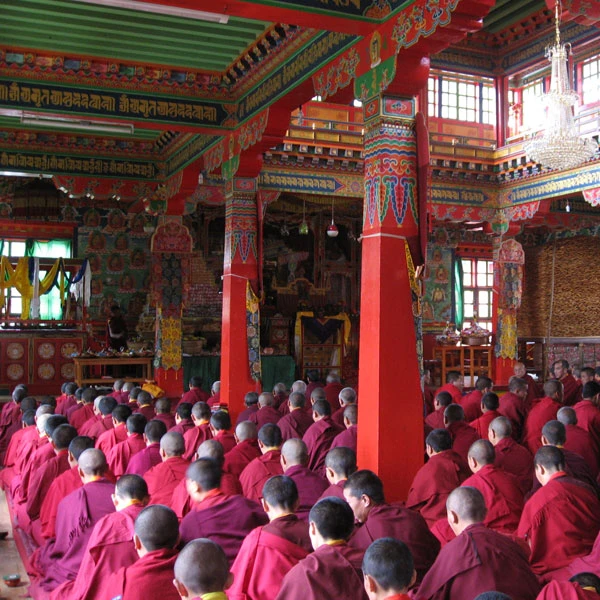
The full ceremonial cycle runs an extraordinary 19 days, beginning with private monastic rituals held inside the monastery walls, unseen by outside visitors. Most travelers instead witness the culmination: three days of public celebration that open the monastery courtyard to pilgrims, trekkers, and Sherpa families alike. Sacred Cham dances take center stage during these days, monks dressed in elaborate brocade gowns and painted paper-mâché masks performing choreography passed down across generations, each movement carrying symbolic weight far beyond simple performance. Alongside the dances, monks construct an intricate sand mandala grain by grain, only to ceremonially dismantle it once the festival concludes, a striking, deliberate reminder of impermanence central to Buddhist teaching.
Three monasteries in the region hold Mani Rimdu each year, though not always on identical dates, since the festival follows the Tibetan lunar calendar rather than a fixed Gregorian schedule. Tengboche Monastery, the largest and most celebrated of the three, draws by far the biggest crowds and forms the centerpiece of most festival itineraries, framed by Everest, Lhotse, and Ama Dablam rising directly behind it. Chiwong Monastery, near Junbesi in the Solu region, and Thame Monastery, west of Namche Bazaar, both hold quieter versions of the same rituals, genuinely worth considering for travelers who'd rather witness the ceremony without Tengboche's larger crowds.
Understanding what Mani Rimdu actually represents, spiritually and culturally, transforms the experience of witnessing it firsthand. It isn't staged for visitors or performed on demand; it's a living tradition, carried forward by monks and Sherpa communities who've practiced these same rituals for generations, and trekkers fortunate enough to be in Tengboche during the public celebration days step into something genuinely rare, a Himalayan festival still belonging entirely to the people who created it.
When Is the Mani Rimdu Festival in 2026? Confirming the Dates
Pinning down exact Mani Rimdu Festival dates is trickier than most travel guides let on, and being upfront about that uncertainty matters more than confidently quoting a single figure. The festival follows the Tibetan lunar calendar rather than a fixed Gregorian schedule, which means its timing shifts year to year and gets formally confirmed by the head lama at Tengboche Monastery only after the Tibetan New Year, often just months ahead of the actual celebration.
For 2026, public celebration days at Tengboche are widely expected to fall somewhere in the late October window, with October 26 through 28 cited most consistently across current sources, though a few place the closing day on the 29th instead. The wider 19 day ritual cycle begins in early October with private monastic ceremonies held inside the monastery, invisible to outside visitors, building toward the public days that draw pilgrims, trekkers, and Sherpa families from across the region.
A few practical points matter here more than the exact date itself. Since timing varies slightly by monastery, Tengboche, Chiwong, and Thame don't always celebrate on identical days, confirming which location and which dates apply well before booking flights is essential. Arriving a day or two ahead of the main public celebration is worth building into any itinerary too, since the sand mandala's construction and early monastic activity often begin building visible momentum in the days just before the festival's formal public opening.
Given how much the exact dates can shift closer to the event, checking directly with a trekking operator or monitoring official announcements in the months before departure remains the most reliable way to confirm timing. Nepal Nomad tracks the head lama's confirmation closely each year and adjusts departure dates for its Mani Rimdu Festival Trek accordingly, rather than locking travelers into a fixed itinerary set months in advance. Booking with that kind of built-in flexibility protects against the small but real chance that final dates shift by a day or two once the official announcement comes through, ensuring the trek still lands squarely on the festival's public celebration days regardless of last-minute changes.
Tengboche vs. Thame vs. Chiwong: Choosing Where to Witness Mani Rimdu
Three monasteries in the Solu-Khumbu region hold Mani Rimdu each year, and choosing between them shapes the entire character of a festival trek far more than most travelers expect going in.
Tengboche Monastery remains the destination most itineraries, including this one, are built around, and for good reason. As the largest and most celebrated of the three, it draws by far the biggest crowds of pilgrims, monks, and international visitors, set against a backdrop of Everest, Lhotse, and Ama Dablam rising directly behind the monastery courtyard. Reaching it also means walking the classic Everest Base Camp approach trail through Namche Bazaar, doubling the trip as both a genuine Himalayan trek and a cultural pilgrimage. The trade-off is scale; festival days at Tengboche draw a genuinely large crowd, and accommodation in the surrounding villages fills quickly during the celebration window.
Chiwong Monastery, tucked near Junbesi in the Solu region further south, offers a markedly quieter alternative. Far less touristed, it holds the same core rituals, sand mandala construction, masked Cham dances, and monastic prayer, but within a smaller, more intimate community setting. Reaching Chiwong involves a different trekking route entirely, generally lower in altitude and less frequented by international trekkers, appealing strongly to travelers who'd rather witness the ceremony without Tengboche's crowds.
Thame Monastery, west of Namche Bazaar, splits the difference in its own way. Still within the Khumbu's main trekking corridor, it offers a lower-key celebration than Tengboche while remaining more accessible than the longer trek to Chiwong. For travelers already planning to pass through the Everest region, Thame can work as a genuine alternative or even a secondary stop, depending on how festival dates align across the two monasteries in a given year.
For most travelers, the choice comes down to a fairly simple trade-off: Tengboche offers the biggest, most visually striking celebration paired with a classic Himalayan trekking route, while Chiwong and Thame offer a quieter, more intimate version of the same sacred rituals. This itinerary centers on Tengboche specifically, pairing the festival's grandest celebration with genuinely spectacular high-altitude scenery, but travelers drawn to a smaller, less-visited experience may find Chiwong or Thame worth exploring as a different kind of Mani Rimdu Festival Trek entirely.
12 Days Mani Rimdu Festival Trek Cost in 2026
A 12 day Mani Rimdu Festival Trek in 2026 typically runs $1,500 to $2,100 per person, depending on group size, accommodation availability, and how close to the festival dates a booking gets confirmed. Pricing tends to sit slightly higher than a standard 12 day Khumbu trek of similar length, largely because teahouse and lodge availability around Tengboche grows genuinely limited during the festival's public celebration days, and demand from both trekkers and pilgrims pushes rates up during that specific window.
The given figure generally covers domestic flights between Kathmandu and Lukla, the Sagarmatha National Park and Khumbu Pasang Lhamu permits, teahouse accommodation and meals throughout the trek, and an experienced guide familiar with festival etiquette and timing. It typically excludes international flights, Nepal visa fees, personal travel insurance, and any Kathmandu sightseeing or extra nights added around flexible festival dates.
A few factors shift the price beyond the base range. Booking well in advance matters more here than on most treks, since accommodation in Tengboche and nearby villages fills quickly once festival dates are confirmed each year, and last-minute bookings often mean paying a premium for whatever rooms remain. Group size affects per-person cost too; larger groups spread permit and guide costs further, while solo or private departures carry a higher per-person rate for the same dedicated attention. Building in extra buffer days around the festival's exact dates, given how the Tibetan lunar calendar can shift timing slightly, also adds a modest cost but genuinely protects against the trip missing the public celebration entirely.
A handful of costs are worth budgeting separately. Hot showers, Wi-Fi, and device charging typically run a few dollars each once above Namche Bazaar, and these add up over twelve days on the trail. High altitude travel insurance with emergency evacuation coverage remains essential regardless of trip length or purpose and should be arranged well before departure.
As always, exact pricing shifts by operator, group size, and how firmly festival dates have been confirmed for the given year, so checking current figures directly before booking matters more here than on almost any other Everest region trek. What the price ultimately buys goes beyond permits and lodging; it buys a guide who understands festival timing, appropriate visitor etiquette inside the monastery, and the flexibility to adjust dates slightly if the head lama's final confirmation shifts the celebration by a day or two.
The Trail to Tengboche During Festival Season
Every Mani Rimdu Festival Trek begins the same way: a short, dramatic flight into Lukla, the gateway into the Khumbu and the starting point for everything that follows. From the moment the plane touches down on that short mountainside runway, the trail ahead carries a different kind of anticipation than an ordinary trek, not just toward mountains, but toward a celebration building somewhere further up the valley.
The early stretches wind through the Dudh Kosi valley, pine and rhododendron forest closing in around narrow trails, suspension bridges swaying over glacial river water far below. It's familiar Khumbu scenery, but walking it during festival season adds a subtle undercurrent, more porters carrying supplies, more families moving with purpose toward Tengboche, the valley itself seeming to lean toward something happening further ahead.
Namche Bazaar marks the trip's natural turning point, both physically and in pace. Days spent acclimatizing here matter as much for the body as for the growing sense of occasion, market streets busier than usual, conversations in teahouses turning toward the festival, trekkers and pilgrims alike comparing notes on what lies ahead.
Beyond Namche, the landscape shifts noticeably. Forest gradually gives way to wider, more dramatic Himalayan terrain, and the villages grow quieter and more distinctly Sherpa in character the higher the trail climbs. Mani walls line the path in greater number, prayer wheels turning at nearly every settlement, small teahouses filled with locals already speaking of Mani Rimdu rather than simply serving passing trekkers.
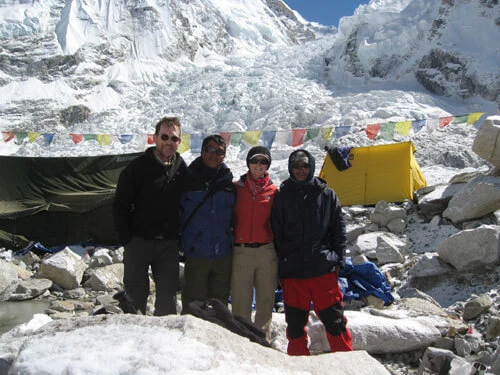
As Tengboche draws closer, the atmosphere changes in a way that's hard to miss. Monks moving between villages, families carrying offerings, trekkers and visitors converging from multiple directions, all of it building toward the same destination. The trail itself starts to feel woven into the celebration rather than separate from it, prayer flags fluttering more densely with each passing mile, small monasteries and shrines appearing more frequently along the route.
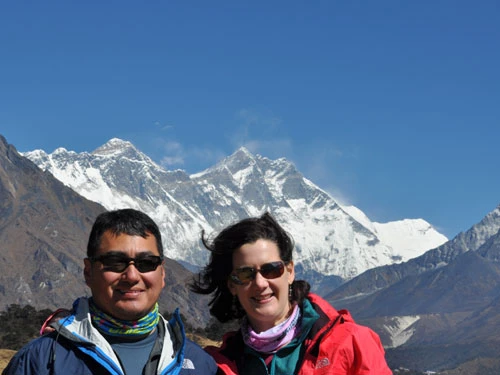
Mountain views accompany every stage of the journey, Everest, Ama Dablam, Lhotse, and Nuptse rising and receding behind ridgelines as the trail climbs, dramatic without ever feeling like the point of the walk itself during festival season. What draws the eye instead are the smaller details: a family repairing prayer flags before departure, a child practicing a few notes on a ceremonial horn, a Sherpa home decorated slightly more than usual in anticipation of guests.
The final approach to Tengboche builds real anticipation, the trail climbing steadily as the surrounding Himalayan landscape opens into full view, monastery rooftops finally visible against a wall of peaks. Arriving here during festival season feels different from any ordinary trekking day, less like reaching a destination and more like stepping directly into the heart of something already in motion, a celebration the trail itself has been quietly leading toward since the very first steps out of Lukla.
How Difficult Is the Mani Rimdu Festival Trek?
A 12 day Mani Rimdu Festival Trek sits at a moderate difficulty level, demanding solid general fitness without requiring technical trekking experience. Daily walking stretches run three to seven hours across varied terrain, and the trek's highest point at Tengboche Monastery, 3,867 meters, puts real altitude into the equation even though the route stops well short of Everest Base Camp's elevation.
What makes this itinerary distinct from a standard Khumbu trek isn't the terrain itself; suspension bridges, steady climbs, and forest trails are all familiar features of the region- it's the compressed schedule built around fixed festival dates. Where a flexible EBC itinerary can add rest days freely if someone needs extra time to acclimatize, this trek's timing is locked to the festival's public celebration window, leaving less natural flexibility to slow down mid-route without risking missing the ceremony itself.
Namche Bazaar's built-in acclimatization day matters considerably here for exactly that reason; it's the trek's main buffer for adjusting to altitude before pushing on toward Tengboche, and skipping or rushing through it isn't advisable even under festival time pressure. Above Namche, symptoms like headache, unusual fatigue, or disrupted sleep should be taken seriously and reported to a guide immediately rather than pushed through in the interest of reaching Tengboche on schedule.
Physically, the trek's demands remain well within reach for reasonably fit trekkers with some hiking experience, ideally including a few full-day hikes on varied terrain in the months before departure. Trekking poles help considerably on the steeper stretches into and out of Namche, and broken-in boots matter as much here as on any Himalayan trek; testing new footwear on the actual trail is a mistake worth avoiding entirely.
Ultimately, the trek's real challenge lies less in extreme altitude or technical terrain and more in timing, arriving fit, rested, and properly acclimatized precisely when the festival's three public days begin, since unlike most Himalayan treks, this itinerary can't simply be paused or extended once those dates arrive.
Festival Etiquette: How to Respectfully Witness Mani Rimdu
Mani Rimdu isn't staged for visitors, and remembering that distinction shapes everything about how to behave once inside the monastery courtyard. For Sherpa families and monks, these three days represent a genuine, deeply held religious observance, not a cultural performance arranged for tourists, and treating it with that level of respect matters more than any single item packed for the trip.
Dress modestly for every day spent at Tengboche, covering shoulders and knees regardless of the weather, and avoid flashy or overly casual clothing that stands out sharply against the setting. Removing hats and shoes before entering the monastery's inner sanctum is expected, following the same conduct as any visitor to a working Buddhist temple, not just during the public festival days but throughout the entire stay.
Photography rules deserve real attention, since they vary by moment and location within the monastery. Photographing the courtyard, the sand mandala, and the public dances is generally permitted, but always worth confirming locally, since rules can shift year to year or moment to moment depending on which ritual is underway. Flash photography is best avoided entirely, and using a zoom lens from a respectful distance beats pushing forward for a closer shot that disrupts monks mid-ritual. Some inner ceremonies remain off-limits to photography altogether, and a guide familiar with the festival will flag exactly when and where cameras should stay put away.
Behavior inside the courtyard follows the same quiet respect expected at any sacred site. Keeping voices low, avoiding pointing feet toward monks or sacred objects, and moving around the courtyard's edges rather than through the center during active ceremony all matter considerably. Sitting rather than standing when locals do the same helps avoid blocking anyone's view, and following a guide's lead on where visitors are welcome to stand versus where space belongs to monks and Sherpa families specifically.
Alcohol and loud conversation have no real place during the public celebration days, and neither does treating the dances as a photo backdrop rather than a religious rite unfolding in real time. A respectful visitor watches quietly, asks questions afterward rather than during active ritual, and remembers throughout that being present for Mani Rimdu is a genuine privilege extended by the Sherpa community, not an entitlement that comes with the price of a trek.