
Some trips are measured by the places on the itinerary. A Bhutan tour from Kathmandu is remembered for something harder to name: the feeling of stepping into a country that chose, deliberately, not to rush toward the rest of the world.
Bhutan sits tucked into the eastern Himalayas, often called the Land of the Thunder Dragon, where monasteries cling to cliff faces, prayer flags mark every high pass, and centuries-old festivals still shape the rhythm of daily life rather than existing for visitors to watch. While most nations measure progress in growth rates, Bhutan built its national policy around gross national happiness instead, a choice that shows up everywhere, from how little the landscape has been developed to how unhurried daily life still feels.
Starting from Kathmandu is one of the simplest ways to enter the kingdom. A dramatic Himalayan flight, one of the most scenic commercial routes anywhere in the world, descends into Paro, and from there the trip moves through Bhutan's defining stops: the capital, Thimphu; the historic valley of Punakha; and the Taktsang Monastery, better known as Tiger's Nest, perched nearly 900 m (2,953 ft) above the Paro Valley floor. Along the way there are mountain passes to cross, dzongs to explore, and a chance to meet a genuinely welcoming population whose Buddhist traditions aren't staged for tourists; they're simply how the country runs.
Built for couples, families, solo travelers, photographers, and anyone drawn to a slower kind of cultural immersion, this trip balances real comfort with substance. Some days, travelers listen to monks chant inside a centuries-old monastery; on other days, they enjoy monks chanting inside a centuries-old monastery; on others, it's the sweep of the Himalayas from Dochula Pass or the final push up to Tiger's Nest itself. Each stop reveals a slightly different aspect of a country that has managed to remain unmistakably itself.
This isn't simply a vacation; it's a window into a kingdom where spirituality, nature, and tradition still coexist without much friction and the kind of trip that tends to stay with you well past the flight home.
- Before flying to Bhutan, explore the cultural treasures of Kathmandu, including UNESCO World Heritage Sites.
- Fly from Kathmandu to Paro on Druk Air on one of the world's most spectacular Himalayan flights.
- Discover Thimphu, Bhutan's charming capital, where old traditions mix effortlessly with today's lifestyle.
- Explore the famous Buddha Dordenma, one of the largest seated Buddha statues in the world.
- Cross the scenic Dochula Pass (3,100 m / 10,171 ft), famous for its 108 memorial chortens and panoramic views of the Himalayas.
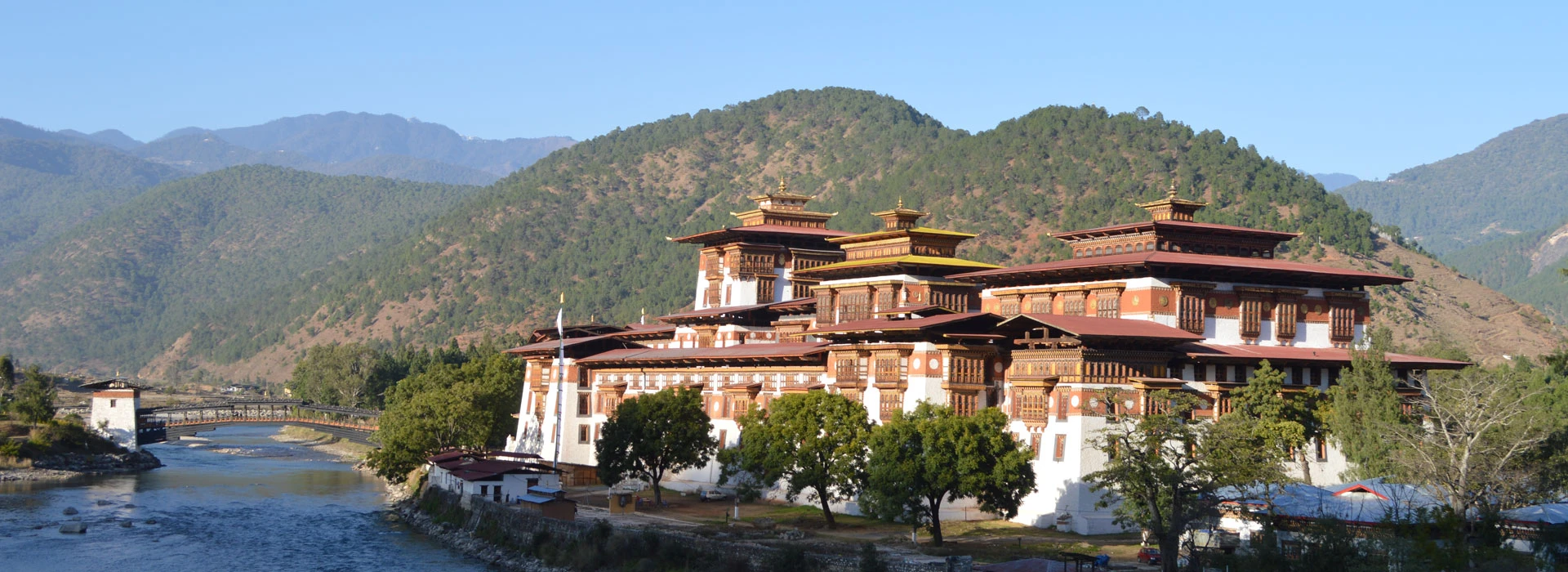
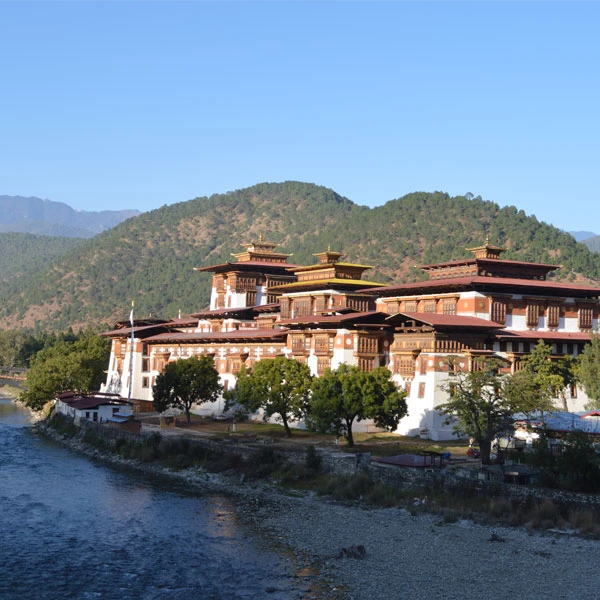
- Admire the architectural beauty and spiritual significance of the magnificent Punakha Dzong, often called Bhutan's most beautiful fortress monastery.
- Experience the real Bhutanese culture among traditional villages, monasteries, prayer flags, and the peaceful mountain scenery.
- Walk to the legendary Taktsang Monastery (Tiger’s Nest), perched dramatically on a cliff 900 m (2,953 ft) above the Paro Valley.
- Enjoy traditional Bhutanese food and learn about the country's unique philosophy of Gross National Happiness.
- Return home with unforgettable memories from one of the world’s last Himalayan kingdoms, where breathtaking landscapes, living Buddhist traditions, and genuine hospitality combine to make a journey like no other.
Discover Bhutan beyond the Guidebooks
Some places are for their landmarks, while others change your worldview. Bhutan belongs to the second category, and it’s most intriguing parts rarely make it onto the standard itinerary.
Much of what shapes daily life here isn't advertised. Bhutan built its national policy around Gross National Happiness rather than economic growth alone, and while there's no sign announcing this on any street corner, its influence shows up in what you don't see as much as what you do: no billboards crowding the valleys, no rushed development swallowing the old architecture. Prayer flags still mark every mountain ridge for genuine devotional reasons, dzongs still function as both government offices and places of worship, and Tshechu festivals still gather entire villages for masked dances and rituals that were never staged for an audience. Step beyond Thimphu's fortress walls or the famous stone steps up to Tiger's Nest, though, and there's a quieter, stranger, more intimate country waiting, one most guidebooks barely mention.
The Valleys Most Travelers Skip
The well-trodden route runs from Paro to Thimphu to Punakha. Bhutan's real texture is often somewhere off that line.
Phobjikha Valley feels sealed off from the rest of the world in the best way: a wide, glacially carved wetland where power lines were deliberately buried underground to protect the wintering grounds of the sacred black-necked crane. What's left above ground is pine forest, stone farmhouses, and some of the most peaceful day hiking in the country.
Haa Valley stayed closed to tourists until 2002, and it still feels like it's just recently opened its door a crack. Reached over the cloud-swept Chele La Pass, it's one of the few places where animist ritual and Tibetan Buddhism visibly overlap rather than existing as separate histories.
Bumthang, spread across four high valleys, is generally considered the country's spiritual heartland, a place thick enough with folklore that locals will point you toward hidden monasteries said to contain termas, sacred treasures buried within the walls themselves. It's also where you'll find some of Bhutan's best sheep's milk cheese and alpine honey, even if the mythology alone doesn't pull you in.
Food That Refuses to Play It Safe
Forget the version of "international buffet" most hotel breakfasts default to. Bhutanese food runs on heat, cheese, and a genuine sense of hospitality that shapes how it's served as much as how it tastes.
Ema datshi, the national dish, inverts the usual culinary logic; chili peppers aren't a seasoning here; they're the primary vegetable, simmered whole in a rich, melted yak cheese sauce. If you're invited into a local farmhouse, you'll likely be offered ara, a home-brewed rice spirit traditionally served warm, with a poached egg and a spoonful of butter melting on top.
Dish or Custom | What It Actually Is |
Ema Datshi | Not a side dish: chili peppers cooked as the main ingredient in a sauce of melted cheese. |
Ara | Warm, home-brewed rice wine, often served with a poached egg and butter stirred in. |
The Polite Refusal | Locals traditionally wave off an offered dish or drink once or twice before accepting it on the second or third round; accepting immediately can come across as overly eager. |
Food here functions almost like communal medicine, shared, unhurried, and treated as an occasion in its own right rather than a stop between activities.
Archery, Phalluses, and the Divine Madman
Look closely at farmhouse walls in rural villages like Sopsokha, and you'll notice large, brightly painted phalluses above the doorways. They're not crude; they're protective symbols tied to Drukpa Kunley, a 15th-century saint remembered as "The Divine Madman" for teaching enlightenment through humour, shock, and open irreverence. His legacy still runs through Bhutanese culture as a kind of built-in permission to take some things lightly.
That same spirit shows up at a local archery match, Bhutan's national sport. Archers shoot at a target roughly 145 metres away (more than double the Olympic distance) while the opposing team sings mocking, needling songs specifically designed to break their concentration. When a hit is scored, the entire team immediately begins a slow, synchronised victory dance. It's part sport, part psychological warfare, part community theatre, and genuinely one of the most entertaining things you can stumble into in any Bhutanese town.
How to Actually Connect With It
Getting past the surface here takes a small amount of deliberate effort.
Trade a hotel night for a farmstay, and you'll sleep on woven mats, help chop chillies for dinner, and likely soak in a dotsho, a hot stone bath where river stones heated over an open fire are dropped into a wooden tub filled with medicinal artemisia leaves.
Buy your own strand of lungta, the colourful wind-horse prayer flags, rather than just photographing someone else's. Work with your guide to find a high, windy ridge or a suspension bridge to hang them yourself; the gesture means considerably more than the photo does.
And if you can manage an early start, sit quietly at the back of a remote monastery while novice monks chant their morning prayers. The sound of long bronze horns and low chanting moving through centuries-old timber is the kind of thing that's genuinely difficult to describe secondhand; you either catch it in person or you don't.
None of this shows up on a highlight reel. That's rather the point: Bhutan measures what it's built not by what gets photographed but by what it's chosen to preserve, and the country's quieter corners are where that choice is easiest to actually feel.
Why Choose a Bhutan Tour from Kathmandu?
For many tourists, Kathmandu is more than Nepal's capital; it's the most convenient gateway into the Kingdom of Bhutan. Regular direct flights to Paro, experienced regional operators, and well-worn travel connections mean starting here lets you move from one Himalayan world into another without friction.
1. The Flight Itself Is Part of the Trip
The Kathmandu-Paro route is widely considered one of the most scenic commercial flights on earth, and it earns that reputation quickly. About 15-20 minutes after takeoff, five of the world's fourteen eight-thousand-meter peaks come into view in sequence: Cho Oyu, Everest, Lhotse, Makalu, and Kangchenjunga, before the aircraft banks into its dramatic descent through the Paro Valley.
Seat choice matters here more than on most flights. Book a window seat on the left side when flying into Bhutan and on the right when flying back to Nepal; those are the sides the flight path favors in each direction, and they're the difference between a pleasing view and an unforgettable one. Clear weather is most likely in late autumn, winter, and early spring, so if the mountains are the priority, time your dates accordingly.
2. One Booking Instead of a Dozen
Starting in Kathmandu also simplifies the logistics considerably. Rather than coordinating visas, permits, flights, hotels, and ground transport as separate, uncoordinated bookings, a professionally organized tour folds all of it into a single itinerary. Working with an established regional operator such as Nepal Nomad means your cross-border visas, local flight ticketing, and Bhutan's mandatory Sustainable Development Fee are all synchronized on your behalf: no juggling three countries' worth of paperwork on your own.
3. A Built-In Acclimatization Advantage
There's also a practical health benefit most travelers don't think about until they're mid-trip. Spending your first days in Kathmandu, sitting at roughly 1,400 m, gives your body an effortless, low-stress introduction to elevation before you fly up to Paro (2,200 m) and continue on to Thimphu (2,330 m). It's a gentler ramp than arriving in Bhutan's higher valleys, cold and all.
4. Two Distinct Cultures, One Week
Nepal and Bhutan share the same mountain range but express their faith quite differently. Kathmandu offers a vibrant blend of Hinduism and Buddhism, dense with temple squares and constant street-level energy; Bhutan slows that down into a more meditative, tightly preserved continuation of Vajrayana Buddhism, wrapped in valleys that have stayed deliberately uncrowded. Architecturally, the contrast is just as striking: the tiered pagoda temples of the Kathmandu Valley set against Bhutan's massive, nail-less dzong fortresses, two very different answers to the same devotional impulse.
In practice, that means one trip gives you high-energy trekking culture, bustling markets, and centuries-old UNESCO sites in Nepal, followed by Bhutan's strict "High Value, Low Impact" model, where the crowds thin out, the trails empty, and the pace of the day genuinely slows. Visiting either country alone is worthwhile. Visiting both back-to-back, connected by a single flight over the roof of the world, is a different kind of trip entirely.
5. Flexible Enough for Travelers Coming From Elsewhere
While this route begins in Kathmandu, other entry points are available. While this route begins in Kathmandu, it is not the only entry point available. Travelers already in India, Bangkok, Singapore, or Dhaka, the cities Bhutan's carriers actually connect to, can often join by flying directly into Paro, as long as international arrangements are coordinated with their operator in advance. Once everyone's on the ground in Bhutan, the whole group follows the same itinerary regardless of how they arrived.
Ultimately, choosing a Bhutan tour from Kathmandu isn't just about where the trip starts. The most efficient, scenic, and logistically sound way to access the Thunder Dragon Kingdom is to combine two remarkable Himalayan destinations into a single, coherent journey rather than two separate trips.
How Much Does a 7-Day Kathmandu to Bhutan Tour Package Cost in 2026?
A 7-day Kathmandu to Bhutan tour package in 2026 typically runs between USD 2,000 and USD 2,900 per person, all-in tour package, government fees, and the Himalayan flight combined. The season you travel in, your hotel category, group size, and how far ahead you book all move that number, sometimes by several hundred dollars in either direction.
What makes Bhutan's pricing feel steep at first glance is really a structural difference from most of Asia. Independent, unguided travel simply isn't an option here; every foreign visitor books through a licensed operator, and that single price bundles accommodation, transport, a licensed guide, meals, sightseeing, and a mandatory government tourism levy into one number instead of dozens of separate line items. Working with an established operator like Nepal Nomad means that entire structure is handled for you, from the visa paperwork through to the final airport transfer.
What Actually Makes Up the Price
The total splits into four distinct pieces, each priced and regulated separately:
1. The Tour Package Rate: USD 1,100 - USD 1,900
Since Bhutan scrapped its old flat Minimum Daily Package Rate, pricing now scales with group size and hotel standard rather than a fixed daily minimum. For a standard 3-star, 7-day itinerary:
Group Size | Tour Package Rate (Per Person) |
Solo traveler | $1,700 - $2,000 (includes a solo-travel surcharge for unshared vehicle and room costs) |
Couples / duos (2-3 pax) | $1,400 - $1,600 |
Small groups (4+ pax) | $1,200 - $1,500 |
2. The Sustainable Development Fee (SDF): USD 100 per night
Bhutan's daily tourism levy sits at its discounted rate of USD 100 per adult, per night, through August 31, 2027. It's charged for every night physically spent inside Bhutan, not for the whole trip length:
Nights in Bhutan | Total SDF (Adults) |
3 nights | $300 |
6 nights | $600 |
Children aged 6-12 pay a 50% discounted rate of USD 50 per night; children under 6 are exempt entirely.
3. The Kathmandu-Paro Flight: USD 450 - USD 520 roundtrip
One of the most scenic commercial flights anywhere in the world, operated exclusively by Druk Air or Bhutan Airlines, since no other carriers fly into Paro. Pricing holds fairly steady around the USD 500 mark, though booking early gives you better odds on preferred dates.
4. The Visa Fee: USD 40 flat
A one-time, non-refundable electronic visa fee applied per person, regardless of trip length.
Choosing Your Hotel Tier
Beyond group size, the other major lever on price is which hotel standard you book into. Bhutan officially certifies its hotels by category, so this isn't just marketing language, it reflects a real, government-recognized tier system that shapes your quote.
Tier | Hotel Standard | Typical Add to Package Rate | Best For |
Standard | Government-certified 3-star hotels | Baseline (included in the rates above) | First-time visitors, budget-conscious travelers |
Deluxe / First Class | 4-star properties with stronger amenities and service | +$40 - $80 per night | Travelers wanting extra comfort without a major cost jump |
Luxury | 5-star resorts (Amankora, COMO Uma, Six Senses) | +$400 - $900+ per night | Honeymooners, special occasions, travelers prioritizing comfort over cost |
Standard hotels are what the package rates above already assume, and they're genuinely comfortable; clean, government-certified 3-star properties with private bathrooms and reliable hot water. Stepping up to Deluxe buys you noticeably better rooms and service for a modest nightly premium, a popular middle ground for travelers who want more comfort without doubling their budget.
Luxury is a different category entirely. Brands like Amankora, COMO Uma, and Six Senses operate boutique lodges across Bhutan's main valleys, and booking into them can add several hundred dollars per night on top of the standard package rate, but it also brings a meaningfully different experience: private drivers, curated cultural programming, and properties built specifically to disappear into the landscape rather than dominate it. It's a genuine splurge, not just a nicer bed.
What's Included in the Price
Bhutan's "High Value, Low Impact" tourism model means once you land, there's very little left to pay for out of pocket:
• Accommodation: government-certified 3-star hotels across Kathmandu, Thimphu, Punakha, and Paro.
• Full board in Bhutan: breakfast, lunch, and dinner daily, plus breakfast during the Kathmandu portion.
• Private transport: a dedicated vehicle and driver for every transfer and sightseeing stop.
• A licensed guide: an English-speaking Bhutanese guide with you for the full trip.
• Permits and entry fees: monument, museum, and national park fees, including entry for the Tiger's Nest hike.
What's Not Included
Budget an extra USD 100-200 in cash for:
• Meals: Extralunches, snacks, alcoholic beverages.
• Tips: customary for your driver and guide at the end of the trip.
• Personal extras: alcohol (ara is worth trying at least once), laundry, souvenirs, or a hot stone bath upgrade.
• Travel insurance: not bundled into the package, but genuinely necessary for high-altitude Himalayan travel.
How to Bring the Cost Down
Traveling as a pair or in a small group is the single biggest lever as it can shave USD 200-400 per person off the package rate by splitting the vehicle and guide costs. Restructuring your nights also helps: a 5-day Bhutan / 2-day Nepal split reduces your SDF exposure compared to spending six full nights inside Bhutan, since the fee only applies per night actually spent in the country.
Booking several months ahead of your travel dates remains the most reliable way to protect your budget overall as it widens your choice of Kathmandu-Paro flights, secures better hotel availability during the popular spring (March-May) and autumn (September-November) seasons, and gives you room to adjust your itinerary before prices firm up closer to departure.
Choosing the Best Season for Your Bhutan Tour
Bhutan doesn't really have a bad month but it has very different months, and which one suits you depends on whether you're chasing festivals, clear mountain views, quieter trails, or simply a better price. Spring and autumn draw the biggest crowds for good reason: reliable weather and the country's two most famous Tshechus. But the shoulder months and even the monsoon have their own case to make, especially if solitude matters more to you than guaranteed sunshine. Here's how each month actually breaks down.
Month | Advantages | Disadvantages | Festivals | Other Factors |
January | Clear blue skies, crisp mountain views, lowest crowds and prices of the year | Cold nights regularly below freezing in Thimphu and Paro | Quiet month, no major Tshechus | Punakha stays milder and more comfortable in the daytime |
February | Warming days, still-clear skies, festival season kicks off | Nights still cold in higher valleys | Punakha Drubchen & Tshechu (re-enacts a 17th-century battle); Losar (Lunar New Year) | Punakha is the best base this month for warmth and celebration |
March | Mild, comfortable weather across all three main valleys; good for birdwatching | Early spring haze can soften mountain views slightly | Paro Tshechu often begins late March | One of the most even, well-rounded months to travel |
April | Rhododendrons in bloom, clear air, warm days and cool nights | Popular month to book hotels and flights early | Paro Tshechu (Bhutan's most iconic festival); Rhododendron Festival at Lamperi | The Tiger's Nest hike pairs especially well with clear April mornings |
May | Lush, green valleys; jacaranda blooms at Punakha Dzong; good trekking window | Late-month humidity builds ahead of monsoon | Smaller local festivals; Jomolhari and Druk Path treks run through late May | Last reliably dry month before the rains arrive |
June | Fewer tourists, lower prices, valleys still accessible and green | Monsoon rains begin; some mountain views obscured by cloud | No major Tshechus | A genuine budget-travel window if you don't mind rain |
July | Lower prices, lush scenery, authentic off-season atmosphere | Wettest month; occasional road disruption in remote valleys | Haa Summer Festival is a rare look at nomadic highland culture | Cultural sites and dzongs remain unaffected by the rain |
August | Waterfalls and rivers at their fullest; quiet, uncrowded sites | Still within monsoon; humidity and cloud cover common | No major Tshechus | Good month for travelers prioritizing solitude over guaranteed mountain views |
September | Monsoon clears, skies sharpen, trekking trails dry out again | Crowds and prices start climbing toward peak | Wangdue Phodrang Tshechu; early Thimphu Tshechu in some years | Excellent balance of scenery, culture, and manageable crowds |
October | Widely considered Bhutan's best month; deep blue skies, sharp Himalayan views | Peak season pricing; book 4-6 months ahead | Thimphu Tshechu (the country's grandest festival); Jambay Lhakhang Drup in Bumthang | The only reliable month for the demanding Snowman Trek |
November | Clear, cool, and consistently dry | Cold mornings and evenings, especially in Bumthang and higher valleys | Jambay Lhakhang Drup continues in some years; Black-Necked Crane Festival in Phobjikha | A moving, less-touristed month if the crane migration is a priority |
December | Snow-dusted dzongs, dramatic scenery, lowest crowds of any peak-view month | Cold, short days; some high passes may see snow | Druk Wangyel Tshechu at Dochula Pass (December 13) | A quiet, contemplative way to close out the year in Bhutan |