
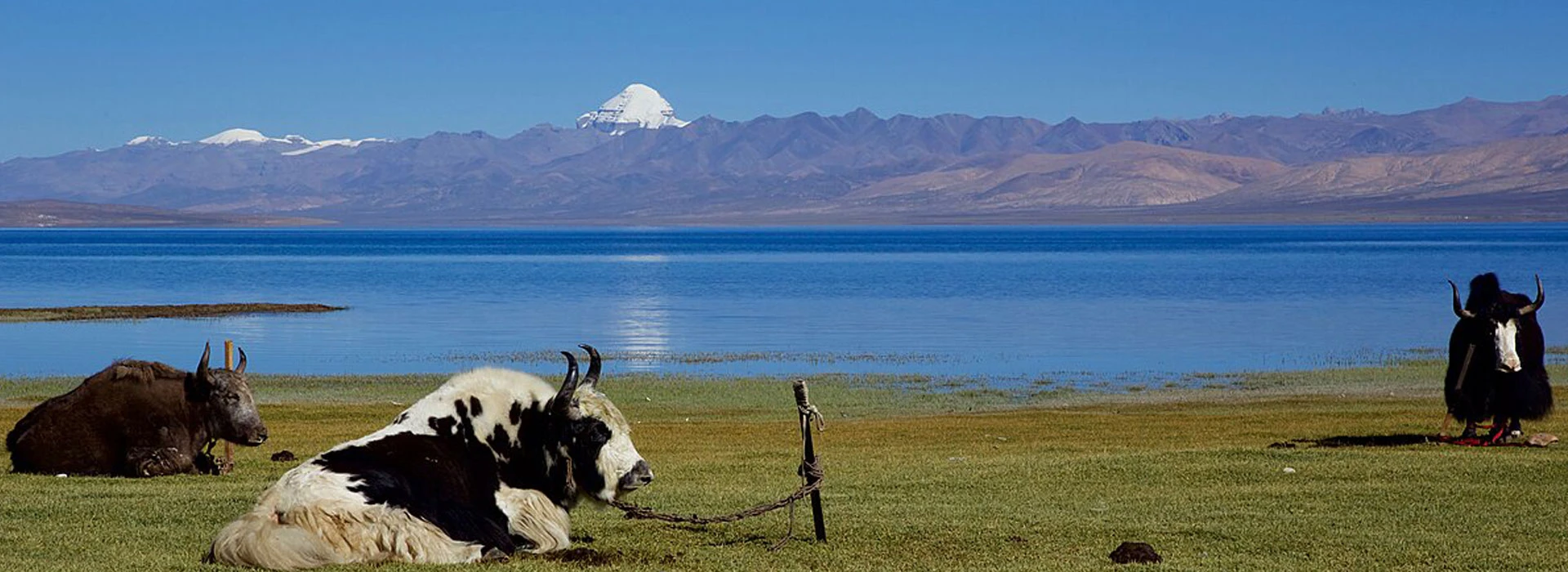
The Kailash Mansarovar Tour Fly in Drive out is a well crafted tour of spiritual discovery, culture and comfortable travel on the Tibetan Plateau. Travellers can fly into Lhasa from Kathmandu, acclimatising gradually by visiting Tibet’s cultural sites before continuing overland to the sacred sites of Lake Mansarovar and Mount Kailash. This reduces the stress of long road journeys at the start of the trip and is a preferred option for those looking for a more balanced high-altitude experience.
This 14 day journey takes you through ancient monasteries, traditional Tibetan towns, crystal clear alpine lakes and vast Himalayan landscapes to arrive at the spiritual heart of the expedition: the 52 km (32 mi) Kailash Parikrama. Revered by Hindus, Buddhists, Jains, and followers of Bon, Mount Kailash has inspired devotion for centuries, while nearby Lake Mansarovar is regarded as one of the world's holiest freshwater lakes.
The return journey is overland through western Tibet and the Kerung border to Nepal, providing a different perspective of the Tibetan Plateau and the Himalayas. The Fly in Drive out Kailash Mansarovar Tour is a well-paced and efficient itinerary, flying into Tibet and gradually driving out. It strikes a perfect balance of acclimatisation, cultural immersion and one of the world’s most profound spiritual experiences.
- Scenic flight from Kathmandu to historic city of Lhasa.
- Explore the cultural highlights of Lhasa, including the Potala Palace, Jokhang Temple, and Barkhor Street.
- See the turquoise beauty of Yambrok Lake and the grand Karola glacier.
- Drive overland across the vast Tibetan Plateau on a spectacular journey. Come to the holy shores of Lake Mansarovar, one of the holiest lakes of Asia.
- Do the spiritually significant 52 km (32 mi) Kailash Parikrama.
- Cross the legendary Dolma La Pass (5,630 m / 18,471 ft), the highest point of this journey.
- Experience authentic Tibetan towns and meet local culture and hospitality.
- Capture amazing pictures of snow covered Himalayan peaks, monasteries & high altitude terrain.
- Returned to Nepal via the picturesque Kerung border, seeing the Himalayas from a new angle.
Why Choose the Fly in Drive out Kailash Mansarovar Tour?
The Fly in Drive out Kailash Mansarovar Tour is a well-planned journey to the holy mountain that promises a combination of efficient travel, gradual acclimatization, and a culturally enriching experience. The itinerary begins with a flight to Lhasa, where the first few days are kept free for rest and gentle sightseeing, allowing the body to adjust to the altitude of the Tibetan Plateau before the longer overland drives toward Kailash begin. It's ideal for pilgrims, older travelers, and those who want a more comfortable yet spiritually rewarding journey.
A Safer Approach to High Altitude Travel
One of the main benefits of this itinerary is its emphasis on gradual acclimatization. Once in Lhasa (3,656 m / 11,995 ft), you have time to explore the city before heading further up in elevation. This gradual ascent allows the body to adjust to lower oxygen levels and reduces the risk of acute mountain sickness (AMS) compared to routes that reach the Tibetan Plateau more quickly.
Explore Tibet Beyond Mount Kailash
This itinerary is not about reaching Kailash as fast as possible, but about taking travelers on a journey through Tibet's rich cultural and spiritual heritage. Along the way, you'll visit famous sites such as Potala Palace, Jokhang Temple, Barkhor Street, Gyantse, and Tashilhunpo Monastery to learn more about Tibetan Buddhism, history, and customs before reaching the holy Lake Mansarovar and Mount Kailash.
More Reliable Travel
A scheduled international flight into Lhasa to begin the trip also reduces dependence on the weather-sensitive domestic flights common on Nepal-side routes. Weather can affect travel anywhere in the Himalayas, but commercial flights to Lhasa are less susceptible to disruption than the small aircraft often used on remote mountain routes, which helps keep this itinerary more reliably on schedule.
Experience the Best of Air and Ground Travel
This hybrid itinerary combines the advantages of air and road travel. Flying into Tibet saves time and preserves energy before the demanding 52 km (32 mi) Kailash Parikrama, while the scenic overland return through Saga and Kerung offers a completely different view of the dramatic Tibetan Plateau. What many pilgrims want from this trip is variety snow-capped mountains, high-altitude deserts, turquoise lakes, and deep Himalayan valleys rather than retracing the same route on the way back.
A Journey of Reflection and Comfort
The Fly-in Drive-out Kailash Mansarovar Tour is not just a quick way to reach one of the world's holiest destinations. It's a carefully balanced itinerary that combines spiritual purpose with practical travel considerations. For travelers seeking both comfort and authenticity, it offers a well-rounded, rewarding pilgrimage with gradual ascent, meaningful cultural experiences, and a scenic overland return to Nepal.
How Much Does the Fly in Drive out Kailash Mansarovar Tour Cost?
This 14 Day Fly to Lhasa, Drive to Kailash package normally costs around $3,900 to $4,400 USD per person. The premium on this route over a purely overland route is the international flight to Lhasa and the extra hotel nights included to help with altitude acclimatisation before the drive to Kailash begins.
Average Package Price by Nationality
Nationality | Average Package Price (16-17 Days) |
Indian Passports | ₹3,75,000 – ₹4,20,000 INR |
Western / Foreign Passports | $3,900 – $4,200 USD |
US & Canadian Passports | $4,100 – $4,400 USD |
Nepali Passports | रू 4,20,000 – रू 4,70,000 NPR |
US and Canadian passport holders pay a slight premium due to Chinese visa reciprocity fees. Packages for Nepali passport holders are priced in NPR and include the whole logistics chain, including the flight to Lhasa.
Why This Route Is More Expensive Than Other Kailash Tours
It costs more than the overland-only route because it includes an international flight and extra nights in Lhasa to acclimatize, as well as stops at cultural sites such as Gyantse and Shigatse along the way days that the overland route misses out on. This route is cheaper than the Simikot helicopter route because there is no weather-dependent helicopter charter, which is the single most expensive line item on that route.
Additional Expenses to Budget For
- Pony/porter hire for the Kora: $100-$300 or so
- High-altitude insurance premium: approx. $200-$400
- Extra nights in a hotel in Lhasa in case you extend acclimatization
- Personal shopping and incidental purchases in Lhasa and Kathmandu
Money Saving Tips Without Sacrificing Your Experience
- Book a fixed group departure (not a private one), private trips can add $1,000+ pp.
- Travel right after Saga Dawa or in September to avoid peak season surcharges
- Reserve More Than 40 Days in Advance, Last-minute permit processing is more expensive for late bookings.
- Bring your own trekking gear rather than renting it in Lhasa or Darchen.
Permits and Visa Requirements for the Fly in Drive out Mount Kailash Tour
For the Fly in Drive out Kailash Mansarovar Tour, you will require a Chinese group visa and various Tibet travel permits, which will be arranged by your licensed tour operator, in this case Nepal Nomad. Independent travel is not permitted in Tibet’s restricted Ngari Prefecture, home to Mount Kailash and Lake Mansarovar, and foreign visitors must join an organized tour.
China Group Visa: Unlike a standard Chinese visa, pilgrims entering Tibet from Nepal are required to obtain a Chinese Group Visa issued by the Chinese Embassy in Kathmandu. This visa is issued as a stand-alone group document, not as a stamp in your passport. Before departure, you’ll need to submit your original passport to the embassy for several business days to complete the application.
Tibet Travel Permit (TTP): The Tibet Travel Permit is the most important document for entering Tibet. It is checked before boarding the Kathmandu-Lhasa flight, issued by the Tibet Tourism Bureau. Your Tibetan guide, who will meet you on arrival in Lhasa, will have the original permit (arranged in advance by your tour operator).
Alien Travel Permit (ATP): Upon arrival in Lhasa, your guide will help you obtain the alien's travel permit at the local Public Security Bureau. This permit allows you to travel to restricted areas outside Lhasa such as Mt. Kailash, Lake Mansarovar, and the larger Ngari Prefecture. It is normally processed within a few hours.
Military Passes: Mount Kailash and Lake Mansarovar are near the international border of China, so a military permit is compulsory. This permit usually takes the longest processing time, typically 20 to 30 days, so booking early is essential. Your tour operator will apply for this permit well in advance of your departure using your passport details.
Frontier Pass: Another travel document you will need if you want to visit border areas in western Tibet is the Frontier Pass. The local authorities in Tibet process it with the military permit, and travelers cannot get it independently.
Who Arranges the Permits?
Foreigners can’t apply for Tibet travel permits by themselves. According to Chinese regulations, all visitors to Tibet must be arranged by a licensed Tibet travel agency, which is responsible for arranging the Chinese group visa invitation, Tibet travel permit, alien's travel permit, military permit, and frontier pass. Your tour operator will handle the entire application process for you so that you can focus on preparing for your trip.
Documents Required from Travelers
You will generally need to submit the following to process your permits:
- A passport valid for at least six months beyond your travel dates with at least one blank visa page.
- A recent photograph (passport size)
- A clear, high-resolution color scans of your passport.
- Your confirmed travel plan and date of departure
- Final passport information for all members travelling on the same group visa
How Long Does Permit Processing Take?
Processing times depend on government regulations and seasonal demand, but you should generally allow the following:
- Chinese Group Visa: around 3-5 working days in Kathmandu.
- Tibet Travel Permit (TTP): 8-15 working days from the moment you submit your documents.
- Alien's Travel Permit (ATP): Usually issued on the same day after arriving in Lhasa.
- Military Permit: Approx. 20-30 days.
- Frontier Pass: Usually processed along with the Military Permit.
Plan for a Smooth Trip
To avoid any unwanted delays, submit your passport copy and required documents at least 30 days before departure. The military permit and frontier pass take the longest to process, so if you confirm early enough, your tour operator will have plenty of time to get all the formalities sorted before the start of your Kailash Mansarovar Tour from Nepal.
Best Time for the Fly in Drive out Kailash Mansarovar Tour
The Fly in Drive out Kailash Mansarovar Tour is operated in the short travel season to Tibet, usually from May to October, when the weather is most suitable for high altitude travel. Every season has its own charm, but the best time to visit depends on your priorities: pleasant weather, spiritual celebrations, clear mountain views, or fewer crowds.
Some routes to Kailash rely heavily on mountain flights within Nepal, which are subject to the weather and strongly influence the routes to Kailash. This itinerary includes a scheduled flight to Lhasa, making the trip a more reliable option throughout the main travel season. But weather, road conditions, and seasonal demand still play a big part in planning your journey.
Spring (May-June) The peak of the pilgrimage season
Spring marks the start of the Kailash travel season and is said to be one of the best times to go. Daytime temperatures become bearable, roads are generally open, and the Tibetan Plateau comes alive after winter.
It is also the season of Saga Dawa, the most important festival in Tibetan Buddhism. Thousands of devotees surround the holy mountain of Mount Kailash to celebrate the birth, enlightenment, and parinirvana of the Buddha. Accommodations and departure times for tours fill up months in advance due to high demand.
Why choose spring?
- Pleasant daytime temperatures
- Great road conditions
- Reliable flights Kathmandu–Lhasa
- Perfect weather for the Kailash Parikrama
- Opportunity to celebrate the Saga Dawa Festival
Summer (July-August): a season of contrasts
July and August are monsoon months in Nepal, but western Tibet is in the rain shadow of the Himalayas and comparatively dry. Tourists can still get excellent weather around Mount Kailash and Lake Mansarovar.
However, heavy rainfall in Nepal may disrupt transportation before travelers reach Tibet. Flights to Lhasa are generally more reliable than flights to remote mountains, but travelers should still build some flexibility into their itineraries at this time.
Why choose summer?
- Mild temperatures are usual in Tibet.
- Green scenery on the Nepal side
- Fewer challenges from cold weather
- Travelers with flexible schedules are in excellent shape.
Autumn (September to October): Clear Skies and Great Views
The fly in drive out Kailash tour is another fabulous season in autumn. After the monsoon, the skies are wonderfully clear, and the Himalayan peaks and the Tibetan Plateau are beautifully visible.
The cooler temperatures are perfect for hiking the Kailash Parikrama, and there are typically fewer visitors than during the busy spring festival.
Why choose autumn?
- Views of mountains, crystal clear
- Calm weather
- Good trekking weather
- Less crowded than peak season in spring
- Excellent opportunities for photography
Winter (November to March): The Off-Season
In winter, western Tibet experiences intense cold weather, strong wind, and abundant snowfall. Many guesthouses shut down, mountain passes become difficult to access, and most organized Kailash tours do not run during this period.
Mount Kailash is magnificent all year, but winter travel is normally not suitable for regular pilgrimage groups because of the harsh weather and limited services.
Saga Dawa Festival: The Holiest Time to Visit
For many devotees, the ultimate spiritual experience is to time the journey to coincide with Saga Dawa. It marks the birth, enlightenment, and death of Shakyamuni Buddha and is celebrated on the full moon day of the fourth Tibetan lunar month.
The main event is the ceremonial raising of the giant prayer flagpole at Tarboche, drawing pilgrims from all over Tibet, Nepal, India, and beyond. There is a deeply spiritual atmosphere, but accommodation, transport, and tour departures are in exceptionally high demand. If you are traveling during this time, it is highly recommended to book months in advance.
Packing List for the Fly in Drive out Kailash Mansarovar Tour
Packing for a fly-in, drive-out Kailash tour requires careful planning, as there are extreme variations in altitude, weather, and terrain in the entire journey. You can go from the comfortable streets of Kathmandu and cultural sites of Lhasa to the windswept Tibetan Plateau and the challenging 52 km (32 mi) Kailash Parikrama. On this trip, you will experience warm sunshine, freezing temperatures, strong winds, and occasional snowfall.
Pack lighter and use layering for your clothing; carry essential medication and only pack what you really need to make your journey more comfortable. Lightweight and functional gear is highly recommended, as luggage space may be limited during parts of the tour.
Essential Travel Documents
Before leaving home, make sure all important documents are organized and easily accessible.
Carry:
- Passport valid for at least six months
- Chinese Group Visa
- Travel insurance documents
- Flight tickets and itinerary
- Emergency contact information
- Printed and digital copies of important documents
- A few passport-sized photographs
Keep these items in your carry-on bag rather than your checked luggage.
Clothing for Changing Himalayan Weather
Weather conditions can vary significantly throughout the journey. While daytime temperatures in Lhasa may feel pleasant, mornings, evenings, and higher elevations around Mount Kailash can be extremely cold.
Pack clothing that can be layered easily.
Recommended clothing includes:
- Moisture-wicking thermal base layers
- Fleece jacket or insulated mid-layer
- Down jacket for cold evenings
- Waterproof and windproof shell jacket
- Waterproof trekking pants
- Comfortable hiking trousers
- Lightweight T-shirts
- Warm hat or beanie
- Sun hat or cap
- Neck gaiter or buff
- Waterproof gloves
- Warm wool socks (3–5 pairs)
- Comfortable sleepwear
Avoid cotton clothing whenever possible, as it retains moisture and dries slowly in cold conditions.
Footwear
Proper footwear is one of the most important investments for the Kailash Parikrama.
- Waterproof trekking boots with good ankle support
- Lightweight walking shoes for sightseeing
- Comfortable sandals or slippers for hotels
- Extra boot laces
- Blister prevention tape or moleskin
Most importantly, wear trekking boots that have already been broken in before the trip.
Personal Medications and Health Essentials
Medical facilities become limited as you travel deeper into western Tibet. Carry enough medication for the entire trip.
Recommended items include:
- Prescription medicines
- Medication for altitude sickness (consult your doctor)
- Pain relievers
- Cold and flu medication
- Anti-diarrheal tablets
- Motion sickness medicine
- Oral rehydration salts
- Adhesive bandages
- Antiseptic cream
- Personal first-aid kit
- Insect repellent (mainly useful in Kathmandu)
If you have any existing medical conditions, carry a doctor's prescription along with your medications.
Sun Protection
The sun is much stronger at high altitude because of thinner air and increased UV exposure.
- Don't forget:
- Sunscreen (SPF 50+)
- SPF lip balm
- UV-protection sunglasses
- Wide-brim hat or cap
- Moisturizer
Even on cloudy days, UV exposure on the Tibetan Plateau remains high.
Toiletries and Personal Care
Pack travel-sized toiletries to save space.
Include:
- Toothbrush and toothpaste
- Soap or body wash
- Shampoo
- Face wash
- Wet wipes
- Hand sanitizer
- Toilet paper
- Facial tissues
- Quick-drying towel
- Nail clipper
- Comb
Wet wipes and hand sanitizer become particularly useful during the Kailash Parikrama where facilities are basic.
Electronics
Electricity is generally available in hotels, although charging opportunities during the trek are limited.
Recommended electronics include:
- Mobile phone
- Camera
- Extra memory cards
- Power bank
- Universal travel adapter
- Charging cables
- Spare batteries (if required)
- Headlamp or flashlight
Keeping electronics inside your sleeping bag at night can help preserve battery life in freezing temperatures.
Daypack Essentials
Carry a comfortable daypack (20–30 liters) for daily sightseeing and the Kailash Parikrama.
Your daypack should include:
- Reusable water bottle or hydration bladder
- Energy bars and trail snacks
- Rain jacket
- Gloves
- Extra socks
- Sunscreen
- Lip balm
- Sunglasses
- Camera
- Passport copy
- Personal medications
- Headlamp
A waterproof rain cover for your backpack is also recommended.
Snacks and Hydration
While meals are provided according to the itinerary, carrying extra snacks helps maintain energy during long travel days and trekking.
Good options include:
- Energy bars
- Nuts
- Dried fruits
- Dark chocolate
- Electrolyte tablets
- Instant tea or coffee sachets
Drink plenty of water throughout the journey to reduce the effects of altitude.
Optional Items for Extra Comfort
These aren't essential but can make your journey more enjoyable.
Consider packing:
- Trekking poles
- Binoculars
- Travel pillow
- Earplugs
- Eye mask
- Journal and pen
- Lightweight book
- Prayer beads or personal spiritual items
- Small dry bags or zip-lock bags for valuables
Smart Packing Tips for High Altitude Travel
- Travel light and take only what you need.
- Wear layers to adjust to temperature changes.
- To prevent blisters, break in your trekking boots before the trip.
- Keep important documents and medications with you in your carry-on.
- Waterproof pouches for protecting electronics from dust and moisture.
- Continue to drink fluids on the trip even if you are not thirsty.
- Pack some room in your suitcase for souvenirs or personal purchases.
- Check with your airline about baggage allowances before leaving home, particularly on the Kathmandu-Lhasa flight.
Pro travel tip: Quality is more important than quantity. Every item you bring should serve a purpose, whether that’s keeping you warm crossing the Dolma La Pass (5,630 m / 18,471 ft), shielding you from the intense UV rays of the Plateau, or ensuring comfort on long drives across Tibet. A well-packed bag will not only save you weight you don’t need to carry but will also allow you to enjoy one of the world’s greatest spiritual journeys to the fullest.
Fly in Drive out Kailash Mansarovar Tour vs Other Popular Routes
There are many ways to reach the holy lands of Mount Kailash and Lake Mansarovar, each varying in comfort, cost, travel time, and cultural experiences. Some travelers want to get there as quickly as possible, while others want a slower overland adventure or a route that minimizes physical strain.
The fly in, drive out Kailash Mansarovar tour is often considered one of the most balanced options. By flying directly to Lhasa, travelers can gradually acclimatize, giving them time to explore Tibet’s cultural treasures before continuing their overland journey to Mount Kailash. The return to Nepal via Kerung completes the circuit without retracing the same path and makes for a more varied journey.
The table below compares the Fly in Drive out itinerary with other popular Kailash routes.
Feature | Fly-in Drive-out Tour | Kerung Overland Tour | Simikot-Hilsa Route | Helicopter Tour |
Duration | 14 Days | 14–16 Days | 14–16 Days | 10–12 Days |
Entry Route | Fly to Lhasa | Drive via Kerung | Flight & helicopter via Simikot–Hilsa | Flight & helicopter |
Return Route | Drive via Kerung | Same overland route | Helicopter & domestic flights | Helicopter & flights |
Acclimatization | Excellent | Good | Moderate | Moderate |
Comfort Level | High | Moderate | Moderate | High |
Cultural Experience | Excellent | Good | Limited | Limited |
Scenic Diversity | Excellent | Excellent | Very Good | Good |
Weather Dependency | Low–Moderate | Low | High | High |
Physical Difficulty | Moderate | Moderate | Moderate–High | Moderate |
Typical Cost | Premium | Budget-friendly | Mid to Premium | Highest |
Best For | Comfort, culture, and balanced travel | Budget-conscious travelers | Speed with moderate cost | Fastest, least physical strain |
Which Route Should You Choose?
Each Kailash route has its advantages, so the best choice depends on your priorities.
Fly-in Drive-out Tour: Perfect for those seeking the ultimate combination of comfort, acclimatization, cultural discovery, and scenic variety.
Kerung Overland Tour: For budget travelers willing to take long road trips.
Simikot Hilsa Route: For the adventure traveler with some knowledge of weather-based flights and helicopter operations.
Helicopter Tour: Best for time-limited visitors who want the fastest access to Mt. Kailash.
The Fly-in Drive-out Kailash Mansarovar Tour is the most complete experience for first-time visitors, integrating Tibet’s rich cultural heritage with a well-paced journey to one of the world’s most sacred destinations.
Acclimatize in Lhasa, Discover Kailash
The Kailash Mansarovar Fly In Drive Out trip is deliberately gentle. Once you reach Lhasa, it doesn’t rush anyone. The city is at almost 3,700 meters, but it keeps you at a human pace in the mornings, watching pilgrims turn prayer wheels along the Barkhor circuit, their footsteps worn into stone from centuries of the same slow circle. Maroon-robed monks argue philosophy in monasteries' courtyards with sudden claps and laughter. Inside the Jokhang, candle flames flicker in darkened halls, their dark smoke spiraling upward toward painted ceilings older than most nations. Here you're not just acclimating to altitude; you are acclimating to a different rhythm of time, one that is measured in mantras and turning wheels, not minutes.
Then the road west begins, and the country becomes more sparse. Villages taper off into camps of nomads; monasteries yield to passes scoured by wind; and the sky becomes so wide it starts to feel like an altitude of its own. Past Saga, or so it seems, the plateau ceases to be scenery and becomes presence: vast, silent, and indifferent as only truly ancient places can be.
And then, one morning, it is just there. Kailash does not resonate with histrionics. It climbs, pale and symmetrical against the blue. Around its base, pilgrims arrive from directions you didn't expect, some lying full-length across the earth for every step of the Kora, thus measuring the mountain in body lengths and not in kilometers. Others walk quickly, beads slipping through their fingers, whispering words as old as the trail.
Two faiths, two rhythms, one mountain that accepts both without contradiction. When you complete the journey and begin the road back home, it's not just your body that feels different. You leave carrying something much harder to describe: a quiet understanding that comes from walking, even briefly, alongside a tradition that has endured for centuries.