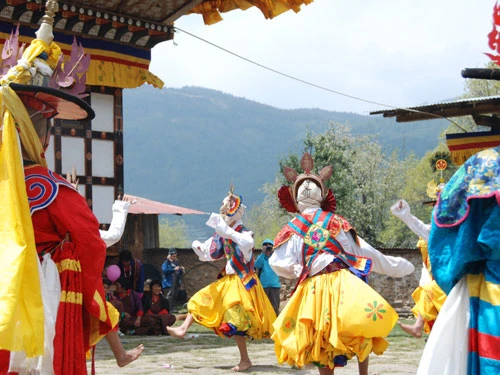
Some journeys are inspired by breathtaking landscapes, while others are drawn to iconic landmarks. A Paro Tshechu Festival Tour offers something even rarer; the chance to witness a centuries-old celebration where Bhutan's spiritual traditions, vibrant culture, and community come together. Held each year in the courtyard of Rinpung Dzong fort on the tenth day of the second lunar month, the Paro Tshechu brings monks, masked Cham dancers, pilgrims, and entire families dressed in their finest gho and kira into one shared space for several days of sacred performance. For culturally curious travelers seeking authentic experiences, it's a rare chance to see Bhutan not as a curated tourist stop but as a country still organizing its year around faith and community.
Designed for travelers who value culture, heritage, and meaningful travel experiences, this 8-Day Paro Tshechu Festival Tour is built around the festival window while still covering Bhutan's essential circuit. Beyond the courtyard's color and movement, the itinerary takes travelers through Thimphu's blend of tradition and modern governance, the riverside grandeur of Punakha Dzong, the remote stillness of Gangtey and Phobjikha Valley, and the demanding, rewarding climb to Tiger's Nest Monastery. Each stop adds a different register to the trip: royal history in Punakha, glacial-valley quiet in Phobjikha, and finally, at Taktshang, the pilgrimage that closes it.
What sets a festival-timed itinerary apart from a standard sightseeing route is proximity to the ritual itself. The rhythmic turn of Cham dances, the low resonance of monastic horns and chanting, families passing food to each other between performances, and for those present on the festival's final morning, the pre-dawn unfurling of the Thongdrel, Bhutan's most sacred tapestry, shown only once a year and believed to cleanse those who witness it. These aren't staged reenactments; they're the same rites Bhutanese communities have kept for centuries, still carried out because they matter, not because visitors are watching.
Because exact Tshechu festival dates shift each year with the lunar calendar and are confirmed by Bhutan's monastic body only months in advance, timing a trip around the festival takes more coordination than a standard sightseeing itinerary. Nepal Nomad Trekking handles that coordination directly, including e-Visa processing, sustainable development fee arrangements, accommodation, private transportation, and licensed Bhutanese guides, so travelers can focus on what the trip is actually for: standing in that courtyard, at that specific moment in Bhutan's calendar, watching a tradition that has outlasted the tourists who come to see it.
- Enjoy the spectacular Paro Tshechu Festival, one of Bhutan’s most sacred and colorful annual festivals.
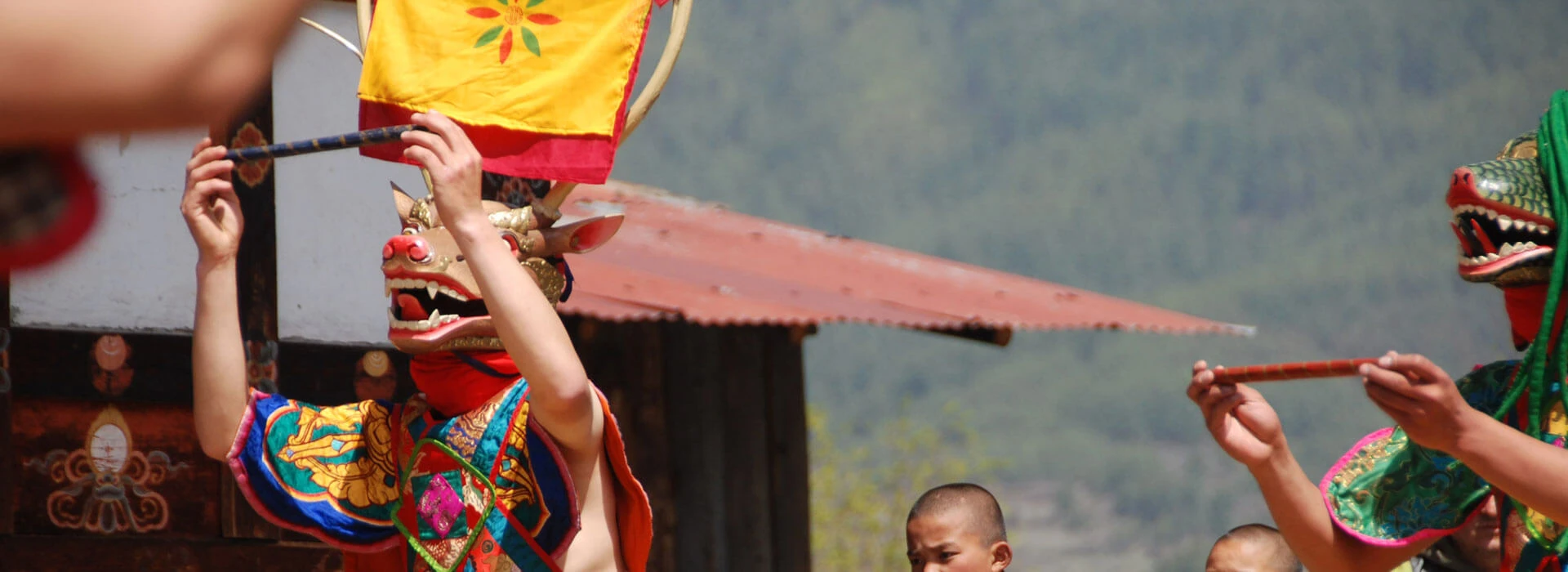
- Observe centuries-old Cham (masked) dances, Buddhist rituals, and colorful cultural performances by the monks and the lay dancers.
- Get blessings from the local monks and absorb the deeply rooted spiritual traditions of Bhutan.
- Stop at Rinpung Dzong, the ancient main site of the Paro Tshechu Festival.
- Walk to the famous Tiger’s Nest Monastery (Taktsang) perched dramatically at 3,120 m (10,236 ft) above the Paro Valley.
- Explore Thimphu, Bhutan’s capital, where ancient monasteries are part of modern Bhutanese life.
- Drive through the beautiful Dochula Pass (3,100 m / 10,171 ft), enjoying panoramic views of the Himalayas on clear days.
- Visit the stunning Punakha Dzong, one of Bhutan's most stunning and historically important fortresses.
- Visit the serene Gangtey Monastery and the breathtaking Phobjikha Valley, known for its unspoiled beauty and diverse wildlife.
- Enjoy authentic Bhutanese cuisine, traditional architecture, and warm local hospitality throughout the journey.
- Comfortable travel with a licensed Bhutanese guide, private transportation, and visas, permits, and logistics arranged by Nepal Nomad Trekking.
Why Experience the Paro Tshechu Festival?
The Paro Tshechu Festival is one of Bhutan's most important religious and cultural celebrations, attracting pilgrims, monks, and culturally curious travelers from around the world. More than a festival, it is a living expression of Bhutanese Buddhism, offering heritage enthusiasts and authentic experience seekers an unforgettable glimpse into the country's traditions, spirituality, and vibrant community life.
The Spiritual Significance Behind Bhutan's Most Celebrated Festival
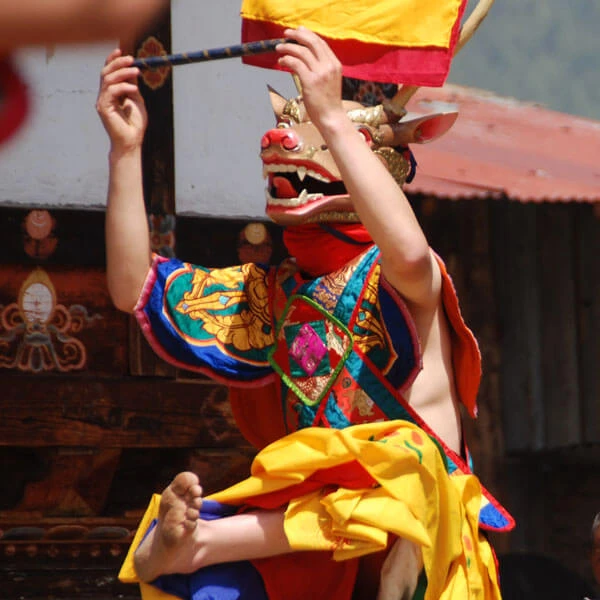
The spiritual significance of the Paro Tshechu Festival traces back to Guru Rinpoche, the 8th-century master credited with bringing Buddhism to Bhutan, and it's held on the tenth day of the second lunar month in his honor; the same day, according to tradition, marks key moments in his life and teachings. Each Cham dance performed in the Rinpung Dzong courtyard reenacts a specific episode from Buddhist teaching or Bhutanese history, danced by monks in elaborate masks and costumes passed down through generations of practice, with movements, music, and mudras that have changed little over centuries. Watching even a single dance unfold, an onlooker starts to notice how deliberate every gesture is; nothing is improvised, and every mask represents a specific protector deity, demon, or historical figure central to the narrative being told.
The festival closes with its most sacred moment: the pre-dawn unfurling of the Thongdrel, a massive appliquéd tapestry of Guru Rinpoche displayed only once a year, which Bhutanese believe cleanses the sins of anyone who witnesses it. Thousands gather in the dark, well before sunrise, for a sight most Bhutanese only see this one morning annually. For any visitor, religious or not, standing in that courtyard as the tapestry catches the first light carries a weight that few travel experiences match, as it's less a photo opportunity than a shared moment of collective devotion.
What Makes the Paro Tshechu Festival Different from Other Cultural Festivals?
For anyone wondering what makes Paro Tshechu different from other cultural festivals, the answer starts with where it happens. Unlike festivals staged primarily for visitors, the Paro Tshechu exists first for Bhutan itself. It takes place inside a working dzong that still functions as a religious and administrative center, not a museum or a recreated set piece, and the dancers performing each Cham are monks fulfilling a religious duty rather than paid performers hired for the season. Entire families travel from surrounding villages to attend, dressed in their finest gho and kira, turning the courtyard into as much a community reunion as a religious event: children weaving between adults, elders finding a patch of shade, and neighbors sharing packed lunches between dance sets.
Add the backdrop of snow-dusted Himalayan peaks above the dzong's whitewashed walls, and the result is a festival that feels less like a show and more like being invited into a centuries-old ritual still very much alive. Compare that to festivals elsewhere designed around a fixed tourist schedule, with performances timed and packaged for visiting crowds, and the contrast becomes obvious almost immediately. Here, the schedule bends to the monastic calendar and the needs of the ritual itself, not the other way around, which is precisely why the atmosphere never quite feels rehearsed, even on its busiest day.
Why Travelers Plan Their Bhutan Journey Around Paro Tshechu
For the culture-focused voyager, timing a Bhutan trip around Paro Tshechu turns a standard sightseeing itinerary into something closer to genuine participation. Because Tshechu dates shift every year with the lunar calendar and are confirmed by Bhutan's monastic body only months in advance, the festival isn't something a passing tourist stumbles into; it takes deliberate planning, which is precisely why it rewards those who plan it rather than those who simply hope to catch it in passing.
Photographers are drawn to the color and movement of the Cham dances against the dzong's ancient walls, where saturated silk costumes and centuries-old masks catch the morning light in a way few other settings in Bhutan can match. Spiritually minded visitors come for the Thongdrel unfurling and the rare chance to witness a ritual usually shown only once a year, arriving in the pre-dawn dark alongside thousands of Bhutanese pilgrims doing the same. Even the more independent wanderer or seasoned globetrotter, used to festivals built primarily for outsiders, tends to notice the difference here almost immediately, as this is a celebration Bhutan would hold with or without a single foreign guest in attendance.
Whether arriving as a first-time visitor or a well-traveled explorer of the Himalayas, anyone who builds a Bhutan itinerary around this festival walks away with an experience that a landmark-only itinerary simply can't replicate. The dzongs, valleys, and monasteries will still be there on any other week of the year; the Tshechu, with its specific rituals, dances, and once-a-year Thongdrel, will not.
The Paro Tshechu Festival: A 5-Day Program
The Paro Tshechu runs for five days, held in the courtyard of Rinpung Dzong each spring. The exact dance schedule can shift slightly from year to year, and Bhutan's monastic body confirms final programming only months in advance, but the broad arc of the festival follows a consistent pattern: quieter, more devotional dances early on, building toward larger crowds and more elaborate performances by the middle days, and closing with the festival's central event called the Thongdrel unfurling on the final morning.
Festival Day | What Typically Happens | Why It Matters |
Day 1 | Opening purification rituals and monastic prayers, followed by the first rounds of Cham dances inside the Rinpung Dzong courtyard. | Sets the spiritual tone for the festival; considered the most solemn and least crowded day. |
Day 2 | Continued Cham dances, often including the Black Hat Dance (Shana), performed by monks in elaborate costume. | One of the more visually striking days, with dramatic mask work and choreography. |
Day 3 | More Cham dances, with community activity building as more local families arrive to attend. | The festival atmosphere becomes noticeably more social, with markets and gatherings around the dzong. |
Day 4 | Continued dances, frequently including the Guru Tshengye Cham (Eight Manifestations of Guru Rinpoche), one of the festival's most symbolic performances. | Considered a highlight day for those focused on the religious storytelling behind each dance. |
Day 5 | The festival's climax: the pre-dawn unfurling of the Thongdrel outside the dzong, followed by closing dances and final blessings. | The most sacred and most attended day, drawing thousands of Bhutanese pilgrims before sunrise. |
Most visitors attend only the final two or three days, when the festival's energy and significance peak, though devout Bhutanese families often attend all five.
A Journey Through Bhutan's Sacred Landscapes and Living Heritage
This Bhutan Festival Tour is anchored by the Paro Tshechu, but understanding Bhutan means looking past the festival grounds themselves. For cultural enthusiats seeking a more profound understanding of Bhutan's culture rather than a checklist of famous sights, this itinerary threads together the country's most significant spiritual, historical, and natural landmarks revealing how Bhutan's landscapes and living traditions have shaped one another for centuries.
Paro: Where Bhutan's Most Celebrated Festival Comes to Life
Paro is the starting and ending point of this journey, and there are good reasons for its significance. Long before it became known as the site of Bhutan's only international airport, Paro was one of the kingdom's oldest and most significant valleys, its terraced fields and traditional farmhouses framed by some of the country's finest examples of Bhutanese architecture: sloped timber roofs, intricately painted window frames, and whitewashed rammed-earth walls that define the region's building style. Rinpung Dzong, the fortress-monastery at the heart of town, has hosted the Paro Tshechu for centuries not by coincidence, but because Paro has long held a central place in Bhutan's religious and administrative life, making it a fitting stage for a festival honouring Guru Rinpoche himself.
For those interested in Bhutan's living Buddhist traditions, Paro's role in this itinerary runs deeper than a single festival day. Guests arrive here on Day 1, return on Day 5 after looping through the country's interior, experience the Tshechu itself on Day 6, climb to Tiger's Nest on Day 7, and depart from Paro on Day 8. That rhythm of arriving, venturing out, and returning makes Paro less a single stop than the anchor to which the entire journey circles back.
Thimphu: Discover Bhutan's Living Traditions in the Capital
Among the best things to do in Thimphu, Bhutan's capital, is simply walking between its landmarks. From Paro, the route moves to Thimphu on Days 1 and 2, one of the only capital cities in the world where ancient ritual and modern governance sit comfortably side by side. The National Memorial Chorten draws a steady stream of elderly Bhutanese circling it in prayer each morning, while the towering Buddha Dordenma statue watches over the valley from above. Tashichho Dzong continues to function as both a monastery and a seat of government, and the city's handicraft workshops keep traditional weaving, papermaking, and woodcarving very much alive rather than preserved only for display.
Rather than simply visiting landmarks, this stretch of the journey reveals the stories behind them: Bhutan isn't frozen in time here but is a country actively choosing which traditions to carry forward as it modernises on its own terms.
Punakha: Bhutan's Royal and Spiritual Legacy
Day 3 carries the journey east to Punakha, where Bhutan's royal and religious history come into sharper focus. Punakha Dzong, set at the confluence of the Pho Chhu and Mo Chhu rivers, served as the seat of Bhutan's government for over a century, hosted the coronation of the first king, and remains the winter residence of the Je Khenpo, the country's chief religious authority, alongside the central monastic body. A traditional cantilevered bridge still leads visitors across the river to the dzong's entrance, and the fertile valley surrounding it, lined with rice paddies and orange groves, stands in clear contrast to Paro and Thimphu's higher, cooler terrain.
For travellers who value heritage and historical context as much as scenery, Punakha adds a layer the festival alone can't provide; a clearer sense of how political power and religious authority have long been intertwined in Bhutanese life.
Gangtey & Phobjikha Valley: Bhutan's Peaceful Himalayan Sanctuary
Day 4 shifts the pace entirely, descending into Gangtey and the wide glacial bowl of Phobjikha Valley. Gangtey Monastery overlooks the valley from a low ridge, and a gentle village walk below offers a glimpse of rural Bhutanese life largely unchanged by tourism; farmhouses, grazing cattle, and communities that have shaped local conservation efforts around the valley's protected wetlands. Phobjikha is best known internationally for the black-necked cranes that winter here, though this April itinerary falls outside crane season, since the birds migrate back to Tibet by early spring; the valley's stillness and traditional rural character remain the draw at this time of year.
This journey is designed for someone who value heritage, spirituality, and authentic cultural encounters over fast-paced sightseeing, and Gangtey's unhurried atmosphere offers exactly that; a deliberate, quiet counterweight to the colour and crowds of festival days.
Tiger's Nest Monastery: Completing Bhutan's Spiritual Journey
The Tiger's Nest Monastery hike in Bhutan closes the itinerary, fittingly, back in Paro with the Day 7 climb to Taktshang Monastery, Bhutan's most iconic pilgrimage site. According to tradition, Guru Rinpoche flew to this cliffside on the back of a tigress to meditate, and the monastery that now clings to the rock face 900 metres above the valley remains one of the most sacred sites in Himalayan Buddhism. After witnessing the Paro Tshechu's Cham dances and the pre-dawn Thongdrel unfurling days earlier, the climb to Taktshang feels less like a separate excursion and more like a natural continuation of the same spiritual thread; a final, physical act of pilgrimage after days spent as a witness to Bhutan's religious life.
Together, these destinations turn the Paro Tshechu Festival from a remarkable event witnessed in isolation into a fuller journey through Bhutan's history, spirituality, and everyday life. Each stop from Paro's festival grounds, Thimphu's living capital, Punakha's royal legacy, Phobjikha's rural stillness, and Taktshang's cliffside pilgrimage provides greater context for understanding why the Tshechu continues to hold such profound meaning for the Bhutanese people today, rather than simply adding another name to the itinerary.
How Nepal Nomad Trekking Makes the Festival Journey Seamless
Planning a Paro Tshechu Tour Package involves far more than booking flights and accommodation. Careful planning and local expertise are essential for experiencing the Paro Tshechu Festival at the right time and in the right way, as the festival follows the Bhutanese lunar calendar and attracts visitors from around the world.
Planning Around Bhutan's Festival Calendar
Paro Tshechu dates aren't fixed on the standard calendar as they follow the Bhutanese lunar calendar and are confirmed annually by the country's monastic authorities, often only months ahead of the festival itself. That makes festival-timed departures inherently harder to plan than a standard sightseeing trip, since a schedule locked in too early risks missing the actual dates once they're announced. Nepal Nomad Trekking coordinates travel dates against the official festival schedule as it's confirmed, building the itinerary around the real calendar rather than an estimate, and ensuring guests arrive in Paro with time to settle in before the main celebrations begin.
Visas, Permits & Sustainable Development Fees Managed for You
Bhutan visa and permit requirements, including the Sustainable Development Fee, involve several moving pieces including e-Visa processing, the Sustainable Development Fee, and, for travel beyond the Paro-Thimphu corridor, additional route permits. Nepal Nomad handles this coordination directly with Bhutanese authorities on behalf of each guest, submitting the required documentation and confirming the visa clearance letter well ahead of departure. The result is considerably less paperwork and far less pre-trip stress, with the administrative side of Bhutan travel largely out of sight by the time the trip actually begins.
Licensed Bhutanese Guides Who Bring the Festival to Life
A festival day at Rinpung Dzong can look, to an unprepared visitor, like a continuous blur of masks, drums, and color. Licensed, English-speaking Bhutanese guides change that entirely, explaining the symbolism behind each Cham dance, sharing the stories tied to specific monasteries and rituals, and walking guests through festival etiquette before they need it. That local context turns the day from simple sightseeing into something closer to genuine cultural interaction, where the performances mean something rather than simply looking impressive.
Comfortable Travel Throughout the Journey
Between festival days and destination stops, the logistics stay consistent: a private tourist vehicle, comfortable intercity transfers, and carefully selected accommodation throughout Paro, Thimphu, Punakha, and Gangtey. Driving times are kept manageable rather than packed end to end, which leaves genuine room for sightseeing, photography, and unhurried personal exploration rather than treating each day as a race to the next stop.
A Well-Paced Itinerary Designed Around the Festival
This itinerary prioritizes the Tshechu, with everything else arranged to complement it. Punakha's royal history, Gangtey's quiet valley, and the Tiger's Nest hike are sequenced to add depth around the festival rather than compete with it, minimizing unnecessary backtracking and letting guests move through Bhutan at a comfortable, unhurried pace instead of a rushed one.
Local Knowledge That Enhances Every Experience
Some of the most useful guidance on a festival trip has nothing to do with the official itinerary at all: knowing the best time to reach the festival grounds before crowds build, where to stand in the courtyard for a clear view, which local restaurants and cafés are worth a stop, and how to photograph the Cham dances respectfully. Licensed guides bring exactly that kind of local knowledge, along with cultural insights that rarely make it into a guidebook, and remain available throughout the journey for anything that comes up along the way.
Rather than simply arranging logistics, Nepal Nomad Trekking helps travelers experience the Paro Tshechu Festival with greater confidence, cultural understanding, and comfort. From coordinating permits and festival dates to providing knowledgeable local guides, the focus remains on creating a smooth journey that allows visitors to fully immerse themselves in one of Bhutan's most treasured annual celebrations.
How Much Does an 8-Day Paro Tshechu Festival Tour Cost?
Understanding the Bhutan Festival Tour Cost starts with demand: a Paro Tshechu Festival Tour is one of Bhutan's most sought-after seasonal journeys, with demand peaking during the annual celebrations rather than spreading evenly across the travel calendar the way a standard sightseeing trip does. While the festival itself doesn't require a separate entrance ticket, the tour cost reflects accommodation availability, festival-season demand, transportation, permits, and the coordination needed to plan travel around Bhutan's most important cultural event all of which behave differently during festival week than during a quieter month.
Average Cost of an 8-Day Paro Tshechu Festival Tour
An 8-day Paro Tshechu Festival Tour typically runs between US$2,800 and US$4,200 per person, depending on hotel category, group size, and how close to the festival dates the booking is made. That range sits noticeably above a standard 5-day Bhutan itinerary covering Paro, Thimphu, and Punakha alone, both because the trip runs three days longer and because it's timed to coincide with the country's highest-demand travel week. The extra days also add real destinations rather than padding: Gangtey and Phobjikha Valley are folded into the route specifically because the festival timing allows for it, giving the longer itinerary a genuinely different shape rather than simply stretching the same five days further.
Group departures, where costs are shared across more guests, generally land toward the lower end of that range, since fixed costs like the private vehicle and guide are spread across a larger party. Private, custom-paced departures push toward the higher end, trading a shared schedule for full control over timing, pacing, and accommodation choices throughout the trip. The package price is generally structured around accommodation, meals, a licensed guide, private transportation, and the government fees required for entry, bundled into a single per-person rate rather than paid separately; the same bundled model that applies to Bhutan tours generally, just priced against a tighter, higher-demand window.
Why Festival Departures Cost More Than Regular Bhutan Tours
Why a Paro Tshechu Tour Package costs more than a standard Bhutan itinerary covering the same route and duration comes down to demand rather than markup. A festival-timed trip typically costs more than a standard Bhutan itinerary covering the same route and duration, with the price difference attributed to higher demand rather than markup. Hotel rooms in Paro book out quickly in the weeks around Tshechu, since both Bhutanese pilgrims traveling from other districts and international visitors are competing for the same limited inventory at the same time, pushing rates upward across every hotel category, not just luxury properties. Flight seats between Kathmandu and Paro are equally constrained, with only two airlines operating the route and both running near capacity during festival week, which tends to firm up fares well before departure rather than leaving room for late discounts.
Experienced, English-speaking guides are in especially high demand during the one week of the year when most visitors want to be in Bhutan at once, which is why travelers typically reserve tour guides and private vehicles months in advance. A guide who might have open availability on a random week in June is often fully booked for festival season by the time most travelers start researching the trip.
Unlike a standard Bhutan tour, which can often be booked with a few weeks' notice, festival dates are fixed by the lunar calendar and confirmed only months ahead, leaving a narrow window to secure hotels, flights, and guides before availability tightens further. Booking early, ideally as soon as dates are confirmed is the most reliable way to avoid both inflated last-minute pricing and the risk of key logistics being unavailable altogether, particularly for anyone hoping to attend the festival's final, most significant days.
Estimated Cost Breakdown
Cost Component | Approximate Price (per person) |
Sustainable Development Fee (SDF) | US$100 per night × 7 nights = US$700 |
Bhutan Visa Fee | US$40 (one-time) |
Kathmandu – Paro – Kathmandu Flight | US$500 to US$650 (round trip, festival-season demand) |
Land Package (guide, driver, hotel, meals) | US$220 – US$380 per night × 7 nights = US$1,540 to US$2,660 |
For context, this positions an 8-day festival departure roughly 60–75% higher than a standard 5-day Bhutan tour covering Paro, Thimphu, and Punakha; a gap that reflects both the three additional days on the road and the seasonal premium built into festival-week pricing across hotels, flights, and guide availability.
Planning Your Bhutan Visit during Paro Tshechu Festival: Dates, Weather and Best Time to Travel
Planning a Paro Tshechu Festival Tour requires more preparation than a regular Bhutan holiday. The festival's alignment with the Bhutanese lunar calendar and its occurrence during the popular spring travel season necessitate a thorough understanding of the dates, weather, and booking timeline to maximize this unique cultural experience.
Understanding Bhutan's Lunar Festival Calendar
Why Paro Tshechu festival dates change every year comes down to the calendar it follows: Paro Tshechu doesn't fall on a fixed date the way a holiday on the standard calendar would. It follows the Bhutanese lunar calendar, so the exact dates shift from year to year, though the festival is almost always held in March or April. Official dates are confirmed annually by Bhutan's monastic authorities, typically only months before the festival itself, which is precisely why checking confirmed dates before booking international flights matters; a Kathmandu-Paro itinerary built around an estimated date rather than the confirmed one risks missing the festival entirely.
The festival's most significant moment, the Thongdrel ceremony, takes place on the final morning before sunrise, when the massive sacred tapestry of Guru Rinpoche is unfurled outside Rinpung Dzong for the only time all year. The itinerary is intentionally designed to ensure that guests arrive in Paro with enough time to settle in before the celebrations begin, rather than rushing in partway through, due to the significant spiritual and logistical importance of that single morning.
Spring Weather During the Paro Tshechu Festival
Spring weather during Bhutan's festival travel season is one of the country's biggest draws: Spring, spanning March and April, is widely considered one of Bhutan's best travel seasons, and festival timing happens to fall right in the middle of it. Daytime temperatures are pleasant enough for comfortable sightseeing across Paro, Thimphu, Punakha, and Gangtey, while mornings and evenings stay noticeably cooler, making layered clothing the most practical approach to daily dressing. Rhododendron forests come into bloom along routes like Dochula Pass, fresh greenery spreads across the valleys, and mountain visibility tends to be clearer than in the hazier summer months.
These same conditions make spring one of the more favorable windows for the Tiger's Nest hike, with firmer trail conditions and milder temperatures than either the height of summer or deep winter. That said, Himalayan weather can shift quickly regardless of season, so carrying a light waterproof jacket is a sensible precaution even on days that start out clear.
Why Early Booking Matters
Why book a Bhutan Festival Tour early comes down to sheer popularity: Paro Tshechu is one of Bhutan's most popular annual festivals, and that popularity shows up directly in availability. Hotels in Paro fill quickly during the festival period, as Bhutanese pilgrims and international visitors compete for the same limited rooms at the same time. Flights to and from Paro carry only a limited number of seats to begin with, and festival week narrows that further, while licensed guides and private vehicles are typically booked well in advance by travelers who planned ahead.
Early reservations translate directly into better accommodation choices and smoother travel arrangements overall, rather than settling for whatever remains once peak dates approach. Nepal Nomad Trekking recommends securing bookings several months before departure to ensure availability throughout festival season, and early planning also builds in enough time for visa processing and the broader coordination a festival-timed trip requires; a buffer that a last-minute booking simply doesn't allow for.
With festival dates changing each year and spring being one of Bhutan's busiest travel seasons, planning ahead ensures a smoother and more rewarding experience. Booking early not only secures better availability but also allows travelers to enjoy the Paro Tshechu Festival alongside Bhutan's iconic cultural landmarks at a relaxed, unhurried pace.
Experiencing the Festival Respectfully: Bhutanese Customs & Etiquette
Long before it became a highlight on any visitor's itinerary, the Paro Tshechu belonged to the Bhutanese people as an act of devotion, not a performance staged for onlookers. A little awareness of local customs lets every guest, from the first-time voyager to the seasoned globetrotter, take part in that atmosphere respectfully rather than as an outsider looking in.
Dress Respectfully for a Religious Celebration
The Paro Tshechu festival dress code calls for modest, comfortable clothing that covers shoulders and knees, and overly casual or revealing outfits are best left for elsewhere. Modest, comfortable clothing that covers shoulders and knees is expected, and overly casual or revealing outfits are best left for elsewhere. Comfortable walking shoes help across the dzong's uneven courtyard stones, and a light jacket or shawl is worth carrying for cool festival mornings. Bright colors are entirely welcome Bhutanese families dress vividly for the occasion, but dressing with a degree of care signals genuine respect for a religious event rather than a costume-optional spectacle.
Photography Etiquette During the Festival
Photography is generally permitted in the outdoor festival areas, though it's worth following a guide's direction on any restricted zones. Flash should stay off during religious ceremonies, and no photo is worth stepping in front of performers or worshippers to get it. Close-up portraits of monks or local families call for a quick, polite ask first. It's also worth lowering the camera occasionally, some of the festival is better experienced directly than through a screen.
Respect Sacred Rituals and Festival Traditions
The Cham dances are sacred rituals, not theater, and treating them that way changes how a wanderer experiences the whole event. A quiet, attentive presence during prayers and ceremonies matters more than commentary, and ritual spaces or active performances should never be walked through or interrupted. Following the direction of monks, guides, or festival officials even when the reasoning isn't obvious in the moment, and observing local customs as they are, rather than as they'd be at home, keeps the experience respectful for everyone present.
Temple & Monastery Etiquette
- Remove hats before entering any religious building.
- Take off shoes wherever instructed.
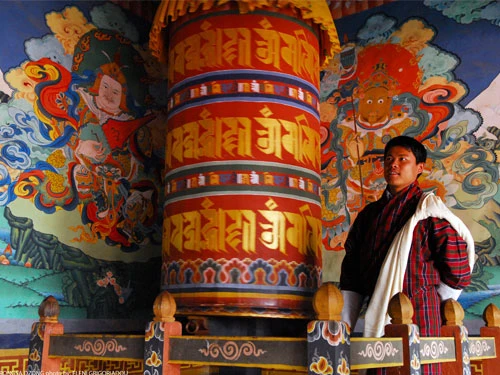
- Walk clockwise around stupas, prayer wheels, and sacred monuments.
- Avoid touching religious objects unless specifically invited to.
- Keep voices low inside temples and monasteries.
- Set mobile phones to silent before entering.
Engaging Respectfully with Bhutanese Communities
A polite smile and greeting can significantly enhance interactions with locals encountered along the way, and obtaining permission before photographing individuals or families is essential, regardless of the festival crowd. Buying genuine handmade crafts supports local artisans directly, and giving people space during crowded festival gatherings is simple courtesy in a packed courtyard.
Guides often provide valuable cultural context in real-time, which is more beneficial than saving it for later; the distinction between an explorer who merely observes the festival and one who comprehends what they are witnessing typically hinges on their attentiveness. Approaching the day as a guest in Bhutanese society, rather than only as a spectator, shapes the whole experience.
Simple Cultural Gestures Every Visitor Should Know
- Walk clockwise around religious monuments.
- Spin prayer wheels clockwise, never against the direction of turn.
- Avoid pointing feet toward sacred objects or images.
- Never climb on temples or religious structures for a photo.
- Dispose of litter responsibly rather than leaving it behind.
- When in doubt about a custom, simply follow the guide's lead.
Respecting these customs shapes far more than a single festival day as it opens a genuine connection to the people, traditions, and spiritual values that define Bhutan. Any visitor who approaches the Paro Tshechu with curiosity and humility leaves not just having seen the festival but with some real sense of why it still matters so deeply to the communities who keep it alive.