The Rhythms of the Roof of the World
To choose the Best time Island Peak climbing via EBC you have to know Khumbu. And to understand the Khumbu, you need to know that the Himalayas are not always the same; they change and grow according to a set of ancient, immutable cycles. The Rhythms of the Roof of the World is the heartbeat of this high-altitude wilderness. It is a complex symphony of changes in the weather, adaptations in living things, and cultural traditions that tell people when they can enter the Death Zone and when they must leave. The traveler who wants to do both the Everest Base Camp trek and the Island Peak ascent must be able to match their own pace to these flows in order to succeed. You aren't just walking through a landscape; you're stepping into a giant, living clock where every season, every gust of wind, and every beat of your heart is a gear turning in a heavenly machine.
The most powerful cadence is the Meteorological Pulse, the grand inhalation and exhalation of the Indian Monsoon. The Jet Stream's strong winds usually hit the tops of the 8,000-meter giants, but twice a year they lift just enough to make a window of calm. This makes a seasonal pace that controls all life in the area. The rhythm builds in the spring. The mountains wake up, the ice melts, and the energy builds up to the frantic pushes to the top in May. In the fall, the pattern is a slow, steady decrescendo; the chaos of the monsoon fades into a clear, brittle silence. When you climb Island Peak, you have to perfectly time your journey so that the mountain is inhaling. This is a short, still pause between the winter winds and the summer rains.
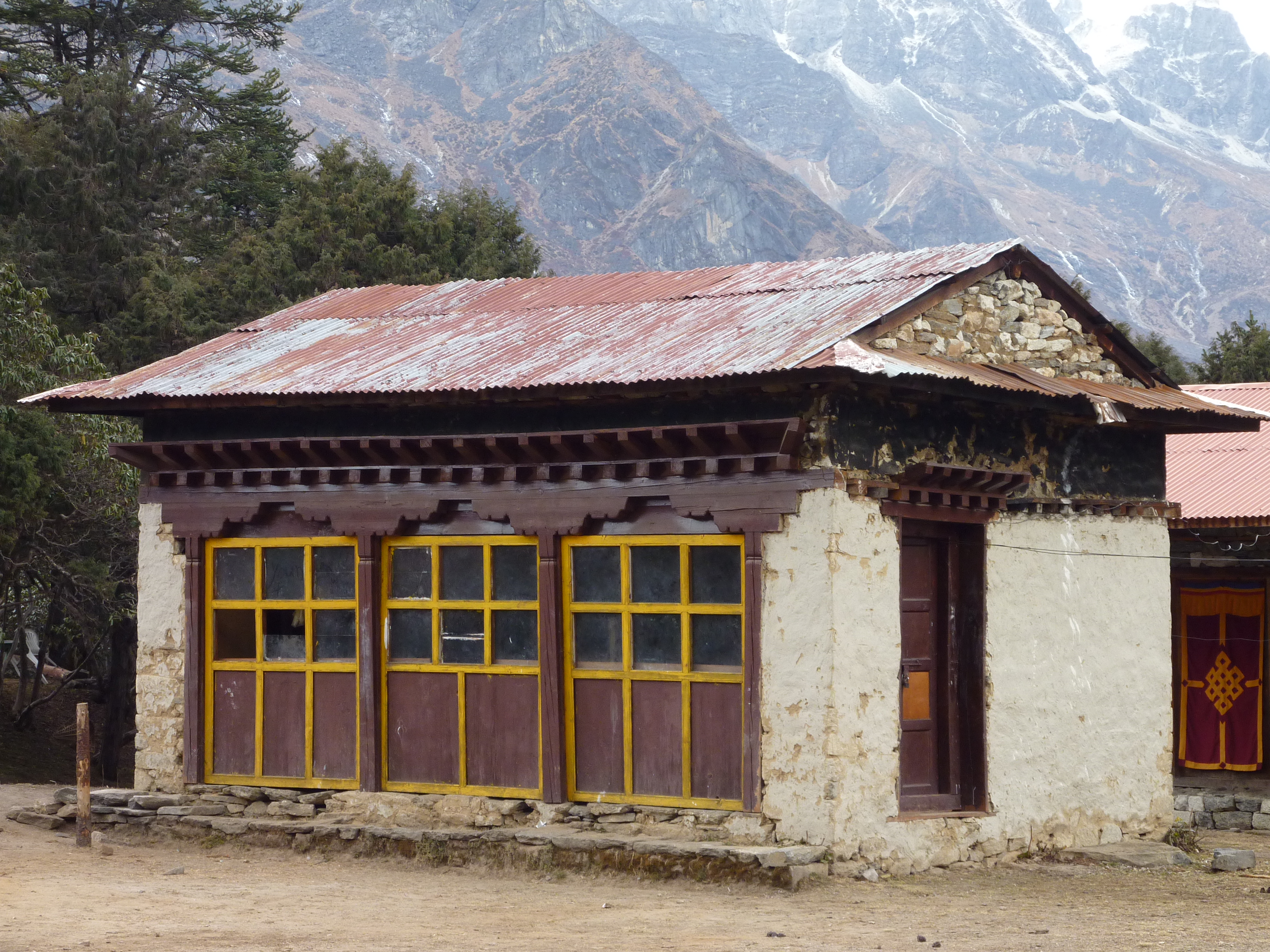
The Internal Cycle of the Body is a biological process that begins as soon as you land in Lukla, underneath the big cycles of the weather. When you are at a high altitude, your body needs to find a new pattern. Your heart beats faster to make up for the thin air, and your breath becomes a rhythmic pressure breathing that pushes oxygen into your blood. The hike to Everest Base Camp is the most important part of this process. Every day of walking is a beat in the song of acclimatization, which is a slow and steady pace that lets your cells change and your lungs grow. If you rush this routine, the mountain will turn you away. If you respect it, your body will become a finely tuned instrument that can play the final, vertical solo on the headwall of Island Peak, which is 6,189 meters high.
Last but not least, there is the Prayer Flag Pulse, which is the spiritual and cultural resonance of the Khumbu itself. The Sherpa people have a tradition that can be heard in the spinning of a Mani wheel, the harmonious clink of yak bells on a suspension bridge, and the deep, low chanting of monks at the Tengboche Monastery. These sounds protect the harshness of the terrain and remind the climber that this is not just a pile of rock and ice, but a holy place. Standing on the top of Island Peak and looking across at the South Face of Lhotse, which is mind-boggling, all of these paces, patience, and respect come together. The weather outside, the pulse inside, and the valley's cultural spirit all come together to create a moment of clarity. You know that you haven't just reached the top; you've also learned how to move in time with the strongest rhythm on Earth.
The Floral Rebirth: Walking Through the Living Museums of May
Stepping into the Khumbu in the month of May is to witness the Earth in a state of most joyful period. The lower part of the Everest Base Camp trek changes from a quiet winter landscape to a lively botanical sanctuary making it the best EBC Trek Climbing Season. When you start your trip in Lukla and walk through the green valleys to Namche Bazaar, you're not just walking a trail; you're walking through a gallery of ancient beauty. The air here smells like wet earth and the sweet, resinous smell of Himalayan pines in bloom. This living museum is a celebration of resilience, and when spring arrives, it brings a sensory explosion that is a stark and beautiful contrast to the sterile, frozen heights of the summit that you will reach.
The famous rhododendron forests, which are Nepal's national flower and are known locally as Lali Gurans, are the main attractions of this museum. In May, these old trees, some of which are as tall as three-story buildings, burst into a red canopy that arches over the route like a natural cathedral. The colors change from deep blood-red to soft pinks and waxy whites, making a kaleidoscope of color against the turquoise Dudh Koshi River, which is roaring below. Walking under these flowers, with the occasional petal falling onto the dusty path, makes the air feel magical at high altitudes. This is the Ascent of Life, where the bright greens of the forest and the cadenced calls of the Himalayan Monal pheasant remind you that life goes on with a fierce and delicate intensity, even in the shadow of the world's tallest peaks.
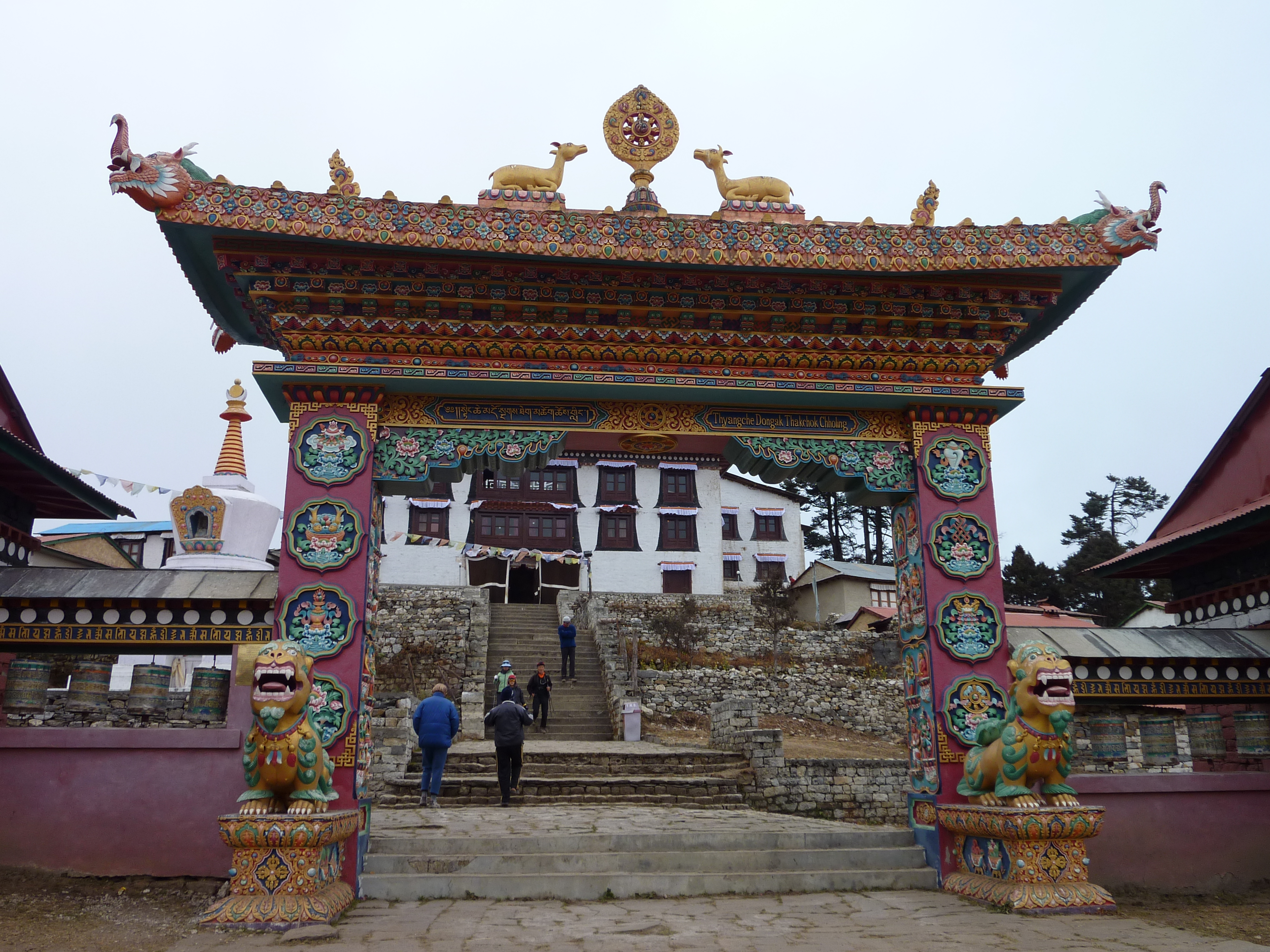
As you climb toward the Tengboche monasteries, the museum keeps changing, showing off the tough plants that grow between the lush valleys and the alpine desert. The rhododendrons are gone now, and instead there are short junipers and alpine wildflowers that cling to the rocks to stay out of the wind. The Floral Rebirth is more than just a pretty sight; it also affects your mind. The air in these forests is rich in oxygen, which is good for your lungs. It helps your body get stronger in a comfortable, nutrient-dense environment before you move on to the thin world above 5,000 meters. The lively life of May is a sensory anchor, a reminder of how fertile the Earth is, and you carry it with you as the trees disappear and the pathway turns to stone and ice.
Choosing to climb Island Peak in the spring means taking part in the most active time of the year in the Himalayas. You are walking through a place that is always changing, through forests that have seen thousands of pilgrims and pioneers over the years. The colors and smells of the lower valley will have filled your soul by the time you leave these Living Museums behind and face the glaciers of Imja Tse. The red rhododendrons are a warm, bright contrast to the blinding white of the summit making it Island Peak Best Season to climb. They complete a journey that celebrates the whole range of the natural world, from the deepest roots of the forest to the highest reaches of the sky.
The Indigo Veil: Why Autumn Provides the World’s Sharpest Horizons
The Autumn window, which runs from late September to November, is a masterclass in perfect weather. It's also the Best time Island Peak climbing via EBC. The Indian monsoon left the air over the Khumbu in a state of unnatural purity, with no dust or haze left behind. It is a rare optical effect that happens during these months when the sky changes from a normal blue to a dark, almost black indigo. This isn't just a change in color; it's a way to show depth. The air is so thin and clean that there is less light scattering. This lets the observer see through the atmosphere and into the cosmic void beyond. This season has such clear skies that it feels like the world has been rendered in high definition. This is great for the trekker going to Everest Base Camp and the climber going to the top of Island Peak.
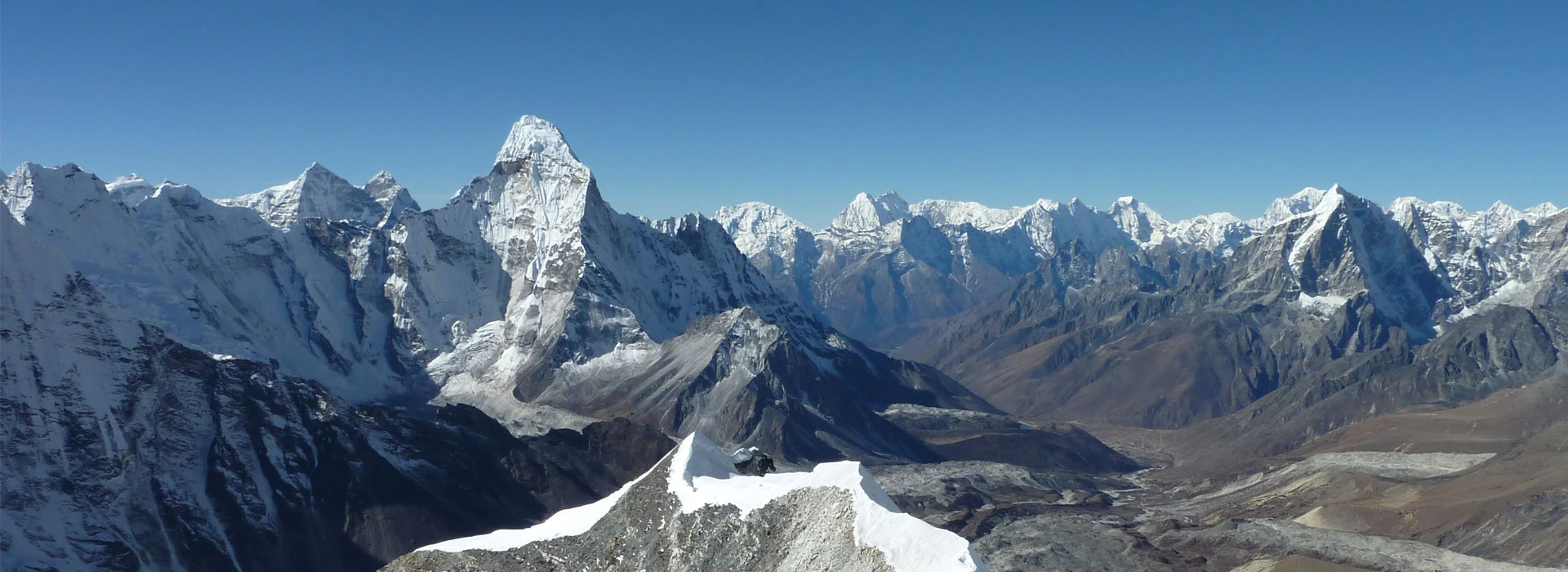
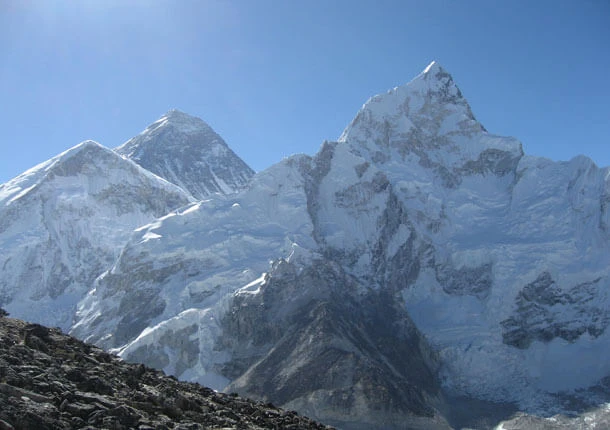
The secret to this Indigo Veil is that the air is cleaned after the monsoon season. The months of heavy rain act like a filter for the whole planet, clearing the Himalayan sky of the pollutants and aeolian dust that can make the horizon looks blurry at other times of the year. This creates an effect called optical compression, which makes the huge peaks of Lhotse, Nuptse, and Ama Dablam look so sharp and detailed that they seem like you could reach out and touch them. It can be hard to tell where you are because every jagged ridge, blue-ice serac, and geological fold in the rock is carved with such precise geometry. For a photographer or someone who loves mountains, autumn gives the mountains a clarity that is almost surgical. They don't look like distant shapes anymore; instead, they look like huge, razor-edged sculptures standing in a dark blue space that is completely silent.
When you leave the EBC trail and start the technical climb up Island Peak (Imja Tse), this stable weather becomes very helpful. The weather is very predictable in the Indigo Veil of Fall. The clouds in the afternoon of spring are replaced by large, unbroken areas of calm, high-pressure air. This clarity turns the sky into a map of the stars on summit night. The constellations look like sharp, unblinking points of light that are low enough to touch without the moisture that makes the stars glow. You get up at 2:00 AM to start the climb. You're not just walking through the dark; you're moving through a world made of crystals where the beam of your headlamp cuts through the indigo air with a sharpness that only happens in the driest and coldest months of the year.
In the end, standing on the top of Island Peak in the middle of the Autumn window gives you a view of everything. From 6,189 meters up, the horizon doesn't fade into a blurry haze; it stays clear and sharp for hundreds of miles, crossing the brown plateaus of Tibet and the white waves of the high Himalaya. The Indigo Veil reminds the adventurer that they have stepped out of the soft world of the valleys and into the hard world of the high atmosphere. The trade-off is a cold that bites and a chill to the bone, which means winter is coming. The reward is a purity of sight and spirit that can't be beat. You come back from the Khumbu with more than just memories of a climb. You also have the hauntingly beautiful image of a dark indigo sky meeting the white shoulder of the world's highest peaks in a perfect, razor-thin line.
Soft Mists vs. Brittle Ice: The Sensory Shift Between Windows
Choosing between a Spring and Autumn trip to decide for Island Peak Best Season and EBC Trek Climbing Season is more than just a logistical choice; it's a choice between two completely different sensory worlds. The differences explores the tactile, auditory, and visual contrasts that define these two primary windows of adventure. In the spring, the Himalayas feel like a living, breathing being that is slowly warming up and getting bigger. In the fall, the mountains feel like a crystal castle that is getting colder and smaller, with the stillness and rigidity of a world getting ready for the deep freeze of winter. To get this sensory change, you need to know how the Himalayan calendar changes the feel of the rock, the sound of the wind, and the smell of the air.
From March to May, the Spring Window is mostly about Softness and Sound. As the sun gets stronger, it starts to affect the huge glaciers, making a world of soft mists. It often smells like thawing juniper and wet stone in the air. While you walk to Everest Base Camp, you can hear water all around you. The Dudh Koshi roars, melting icicles drip, and you can even hear the distant rumble of a spring avalanche. The ice on Island Peak is plastic and forgiving. Your crampons bite into the snow, which is getting heavy with the moisture from the coming monsoon, with a dull, muffled thud. In the afternoons, soft mountain fog often covers the area in a white-out that muffles sound. This makes the high-altitude world feel close, quiet, and strangely comforting, like being wrapped in a cold, gray blanket.
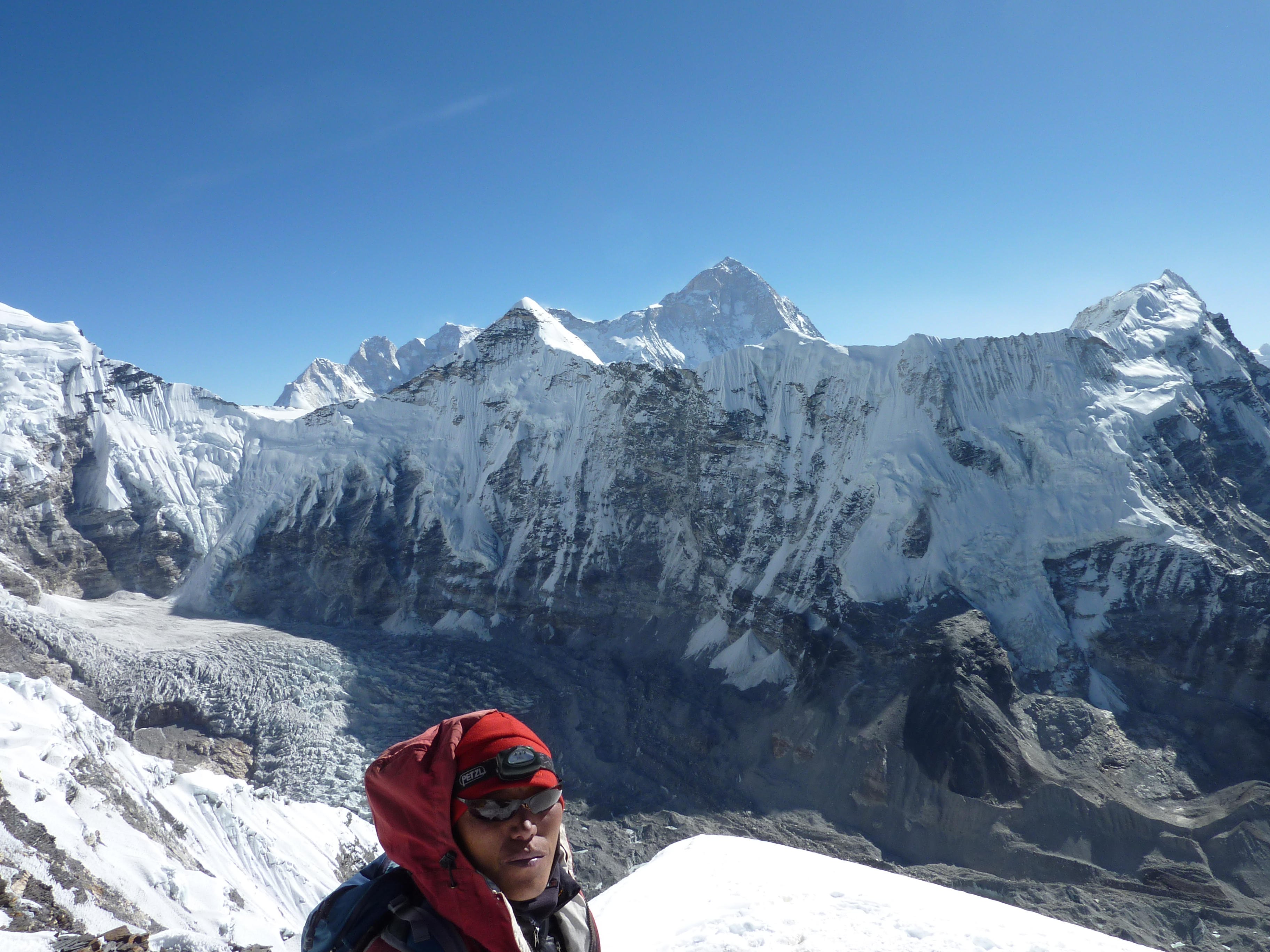
The Autumn Window (September to November), on the other hand, is all about the sensory experience of Brittleness and Silence. The mountains become brittle ice as the moisture goes away. The air loses its moisture and becomes dry and metallic. This often makes the back of the throat hurt with every breath. The rivers' roar has turned into a trickle, and the high Khumbu is so quiet that it feels heavy. The ice on the top ridge of Island Peak is no longer soft; it is hard and glassy. Your crampons don't thud anymore; they tink and scrape against a surface that has been frozen into a solid, unyielding sheet with a high-pitched, mechanical sound. Every movement feels sharper, every gust of wind feels like a blade, and the world feels like it's lost its padding, leaving only the bare bones of the earth's architecture.
In the end, this sensory shift dictates the mood for the expedition. It feels like a group effort to climb a mountain in the spring. The mists give the mountain a sense of mystery, and the warmth gives it a sense of possibility. An Autumn journey feels like a planned fight with a mountain that is closing its doors. It is a time of precision and rigidity, when the brittle ice requires perfect technique and the silence requires mental strength. In the high Himalayas, the season you choose is the lens through which you see the world. Whether you like the soft, humid embrace of the Spring mists or the sharp, crystalline grit of the Autumn ice, you are seeing the same landscape through two different skins.
The Forbidden Calendar: Navigating the Perils of the Off-Season
The Spring and Autumn windows are great times to visit the high Himalayas, but there are parts of the year when the gates to the Khumbu are basically closed. So, what is not the Best Season for the Island Peak Climb with EBC Trek? Well the simple answer is the two most extreme weather conditions: the summer monsoon and the Himalayan winter. These make the trek to Everest Base Camp a logistical nightmare and the climb of Island Peak a life-threatening risk. During these months, the rhythms of the world turn violent and unpredictable. For the casual adventurer, the off-season isn't just bad weather; it's a complete atmospheric lockout where the mountains take back their power and the margin for error disappears in heavy rains or bone-breaking winds.
The Green Peril marks the start of the forbidden calendar, which runs from June to August. The Indian Ocean's moisture hits the Himalayan wall hard during these months, making the world always gray and humid. The sensory experience is one of mud and leeches; the lower trails turn into slippery chutes of slick clay, and the famous views of the giants are blocked by a White Wall of thick cloud that can last for weeks. The monsoon is especially dangerous for people who climb Island Peak. When it rains, the glaciers become unstable, and the soft snow on the headwall turns into a heavy, slushy mess that is likely to cause wet-slab avalanches. Also, the Lukla flight, which is the only way to get to the Khumbu, is often grounded for days at a time, leaving travelers stuck in a humid, vertical wilderness where they can feel the mountains but never see them.
The second phase is The Deep Freeze of Winter, which lasts from December to February and is known for the Sovereign Cold. As the monsoon ends, the Himalayan Jet Stream, a river of fast-moving air, drops in altitude and hits the tops of mountains with winds that are as strong as hurricanes. The skies may look clear and blue, but the temperatures at Everest Base Camp and Island Peak High Camp drop to an unbelievable -30°C or lower. During this Iron Gate time of year, the trail becomes empty because most teahouses close and water sources freeze solid. The Brittle Ice of Autumn becomes Black Ice for the climber. This surface is so hard and unforgiving that crampons can barely bite, and a single slip on the Island Peak headwall can lead to a deadly fall. People who dare to go against the Jet Stream's rage should expect to get frostbite.
In the end, figuring out how to use the forbidden calendar is a lesson in Himalayan humility. Modern gear has made it possible for elite, high-altitude professionals to push the limits in these seasons. However, for most adventurers, the off-season is a time when the mountain's natural order is broken. Trying to climb Island Peak in the middle of the monsoon or in the middle of winter is like fighting a war on two fronts: the technical difficulty of the climb and the power of the weather. The Forbidden Calendar is an important reminder that we are guests in the Khumbu and can only visit when the mountains let us. Choosing to wait for the Spring or Autumn windows doesn't mean you're weak; it means you're a seasoned mountaineer who knows that some flows should be watched from a distance, not challenged.
Island Peak Climb with EBC Trek: Seasonal & Experience Framework
SEASON | MONTHS | CORE EXPERINCE | ATMOSPHERE | KEY HIGHLIGHTS |
Spring Season | March to May | Ascent of Life | Lively, Social and Colorful | Trails covered in Nepal’s national flower Rhododendron, busy Everest Base Camp; a chance to meet living mountaineering legends, warmer trekking conditions |
Autumn Season | September to November | Crystal Kingdom | Clear, Sharp and Stable | Deep blue clear skies, best visibility, best for photographers, clod but ideal climbing conditions. |
Off-Seaon: Monsoon | June to August | Green Peril | Wet, Unstable, and Low Visibility | Landslide, clouds, floods, trails covered with leeches, unsafe glacier conditions and flight disruptions. |
Off-Season: Winter | December to February | Deep Freeze | Extreme Cold, Silent and Harsh | Frozen Khumbu, closed teahouses. Technical risk on Island Peak, ideal for only elite mountaineers with decades of experience. |
Season Comparison | Spring Vs Autumn | Experience Vs Clarity | Social Vs Solitary | Energy of crowds Vs Purity of views |
Final Choice | Legacy decision | Personal expedition | Emotional and reflective | Choosing your version of the Himalayas story |
Choosing Your Legacy: Which Himalayan Window Defines Your Story?
When you decide to go into the Khumbu, it's more than just checking the weather; it's the whole story of your trip. The season you choose to climb Island Peak with the Everest Base Camp Trek will affect how you experience the Himalayas. Every season has a different vibe, energy, and challenge that changes the landscape around you and the person you become along the way.
Your expedition will be full of life and energy if you choose the spring season. This is the best time of year to climb in the Everest region, where climbers and trekkers from all over the world come together. The trails are full of blooming rhododendrons, and the teahouses are full of stories and excitement. You feel like you're on a bigger adventure with other people who are going after the same things you are. In the spring, standing on Island Peak means being part of a lively and social mountaineering season.
The experience gets quieter and more peaceful if you choose the fall season. The skies are very clear and the views of the mountains are at their best after the monsoon. There are fewer people on the trails, and the trip feels more personal. It is colder and harder, but also more peaceful. In the fall, climbing Island Peak makes you feel alone, and the mountains seem more raw and powerful as you focus on yourself.
Ultimately, it all comes down to what kind of trip you want to take. Do you like the energy and sense of community that comes with spring, or the calm and clear weather of fall? Both seasons will take you to the same top, but the memories and feelings they leave behind will be very different.