The Legend of King Pratap Malla and the Grieving Queen
Nearly four centuries ago, in the reign of King Pratap Malla, a personal tragedy set the foundation for what became Gai Jatra Nepal's most enduring tradition. When the king and queen lost their young son, grief settled over the queen so completely that nothing seemed to lift her sorrow, not counsel, not comfort, not time itself.
Determined to help, the king ordered every family in the kingdom who had lost a loved one over the previous year to join a public procession, leading a cow, or a child dressed as one, through the streets of Kathmandu. His hope was simple: seeing so many others carrying the same grief might ease the queen's isolation in her own loss, proof that mourning, however heavy, was never hers alone to carry.
What followed reshaped the entire moment. Alongside grieving families walked villagers in comic costume, playful performers weaving humor directly into the procession. Watching neighbors mourn openly, and laugh just as openly moments later, finally broke through the queen's grief, drawing what accounts describe as her first genuine smile since losing her son.
That single royal procession, born from one family's private sorrow, grew into a tradition observed across generations, spreading from the royal court into ordinary Newar households throughout Kathmandu, Patan, and Bhaktapur. Gai Jatra history carries that origin forward even now, a festival still rooted in the same instinct a grieving king once acted on: sorrow shared publicly loses some of its weight, and laughter, even beside fresh grief, remains a genuine form of healing.
Why a Cow Leads the Procession: Meaning in Hindu Tradition
Understanding Gai Jatra meaning starts with the name itself, "Gai" for cow, "Jatra" for procession or pilgrimage, a literal Cow Procession carrying spiritual weight far beyond a simple parade. Within Hindu belief, cows hold sacred status as guides capable of leading departed souls safely through the afterlife journey, and that belief sits directly at the heart of why families choose a cow, or a child dressed as one, to lead their procession each year.
For a grieving family, walking behind a cow through crowded city streets isn't performance or tradition observed out of obligation alone. It carries genuine spiritual purpose, a visible act meant to ease a departed loved one's passage into whatever comes next, offered publicly rather than privately, shared with an entire community rather than mourned alone behind closed doors.
Families who cannot arrange an actual cow often dress a young child instead, decorating them with garlands, painted markings, and symbolic ornaments representing the animal's sacred role. Either way, the procession moves with real intention, a family's most personal grief transformed into a public act of devotion, believed capable of genuinely helping a soul find peace.
Cows themselves hold broader reverence across Hindu tradition in Nepal, considered sacred well beyond Gai Jatra alone, protected and honored in daily life throughout the year. What makes their role in this particular festival distinct is the directness of purpose, not general reverence, but a specific spiritual task, guiding someone's mother, father, or child toward safety in the afterlife, walked out loud through the same streets that family calls home.
From Mourning to Satire: How Grief Became Comedy
No other Gai Jatra Festival tradition captures the day's central paradox quite like its satire, comedians, costumed performers, and street theater weaving humor directly into a day rooted in personal loss. Understanding how that pairing took hold reveals something genuinely distinct about Nepali culture's relationship with death itself.
The seed was planted in the original royal procession, when villagers in comic costume walked alongside grieving families, their humor deliberately woven into the same public display of mourning. Over centuries, that impulse grew into something far larger than a single gesture of royal comfort. Modern Gai Jatra now transforms Kathmandu Valley's streets into an open stage for satire, performers dressed as politicians, public figures, and social archetypes delivering pointed commentary on the past year's events, protected by a kind of cultural license rarely extended on ordinary days.
Political and social satire in particular finds a genuinely rare outlet during Gai Jatra. Performers mock leaders, critique policy, and poke fun at social norms with a freedom that would draw very different reactions outside the festival's protective context, humor here functioning almost as a pressure valve, releasing frustrations built up across a year through laughter rather than confrontation.
What makes this pairing work, rather than feel jarring, comes down to timing and intention. Satire doesn't interrupt or diminish the mourning families carry through the procession; it runs alongside it, offering a different register of release for a community holding both grief and resilience at once. Watching a grieving family walk past a comedian dressed as a well-known public figure isn't contradiction so much as coexistence, proof that a community can hold sorrow and humor in the same breath without either one canceling the other out.
Over generations, this blending became something close to cultural philosophy rather than simple tradition. Gai Jatra teaches, through lived practice rather than instruction, that dwelling too long in grief serves no one, that honoring the dead and celebrating life were never meant to stand in opposition, and that laughter, even beside fresh loss, remains one of the most human responses available to a community determined to keep moving forward together.
Gai Jatra Across the Valley: Kathmandu vs. Patan vs. Bhaktapur
Gai Jatra doesn't unfold as one single, uniform celebration. Each city across Kathmandu Valley brings its own distinct character to the festival, and understanding those differences matters considerably for anyone planning where to actually witness it.
Kathmandu remains the festival's original home, the city where King Pratap Malla first held the royal procession centuries ago, and it retains the loudest, most satirical version of the celebration today. Youth participation runs remarkably high, masked processions wind through the old city's different neighborhoods, and satirical performances draw enough attention to reach national television coverage each year. Families along the route offer performers small packets of sweets, oats, and fruit as the procession passes, a longstanding gesture of communal support woven directly into the day.
Patan, or Lalitpur, celebrates a notably quieter version by comparison, smaller, community-based processions carrying real cultural depth without Kathmandu's scale or satirical intensity. Interestingly, Patan also hosts a distinct but related celebration called Matayaa, drawing enthusiastic local participation in its own right and reflecting the depth of Newar tradition specific to the city.
Bhaktapur offers perhaps the most visually striking celebration of all three. Recognized as the city's second-largest festival after Bisket Jatra, Bhaktapur's Gai Jatra stretches across seven or eight days rather than a single afternoon. Its signature feature, the Taha Macha, tall bamboo poles wrapped in cloth and decorated with photographs of the deceased, moves through the old city's preserved streets alongside folk dances including Ghinta Ghisi and the striking Mahakali dance performed in Bode and Nagadesh, adding genuine theatrical spectacle to a day already rich with meaning.
Kirtipur, smaller and less visited than the valley's three main cities, carries its own distinct traditions layered with history rarely found elsewhere. Men dress as women and travel door to door inviting neighbors to join the celebration, music and dance fill household courtyards, and devotees dressed as gods and goddesses march through historic town centers praying for departed souls to reach the gates of heaven. A communal farmers' feast often follows, tying the day's spiritual purpose directly to the agricultural rhythms still shaping daily life in the old town.
Choosing where to experience Gai Jatra ultimately depends on what a visitor wants from the day. Kathmandu delivers scale, satire, and energy; Patan offers quieter, closely-knit tradition; Bhaktapur brings visual spectacle stretched across more than a week; and Kirtipur rewards those seeking something more intimate and historically layered. Together, the four cities reveal just how differently one shared tradition can be carried forward across a single valley.
Where to Experience Gai Jatra in Kathmandu Valley and near cities
Knowing which city fits a visitor's interest is only half the planning. Finding the right street, square, and hour matters just as much, since Gai Jatra unfolds across dozens of neighborhood processions happening simultaneously rather than one single event to simply show up for.
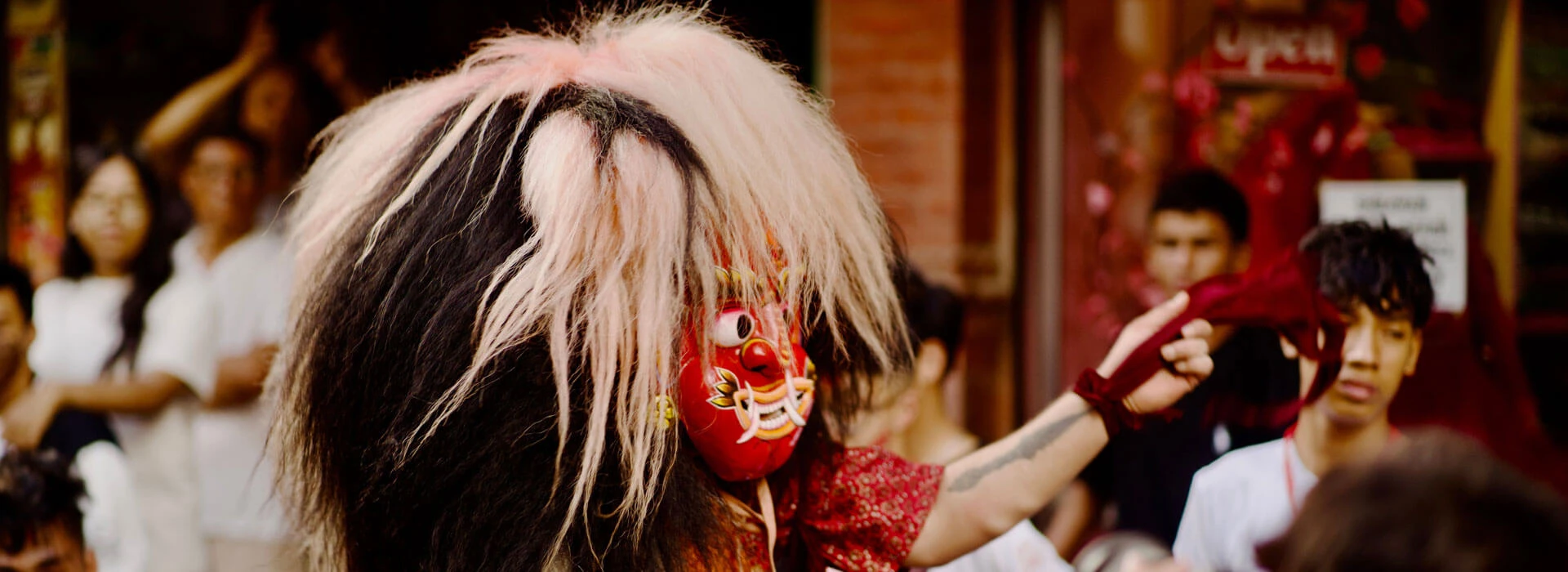
Kathmandu Durbar Square and Basantapur anchor the capital's celebration, centered around Hanuman Dhoka Palace. Religious processions move through between 8:00 and 11:00 AM, offering the clearest view of children dressed as cows passing the square's ancient temples and courtyards. Satirical performances take over afterward, peaking between 1:00 and 4:00 PM, when street performers dressed as politicians and public figures draw the loudest crowds of the day. Nearby Ason and Indra Chowk host smaller neighborhood processions worth wandering toward, while Thamel adds its own distinct flavor with vivid processions of men dressed as women and appearances by the Lakhey, a masked folk figure tied to Kathmandu's older festival traditions.
Mangal Bazaar in Patan offers a quieter, more devotional counterpart to Kathmandu's noise and scale. Processions here weave through Patan Durbar Square with genuine religious depth, often overlapping with Mataya, the related light festival where devotees illuminate small shrines throughout the old city to guide departed souls. Crowds gather densely along the square regardless, so arriving early matters as much here as anywhere else in the valley.
Taumadhi Square in Bhaktapur delivers the valley's most immersive experience, and rooftop cafes ringing the square rank among the best vantage points anywhere in Nepal for watching the day unfold below. Processions move clockwise, starting near Durbar Square, passing through Dattatreya Square, and arriving at Taumadhi beneath the towering Nyatapola Temple, Nepal's tallest pagoda. Arriving by 10:00 AM allows a clear view of the Taha Macha bamboo effigies before midday crowds fill the narrow streets, and the Ghintang Ghisi stick dance continues well beyond the main procession, often stretching into evening performances across the old city's courtyards.
Getting there requires a bit of planning across all three cities, and it's exactly the kind of logistics Nepal Nomad's local guides handle so visitors don't have to. Bhaktapur sits roughly 15 kilometers east of central Kathmandu, reachable by taxi from Thamel in 30 to 45 minutes depending on traffic, or by local bus from Ratnapark followed by a short walk into Taumadhi. Patan lies far closer, just across the Bagmati River from central Kathmandu, making it an easy addition to a single day spent moving between celebrations. Travelers hoping to catch more than one city in a single day benefit enormously from a guide who already knows the timing: prioritizing Kathmandu's morning processions first, moving to Patan around midday, and saving Bhaktapur, with its extended, multi-day celebration, for a slower visit that doesn't need to compete with anywhere else on the same afternoon. With an experienced local guide managing the route and the clock, visitors can focus entirely on the festival itself rather than the transit between it.
Gai Jatra Through the Eyes of the Newar Community
Beyond the processions, the satire, and the citywide spectacle, Gai Jatra Nepal remains, at its core, a Newar tradition, carried forward by a community for whom the festival represents something far deeper than public celebration.
For Newar families across Kathmandu Valley, Gai Jatra offers a rare, sanctioned space to process grief openly rather than privately. Losing a family member carries weight all year, but Gai Jatra provides one specific day where that loss gets witnessed publicly, walked through the streets, and shared with an entire community rather than carried alone behind closed doors. Neighbors, extended family, and strangers alike bear witness to a family's mourning, offering a kind of collective support rarely built so deliberately into daily life.
What makes this particularly meaningful within Newar culture is how naturally grief and joy coexist throughout the day. A family walking behind a cow in quiet remembrance passes comedians in elaborate satirical costume moments later, and neither feels like an interruption of the other. This coexistence reflects something genuinely central to Newar spiritual life, an understanding that honoring death and celebrating life were never meant to exist as opposites, and Gai Jatra teaches that lesson through lived experience rather than instruction.
Passing the tradition forward matters enormously too. Children growing up in Newar households attend Gai Jatra from an early age, absorbing its rhythms long before fully grasping its deeper meaning, much the way any deeply rooted cultural practice gets carried from one generation to the next. Elders often take an active role preparing costumes, guiding processions, and explaining customs to younger family members, ensuring the festival's specific traditions, the Taha Macha in Bhaktapur, the door-to-door visits in Kirtipur, the satirical performances in Kathmandu, remain intact rather than fading under modern pressures.
For visitors witnessing Gai Jatra as outsiders, understanding this layer changes the experience considerably. A festival that might initially read as colorful spectacle reveals itself, on closer look, as something the Newar community has quietly protected for centuries, a shared language for processing loss that belongs fully to the people practicing it, offered openly to anyone present enough to recognize its weight.
When Is Gai Jatra in 2026? Dates and Timing
Gai Jatra 2026 falls on Saturday, August 29, marking Bhadra Krishna Pratipada, the first day of the waning moon fortnight in the Nepali month of Bhadra. Unlike holidays fixed to the Gregorian calendar, Gai Jatra follows the Nepali lunar calendar, meaning the date shifts every year rather than landing on the same day twice in a row. Travelers planning around the festival should always check the specific year's date rather than assume a repeat of a previous August timing.
Because the lunar calendar governs the celebration, Gai Jatra typically lands somewhere in late August or early September, though the exact day moves within window depending on the moon's cycle. In 2027, for example, the festival shifts to Wednesday, August 18, a full eleven days earlier on the Gregorian calendar despite marking the identical lunar occasion. Anyone booking travel around Gai Jatra benefits from confirming the year's specific date well in advance, since flights and accommodation across Kathmandu Valley tend to fill quickly once locals and visitors alike start planning around the holiday.
Timing also varies meaningfully by city. Kathmandu and Patan observe the core procession and satirical performances within a single day, concentrated mostly around morning and midday hours when families lead their processions through central streets. Bhaktapur, by comparison, extends the celebration across seven or eight days, with the Taha Macha poles and folk dances continuing well beyond the initial procession. Visitors hoping to catch Bhaktapur's fuller schedule should plan for an extended stay in the city rather than a single-day visit, while Kathmandu and Patan reward travelers who arrive specifically on the main date itself.
As a public holiday across Kathmandu Valley, Gai Jatra closes schools, offices, and many businesses for the day, and main roads throughout the old cities become impassable to vehicle traffic once processions begin. Visitors should plan to travel on foot during festival hours, arrive early to secure a good vantage point along procession routes, and expect crowded streets, particularly in Kathmandu, where the scale of celebration draws the largest gathering anywhere in the valley.
Photography at Gai Jatra: What to Capture, What to Respect
Few festivals anywhere in Nepal offer a camera more to work with in a single day, and few demand more care in how a lens gets pointed. Gai Jatra hands photographers an extraordinary range of subjects, spanning genuine mourning, wild satire, and centuries-old ritual, often within the same city block. Knowing where to point a camera matters as much as knowing when to lower it.
Worth capturing: morning processions rank among the most visually striking moments of the entire day. Children dressed as cows, garlanded and painted, moving past ancient palace facades in Kathmandu Durbar Square or beneath Bhaktapur's towering Nyatapola Temple, offer genuinely rare frames rooted in centuries of unbroken tradition. Bhaktapur's Taha Macha, tall bamboo effigies draped in cloth and photographs of the deceased, carry visual weight few festivals anywhere in the world can match, particularly against the backdrop of the city's preserved medieval streets. Satirical performers deserve a camera too: elaborate costumes mocking politicians and public figures, painted faces mid-performance, and crowds reacting in real time all make for compelling, colorful street photography. Afternoon light in Bhaktapur's Taumadhi Square, watched from a rooftop cafe as the Ghintang Ghisi stick dancers move in long synchronized rows, offers one of the more rewarding wide shots available anywhere during the festival.
Worth respecting: grieving families walking behind a cow, or a child dressed as one, deserve real sensitivity regardless of how public the procession itself may be. A family's grief remains personal even mid-street, and close-up portraits of visibly mourning relatives should never happen without asking first, a simple gesture that costs nothing and prevents turning private sorrow into a stranger's photo opportunity. LGBTIQ+ pride marchers, particularly those wearing masks or partial disguises still common among older or more vulnerable participants, warrant the same caution; masks at Gai Jatra often exist precisely because full visibility still carries risk for some marchers, and a published photograph can undo that protection instantly. General crowd shots, wide processional images, and photographs taken with clear consent remain fair game throughout the day, but a moment's pause before raising a lens toward anyone visibly grieving or masked tends to separate a respectful visitor from an intrusive one.
Genuinely great festival photography rarely requires invasive proximity anyway. Gai Jatra's best images tend to come from patience and distance nearly as often as close range, a satirical costume caught mid-stride, a Taha Macha silhouetted against old brick rooftops, or a grieving family walking quietly through a crowd otherwise consumed by noise and color. Respect, more than access, tends to produce the photographs worth keeping.
Frequently Asked Questions About Gai Jatra
Is Gai Jatra the same as Gai Puja or Gai Tihar?
No, despite both honoring cows, the two festivals serve completely different purposes and land months apart. Gai Jatra falls in Bhadra (August/September) and centers on mourning family members lost within the past year. Gai Puja, sometimes called Gai Tihar, happens during Tihar in October/November and honors cows as symbols of prosperity and agricultural abundance, unrelated to personal grief or remembrance.
Why do children dress as cows instead of using real cows?
Real cows remain part of many processions, but arranging one isn't always practical for every grieving family. A young boy dressed in cow-symbolic garlands, painted markings, and ornamental coverings serves the identical spiritual purpose within Hindu belief, standing in for the animal believed to guide a departed soul safely into the afterlife.
Can non-Hindu visitors or foreign tourists attend?
Absolutely. Gai Jatra unfolds entirely in public streets and squares, and Newar communities generally welcome outside visitors witnessing the celebration. Sensitivity toward grieving families and masked participants matters more than religious background; genuine respect, not shared faith, determines whether a visitor experiences the day appropriately.
Why doesn't Gai Jatra fall on the same Gregorian date every year?
Timing follows the Nepali lunar calendar rather than a fixed solar date, landing specifically on Bhadra Krishna Pratipada, the first day of the waning moon fortnight. Because lunar months run roughly 29.5 days, the corresponding Gregorian date shifts noticeably year to year, sometimes by nearly two weeks.
Do Nepali communities abroad celebrate Gai Jatra too?
Yes, and increasingly so. Decades of Newar emigration have carried Gai Jatra traditions well beyond Kathmandu Valley, with diaspora communities in cities across the world now holding smaller processions and gatherings marking the same day, preserving mourning rituals and satire alike far from Nepal itself.
How does the LGBTIQ+ pride march relate to the traditional mourning procession?
Both unfold on the identical day but represent distinct threads within one shared festival. Grieving families lead cow processions honoring personal loss, while Blue Diamond Society's pride march, running since 2001, uses Gai Jatra's built-in cultural license for costume and self-expression to advocate for LGBTIQ+ visibility, closing with a candlelight vigil for community members lost over the past year.
Do onlookers give money or gifts to families in the procession?
Direct monetary donations aren't standard practice, but communities commonly offer small packets of sweets, oats, and fruit to performers and marchers passing through neighborhood streets, a longstanding gesture of communal support woven directly into the day rather than a formal transaction.
Is Gai Jatra appropriate for children or travelers uneasy with themes surrounding death?
Generally yes, since Nepali culture frames Gai Jatra around remembrance and healing rather than graphic or disturbing imagery. Children attend from an early age within Newar families themselves, and visitors uncomfortable with mourning-adjacent content can focus attention on satirical performances and cultural spectacle, which occupy just as much of the day as memorial processions.
Can tourists join the satirical performances or dress up themselves?
Organized satirical troupes and community groups typically plan costumes and performances well in advance, making spontaneous participation unlikely for visitors. Watching, photographing respectfully, and engaging with performers after a show remains the more realistic way for outsiders to take part in the day's spirit.
Why does Nepali culture permit open political satire specifically during Gai Jatra?
Historical precedent set the pattern centuries ago, when ordinary citizens used festival immunity to voice frustrations toward rulers without fear of punishment, a rare outlet in eras when political expression carried real risk elsewhere. Modern Gai Jatra preserves exactly cultural license, protecting performers mocking politicians and public figures under a kind of unspoken immunity rarely extended on ordinary days.
Where Sorrow and Laughter Walk the Same Street
Four centuries after a heartbroken king first asked grieving families to walk together rather than mourn alone, Gai Jatra still carries out precisely instruction, one August morning at a time. A cow moves through Kathmandu Durbar Square carrying someone's private loss into public view. A comedian mocks a politician two streets over. A pride marcher, once masked out of fear, dances openly beneath a rainbow flag near the same crowds honoring the dead. None of it cancels anything else out.
Few festivals anywhere allow grief and joy to occupy identical ground without one eventually overwhelming the other. Gai Jatra never asked them to compete in the first place. Sorrow gets witnessed, honored, and carried by an entire community rather than hidden behind closed doors, while laughter, satire, and unrestrained self-expression unfold in the very same hours, treated not as disrespect but as a companion healing offers just as genuinely as tears.
Visitors arriving for the cow processions or the satire alone tend to leave having witnessed something considerably larger: a culture willing to hold two emotions most places insist on separating, side by side, in full public view, year after year. A grieving queen found her first smile in it centuries ago. Newar families still find theirs today, and increasingly, so does anyone brave enough to march, dance, or simply stand at the edge of the crowd and watch grief learn, once again, how to laugh.