Himlung Himal Location and Climbing Route
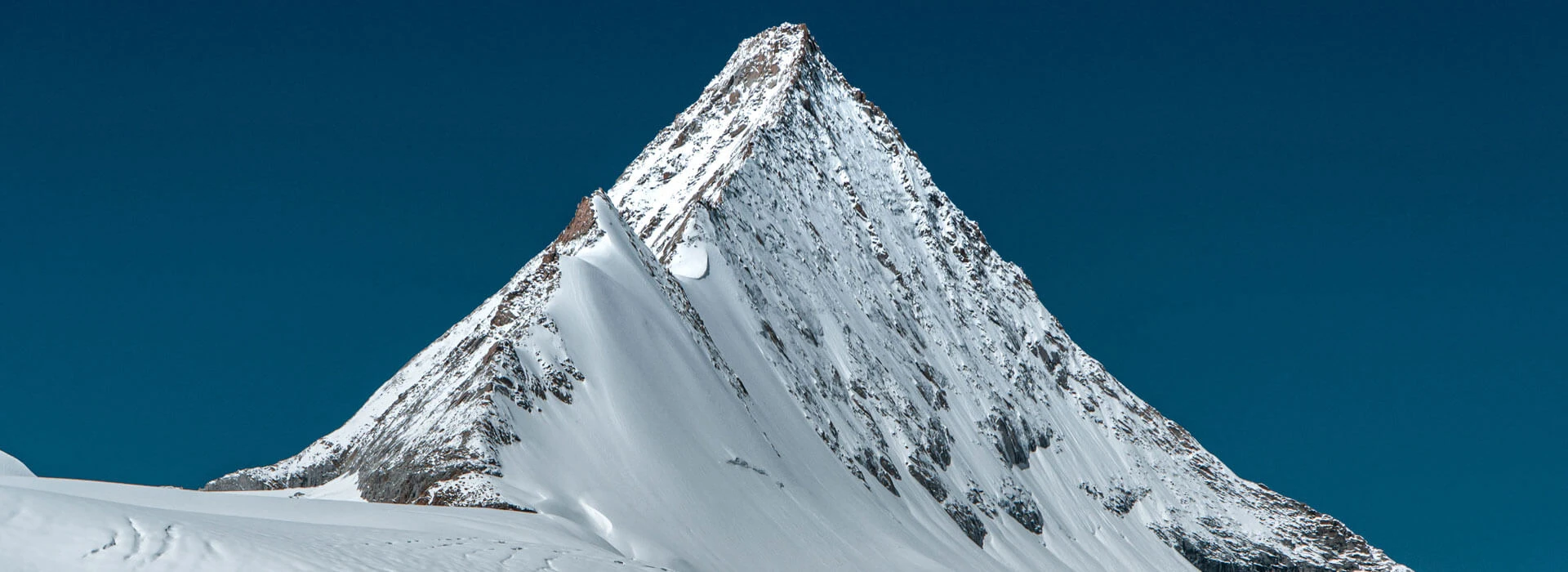
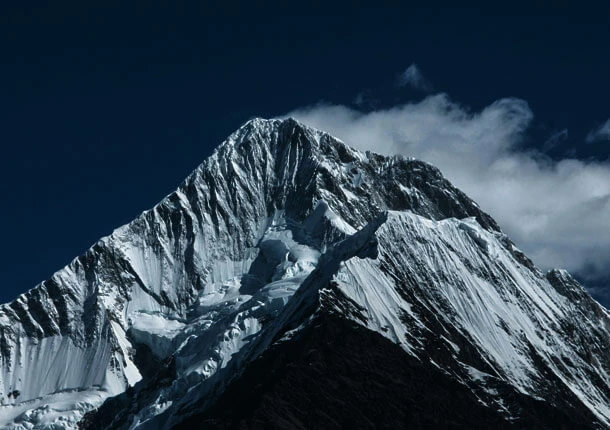
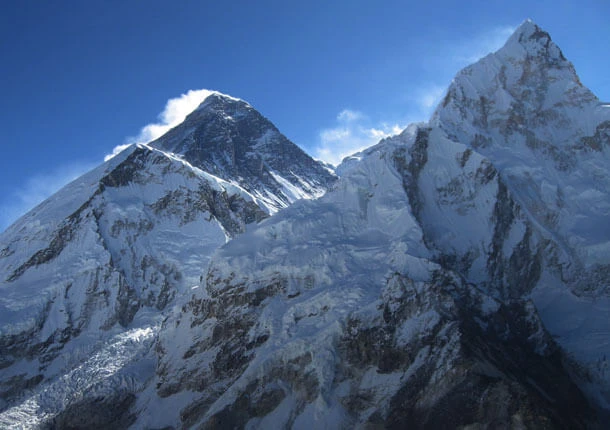
Rising to 7,126 m (23,379 ft), Himlung Himal is a prominent peak in the Peri Damodar Sarinung range of Manang District, located between the Manaslu and Annapurna regions near the Nepal Tibet border. Understanding its location matters for preparation, since the mountain's remoteness directly shapes the climbing route and the time needed to acclimatize before the summit push.
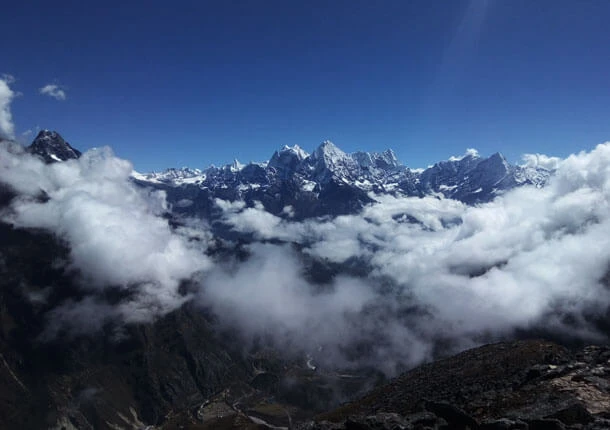
Reaching Himlung means first traveling through the Nar Phu Valley, a restricted, high altitude region that only opened to outside trekkers in recent years. This stretch is a trek in the traditional sense, following trails through Tibetan influenced stone villages, dry ridgelines, and high pasture, and it forms the first stage of the Himlung Himal climbing route rather than just a scenic approach. Beyond Base Camp at roughly 4,900m, the terrain shifts into genuine glaciated mountaineering, with three higher camps, fixed ropes on steeper sections, and increasingly technical snow and ice leading to the summit.
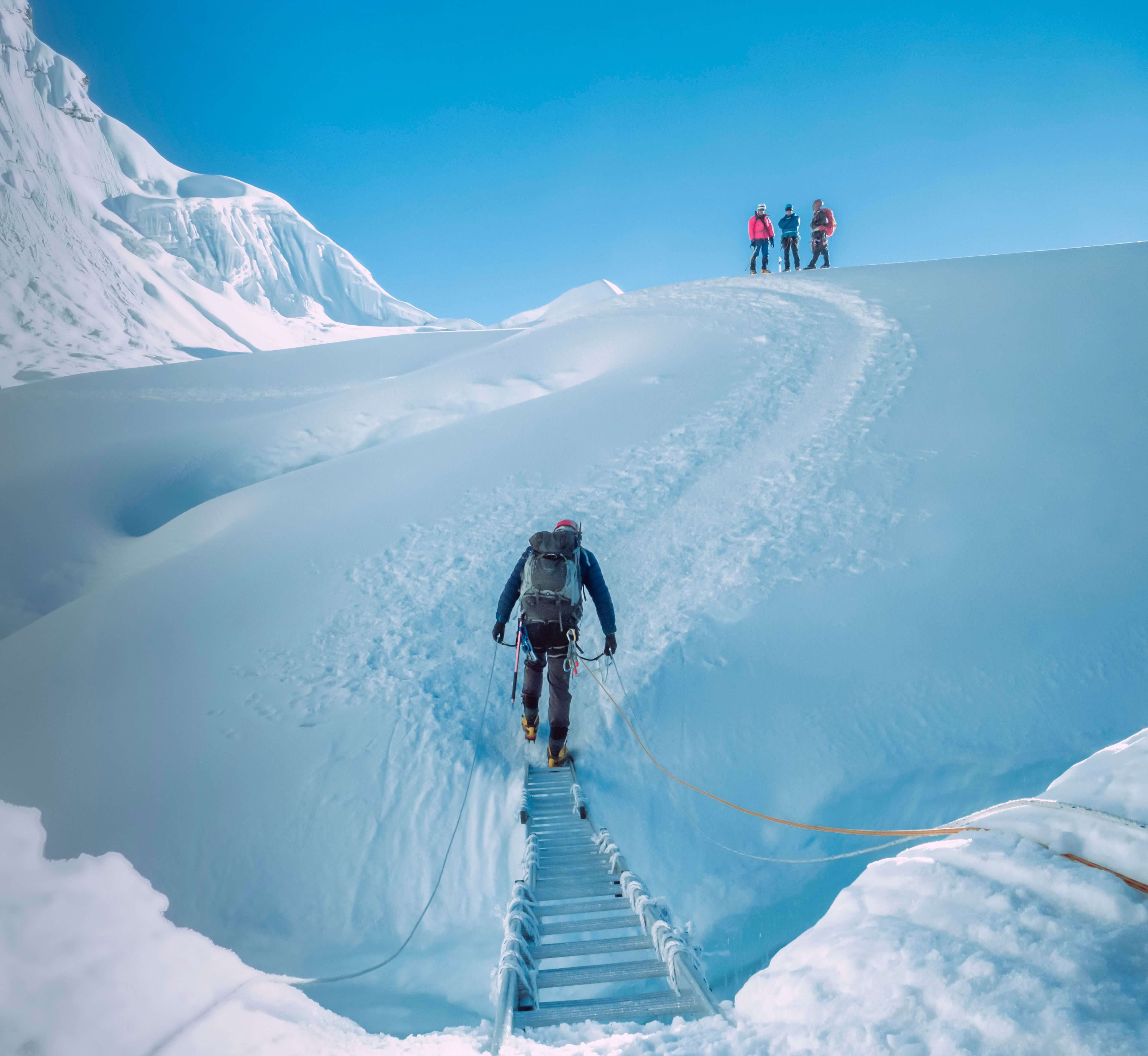
Because the trekking and climbing sections of the route are so different in character, an accurate sense of Himlung Himal's location and terrain is the starting point for any real preparation, and it's what the rest of this guide builds on.
Himlung Himal Climbing Difficulty and Experience Required
At 7,126m (23,379 ft), Himlung Himal is often described as one of the more approachable 7,000m peaks in Nepal, and by the standards of that category, it genuinely is. But "approachable" is a relative term at this altitude, and it's worth being precise about what that actually means before committing to the climb.
The trek to Base Camp and the climb above it are two unique undertakings. Reaching Base Camp at around 4,900m through the Nar Phu Valley is demanding but non technical, closer to a high altitude trek than a climb. Above Base Camp, the character of the expedition changes completely. Climbers move through genuine glaciated terrain across three higher camps, with sections of steep snow and ice, crevassed glacier travel, and fixed ropes on the more exposed stretches near the summit ridge. Crampons, an ice axe, and comfort moving on a rope team become essential rather than optional.
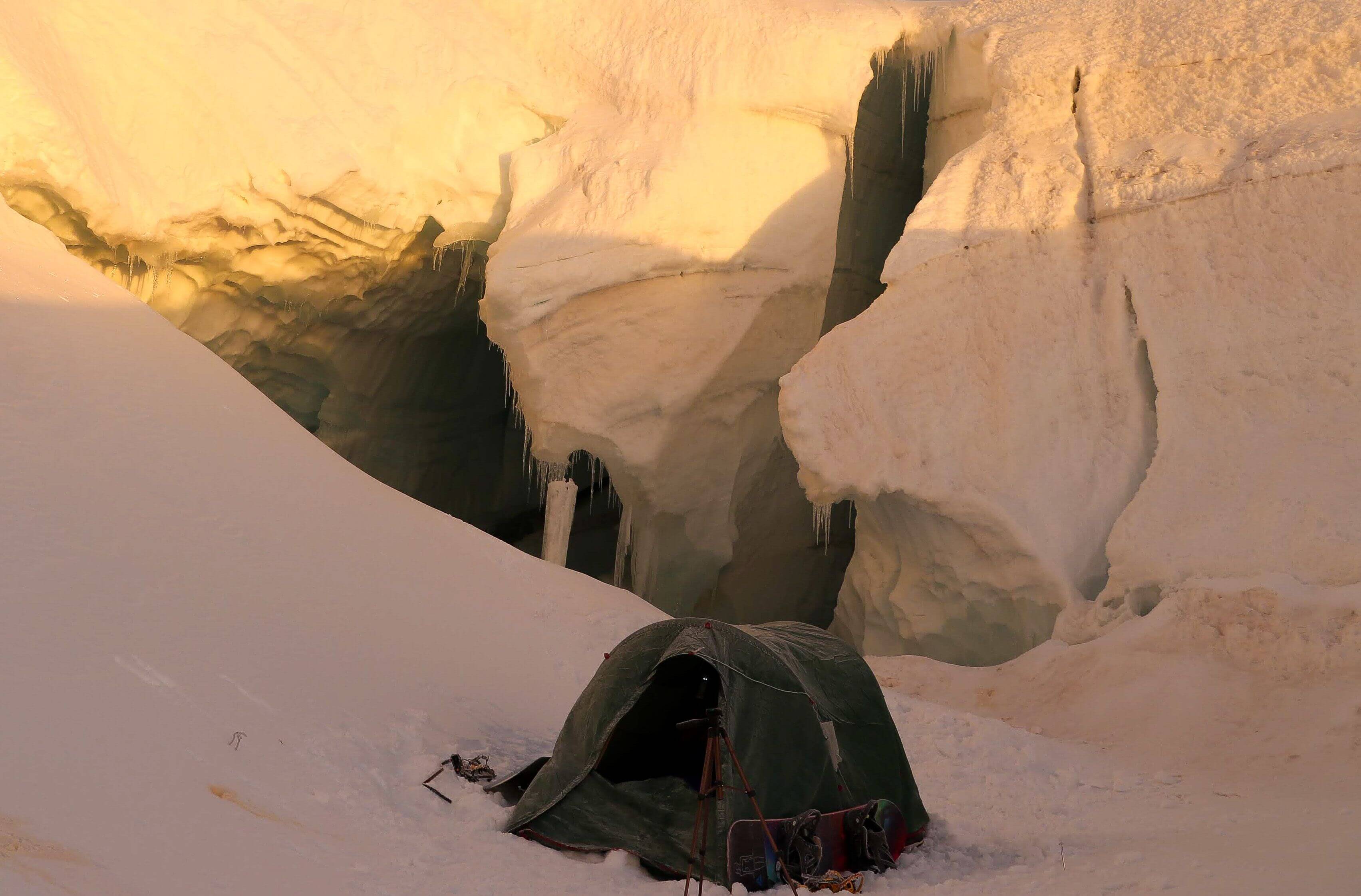
Altitude is the other major factor, and it doesn't ease up just because the technical grade is moderate. Above 6,000m, the air holds roughly half the oxygen available at sea level, and even fit, experienced climbers slow down significantly at that elevation. Summit day typically involves many continuous hours of movement in cold, thin air, often starting in darkness, and it demands real physical endurance built up over months of training, not just general fitness.
For this reason, Himlung is not a suitable first mountaineering objective. Climbers should come with prior experience at 6,000m or higher, ideally on a peak that involved glacier travel, fixed-rope sections, and multi day expedition life in a high camp. Basic rope skills, including jumaring, rappelling, and moving safely roped up on a glacier, are expected rather than taught from scratch on the mountain. Alongside the physical demands, summit day requires a specific kind of mental preparation: the ability to keep making sound decisions after hours of exertion at altitude, when fatigue and reduced oxygen both affect judgement.
Himlung Himal is best understood as an entry point into 7,000m mountaineering, not as an entry point into mountaineering itself. It realistically suits climbers who have already proven themselves on a 6,000m peak, have solid rope and crampon skills, and are looking to build towards an eventual 8,000 m expedition, rather than those attempting their first serious climb.
Building the Strength and Mindset to Climb
Proper Himlung Himal preparation starts well before departure, ideally 4 to 6 months out for most climbers and longer if you're newer to high altitude expeditions. This isn't a peak that rewards a few weeks of intense last minute training. The body needs time to genuinely build endurance, and rushing that process in the final weeks before departure tends to do more harm than good, since arriving fatigued or injured is far worse than arriving slightly undertrained.
Cardiovascular endurance forms the foundation of that training. Long distance trekking, running, cycling, and stair climbing all help build the kind of sustained aerobic capacity that summit day demands, where climbers are moving continuously for many hours at altitude. Alongside cardio, strength training matters just as much: legs and core carry the bulk of the physical load on steep, uneven terrain, while upper body and grip strength come into play during rope work, jumaring, and any sections requiring upper body pulling power.
Training with a loaded backpack is one of the most specific and useful things a climber can do to prepare, since it conditions the body for the actual weight and balance demands of expedition life, not just general fitness. Building up pack weight gradually over months, combined with hiking on varied terrain, including steep ascents and descents, helps the body adapt to the kind of ground Himlung's approach and lower slopes actually involve.
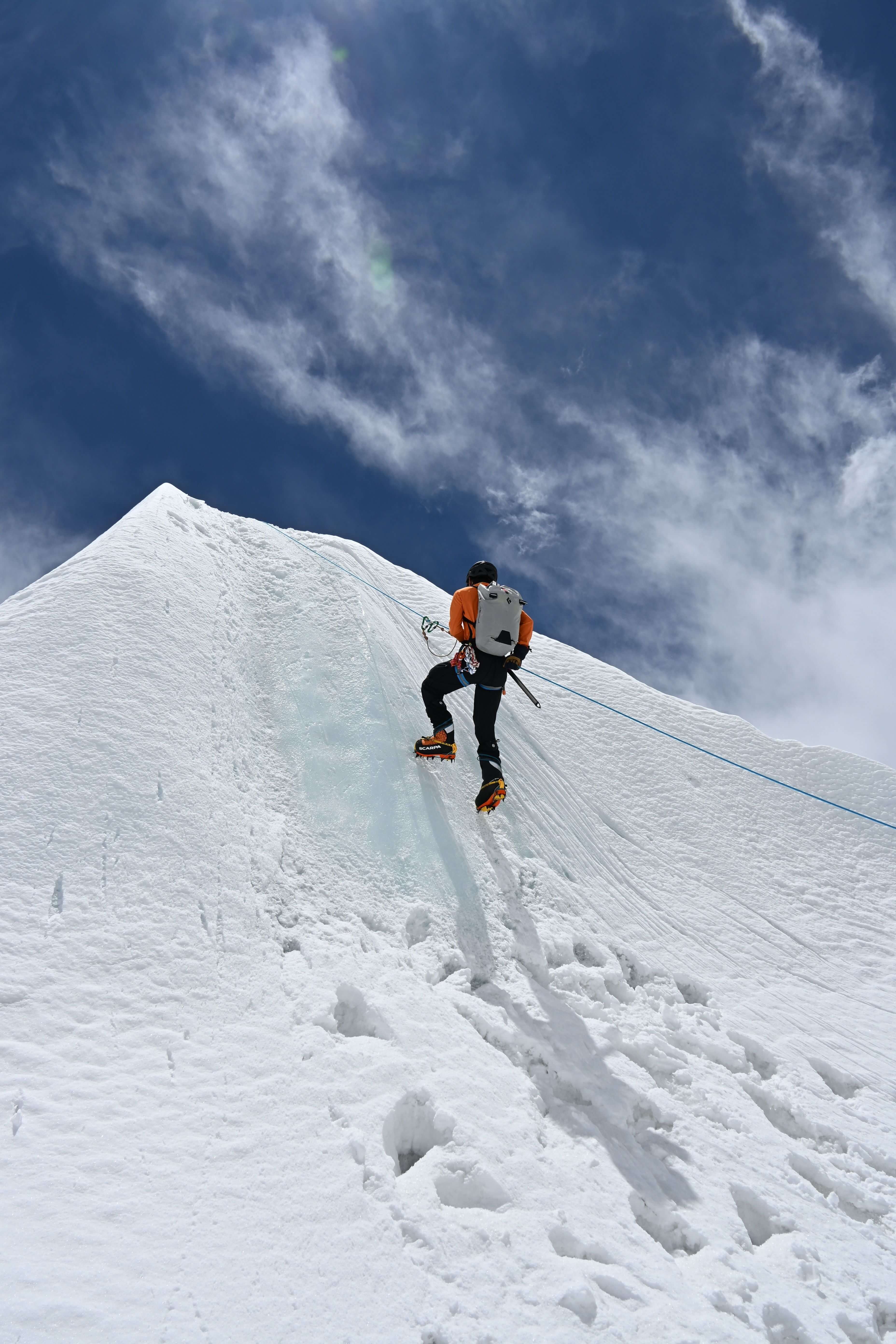
Physical preparation is only one aspect of the overall picture. Summit day at 7,126m brings cold, fatigue, isolation, and often unpredictable weather, all at once, and mental preparation for that combination matters as much as fitness. Spending time in cold conditions, practicing patience during long training days, and getting comfortable with discomfort in controlled settings all help build the resilience that high altitude summit pushes actually require.
Consistency is what separates climbers who arrive genuinely ready from those who don't. A steady, gradually increasing training load over several months builds real physical adaptation, where a rushed final push before departure mostly just builds fatigue. Training intensity should increase in stages, not spike suddenly, and it should scale to match the specific demands of a 7,126m expedition rather than general fitness goals, since trekking fitness alone isn't the same as expedition ready fitness.
Alongside physical training, it's worth building in technical mountaineering practice too, ideally on a glaciated peak beforehand: crampon technique, rope work, jumaring, and self arrest skills are not things to learn for the first time on Himlung itself. Combining consistent physical training with genuine technical preparation is what actually makes a 7,126m summit a realistic goal rather than an optimistic one.
Acclimatization: Learning to Climb at Altitude
At 7,126m, acclimatization isn't a formality built into the itinerary for comfort; it's what makes reaching the summit possible at all. The human body simply doesn't function normally at this altitude without time to adapt, and rushing that process is one of the most common reasons climbers fail to summit or, worse, develop serious altitude illness.
The Nar Phu Valley approach is where acclimatization genuinely begins, well before the technical climbing does. Gradually ascending over several days of trekking, rather than flying or driving directly to Base Camp, gives the body an early advantage in adjusting. Once climbing begins, dedicated acclimatization days are built into the schedule at Base Camp and again at the higher camps, giving the body time to produce more red blood cells and adjust to lower oxygen levels before pushing further. Camp rotations are the core mechanism behind this. Climbers typically move up to a higher camp, spend time there or sleep a night, then descend back to a lower camp or base camp to recover, following the well established mountaineering principle of climbing high and sleeping low. Each rotation exposes the body to a bit more altitude stress, then gives it a chance to recover in relatively richer air, and this repeated cycle is what gradually prepares the body for the thin air near the summit.
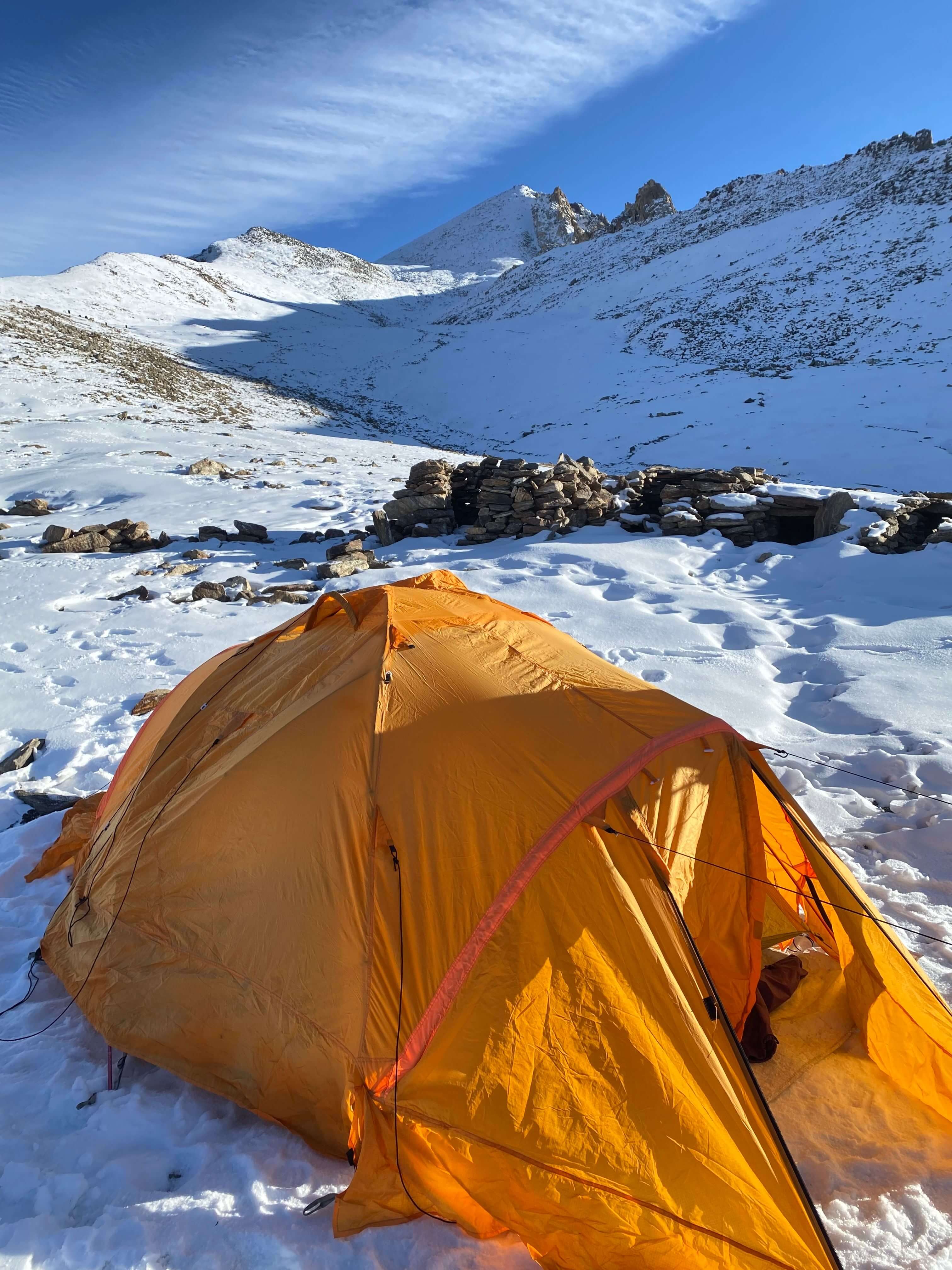
Altitude affects everyone differently, but the pattern is consistent: heart rate rises, sleep becomes lighter, appetite often drops, and simple tasks take more effort as elevation increases. A slow, deliberate pace and genuinely adequate rest at each stage matter more than raw fitness here, since even strong climbers can struggle if they move up too quickly. Hydration and nutrition become harder to maintain at altitude, exactly when the body needs them most, so climbers are generally expected to keep eating and drinking consistently even when appetite fades, and to prioritize real sleep whenever the schedule allows.
Recognizing the early signs of altitude related problems- persistent headache, nausea, unusual fatigue, or difficulty sleeping- is essential, and these symptoms should never be brushed off as something to push through. Altitude sickness tends to escalate quickly once ignored, and what starts as a mild headache can become dangerous within hours if the ascent continues regardless.
Weather and summit windows add another layer of complexity to the acclimatization schedule. A shift in conditions can mean camp rotations get compressed, delayed, or reordered on short notice, and such changes are precisely why following the expedition leader's acclimatization plan matters, even when it means waiting, descending, or adjusting a plan a climber might feel ready to skip. The leader's decisions are based on real time conditions and the whole team's safety, not just one climber's sense of readiness, and sticking to that plan is one of the most important things a climber can do to actually reach the summit safely.
Essential Gear for the High Himalayas
Gear for a 7,126m expedition needs to do more than keep a climber comfortable; it needs to function reliably in genuinely extreme cold, thin air, and unpredictable mountain weather, which makes equipment choices a real part of Himlung Himal preparation rather than an afterthought.
Clothing follows a layering system built around the fact that temperatures swing dramatically between the lower valley approach and the summit push. A moisture wicking base layer, insulating mid ayers, and a windproof, waterproof outer shell form the core system, with a heavyweight down jacket and down or insulated pants added for high camps and summit day, when temperatures can drop well below freezing even during daylight hours.
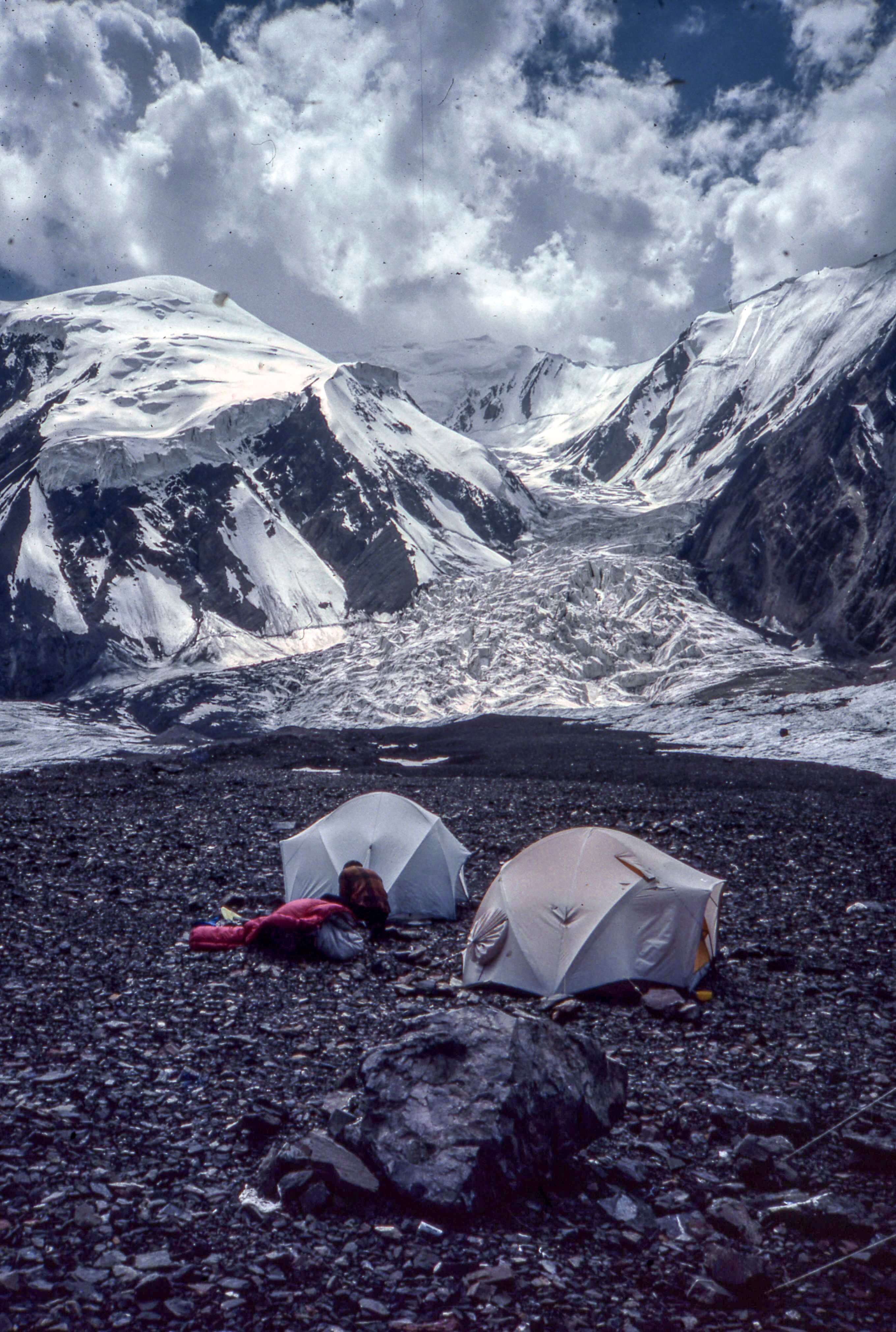
Footwear matters as much as any other single item. Double mountaineering boots rated for 7,000m altitudes are essential, since standard trekking boots simply aren't built for the cold and technical terrain above Base Camp. Crampons, an ice axe, a climbing harness, and a helmet round out the core technical kit, along with a jumar and rappel device for the fixed rope sections higher on the route. Warm, dexterous gloves for technical work, heavier mitts for extreme cold, and solid head protection, including a warm hat and buff, complete the cold weather essentials, alongside a sleeping bag rated for well below freezing for nights at the higher camps.
Most expeditions, including Nepal Nomad Trekking's Himlung Himal departures, provide the shared technical equipment: fixed ropes, group climbing hardware, oxygen and mask setups if used, and camping infrastructure at Base Camp and the higher camps. Personal technical gear, boots, crampons, harness, helmet, and personal layers are typically the climber's own responsibility to bring, fitted and tested well before arriving in Nepal.
Beyond the technical kit, a few trekking essentials carry through the whole expedition: a comfortable daypack for the approach and summit day, a larger duffel bag for gear carried by porters or yaks to Base Camp, trekking poles, and a headlamp with spare batteries. Sun and eye protection deserve real attention at this altitude, since UV exposure on snow and ice is far more intense than at lower elevations; glacier glasses or goggles with strong UV protection, along with high SPF sunscreen and lip balm, are non negotiable rather than optional extras.
A personal first aid kit and any regular medication should also be packed with care, along with basics like blister treatment, altitude medication discussed in advance with a doctor, and any personal supplies a climber can't easily replace on the mountain. Choosing gear suited specifically to a 7,126m expedition, rather than borrowing from lower altitude trekking experience, matters more than climbers sometimes expect. Boots in particular should be broken in and tested on real terrain well before departure, since new or poorly fitted boots at altitude are one of the most common and preventable causes of blisters, cold injury, and abandoned summit attempts. At the same time, every extra kilogram matters at altitude, so the goal is a kit that's complete without being excessive: nothing essential left behind, but nothing carried that doesn't earn its place in the bag.
Medical Preparation Before the Expedition
A thorough medical check up before departure is one of the most important, and most often skipped, parts of preparing for a 7,126m expedition. Climbing above 7,000m puts real, sustained stress on the cardiovascular and respiratory systems, and a pre trip check up gives both the climber and their doctor a clear picture of whether the body is genuinely ready for that demand, well before it's tested on the mountain.
Cardiovascular and respiratory fitness deserve particular attention, since the heart and lungs are working harder than usual at every stage of the climb, long before summit day itself. It's worth discussing any existing health conditions honestly with a doctor, including heart or blood pressure issues, asthma or other respiratory conditions, and anything requiring regular medication, since being generally fit doesn't automatically mean every condition is safe to bring to this altitude. This conversation should also cover what climbing above 7,000m actually demands physically: prolonged exertion in extreme cold, disrupted sleep, reduced appetite, and cumulative fatigue over several weeks, all of which place real strain on the body beyond normal trekking or gym fitness.
Climbers on regular medication should carry a sufficient supply for the full expedition length, plus a reasonable buffer, along with copies of prescriptions where relevant. A well stocked personal first aid kit matters too, covering basics like blister treatment, pain relief, and any condition specific supplies a climber depends on, since replacing forgotten medication becomes far harder once the expedition leaves Kathmandu.
Understanding the symptoms of altitude related illness is essential knowledge, not optional reading. Persistent headache, nausea, unusual fatigue, dizziness, and difficulty sleeping are all early warning signs that should never be ignored or explained away. Climbers should know, before they ever need it, that any of these symptoms means telling the expedition leader immediately, not waiting to see if they pass. In more serious cases, descending and seeking medical assistance takes priority over continuing the ascent, regardless of how close the summit might feel at that point.
Appropriate travel insurance is a core part of medical preparation, not an afterthought. A policy that specifically covers high altitude climbing up to and beyond 7,126m, including emergency evacuation by helicopter, is essential, since standard travel insurance rarely covers mountaineering at this elevation at all. Given the cost of a high altitude rescue, confirming this coverage before departure is one of the simplest and most important things a climber can do.
None of this replaces proper acclimatization or sound expedition planning. Medical preparation works alongside those things, not instead of them: a body that's been medically screened, well informed about warning signs, and properly insured is simply better equipped to acclimatize safely and respond quickly if something does go wrong on the mountain.
The Technical Skills You Need on the Mountain
Being physically fit and being technically prepared are two different things, and Himlung Himal genuinely requires both. A climber can have excellent cardiovascular fitness and still struggle on the mountain if they've never practiced the specific technical skills the route demands, since altitude has a way of exposing exactly the skills that weren't properly learned beforehand.
A solid foundation in basic mountaineering skills should be in place before arriving in Nepal, not picked up for the first time on the mountain. Crampon technique, moving efficiently and securely on snow and ice without catching a spike or losing balance, along with proper ice axe use for both movement and self arrest, forms the core of that foundation. These are the kinds of skills best learned on a lower altitude glaciated peak beforehand, where mistakes are far less costly than they are at 7,000m.
Fixed rope skills matter just as much, since much of Himlung's steeper terrain relies on ropes already anchored into the mountain. Climbers need to be genuinely comfortable using an ascender to move upward on a fixed line and a descender for controlled descents, along with confident harness and carabiner use for clipping in, transitioning between rope sections, and managing gear efficiently while wearing gloves in the cold. Fumbling with unfamiliar equipment at altitude wastes energy and time that climbers often can't spare.
Glacier travel adds another layer of required skill. Understanding crevasse hazards, moving safely as part of a rope team, and maintaining clear communication with teammates are all essential on Himlung's glaciated sections, where the terrain isn't always straightforward even on a well established route. Climbing efficiently across mixed terrain, snow, ice, and steeper technical sections alike, is a skill built through repetition, not something that clicks into place automatically on summit day.
All of this is why training with the actual equipment matters so much before departure: practicing crampon and ice axe technique, ascending and descending fixed lines, and moving in a harness with real gear, ideally in conditions similar to what the expedition will involve. Previous technical climbing experience, ideally on a 6,000m peak with similar terrain, gives climbers a genuine baseline of comfort and muscle memory that pays off directly at altitude, when thinking clearly and moving efficiently both become harder.
Even well prepared climbers rely on professional guidance and established expedition team procedures throughout the climb. Following the lead guide's instructions on rope management, pacing, and turnaround decisions isn't a sign of inexperience; it's simply how safe expeditions operate at this altitude, where individual judgment alone isn't enough to account for constantly shifting conditions. Technical skill and team discipline work together, and neither one substitutes for the other on a mountain like Himlung.
Himlung Himal Expedition Permits, Insurance and Logistics
Climbing Himlung Himal requires more paperwork than a standard trek, since the route crosses both a conservation area and a restricted region near the Tibetan border. Understanding what's needed, and arranging it well in advance, is a core part of Himlung Himal preparation.
Three permits are typically required. The Annapurna Conservation Area Permit (ACAP) covers the approach through the Annapurna region and generally costs around NPR 3,000 (roughly USD 25) per person. Because the route passes through the restricted Nar Phu Valley, a separate Restricted Area Permit is also required, priced per person per week rather than as a flat fee, with rates typically higher in the peak spring and autumn seasons and lower in winter and monsoon. On top of these, a Himlung Himal climbing permit, or royalty fee, is charged directly for the mountaineering ascent itself, with pricing that also varies significantly by season, generally highest in spring and considerably lower in autumn. A liaison officer, assigned by the Nepalese government to accompany the expedition, is typically a mandatory part of this permit structure as well.
Expedition registration and documentation go beyond the permits themselves. This generally includes formal registration of the expedition with the relevant government department, passport and visa details for every climbing member, and paperwork confirming the expedition operator's license to run climbs in the region. A reputable operator handles most of this process directly, but climbers should still confirm well ahead of departure that everything is filed correctly, since restricted area permits in particular can take time to process.
High altitude rescue and evacuation insurance is not optional for a climb of this scale, and it needs to be specific to what the expedition actually involves. A policy should explicitly cover mountaineering up to and beyond 7,126m, since general trekking insurance typically caps out at much lower altitudes and won't apply once technical climbing begins. It should also cover helicopter evacuation from Base Camp or higher camps, medical treatment for altitude related illness, and trip interruption in case bad weather or injury cuts the expedition short. Given the cost of a genuine high altitude rescue, this is one area where under insuring is a real risk rather than a way to save money.
Emergency communication is arranged as part of the expedition's logistics, generally through satellite phones or radios carried by the guide team, allowing contact with Kathmandu and coordination of a rescue if conditions require one. This system, along with clear evacuation procedures agreed on before the climb begins, should be something climbers understand and confirm before departure, not something assumed.
On the ground, logistics typically include jeep transport between Kathmandu and the trailhead at Koto, with the return journey following the same route once the expedition concludes. Accommodation and meals during the approach through Nar Phu Valley are generally a mix of teahouses and camping, depending on the itinerary, while Base Camp and the higher camps rely entirely on expedition tents and camp kitchens. A full support team, porters or mules carrying equipment to Base Camp, climbing Sherpas assisting on the technical sections above it, and cooking and camp staff forms the backbone of a properly run expedition and are generally included as part of a full service package. Permit fees, royalty costs, and restricted area pricing are reviewed periodically and can shift by season or government policy, so it's worth confirming current requirements and costs directly with your operator before booking rather than relying on last year's figures. Nepal Nomad Trekking handles the full permit and logistics process as part of its Himlung Himal expeditions, but regardless of operator, climbers should treat permit and insurance confirmation as one of the first steps in preparation, not a last minute formality.
Food, Hydration and Fuel for the Climb
Nutrition matters more with every meter of altitude gained, simply because the body burns significantly more energy at high altitude just to stay warm and keep functioning, even before factoring in the physical demands of climbing itself. Getting food and hydration right isn't a comfort issue on a 7,126m expedition; it's part of what keeps a climber strong enough to actually reach the summit.
Meals shift noticeably in character as the expedition moves higher. During the trekking approach through Nar Phu Valley, meals are typically varied and reasonably substantial, often including rice, lentils, vegetables, and simple carbohydrate heavy dishes served in teahouses or camp kitchens. Once the expedition reaches Base Camp and the higher camps, meals become simpler by necessity, built around dehydrated or freeze dried food, instant meals, soups, and whatever the camp kitchen can realistically prepare at altitude with limited fuel and time. This shift is worth expecting and mentally preparing for, since food at 6,000m and above rarely resembles a full trail meal.
Calorie and macronutrient needs rise sharply during the expedition. Carbohydrates become the primary fuel for sustained climbing, since they're the most efficient source of quick energy at altitude, while adequate protein supports muscle recovery after long days of exertion in the cold. Total calorie requirements can climb well above normal daily intake, and climbers often need to eat more than their appetite naturally signals to keep pace with what the body is actually burning.
Hydration deserves just as much attention as food, arguably more, since dehydration at altitude happens faster than most climbers expect, driven by increased respiration rate, dry mountain air, and the physical effort of climbing. Drinking water consistently throughout the day, rather than only when thirsty, is essential, and hot drinks, tea, soup, and hot water with electrolytes serve a dual purpose in cold conditions, supplying fluids while also helping maintain core body temperature. Warm meals matter for the same reason; eating something hot at the end of a cold day supports both nutrition and basic morale.
Appetite naturally drops at high altitude, even in climbers who are eating and training well, and this is one of the more counterintuitive challenges of expedition life: the body needs more food exactly when it wants less. Eating on a schedule rather than waiting for hunger, and choosing calorie dense foods that go down easily even with reduced appetite, helps offset this. Snacks and quick energy foods, nuts, energy bars, chocolate, dried fruit, and simple carbohydrate snacks, matter enormously on climbing days, when stopping for a full meal isn't practical and steady, small bursts of energy are what actually keep a climber moving.
Food storage and availability become more limited the higher the expedition goes. Base Camp typically has a proper camp kitchen and reasonable food storage, but the higher camps carry only what's been transported up by climbers and Sherpas, which means meals are simpler, supplies are finite, and nothing is wasted. Safe drinking water follows the same logic: water at Base Camp and above is generally melted snow or sourced locally and must be purified, either by boiling, filtering, or chemical treatment, before it's safe to drink.
Alcohol has no real place on a high altitude expedition. It worsens dehydration, disrupts sleep quality, which is already compromised at altitude, and can mask or worsen symptoms of altitude sickness, making it one of the easier things to simply avoid entirely during the climb.
Balancing all of this against the physical demands of a 7,000m expedition really comes down to consistency: eating enough even without appetite, drinking water on a schedule rather than by thirst alone, and prioritizing warm, calorie dense food whenever it's available. For summit day specifically, climbers should carry easily digestible, high energy foods that don't require much chewing or preparation in the cold: energy gels, chocolate, dried fruit, and simple carbohydrate snacks that can be eaten quickly with gloved hands during brief pauses, since summit day leaves little time or appetite for anything more elaborate.
When to Climb: Seasons and Mountain Weather
Himlung Himal can technically be climbed in more than one season, but two windows genuinely matter: spring (March to May) and autumn (September to November). Between the two, autumn is generally considered the stronger choice, and within autumn, the stretch from mid October to early or mid November tends to offer the most reliable combination of stable weather, dry trails, and manageable summit conditions.
Spring brings warming temperatures, longer daylight hours, and a valley coming into bloom along the lower approach, which makes for a genuinely pleasant trekking experience through Nar Phu Valley. Snow conditions on the mountain itself are generally manageable, though spring weather in the Himalaya can be less settled than autumn, with a higher chance of snowfall and shifting conditions higher on the route. Spring also sees noticeably fewer expedition teams on Himlung compared to autumn, which appeals to climbers who prefer a quieter mountain, though it means less shared trail breaking and fewer teams to coordinate with if conditions get difficult.
Autumn is where most commercial expeditions concentrate, and for good reason. After the monsoon clears, the snowpack tends to stabilize, trails dry out, and the region settles into a run of crisp, clear days with strong visibility, ideal both for the trek through Nar Phu Valley and for the technical climbing above Base Camp. This stability is also what makes acclimatization more predictable during autumn, since camp rotations are less likely to be disrupted by sudden storms. That said, autumn isn't uniformly reliable from start to finish. Conditions are generally at their best from mid October into early or mid November, while later in November, wind speeds on the mountain tend to increase, which is part of why most successful summit pushes land in October or the first week or two of November rather than later in the month.
Winter and monsoon are both avoided for good reason. Winter brings extreme cold, with nighttime temperatures at the higher camps regularly dropping below -15°C even before wind chill, along with heavy snow loads and short daylight hours that leave little margin for a safe summit push. Monsoon season, from June to August, brings heavy precipitation to the lower approach and correspondingly heavy snowfall higher up, raising the risk of landslides on the trek in and unstable snow conditions on the mountain itself.
Temperatures shift dramatically with elevation throughout the expedition. Base Camp at around 4,900m is cold but generally tolerable, while the higher camps and the summit push involve genuinely extreme cold, made worse by wind chill on exposed ridgelines. Strong winds, sudden cloud cover, and fast moving weather changes are a normal part of climbing at this altitude, and they're exactly why a fixed summit date rarely works on a mountain like Himlung. Instead, expedition schedules are built around identifying a reliable summit window once the team is on the mountain, watching wind speed and precipitation forecasts closely, and being ready to adjust camp rotations or delay a summit attempt if conditions shift.
This is also why flexibility matters more than climbers sometimes expect going in. A schedule with some built in slack for weather delays is far more likely to produce a successful, safe summit than one planned around a single fixed date. Forecasts should be checked regularly throughout the expedition, but the final call on timing always comes down to the expedition team's on the ground weather assessment, since conditions on a remote 7,000m peak can shift faster than any forecast fully captures.
What to Pack for a 7,126m Expedition
Packing for Himlung Himal means preparing for two very different environments: the trekking approach through the Nar Phu Valley and the extreme conditions above Base Camp. The goal is to carry everything essential for the climb without adding unnecessary weight, as even a few extra kilograms become noticeably harder to manage at high altitude.
Clothing: A reliable layering system is essential, including moisture wicking base layers, insulating mid ayers, a waterproof and windproof outer shell, a high altitude down jacket, insulated pants, warm socks, gloves, and head and neck protection.
Footwear: Climbers need properly fitted double mountaineering boots suitable for 7,000 m conditions, along with comfortable trekking footwear for the approach and lightweight camp shoes for rest periods.
Technical climbing gear: Essential personal equipment includes crampons, an ice axe, climbing harness, helmet, ascender, descender, carabiners, and slings. Some shared technical equipment, fixed ropes, and camp infrastructure may be provided by the expedition operator, so climbers should confirm what is included before departure.
Sun and eye protection: Strong UV exposure at high altitude makes glacier glasses or goggles, sunglasses, high SPF sunscreen, and lip balm important throughout the expedition.
Trekking and camp essentials: A comfortable daypack, expedition duffel, trekking poles, headlamp, water bottles or a hydration system, and a reliable water purification method are useful throughout the journey.
Health and personal items: Pack basic toiletries, a personal first aid kit, and sufficient personal medication for the entire expedition. Any altitude related medication should be discussed with a qualified doctor before departure.
Food and hydration: Personal energy snacks such as nuts, energy bars, chocolate, or dried fruit can be useful during long climbing days, while electrolyte supplements may help climbers maintain hydration.
Important documents: Keep your passport, permits, travel and high altitude rescue insurance details, emergency contacts, and other required documents safely organized and accessible.
Most importantly, every item should be tested before departure, particularly mountaineering boots and technical equipment. A well planned Himlung Himal packing list is not about carrying everything possible; it is about having the right equipment, knowing how to use it, and keeping the load manageable for the demanding climb ahead.
What the expedition provides vs. what climbers bring
Most established operators, including Nepal Nomad Trekking, supply the shared technical and camp infrastructure: fixed ropes, group climbing hardware, tents at Base Camp and higher camps, camp kitchen equipment, and oxygen setups where used. Personal gear, clothing, boots, crampons, harness, helmet, sleeping bag, and all personal items remain the climber's own responsibility to bring, fitted and tested well before arrival in Nepal. It's worth confirming the exact split with your operator before departure, since it can vary slightly between companies.
A final point worth taking seriously: every extra kilogram matters more at altitude than it does at sea level, where energy and oxygen are already limited. The goal isn't to pack for every possible scenario, but to bring a complete, well tested kit with nothing essential missing and nothing unnecessary weighing down the climb.
How Much Does the Himlung Himal Expedition Cost?
A full service Himlung Himal expedition typically costs between $6,000 and $9,500 per person, with most well organized packages landing around $7,000 to $8,500. Prices vary meaningfully based on group size, season, and how much support is included, so it's worth treating this as a planning range rather than a fixed number, and confirming current pricing directly with your operator before booking.
What's Typically Included
Typically Included | Typically Excluded |
Climbing permit (royalty fee), Restricted Area Permit, and ACAP | International airfare to and from Nepal |
Nepal entry visa fee | Personal climbing gear and clothing |
Domestic transportation (Kathmandu to Koto and return) | Personal travel and rescue insurance |
Accommodation and meals during the trekking approach | Tips for guides, Sherpas, and porters |
Base Camp and high-camp tents, meals, and logistics | Personal snacks and extra food items |
Guide, climbing Sherpa, and porter/support staff costs | Alcoholic and bottled beverages |
Group climbing and camping equipment | Wi Fi, phone charging, and communication costs on the trail |
Government liaison officer fees | Extra nights in Kathmandu due to delays or early return |
Garbage deposit and waste management fees | Emergency evacuation costs beyond what insurance covers |
Where the Cost Actually Goes
Breaking the total down by category makes it easier to see what's driving the price, and where costs can shift depending on your choices.
Cost Category | Typical Range |
Climbing permit (royalty fee) | $125–$500 per person, depending on season (highest in spring, lowest in winter/monsoon) |
Restricted Area Permit (Nar Phu Valley) | $75–$100 per person per week, plus $15/day beyond the first week |
Annapurna Conservation Area Permit (ACAP) | ~$25 per person |
Nepal entry visa (90 days) | ~$125 |
Guide, climbing Sherpa, and porter support | Built into the package; typically 1:1 Sherpa-to-climber ratio on guided expeditions |
Domestic transport (Kathmandu – Koto – Kathmandu) | Built into the package; private jeep or local bus |
Food and accommodation (approach + Base Camp + high camps) | Built into the package; teahouse/camping approach, full camping above Base Camp |
Group climbing and camping equipment | Built into the package (fixed ropes, tents, camp kitchen) |
What Changes the Final Price
A few factors move the total cost up or down more than anything else. Group size matters significantly, since permit and liaison officer costs are often shared across the team, making larger groups meaningfully cheaper per person than solo or small private climbs. Season affects both permit fees and overall demand, with spring generally costing more than autumn due to higher royalty fees. The level of service also matters: a full board package with a 1:1 Sherpa ratio costs considerably more than a "base camp joining" service, where climbers handle more of their own logistics above Base Camp. Finally, the operator itself makes a real difference, since international agencies typically charge more than local Nepalese operators for a comparable level of support.
Who Should Consider Climbing Himlung Himal?
Himlung Himal suits a fairly specific type of climber, and being honest about that upfront saves people time, money, and risk further down the line.
It's best suited to experienced trekkers and climbers who are genuinely comfortable with long, demanding Himalayan journeys, not just a single big trek, but the accumulated physical and mental load of weeks spent at altitude, in a remote setting, with limited comforts. Prior high altitude experience matters a great deal here. Climbers who have already trekked or climbed above 5,000 to 6,000m have a real sense of how their own body responds to thin air, disrupted sleep, and reduced appetite, and that self knowledge is difficult to substitute with fitness alone.
Basic mountaineering skills are a genuine prerequisite, not something to pick up along the way. Comfort with crampon use, ice axe technique, moving on fixed ropes, and basic glacier travel and safety should already be in place before arriving in Nepal, ideally practiced on an earlier 6,000m class peak. Alongside that technical baseline, strong physical conditioning matters: solid cardiovascular fitness, leg strength, and the endurance to handle consecutive demanding days, since expedition life doesn't offer much recovery time between exertion.
Just as important, though less talked about, is mental preparation. Climbers need to be genuinely ready to cope with sustained cold, fatigue, isolation, and the uncertainty that comes with mountain weather that can change the plan on short notice. This also means being willing to follow a gradual acclimatization schedule, including rest days and camp rotations that can feel slow when a climber is eager to push higher, rather than trying to rush toward the summit.
It's worth being clear eyed about one thing in particular: 7,126m is a serious altitude, full stop. Himlung is often described as one of the more accessible 7,000m peaks, and relative to others in its category, that's fair. But "more accessible" doesn't mean easy, and climbers should approach it with the same seriousness they'd bring to any major high altitude objective, not as a shortcut around proper preparation.
Finally, this is a mountain for climbers willing to genuinely invest time beforehand, months of physical training and, ideally, dedicated technical practice, rather than those hoping general fitness will carry them through. Climbers who haven't yet reached 5,000 to 6,000m, or who don't yet have hands-on experience with crampons, ropes, and glacier travel, are generally better served building that experience on a smaller peak first, rather than treating Himlung as a starting point.
In the end, what makes someone genuinely ready for Himlung Himal isn't just physical fitness; it's the combination of real experience, honest self assessment, and a willingness to make disciplined, sometimes unglamorous decisions on the mountain: turning back when conditions call for it, resting when the body needs it, and trusting the acclimatization schedule even when the summit feels close. Preparation and judgment, more than raw strength, are what actually get climbers to the top and back down safely.
Prepared for the Mountain, Ready for the Journey
Climbing Himlung Himal was never just a matter of being fit enough. Across the journey from the remote trails of Nar Phu Valley to the 7,126m summit, what actually determines success is preparation in the fullest sense: months of physical training, real technical skill with rope and crampon, a disciplined acclimatization schedule, the right gear tested and broken in beforehand, and a medical and logistical plan that takes the mountain seriously rather than assuming things will work out.
None of this is about eliminating risk, since no high altitude climb offers that. It's about approaching Himlung with genuine confidence instead of unearned optimism, knowing that every stage of preparation was handled properly rather than hoped past. The mountain rewards patience and respect far more than ambition alone, and conditions here, as on any 7,000m peak, can shift faster than a schedule can account for, which is exactly why sound judgment matters as much as strength on summit day.
Standing on Himlung's summit isn't really about a number on an elevation chart. It's what that number represents: weeks of discipline, a body and mind brought into genuine readiness, and the quiet respect earned by moving through one of the world's most demanding landscapes carefully rather than carelessly. For those willing to prepare properly, Himlung Himal offers something rare: a serious Himalayan summit that is genuinely within reach, and an experience worth every bit of the effort it takes to get there.