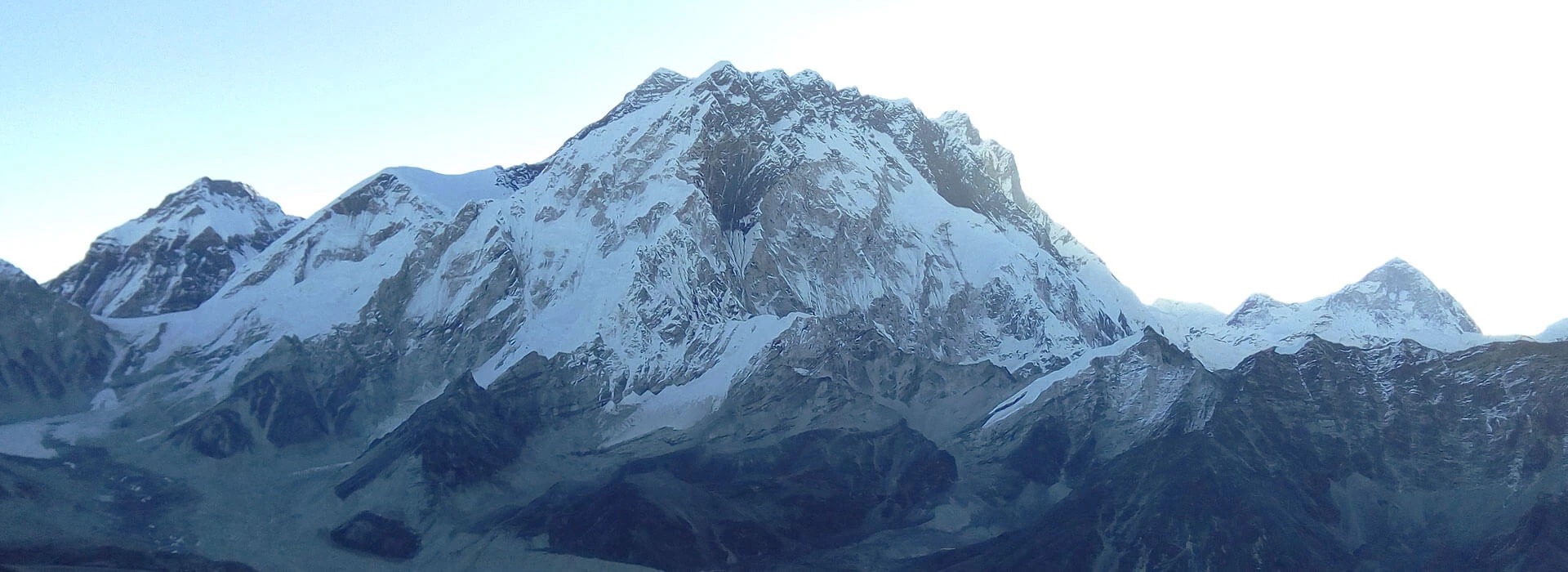
Where is Lobuche Peak ranks among the most searched questions from climbers eyeing their first technical summit in the Everest region, and the answer sits almost deceptively close to a trail most of them are already walking? Rising just 13.5 kilometers from Everest and Lhotse themselves, Lobuche Peak stands directly above the small village most trekkers only ever pass through on their way to Base Camp, making it one of the few genuine 6,000 meter summits reachable without straying far from the classic Khumbu route.
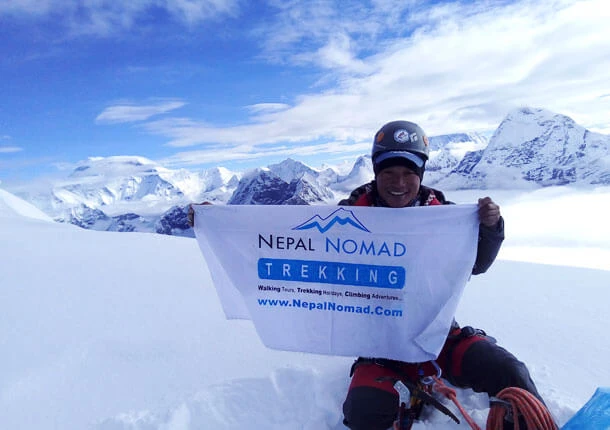
At 6,119 meters, Lobuche East holds the summit most climbers reach for, while its taller twin, Lobuche West at 6,145 meters, sits almost entirely out of reach for anyone without serious expedition-level experience. A deep, notched ridge separates the two, steep enough and distant enough that crossing from one summit to the other is practically impossible, so climbers choose their mountain early and commit to it completely. Nearly every guided climb heads toward Lobuche East, the route Nepal Nomad's Lobuche Peak Climbing itinerary follows, combining the climb directly with the classic Everest Base Camp trail most climbers are already walking anyway.
Geographically, Lobuche sits within the same Khumbu corridor trekkers know intimately, rising directly above Lobuche village and the Khumbu Glacier, positioned between Nuptse to the north and the Chola valley stretching west toward Gokyo. Few trekking peaks anywhere in Nepal sit this close to the main Base Camp trail, letting climbers summit a genuine 6,000 meter mountain without ever straying far from the route they'd likely be walking regardless.
What makes Lobuche genuinely distinct from its neighbors comes down to a detail most climbers never learn until they're already on the mountain; more on that shortly. Understanding exactly where Lobuche Peak sits, flanked by Everest's own massif and reachable almost as an extension of the Base Camp trek itself, helps set the stage for one of the Khumbu's most deceptively complex climbing objectives.
The Summit You're Actually Climbing Isn't the Real Summit
The summit you're actually climbing isn't the real summit, and this single detail catches more climbers off guard than almost anything else about Lobuche Peak. Most commercial guided treks finish at the trekking summit, which is a very real and challenging achievement, but still a few hours shy of the true summit of Lobuche East, which lies even further up a narrow, increasingly technical ridge.
It's not a secret, but it's not always understandably explained before climbers book it. The trekking summit is located at a point where the terrain, exposure, and technical demands ramp up significantly beyond what most commercial guiding operations are equipped and willing to take clients through. From there, one has to do a lot more serious technical climbing to reach the actual true summit, which is steep and exposed and not available on most of the packages available from the agencies, including Nepal Nomad's standard packages that climb Lobuche Peak.
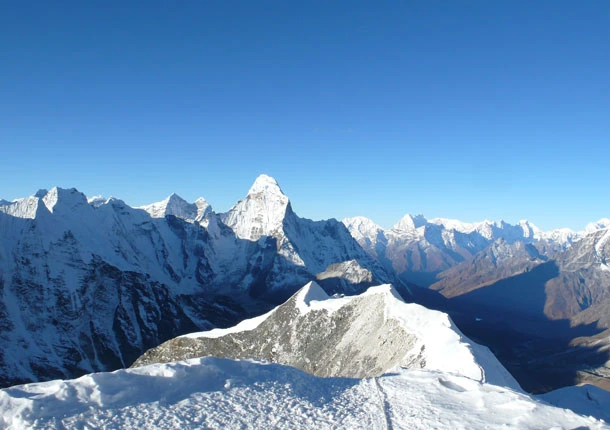
Why does this separation still exist? The trekking summit provides an already astounding return with views of Everest, Lhotse, and Nuptse rising just kilometers away, making the payoff sufficient for most climbers to complete their trek and simply call it a day. This separation exists partly because it is impossible to describe the difference at the outset without acknowledging that "summitting Lobuche Peak" involves a different experience with various operators and routes.
To climbers, this is a crucial consideration before booking. If you want to see incredible Everest views and actually climb a challenging 6k summit, then the standard trekking summit is just that, and the majority of climbers who attempt Lobuche East are looking for exactly this, not the true summit beyond it. A complete technical ascent, however, is a more challenging and serious quest in its own right and not really a typical guided trekking package.
Lobuche East vs Lobuche West: Why Climbers Only Ever Attempt One
The Lobuche East-Lobuche West divide is not really a choice that climbers make when planning their trek; it is simply a division that most climbers are not even aware of until they start to do more research on the mountain. These are actually two entirely different climbing goals, dramatically different in classification by the Nepalese Mountaineering Association, and virtually no one climbs them both.
Lobuche East is the NMA's highest trekking peak at 6,119 m and can be accessed with a basic climbing permit and commercial guided trekking. Even though Lobuche West is only 26 meters lower at 6,145 m, it is still included in the expedition peak category, which is for those mountains that require serious technical mountaineering experience, special permits, and much pricier and logistically complex mountaineering trips.
The long, deep notch that links the two summits drops steeply and extends well out of the way, making it a no-go from one peak to the other unless you have a special, highly technical trip that you're taking. First climbed in 1955 via its South Shoulder, Lobuche West remains a serious mountaineering objective attempted by only a handful of experienced climbers each year, worlds apart from the steady stream of guided groups attempting Lobuche East's trekking summit each season.
This is why, for instance, all commercial Lobuche Peak packages, including the ones offered by Nepal Nomad, specify Lobuche East, even if they do not specify which of the two peaks. For virtually every climber researching this mountain, Lobuche East is the objective, accessible, achievable, and rewarding, while Lobuche West remains a different mountain entirely, bearing the same name but demanding a completely different level of commitment that most climbers never seriously consider.
Why Lobuche Peak Feels Like an Extension of Everest Base Camp
Why Lobuche Peak feels like an extension of Everest Base Camp comes down to simple geography most other trekking peaks in Nepal can't claim. Unlike Island Peak, which requires branching off through Chhukung, or Mera Peak, which pulls you entirely away from the Khumbu into a different valley altogether, Lobuche sits directly along the standard Everest Base Camp trek route, rising immediately above the same village where Base Camp trekkers routinely spend a night before pushing on toward Gorak Shep.
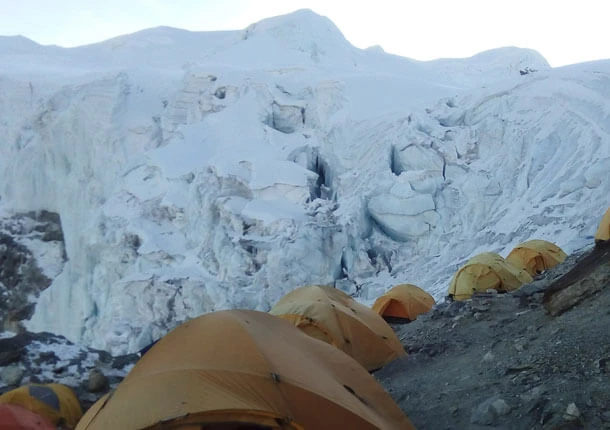
This proximity changes the entire character of the climb. Climbers don't need a separate multi-day approach through unfamiliar terrain, since the acclimatization schedule, villages, and trail infrastructure supporting your climb are identical to what any Base Camp trekker already relies on. Namche Bazaar, Tengboche, and Dingboche, all the familiar waypoints defining a standard Everest region trek, double as your own approach route, with Lobuche Base Camp simply becoming one more stop rather than a dedicated detour.
Many climbers take full advantage of this overlap, combining Everest Base Camp and Kala Patthar directly into their Lobuche itinerary, summiting the peak either before or after visiting Base Camp itself, since both destinations sit within comfortable reach of the same village. This isn't a forced pairing; it's simply how the geography naturally works, with two legendary Khumbu destinations reachable within the same extended trip, without backtracking or branching onto an entirely separate trail system.
For climbers weighing their first Himalayan summit, this overlap offers genuine practical appeal. Rather than choosing between trekking to Base Camp or climbing a peak, Lobuche lets you do both within a single, efficiently structured journey, standing at Everest Base Camp one week and summiting a genuine 6,000 meter mountain the next, all without leaving the trail system you're already walking.