Shower Availability at a Glance: Lukla to Gorak Shep
Use this table as a rough planning aid rather than a promise. Facilities differ from lodge to lodge, and altitudes are approximate.
Village | Approx. altitude | What you can usually expect | Reliability |
|---|
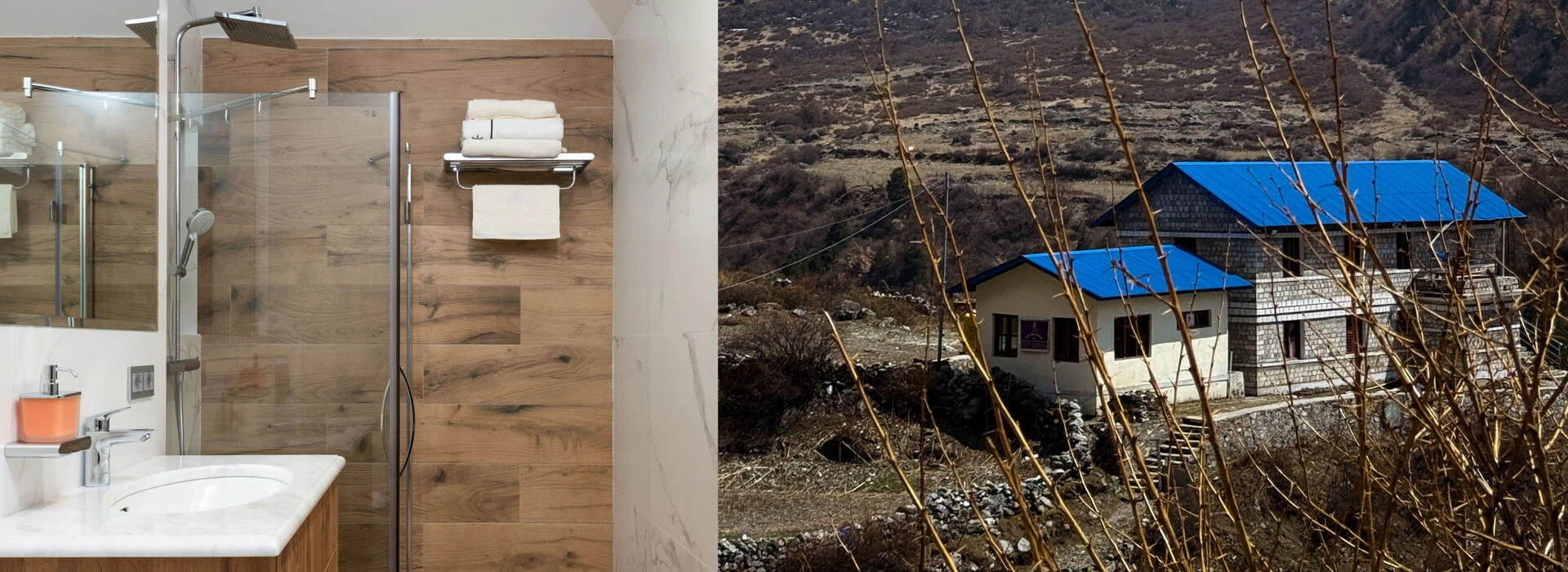
Lukla | 2,860 m / 9,383 ft | Hot showers, often with attached bathrooms in better hotels | Good |
Phakding | 2,610 m / 8,563 ft | Hot shower, shared bathroom or bucket wash | Good to fair |
Namche Bazaar | 3,440 m / 11,286 ft | Widest choice; private bathrooms in comfort lodges | Best on the route |
Tengboche / Deboche | ≈ 3,860 m / 12,664 ft | Hot shower or bucket wash, basic washrooms | Fair |
Pangboche | ≈ 3,985 m / 13,074 ft | Simple facilities; paid hot water at some lodges | Fair to limited |
Dingboche / Pheriche | ≈ 4,410 m / 4,240 m | A shower at some lodges; otherwise warm-water bucket | Limited |
Dole to Lungden (Gokyo) | Varies | Occasional showers; bucket wash is more realistic | Limited |
Lobuche / Gorak Shep | Highest overnight stops | Warm-water basin wash; conventional showers unlikely | Very limited |
The Comfortable Foothills: Showering in Lower Khumbu
Lower Khumbu is where trekkers get the easiest access to a hot shower. Lukla, Phakding and Namche Bazaar all have a spread of teahouses, guesthouses and lodges, and many advertise hot-water facilities. The standard still varies: one lodge may have an attached bathroom with a proper shower, while the one next door may offer a shared washroom or a bucket of heated water.
Lukla (2,860 m / 9,383 ft): Rinse Off Before the Climb Begins
Lukla is the main air gateway to the Everest region and a handy place to freshen up before you set off or after you return. If you want to understand the distances involved before you start walking, this breakdown of the Lukla to Everest Base Camp trek distance is a good place to start. The town has a broad range of accommodation, from simple guesthouses to more comfortable hotels, and hot showers are commonly offered.
Ask whether hot water is included in the room rate or charged separately. Systems may be electric, solar or gas-assisted, and performance depends on weather, electricity supply and how many guests are using hot water at the same time. If you are returning from the high trail, a long Lukla shower is a well-earned reward, but remember that flight delays are common, so keep spare clean clothes handy.
Phakding (2,610 m / 8,563 ft): A Riverside Wash After Day One
Phakding is a popular first-night stop, set beside the Dudh Koshi River with several trekking lodges and teahouses. Many offer hot-water washing, but the facilities are not identical from one property to another. You may find a shower cubicle, a shared bathroom or a simpler bucket-wash arrangement.
After your first day on the trail, your legs will appreciate the warmth. Ask about the system before paying, and shower earlier in the evening while the washroom is warmer and you have time for your hair and clothes to dry before the temperature drops.
Namche Bazaar (3,440 m / 11,286 ft): The Shower Capital of the Trail
Namche is the trading and acclimatisation hub of the Khumbu and usually offers the widest choice of lodges on the main routes; our guide to Namche Bazaar as a gateway to Everest explains why trekkers linger here. Many lodges provide hot showers, and higher-comfort properties have private bathrooms. Standard teahouses may have shared facilities or charge separately for hot water.
Namche is also a smart place to wash clothes, restock toiletries and enjoy a proper shower before the trail gets colder. Trekkers often spend an acclimatisation day here before continuing towards Everest Base Camp, Gokyo or the Three High Passes, and the village is also the starting point for the quieter valley towards Thame, covered in our Thame Everest Kala Patthar trek. Make the most of the facilities, but remember that a shower is optional, while acclimatisation and rest are the priorities.
Where the Air Thins and the Water Cools: Upper Khumbu Villages
Beyond Namche, accommodation becomes more basic and the weather colder. Hot showers may still be available in some lodges, but they are less dependable and often cost more, because water must be heated and fuel or electricity brought into remote settlements. Do not assume that a shower advertised by one lodge will be available at every property in the same village.
Tengboche and Deboche (3,860 m / 12,664 ft): Monastery Views, Mountain-Cold Evenings
Tengboche is best known for its monastery and wide mountain views, while nearby Deboche is another common overnight stop. Both have trekking accommodation, but shower arrangements vary. Some lodges offer hot-water showers or bucket washing; others have only basic washing facilities.
If a hot shower matters to you, ask your guide or lodge when you arrive rather than planning your day around it. In cold conditions, a quick wash with warm water can be more comfortable than a full shower.
Pangboche (3,985 m / 13,074 ft): Sherpa Heritage, Simple Washrooms
Pangboche is a traditional Sherpa village on the way to Dingboche and Everest Base Camp. Guesthouses provide a place to rest and eat, but bathroom facilities are generally simpler than in Namche. Hot water may be available at selected lodges, often as a paid service, but it should not be treated as guaranteed.
Dingboche and Pheriche (4,410 m and 4,240 m): When a Warm Cloth Beats a Cold Shower
Dingboche and Pheriche are important stops for trekkers heading higher, and both have established teahouses. Colder temperatures and the logistics of heating water make showering less straightforward. Some lodges offer a hot shower or a bucket of warm water, while others have limited washing options.
At this altitude it is perfectly reasonable to skip a full shower for a day or two. Use a warm damp cloth for a quick wash, change into clean base layers and keep your sleeping clothes dry. Your body is working hard to adjust to the altitude; do not turn personal hygiene into another exhausting task.
Lakeside Living: Washing in the Gokyo Valley and Over Renjo La
The Gokyo Valley and the Renjo La route lead trekkers away from the busier Everest Base Camp trail and into a quieter, more remote landscape. Dole, Machhermo, Gokyo and Lungden are small settlements, and the choice of lodges is far more limited than in Namche. Some teahouses provide hot showers, but availability, water pressure, heating methods and prices all vary. If you want to see how the route fits together, the Gokyo and Renjo La Pass trek itinerary is a good reference, and it helps to know where the Gokyo Lakes are located before you plan your days.
In the higher villages, a bucket of heated water is often the more realistic option. Gokyo is a memorable place to spend time beside the glacial lakes, but it is still a remote mountain settlement. Check with your lodge on arrival and do not assume a hot shower will be available just because another trekker had one at a different property.
The Final Stretch: Lobuche, Gorak Shep and Everest Base Camp
Lobuche and Gorak Shep are among the highest overnight settlements on the standard route, so accommodation is basic and water is difficult to heat. Some lodges offer limited hot-water washing, but a conventional shower should not be expected, and facilities can change with the season, lodge operations and weather. For a fuller picture of the whole journey, including permits, acclimatisation and daily stages, see our complete Everest Base Camp trek guide.
There are no regular teahouse shower facilities at Everest Base Camp itself, and trekkers generally return to Gorak Shep for the night. If you are staying at Lobuche or Gorak Shep, ask about washing options before ordering hot water, and be prepared to use a small basin or a warm cloth instead of a full shower. Think of it as part of the adventure: the Everest Base Camp trek rewards you with views, not bathrooms.
Beyond the Main Trail: Chhukung, Island Peak and High Camps
Chhukung is a small settlement used by trekkers exploring the Imja Valley and by climbers preparing for Island Peak. It is also a common stop for trekkers crossing Kongma La on the
Everest Three Passes trek. Facilities are more limited than in Namche or Lukla. Some lodges provide hot-water washing, but a proper shower is not guaranteed. Climbers should check what their chosen lodge offers and follow their guide’s advice about staying warm and conserving energy.
Stepping away from the established teahouse network of the main Khumbu trail and moving into remote high camps like Island Peak High Camp marks a total transition from basic lodge comforts to rugged, self-contained wilderness expedition living. At these high altitudes, there are no running water systems, indoor plumbing, or heated teahouse structures. Personal hygiene relies entirely on careful preparation, guide team support, and strict leave-no-trace mountain protocols.
High Camp Toilet Facilities: What to Expect
At base camps and high camps, toilet setups are temporary and functional, designed purely to handle human waste safely in extreme freezing environments:
Expedition Toilet Tents: At established base camps (such as Island Peak Base Camp or Chhukung high stops), the expedition crew sets up a dedicated toilet tent. Inside, you will typically find a portable chemical toilet, a dry-pit bucket system, or a raised toilet seat positioned over a waste collection container.
High Camp Reality: At rocky high camps where setting up large tents is difficult due to narrow, icy terrain, toilet facilities are even more minimal. Trekkers and climbers use designated wind-sheltered toilet sites or small popup privacy shelters. Waste is collected in specialized, eco-friendly waste bags (such as Cleanwaste/WAG bags) that contain gelling agents and deodorizers, which are carried back down the mountain by the expedition crew to protect the high-alpine glacier environment.
The Cold Factor: Sub-zero temperatures mean water-based flushing does not exist. Hand hygiene relies strictly on alcohol-based hand sanitizer rather than water, as liquid soap and water freeze almost instantly outdoors. Always keep hand sanitizer and toilet paper in an inside jacket pocket so they remain unfrozen and accessible when needed.
Washing & "Showers" at High Camp
Proper showers with running hot water are completely non-existent at high camps and remote side-trip locations. Producing hot water requires melting ice and burning expensive, porter-transported fuel, making full-body showers neither practical nor safe in sub-freezing temperatures.
Warm Water Basins: Every morning or after coming off the trail, the camp kitchen crew typically provides each climber with a small bowl or washbasin of warm, boiled water. This limited supply is strictly intended for basic facial hygiene, washing your hands, and brushing your teeth.
Wet Wipe Baths: Complete personal hygiene at high camp relies almost entirely on wet wipes. Experienced climbers use heavy-duty, unscented wet wipes to clean off dust and sweat inside the shelter of their sleeping bags or tents, where they are protected from freezing winds.
Warmth & Frost Prevention: Keep your wet wipe packs inside your sleeping bag overnight. If left outside in a tent or pack pocket, the liquid in the wipes will freeze solid into an unusable block of ice by morning.
Managing Waste & Staying Warm
Pack-It-In, Pack-It-Out: Environmental rules in the Sagarmatha region require all non-biodegradable waste including used wet wipes, tissue paper, feminine hygiene products, and trash to be bagged securely and packed back down to lower villages for proper disposal.
Nighttime Logistics: Leaving a warm sleeping bag at 2:00 AM in sub-zero high-camp temperatures to use an outdoor toilet tent is extremely uncomfortable and increases your exposure to the harsh cold. Most experienced climbers carry a dedicated, wide-mouth pee bottle ($1\text{-liter Nalgene}$, clearly marked) inside their tent to avoid stepping out into the freezing night air.
Shower, Bucket or Basin? Decoding What “Hot Water” Really Means
A “hot shower” in the Khumbu does not always mean a long, hotel-style experience. The phrase can describe quite different systems, so it is worth asking what the lodge actually provides.
The Hot Water Shower
Some lodges have a showerhead connected to an electric, solar or gas-assisted water heater. Temperature and pressure may fluctuate, especially during busy periods or cloudy weather. Keep showers short so hot water remains available for other guests.
The Bucket Shower
A bucket shower usually means the lodge heats water and brings it to the washroom in a bucket or container. You wash using a small jug or mug. It may not feel luxurious, but it is an effective way to get properly clean while using less water, and many trekkers come to prefer it.
The Basin or Warm-Cloth Wash
When a shower is unavailable, a basin of warm water or a damp cloth lets you wash your face, hands, underarms and feet. This is often the most practical choice at higher elevations and in very cold conditions, and it takes only a few minutes.
Paying for the Privilege: What Hot Water Costs on the Trail
There is no single fixed shower tariff across the Khumbu. The price depends on the lodge, altitude, heating method, season and whether hot water is already included in your room rate. Lower villages with more accommodation choices tend to be more competitive, while remote settlements usually charge more because fuel, equipment and supplies are harder to transport.
Treat any online price list as a guide rather than a promise. Ask the lodge for the current price before you use the shower, and check whether the fee covers a full shower or a limited amount of hot water. If you are travelling with a guide, they can often confirm the arrangement at each stop.
Keep a little extra cash for optional hot-water services, along with money for charging devices and snacks. For wider budgeting, including permits, see our guide to the Everest Base Camp trek permit. Do not rely on a price quoted for one village or season applying across the whole region.
Behind the Boiler: How Teahouses Heat Water in the Himalayas
The method depends on the lodge and its location. Some properties use solar water heaters when the sun is out. Others rely on gas, electricity or other locally available heating systems. In more remote places, staff heat water in the kitchen or in a boiler and carry it to the bathroom in buckets.
Each method has limits. Solar systems depend on sunshine, electric systems depend on the power supply, and fuel-based systems add cost and require supplies to be transported into the mountains. This is one reason hot water becomes less predictable the farther you travel from the main settlements.
Using water thoughtfully helps everyone. Keep showers brief, turn off the tap while soaping up and avoid requesting more hot water than you need.
Beyond the Shower Head: What to Expect from Teahouse Bathrooms
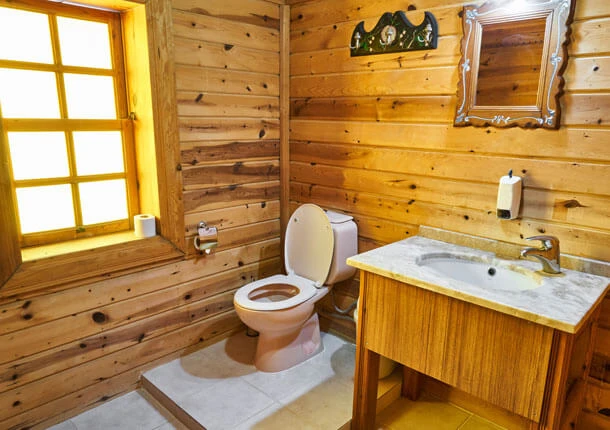
A shower is only one part of the bathroom story. Teahouse bathrooms in Nepal range from private rooms with attached toilets in the lower villages to shared facilities in the higher ones. Toilets may be Western-style or squat-style, and at higher altitudes they may be outside the main building and very cold at night.
Carry a small torch or headlamp: bathrooms can be dark, and a head torch keeps your hands free.
Bring your own toilet paper: it is not always supplied and can cost extra in remote lodges.
Wash your hands often: use soap where available, or hand sanitiser when water is limited.
Dispose of waste properly: follow the lodge’s instructions on used paper and wipes.
Keep slippers handy: light shoes or sandals are useful for damp, cold floors.
Seasons and Showers: How the Weather Changes the Experience
Weather and season shape hot-water availability as much as altitude does. In the busy trekking months of spring and autumn, popular lodges can be full, which means more guests competing for the same limited hot water, so an early shower is often the best plan. On sunny afternoons, solar-heated water may be at its warmest, while cloudy or snowy spells reduce what solar systems can deliver.
In the colder winter months, washrooms are chilly, pipes may be affected by low temperatures and some lodges in higher villages may close. In every season, ask your guide what to expect and plan your wash for the warmest part of the day.
A Safe Shower Routine: Washing at High Altitude
A shower does not directly cause altitude sickness, but a long, hot shower can leave you chilled, tired or light-headed, especially if you are already dehydrated or feeling unwell. At altitude your body is adapting to thinner air, and rest, warmth and hydration matter more than keeping up a daily shower routine.
Choose a warm part of the day when possible, rather than showering late at night.
Keep the shower short and avoid getting chilled afterwards.
Dry yourself and your hair thoroughly before returning to a cold room.
Drink water regularly, and skip the shower if you feel faint, unusually weak or unwell.
If you have symptoms that could indicate altitude illness, tell your guide and follow appropriate medical advice. Do not ignore symptoms just to take a shower. If you are significantly unwell, skip it: your safety matters far more than feeling freshly washed.
No Shower? No Problem: A Five-Step Trail Wash
You can stay comfortable without a full shower every day. A simple wash routine is often enough for a trekking day, particularly when temperatures are low and you are wearing layers.
Use a small amount of warm water and a quick-drying cloth to wash your face, neck, hands and underarms.
Clean your feet and change into dry socks each evening.
Change your underwear and base layers regularly, and keep a clean set just for sleeping.
Use unscented body wipes when water is limited, and carry used wipes out rather than leaving them in the mountains.
Brush your teeth with safe drinking water and avoid wasting it.
Your Mountain Wash Kit: What to Pack for Personal Hygiene
A little preparation makes mountain hygiene much easier. You do not need to carry your whole bathroom cabinet, but a few lightweight essentials make a real difference.
Quick-drying travel towel: dries faster and takes up less space than a regular bath towel.
Biodegradable or low-impact soap: use sparingly and follow lodge guidance; never wash directly in streams or lakes.
Toothbrush and toothpaste: keep them in a small, easy-to-reach pouch.
Wet wipes or body wipes: choose unscented options and carry used wipes back down.
Hand sanitiser: useful when soap and running water are not readily available.
Moisturiser and lip balm: cold, dry mountain air can leave skin and lips uncomfortable.
Clean underwear and socks: a dry change improves comfort even when you cannot shower.
Small waterproof bag: keeps damp clothing and toiletries apart from the rest of your kit.
Planning with Comfort in Mind: Choosing Lodges and Trek Styles
If hot showers and private bathrooms matter to you, choose a trek and lodge plan that reflects that. Standard teahouse treks keep costs sensible and put you among fellow trekkers, while comfort-focused itineraries use better-equipped lodges where available. Nepal Nomad’s Everest Base Camp luxury trek is one example of an itinerary built around higher-comfort accommodation.
Whichever style you choose, tell your trip planner and guide about your comfort priorities in advance. They know which lodges tend to have reliable hot water, can phone ahead and can suggest where to build in a rest day for a proper wash and laundry.
Leaving the Mountains Lighter: Responsible Water Use in the Khumbu
Water is a valuable resource in mountain communities. It takes effort to collect, heat and distribute in remote villages, and the same sources support local households, lodges and trekkers. A short shower is not only practical, it is also a considerate choice.
Use only the water you need.
Do not use soap, shampoo or wipes directly in rivers, lakes or streams.
Avoid leaving plastic packaging, wipes or toiletries behind.
Follow the lodge’s instructions for bathrooms and wastewater.
Choose reusable or refillable toiletries where practical.
Quick Answers: Everest Region Shower FAQs
Can you shower every day in the Everest region?
Sometimes, particularly in lower villages with more accommodation choices. Daily hot showers are not guaranteed, though, and as you gain altitude facilities become less predictable.
Are hot showers available in Namche Bazaar?
Many hotels and teahouses in Namche offer hot-water facilities, but the type of shower and whether it is included in the room price depend on the property. Confirm when booking or checking in.
Can you take a hot shower in Gokyo?
Some lodges in Gokyo may offer hot-water showers or bucket washing. Availability depends on the lodge, season and operating conditions, so ask before relying on it.
Can you shower at Everest Base Camp?
There are no regular teahouse shower facilities at Everest Base Camp. Trekkers usually stay in Gorak Shep and should expect limited washing options at that altitude.
Are showers free in Everest-region teahouses?
Not always. Some accommodation packages include hot water, while other lodges charge separately. Ask about the current arrangement before using the facility.
Should you bring your own towel?
Yes. A lightweight, quick-drying travel towel is useful even if your lodge provides towels, because facilities and supplies vary between villages.
Is it okay not to shower for several days while trekking?
Yes. In cold, high-altitude conditions many trekkers use a warm-cloth wash and change into clean base layers instead of showering daily. Staying warm, hydrated and healthy matters more.
Do teahouses provide shampoo and soap?
Some may provide basic toiletries, but you should not depend on them. Bring small travel-size supplies that suit your skin.
Are bucket showers common in the Khumbu?
Bucket showers or basin washes are often offered where running hot water is limited. The arrangement differs between lodges and villages.
Can you charge your phone while waiting for hot water?
Many lodges offer charging, sometimes for a fee, but the same power supply may also run hot-water systems. Charge when asked and keep a power bank in your kit.
What is the best place for a proper shower before heading higher?
Lukla and Namche Bazaar generally offer more accommodation choices and a better chance of finding a comfortable shower. The exact facilities depend on the lodge you choose.
A Final Word: Stay Fresh, but Keep It Simple
Shower facilities in the Everest region change from village to village. Lukla, Phakding and Namche Bazaar generally offer the best range of options, while higher and more remote settlements may have only basic hot-water washing, or none at all. The key is to ask your lodge what is available, carry a few hygiene essentials and stay flexible.
If you are planning an Everest-region trek, Nepal Nomad Trekking can help you choose a route and accommodation plan that matches your comfort level, schedule and goals. Whether your itinerary follows the classic Everest Base Camp trail, the Gokyo Valley, the Three High Passes or a quieter route towards Thame, it is worth understanding the facilities you can expect along the way.