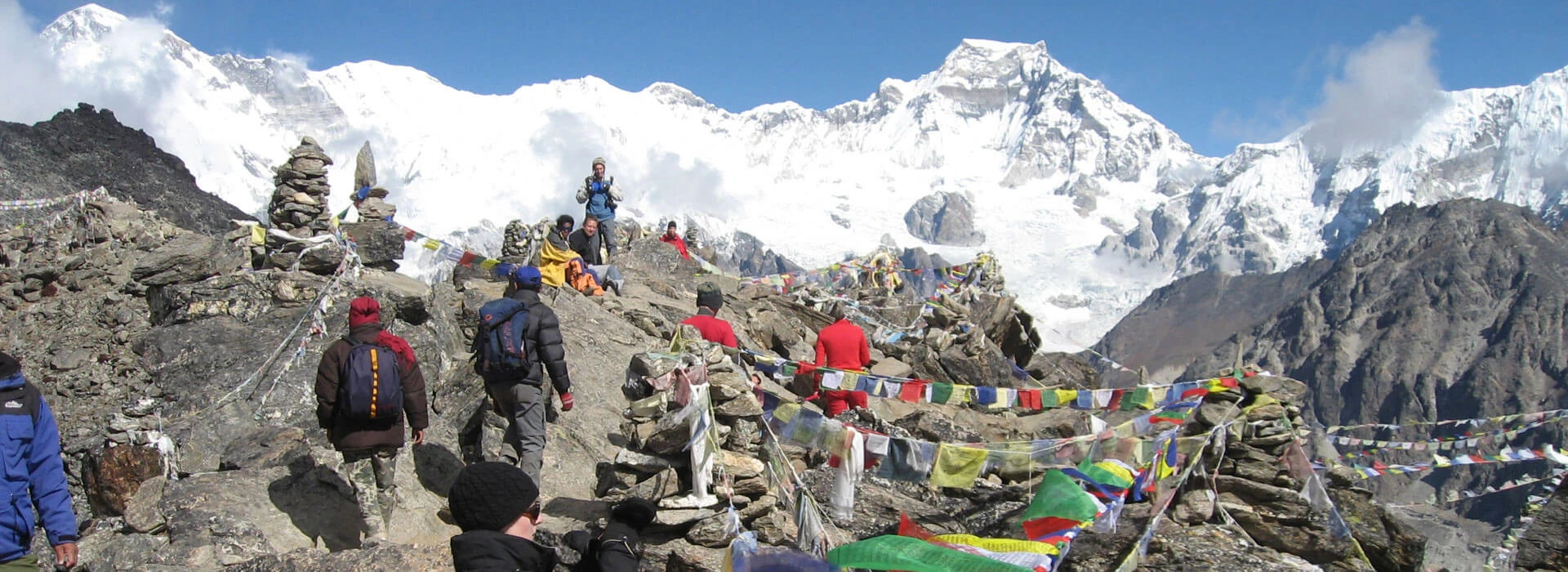
Where is Gokyo Ri ranks among the most searched questions for trekkers mapping out a route through the Khumbu's quieter western valleys, and for good reason. Standing at 5,357 meters directly above the turquoise waters of Gokyo village, this summit rivals Kala Patthar as one of the two defining viewpoints in the entire Everest region, yet far fewer trekkers actually reach it each season. Climbing to the top rewards you with something genuinely rare in the Himalayas: four of the world's highest peaks framed together within a single, unbroken panorama.
Reaching the summit means first arriving at Gokyo village itself, tucked beside the third of six turquoise glacial lakes making up the celebrated Gokyo Lakes system. Your journey typically follows the same starting route used across the wider region, flying into Lukla before trekking through Namche Bazaar and branching west toward Dole and Machhermo, a quieter corridor most Everest Base Camp trekkers never experience. Travelers wanting the full itinerary mapped out day by day often follow Nepal Nomad's Everest Gokyo Lakes Trek, which builds proper acclimatization directly into the route before the final summit push.
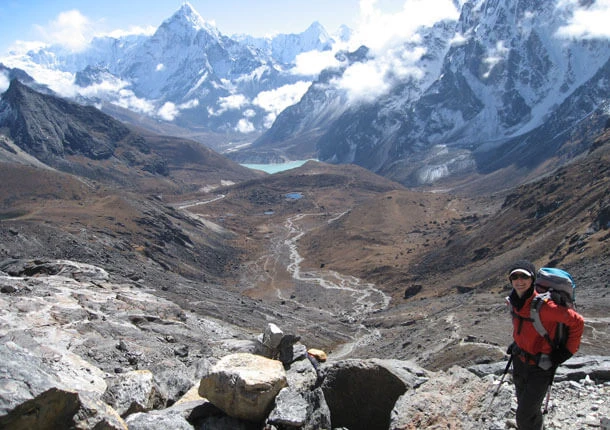
Geographically, Gokyo Ri sits within Nepal's Solukhumbu district, inside Sagarmatha National Park, close enough to the Nepal-Tibet border that clear mornings reveal the arid Tibetan plateau stretching north beyond the ridgeline. Unlike Kala Patthar's more direct, close-up Everest view, Gokyo Ri delivers a wider, more varied panorama, framing Everest, Lhotse, Makalu, and Cho Oyu together above the Ngozumpa Glacier and the lake system spread out below.
Trekkers extending their journey further sometimes continue from Gokyo toward Renjo La Pass, linking the summit and lake system directly with the remote village of Thame on the opposite side of the ridge. Understanding exactly where Gokyo Ri sits, and how its geography differs from the region's more famous viewpoints, helps set realistic expectations for a trek that rewards patience, proper acclimatization, and a genuine appreciation for one of the Himalayas' most rewarding summits.