What Does the Bhutan Tour Cost Include?
A Bhutan tour price isn't one line item; it's four separate ones bundled into a single quote. Understanding each piece makes every number later in this guide easier to read and easier to compare between operators.
- The Sustainable Development Fee (SDF)
A fixed government levy of USD 100 per person, per night, paid to the Royal Government of Bhutan through your tour operator. It's non negotiable, applies to every night physically spent in the country, and funds Bhutan's free healthcare, education, and conservation programmes. No operator can discount it.
This is where operators actually compete on price. It covers your hotel, all meals, a licensed guide, a private vehicle and driver, and entry fees to monasteries, dzongs, and museums. It scales with your accommodation tier ( 3 star, 4 star, or luxury) and your group size, since a guide and vehicle cost the same whether one traveller is using them or four.
A one time USD 40 charge, processed by your operator alongside the SDF. It doesn't change based on trip length.
- International/Regional Flights
Bhutan's only airport, Paro, is served exclusively by Drukair and Bhutan Airlines. Flights are priced separately from your land package and vary by season and point of origin, whether that's Kathmandu, Delhi, Bangkok, or Singapore.
Add these four together and you have your total trip cost. The SDF and visa fee are fixed no matter who you book with; the package rate and flights are where your choices, and your budget, actually come into play.
Bhutan Sustainable Development Fee (SDF) 2026/2027
The Sustainable Development Fee is the one cost every visitor to Bhutan pays, regardless of which operator they book with or how their itinerary is put together. It is a nightly government levy, separate from any tour package, and it forms the fixed floor of every Bhutan trip budget.
The current rate sits at USD 100 per person, per night, locked in through 31 August 2027. This is already a reduced rate: the fee was originally set at USD 200 per night when Bhutan reopened to tourism in 2022, then halved in September 2023 to encourage longer stays. A rate review is expected after August 2027, so visitors with flexible dates may want to book before then.
The SDF is calculated per night physically spent in Bhutan rather than per day of the itinerary like a 7 day trip with 6 nights in country means 6 nights of SDF, not 7 and it is paid upfront as part of the visa application, bundled into the operator's invoice rather than settled upon arrival. Since January 2026, Bhutan has applied a 5% GST to tour package components such as hotels, transport, and guiding services; the SDF itself is exempt from this GST and remains a flat USD 100 per night regardless.
SDF Rates by Nationality
Traveler | SDF Rate |
|---|
Most international visitors (USA, UK, Australia, China, and other non SAARC nationalities) | USD 100 / night |
Nepali citizens | USD 100 / night full rate, no discount |
Indian nationals | INR 1,200 / night |
Bangladeshi nationals (first 15,000 travelers/year, quota based) | USD 15 / night |
Maldivian nationals | Visa exempt, with preferential SDF terms similar to other SAARC neighbors; confirm current rate with operator |
Children aged 6–12 | USD 50 / night (50% discount) |
Children under 6 | Exempt |
A portion of every SDF payment goes directly toward free healthcare and education for Bhutanese citizens and the country's carbon negative conservation programs which is one of the reasons Bhutan frames the fee as an investment rather than a tourist tax. It's worth noting for someone researching a Bhutan tour from Nepal/Kathmandu: despite the short flight and cultural proximity, Nepali citizens pay the full USD 100/night rate, with no discount extended the way it is to Indian or Bangladeshi nationals.
Bhutan Visa Fee
Alongside the SDF, most visitors also pay a one time USD 40 visa fee, processed by a licensed Bhutanese tour operator as part of the same visa application. It doesn't change based on trip length, and there's no embassy interview or in person process involved; approval is handled online, typically within five to seven working days, and the visa clearance letter is issued before departure rather than stamped on arrival. A handful of nationalities skip this fee entirely and enter on a free permit instead.
Who Needs a Bhutan Visa
Nationality | Entry Requirement |
|---|
Most international visitors (USA, UK, Australia, China, Nepal, and other non exempt nationalities) | Visa required, USD 40 fee |
Indian nationals | Free entry permit, no visa fee |
Bangladeshi nationals | Free entry permit, no visa fee |
Maldivian nationals | Free entry permit, no visa fee |
Nepali citizens fall into the standard visa category, so a Bhutan tour from Nepal still requires the USD 40 fee even though no other South Asian country enjoys visa free entry. In practice, this fee is minor next to the SDF and package cost; it's usually the last line item to budget for, not the one worth spending much time optimizing.
Bhutan Tour Package Cost by Tier
Once the SDF and visa fee are set aside, the tour package rate is where the real budgeting decisions happen. This land package, hotel, meals, a licensed guide, and private transport, is priced per person, per night, and scales with two things: the hotel category and the group size.
A couple sharing a vehicle and guide pays less per head than a solo visitor covering those same fixed costs alone, and a 3 star government certified hotel costs meaningfully less than a boutique 5 star lodge. Bhutan groups its accommodation into three official tiers, and most itineraries are quoted against one of them by default.
Package Rate by Hotel Tier
Tier | Hotel Standard | Typical Add to Package Rate | Best Suited For |
|---|
Standard | Government certified 3 star hotels | Baseline (roughly USD 180–260/night, group size dependent) | First time visitors, budget conscious itineraries |
Deluxe | 4 star properties with upgraded amenities and service | + USD 40–80/night over standard | Guests wanting extra comfort without a major cost jump |
Luxury | 5 star resorts (Amankora, COMO Uma, Six Senses) | + USD 400–900+/night over standard | Honeymooners, special occasions, comfort first itineraries |
Standard hotels are what most quoted package rates already assume: clean, government certified 3 star properties with private bathrooms, hot water, and dependable service, often boutique in character despite the modest star rating. Stepping up to Deluxe buys noticeably better rooms and dining for a modest nightly premium, a popular middle ground for anyone who wants more comfort without doubling the budget.
Luxury sits in a different category entirely; brands like Amankora, COMO Uma, and Six Senses operate boutique lodges across Bhutan's main valleys, and booking into them can add several hundred dollars a night on top of the standard rate. In exchange, guests get private drivers, curated cultural programming, and properties built to disappear into the landscape rather than dominate it, a genuine splurge rather than a small upgrade. Solo visitors should also expect a single occupancy surcharge on top of whichever tier they choose, since the vehicle and guide costs that a couple or small group would share fall on one person instead.
Real Bhutan Tour Cost Examples by Itinerary Length
General cost ranges are useful, but seeing how they play out on actual itineraries makes budgeting far easier. The five packages below, all run from Kathmandu, cover the typical span of a Bhutan holiday: a quick long weekend introduction, the classic western circuit, a festival timed departure, and a longer, more remote route into central Bhutan. Each total already bundles the SDF, land package, visa fee, and round trip Kathmandu Paro flight.
Tour | Nights | Destinations Covered | SDF Total | Land Package | Total Range (pp) |
|---|
4 Day Bhutan Short Tour | 3 | Paro, Thimphu | $300 | $540 – 735 | $1,340 – 1,660 |
5 Day Glimpse of Bhutan Tour | 4 | Paro, Thimphu, Punakha, Dochula Pass | $400 | $800 – 1,400 | $1,600 – 2,400 |
7 Day Bhutan Tour from Kathmandu | 6 | Full western circuit (Paro, Thimphu, Punakha) | $600 | $1,100 – 1,900 | $2,000 – 2,900 |
8 Day Paro Tshechu Festival Tour | 7 | Paro, Thimphu, Punakha, Gangtey/Phobjikha | $700 | $1,540 – 2,660 | $2,800 – 4,200 |
11 Day Bumthang Tangbi Mani Festival Tour | 10 | Paro, Thimphu, Punakha, Trongsa, Bumthang, Wangdue, Gangtey | $1,000 | $1,900 – 3,200 | $3,400 – 5,100 |
Two patterns stand out across these five. First, cost per night actually drops as the trip lengthens, since the guide and vehicle are fixed costs spread across more nights; a 4 day trip runs closer to USD 450/night all in, while the 11 day Bumthang route averages closer to USD 340/night despite covering far more remote ground.
Second, price jumps aren't purely about duration: the 8 day festival departure costs noticeably more than a standard 8 day itinerary would, purely because hotels, flights, and guides are in short supply during Paro Tshechu week. Matching an itinerary to a budget, in other words, means looking at what's driving the number up, extra nights, extra distance, or extra demand, rather than the total alone.
What Affects the Cost of a Bhutan Tour?
No two Bhutan trips cost the same, even when they cover the same valleys. Beyond the fixed SDF and visa fee, a handful of choices push the total up or down: who's booking, how many nights, which hotel tier, how many people are sharing the vehicle and guide, the season, and what gets added on once the base itinerary is set.
Nationality, Duration, and Accommodation
These three carry the biggest weight and are covered in full detail earlier in this guide, so only a quick summary here. Nationality determines the SDF rate and whether a visa is required at all (Indian, Bangladeshi, and Maldivian nationals pay reduced or no fees; everyone else, including Nepali citizens, pays the standard USD 100/night SDF and USD 40 visa fee).
Trip duration sets the SDF total and, because guide and vehicle costs are fixed per day, the per night rate actually drops the longer a trip runs. Accommodation tier, standard 3 star, deluxe 4 star, or luxury 5 star, is usually the single biggest swing factor in the land package price. See the SDF, package tier, and itinerary comparison sections above for the full numbers.
Group Size and Travel Style
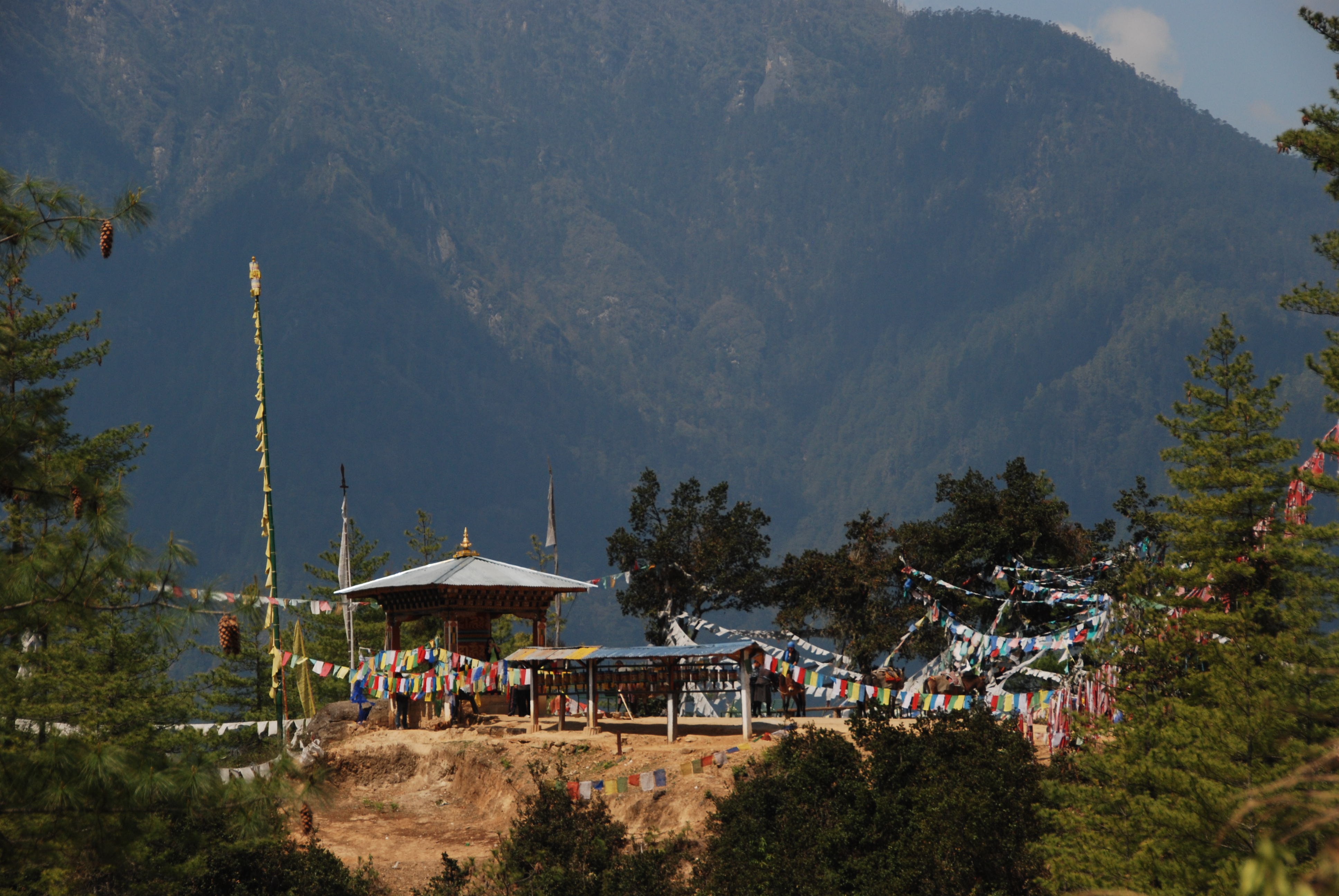
A private guide and vehicle are included on every Bhutan itinerary regardless of group size, which means those fixed costs get divided differently depending on who's traveling. A solo visitor covers the full guide and vehicle rate alone, plus a single occupancy hotel surcharge, while a couple or family splits the same costs two, three, or four ways. Joining or forming a small group departure (typically five or more) brings the per person land cost down further, since hotels also tend to offer better group rates.
Whether the trip is booked as a fully private tour or a small group departure is really the same decision as travel style: a private tour offers full schedule control at a higher per person price, while a group departure trades some flexibility for a lower cost per head.
Group Type | Land Package Effect | Why |
|---|
Solo visitor | Highest per person rate, plus single occupancy surcharge | Guide and vehicle costs aren't shared |
Couple | Noticeably lower per person than solo | Same fixed costs split two ways |
Family (3–4) | Lower still, larger vehicle sometimes needed | Fixed costs split further, though a larger van may replace a standard SUV |
Small group (5+) | Lowest per person rate | Fixed costs spread widest; better group hotel rates often apply |
How Season Affects the Bhutan Cost?
The SDF stays the same year round; season affects cost through hotel rates and flight availability instead. Spring (March to May) and autumn (September to November) are peak season, driven by clear mountain views and Bhutan's two major Tshechus, so hotels and Kathmandu Paro flights book up and prices firm up months in advance.
Summer's monsoon and the depths of winter bring lower hotel rates and easier flight availability, though summer adds a real risk of Paro flight delays due to cloud cover over the valley. None of this changes the SDF; it changes how much competition there is for a limited supply of hotel rooms and flight seats.
Activities Included
The standard package covers sightseeing and entry fees, but several popular add ons sit outside it and can meaningfully change the final bill if a few are stacked together.
Activity | Typical Cost | Notes |
|---|
Tiger's Nest pony ride (one way) | USD 12–18 | Covers the ascent to the halfway cafeteria viewpoint only |
Hot stone bath | USD 15–30 | Widely offered in Paro, Punakha, and farmhouse stays; some hotels include it |
Cooking class | ~USD 25 | Local Bhutanese cuisine, usually a few hours |
Punakha white water rafting | ~USD 150 per raft (up to 6 people) | On the Mo Chhu River, roughly 10–12 km |
Helicopter scenic flight | USD 180–600 per person | Priced per charter of up to 5 passengers; varies widely by route and duration |
Transportation
A private vehicle and driver are included in every standard package, and the vehicle type is set by group size rather than by choice; Bhutan's narrow, winding mountain roads rule out the large coaches used elsewhere.
Upgrading to a premium SUV, a Land Cruiser or Range Rover instead of a standard Hyundai Tucson or Toyota Prado, is available at extra cost and is common on luxury tier itineraries.
Vehicle | Typical Capacity | When It's Used |
|---|
SUV (Hyundai Tucson, Toyota Prado) | 1–4 passengers | Standard for solo visitors, couples, and small families |
Van (Toyota HiAce) | 5–8 passengers | Mid sized families and small group departures |
Coaster bus | 9–20 passengers | Larger group departures; the only large coach type used in Bhutan |
Luxury SUV (Land Cruiser, Range Rover) | 1–4 passengers | Optional upgrade, common on luxury tier itineraries |
Is Bhutan Worth the Cost?
Stacked next to a backpacking trip through Nepal or South east Asia, Bhutan looks expensive on paper. But that comparison misses what's actually being priced. A USD 250 to 300 day in Bhutan already includes a private guide, a private vehicle and driver, a hotel room, and three meals, the kind of package that would cost roughly the same, or more, if pieced together separately in most other Asian destinations, minus a guide who can actually explain what's inside a 7th century temple. There's no haggling over tuk tuk fares, no separate entry tickets to track down, and no gap between what a brochure promises and what a traveller actually gets on the ground.
The SDF specifically is where the value case gets stronger rather than weaker. A meaningful share of every USD 100 nightly fee funds free healthcare and education for Bhutanese citizens and the country's carbon negative conservation programmes, the same policies that keep Bhutan's forests, festivals, and valleys from following the overtourism trajectory seen elsewhere in the Himalayas. Visitors aren't just buying a trip; they're subsidising the reason the trip is worth taking in the first place: uncrowded dzongs, living festivals that were never staged for tourists, and a country that capped visitor numbers instead of maximising them.
Whether that adds up to "worth it" comes down to what a guest is actually looking for. Someone looking for a low stress, high substance trip, where the planning is done in advance, the crowds are thin, and the fee itself does more than cover the traveller's own visit, tends to find that Bhutan delivers exactly what the price promises. For most first time guests, that's the real trade being made: not a discount destination, but a deliberately uncrowded one.
Bhutan Tour Cost: Frequently Asked Questions
Is the SDF refundable if a trip is cut short?
Yes. Unused nights of SDF are refundable after departure from Bhutan or on full cancellation before arrival, minus applicable bank transaction charges.
Does the SDF apply to children?
Children aged 6 to 12 pay a discounted USD 50 per night. Children under 6 are exempt entirely.
What's the cheapest way to visit Bhutan?
A short 4 day standard tier itinerary, booked as a couple or small group during shoulder season, sits at the lower end of the cost spectrum, typically starting around USD 1,300 to 1,400 per person.
Is a Bhutan trek more expensive than a Nepal trek?
Per day, yes. Bhutan's bundled pricing, guide, driver, hotel, and meals all included, runs higher than the pay as you go cost of an independent Nepal trek. The comparison isn't quite even, though, since a Nepal trek budget typically doesn't include a private guide and vehicle the way every Bhutan day does by default.
Does the price change based on where in Bhutan the itinerary goes?
Yes. Itineraries reaching central Bhutan (Bumthang, Trongsa) or more remote valleys cost more than westerncircuit trips covering Paro, Thimphu, and Punakha, mainly due to added nights, route permits, and thinner hotel competition outside the main tourist corridor.
Can the visa and SDF be paid separately from the tour package?
They're processed together as part of the same visa application, but they are billed as distinct line items, not folded invisibly into the package price the way they were under Bhutan's old Minimum Daily Package Rate system.