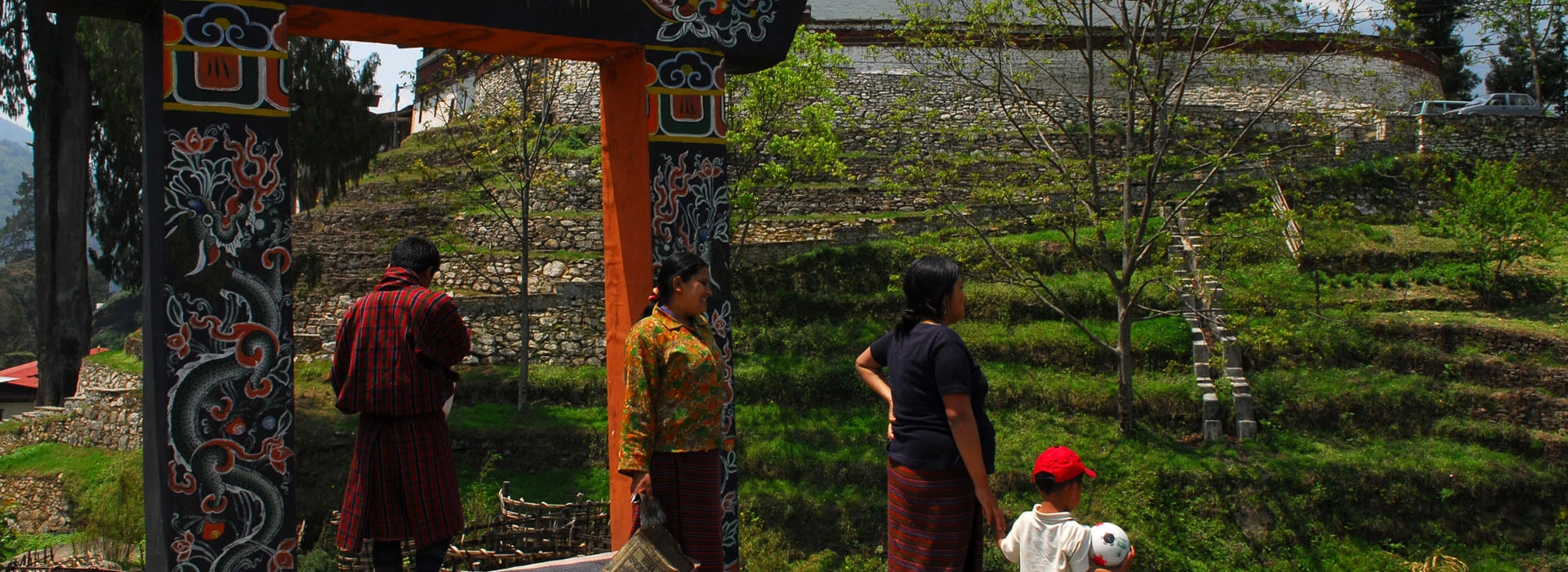
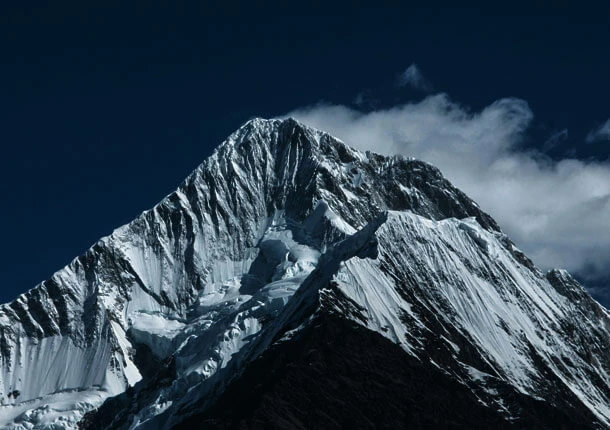
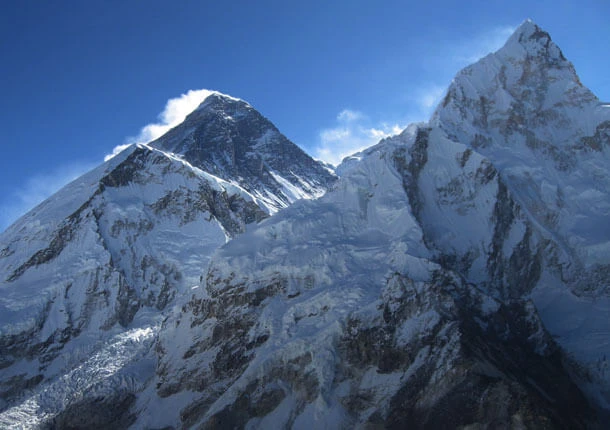
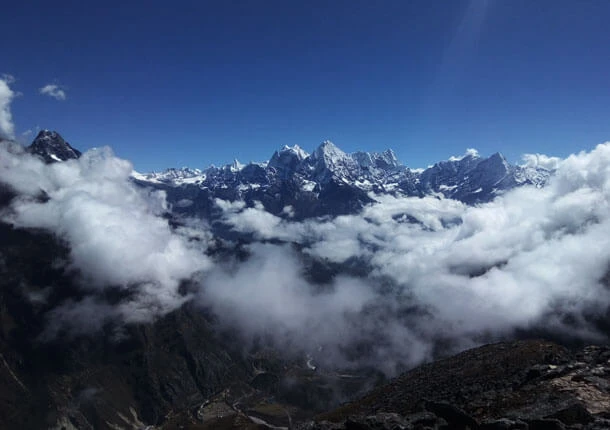
How to Choose Which Bhutan Destinations to Visit
Bhutan rewards depth over breadth, and trying to see every valley on a single trip usually means rushing through all of them. The better starting point is figuring out what actually matters most for this particular trip, then building the itinerary around that rather than a list of famous names.
Trip length is the first practical constraint. Five to six days comfortably covers the western circuit including Paro, Thimphu, and Punakha without feeling rushed, the itinerary behind the Glimpse of Bhutan Tour, while eight to eleven days opens up central Bhutan, including Bumthang, Trongsa, and Gangtey Valley, for travelers with more time to spend.
Interests matter just as much as duration. Culture and history point toward Thimphu, Punakha, and Trongsa, where dzongs, royal heritage, and daily Buddhist practice sit close together. Nature and quiet landscapes favor Gangtey and Phobjikha Valley, or the less visited Haa Valley for something further off the main route. Anyone hoping to build a trip around a living festival should look at timing first, since Paro Tshechu, Thimphu Tshechu, and Bumthang's Tangbi Mani each fall in different seasons and shape the whole itinerary around them.
Physical ability and pace preference are worth being honest about too. The hike to Tiger's Nest Monastery, while rewarding, is the most physically demanding stretch on most Bhutan itineraries, and travelers with limited hiking capacity can shorten it with a pony ride partway up rather than skip Paro Valley altogether. Pace matters separately from fitness: a slower trip that lingers in two or three valleys tends to leave a stronger impression than a packed loop that touches five places for a single night each.
Whether this is a first visit or a return trip to reach the parts of Bhutan most travelers never get to, the same principle holds: pick what matters most, then let that choice shape the route, rather than trying to fit everything in.
If You Want... | Prioritize... |
A classic first visit | Paro, Thimphu, and Punakha, Bhutan's core western circuit |
Deep culture and history | Thimphu, Punakha, and Trongsa for dzongs, royal history, and living tradition |
Nature and quiet landscapes | Gangtey and Phobjikha Valley, plus Haa Valley for something less visited |
A living festival experience | Paro (spring), Thimphu (autumn), or Bumthang's Tangbi Mani (autumn) |
Off the beaten path travel | Haa Valley, Bumthang, and central Bhutan beyond the main tourist corridor |
A shorter trip (5 to 6 days) | Paro, Thimphu, and Punakha, comfortably covered without rushing |
A longer trip (8 to 11 days) | Add Bumthang, Trongsa, and Gangtey to the western circuit |
Limited hiking ability | Punakha and Thimphu focused itineraries; Tiger's Nest can be shortened with a pony partway up |
A slower, unhurried pace | Fewer destinations with more time in each, rather than a packed multi region loop |
Paro: Bhutan's Spiritual Gateway
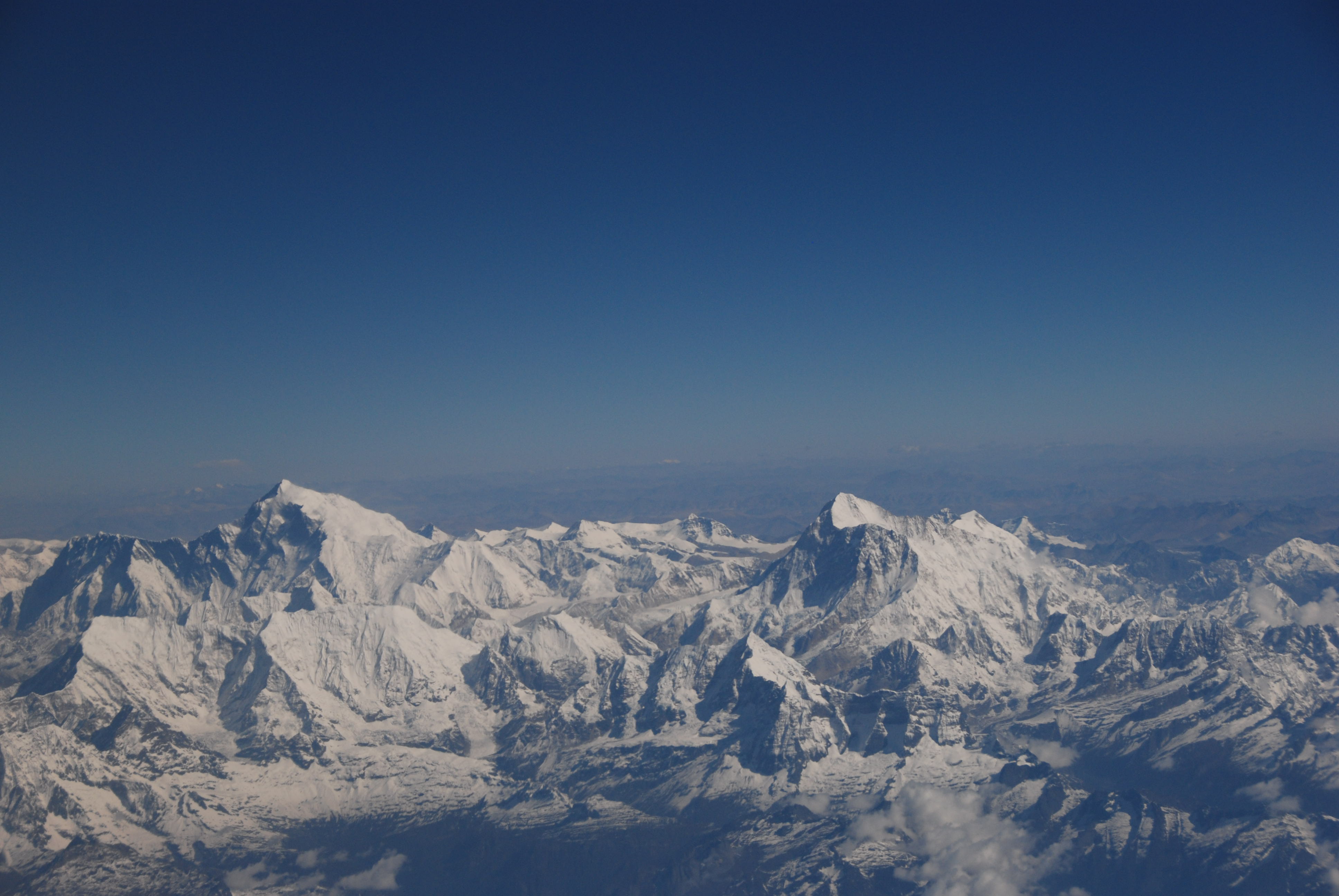
Paro is where nearly every Bhutan trip begins and ends, and it earns that role well beyond hosting the country's only international airport. Long before it became a point of arrival, Paro was one of Bhutan's oldest and most significant valleys, its terraced fields and whitewashed farmhouses framed by some of the finest traditional Bhutanese architecture anywhere in the country. Flanked by pine covered ridgelines and the winding Pa Chhu River, the valley sets the tone for the rest of a Bhutan trip before a single dzong has even come into view.
Rinpung Dzong sits at the heart of Paro town, a fortress monastery built in the 17th century that still functions as both a religious center and the seat of local government. Its whitewashed walls and painted timber framing, built entirely without a single nail, set the architectural tone for the entire valley, and the dzong remains one of the best preserved examples of Bhutanese fortress design still in active use.
Above the dzong stands Ta Dzong, a circular watchtower built in 1649 and converted into Bhutan's National Museum in 1968. Damaged in the 2011 earthquake, the museum has since reopened after extensive restoration, and its unusual conch shell shape houses over three thousand artifacts spanning more than 1,500 years of Bhutanese history, from ancient thangka paintings to Stone Age tools.
A short drive from town, Kyichu Lhakhang ranks among Bhutan's oldest temples, believed to date to the 7th century and built as part of a legendary network of 108 temples meant to pin down a demoness said to have blocked the spread of Buddhism across the Himalayas. Its quiet courtyard and ancient orange trees make it one of the more contemplative stops in the valley, especially compared to Paro's larger, busier sites.
Further up the valley, the ruins of Drukgyel Dzong mark where Bhutanese forces once repelled Tibetan invasions in the 17th century. Destroyed by fire in 1951, the fortress spent decades as a preserved ruin before a major restoration project brought much of its original structure back to life, and it remains a striking stop for anyone interested in Bhutan's military history and traditional reconstruction techniques.
None of this fully prepares a visitor for Paro Taktsang, the Tiger's Nest Monastery, clinging to a cliff face 900 meters above the valley floor. According to legend, Guru Rinpoche flew here on the back of a tigress to meditate, anchoring Buddhism in Bhutan, and the roughly four hour round trip hike to reach it remains the single most iconic experience on almost any Bhutan itinerary. The trail climbs through pine forest strung with prayer flags before reaching a cliffside viewpoint directly across the gorge from the monastery, a moment that tends to justify the climb well before the final approach even begins.
Paro town itself rewards slower exploration too. A weekend market draws farmers from surrounding villages selling produce, textiles, and household goods, offering a far more candid look at daily Bhutanese life than any formal sightseeing stop, while the valley's rice terraces and pine covered hillsides make simply walking between sites part of the experience.
Practical Notes
Altitude: Paro sits at approximately 2,200 meters (7,200 feet), mild enough that altitude rarely causes issues for most visitors.
Days needed: Two full days allow time for Rinpung Dzong, the National Museum, Kyichu Lhakhang, and the Tiger's Nest hike without rushing; add a third for Drukgyel Dzong and the weekend market.
Best time to visit: Spring (March to May) and autumn (September to November) offer the clearest mountain views and coincide with the Paro Tshechu Festival, one of Bhutan's largest festivals.
Getting there: Paro International Airport is Bhutan's only airport, served by Drukair and Bhutan Airlines. Many travelers begin their trip with a Bhutan tour from Kathmandu, or connect through Delhi, Bangkok, or Singapore.
Thimphu: Where Tradition Meets Modern Life
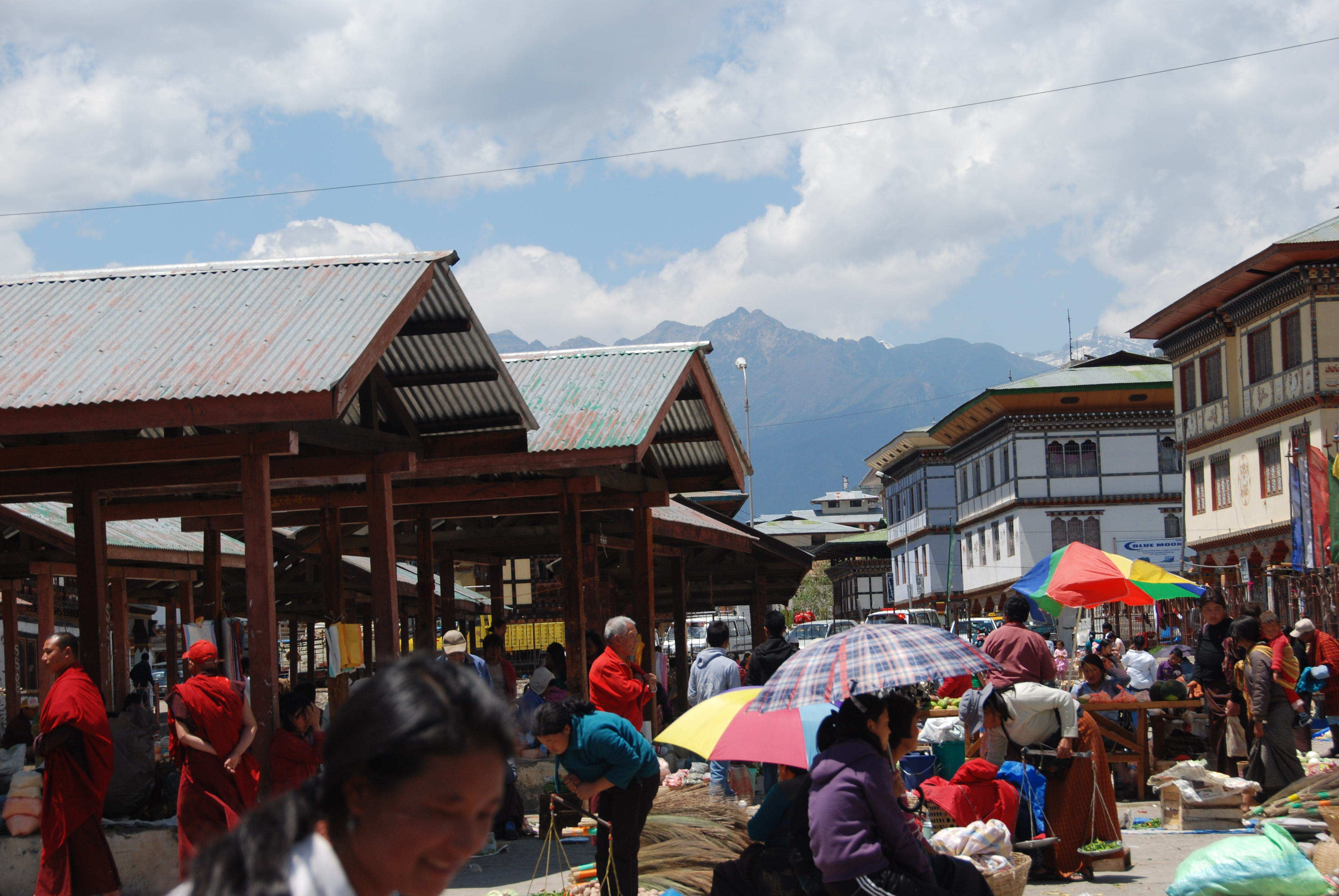
An hour and a half from Paro sits Thimphu, one of the only capital cities in the world without a single traffic light, a small but telling detail about how deliberately Bhutan approaches modernization. Government buildings, monasteries, and everyday city life sit side by side here in a way that rarely feels forced, making Thimphu less a detour from Bhutan's traditions and more a working demonstration of them. It is also the only Bhutanese city large enough to feel genuinely urban, with cafés, shops, and a younger population that give it a noticeably different rhythm than the quieter valley towns elsewhere on most itineraries.
Tashichho Dzong anchors the city both physically and administratively, functioning as the seat of Bhutan's civil government and the summer residence of the central monastic body. Its whitewashed walls and gold capped roofs are built, like every dzong in the country, entirely without nails, and the courtyard comes alive each autumn during Thimphu Tshechu, one of Bhutan's largest and most attended festivals. Since the dzong still functions as an active government building, tourist access on weekdays is generally limited to after 5 p.m. once offices close, while weekends open up much more flexible hours, a detail worth checking before planning the rest of a Thimphu day around it.
Above the city, the Buddha Dordenma statue rises 169 feet from a ridge overlooking the valley, one of the largest Buddha statues in the world and visible from much of Thimphu below. Built to house tens of thousands of smaller Buddha statues within its base, the site draws a steady stream of visitors for both the statue itself and the sweeping views over the capital, particularly toward sunset when the last light catches the gold finish.
The National Memorial Chorten, built in memory of Bhutan's third king, functions less as a monument and more as a living place of daily worship, with elderly residents circling it clockwise from early morning, spinning prayer wheels and murmuring mantras in a ritual that continues regardless of who happens to be watching.
Thimphu's living traditions extend well beyond its religious sites. The National Institute for Zorig Chusum trains students in Bhutan's thirteen traditional arts and crafts, from woodcarving to thangka painting, in classrooms open to visitors curious about how these skills are actually passed down. The Centenary Farmers Market draws vendors from across the region each weekend, offering a far more candid look at daily commerce than any curated cultural stop, its stalls stacked with chilies, cheese, and produce grown across Bhutan's valleys.
On the city's outskirts, the Motithang Takin Preserve protects Bhutan's unusual national animal, the takin, a goat antelope hybrid that Bhutanese legend credits to the 15th century saint Drukpa Kunley, and one of the few places in the country to see it up close, roaming a forested enclosure that was originally built as a small zoo before being converted into a preserve.
Practical Notes
Altitude: Thimphu sits at approximately 2,334 meters (7,657 feet), generally comfortable for most visitors coming from Paro.
Days needed: One full day covers Tashichho Dzong, Buddha Dordenma, the National Memorial Chorten, and the weekend market; a second day allows time for the Takin Preserve and Zorig Chusum.
Best time to visit: Autumn brings Thimphu Tshechu, the city's largest festival, while spring and autumn both offer the clearest valley views.
Getting there: A private vehicle covers the roughly 1.5 hour drive from Paro, the standard first leg of nearly every Bhutan itinerary.
Punakha: The Valley of Bhutan's Grandest Dzong
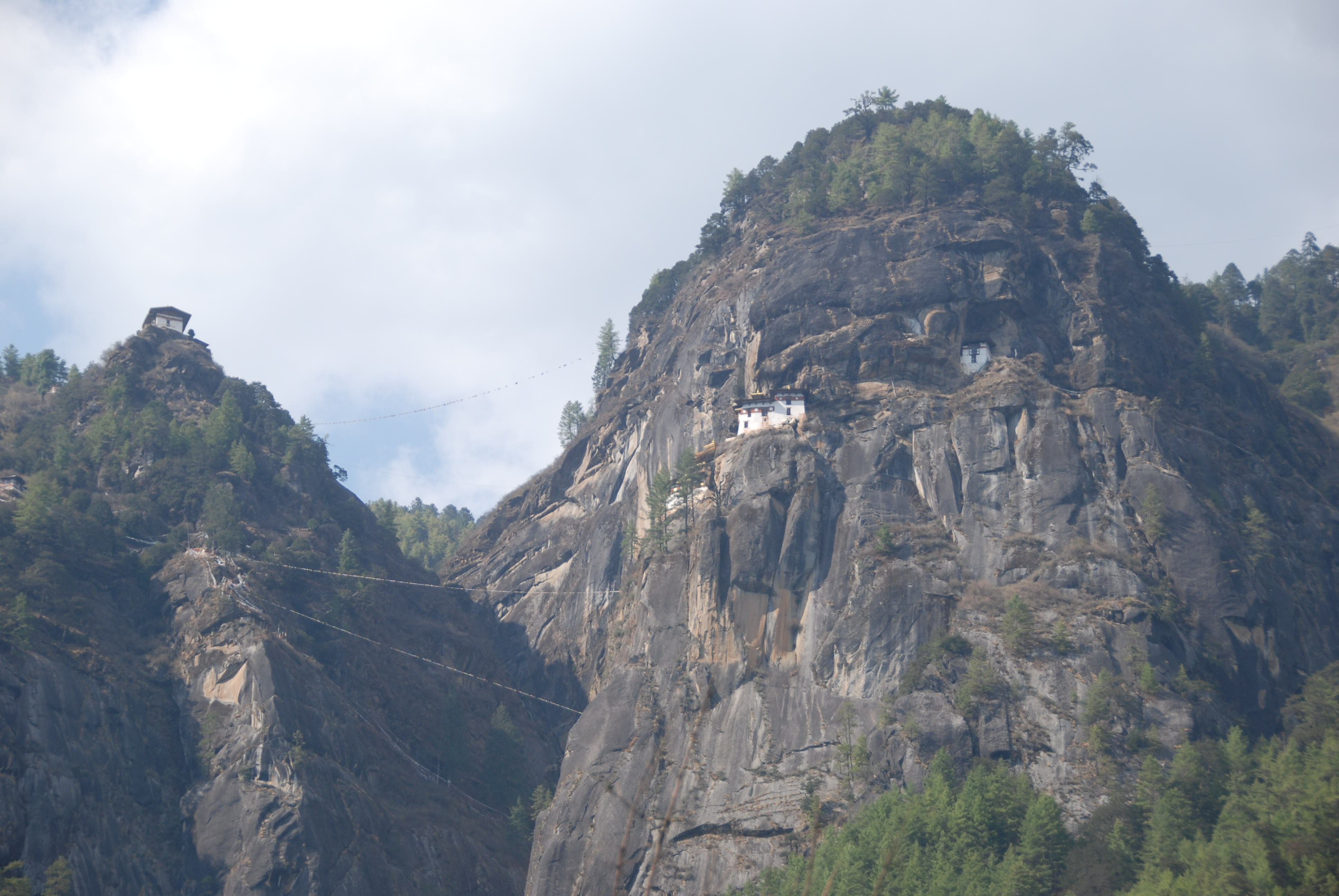
Roughly three hours east of Thimphu, over the high pass of Dochula, the road drops more than 1,900 vertical meters into Punakha, trading pine forest for warm air, rice terraces, and cactus lined hillsides within a single afternoon. Punakha served as Bhutan's capital until 1955, when the seat of government moved to Thimphu, and the valley has never quite lost the sense of historical weight that comes with that past. Dochula Pass itself, at 3,100 meters, is worth pausing on a clear day, its 108 memorial chortens framed against the Eastern Himalayas before the descent into Punakha's much lower, warmer terrain begins.
Punakha Dzong is the reason most visitors make the trip. Built in 1637 at the exact confluence of the Pho Chhu and Mo Chhu rivers, it remains one of the most architecturally significant fortresses in the Himalayas, reached by a traditional wooden cantilever bridge that adds real drama to the approach. Massive whitewashed walls and towering shrines hold centuries of the kingdom's founding history, and the dzong houses sacred relics of the Drukpa Lineage, including remains connected to Ngawang Namgyal, the 17th century unifier of Bhutan. The dzong still serves as the winter residence of the Je Khenpo, Bhutan's chief religious authority, and hosted the 2011 royal wedding of King Jigme Khesar Namgyel Wangchuck, a detail that underscores how central Punakha remains to Bhutanese ceremonial life despite losing its status as capital seven decades ago.
A short drive and an effortless twenty minute walk through rice and mustard fields leads to Chimi Lhakhang, Bhutan's fertility temple, built in 1499 and closely tied to Drukpa Kunley, the unconventional 15th century saint known as the Divine Madman, whose teachings blended sharp wit with unorthodox methods of spreading Buddhist wisdom. Couples still travel here seeking blessings for children, and the surrounding village of Sopsokha, known for its distinctive folk art, reflects the same irreverent spirit tied to Kunley's legacy. The temple's playful, unconventional character makes it one of the more memorable stops in the valley, quite different in tone from the solemnity of the dzong itself.
Punakha's suspension bridge, one of the longest in the country, crosses the Mo Chhu just below the dzong and offers sweeping views over the valley's rice paddies, a popular stop for both the walk itself and the photographs it produces. Prayer flags line the bridge's full length, fluttering over the river below, and the walk across it makes a natural, unhurried addition to a day otherwise spent at the dzong. The valley's lower elevation and milder climate, noticeably warmer than Paro or Thimphu, also make it one of the more comfortable stops on a Bhutan itinerary, particularly for travelers visiting in the cooler months, when Punakha's rice terraces and orange groves offer a welcome change of scenery from the higher, cooler valleys elsewhere on the route.
Practical Notes
Altitude: Punakha sits at approximately 1,200 meters (3,937 feet), Bhutan's lowest major stop, with a noticeably warmer, subtropical climate.
Days needed: One full day covers Punakha Dzong, the suspension bridge, and Chimi Lhakhang comfortably.
Best time to visit: Punakha's mild climate makes it a good year round stop, though Punakha Tshechu in late winter draws travelers specifically for the festival.
Getting there: A private vehicle covers the roughly three hour drive from Thimphu via Dochula Pass, typically the second or third leg of a western Bhutan itinerary.
Bumthang: Bhutan's Spiritual Heartland
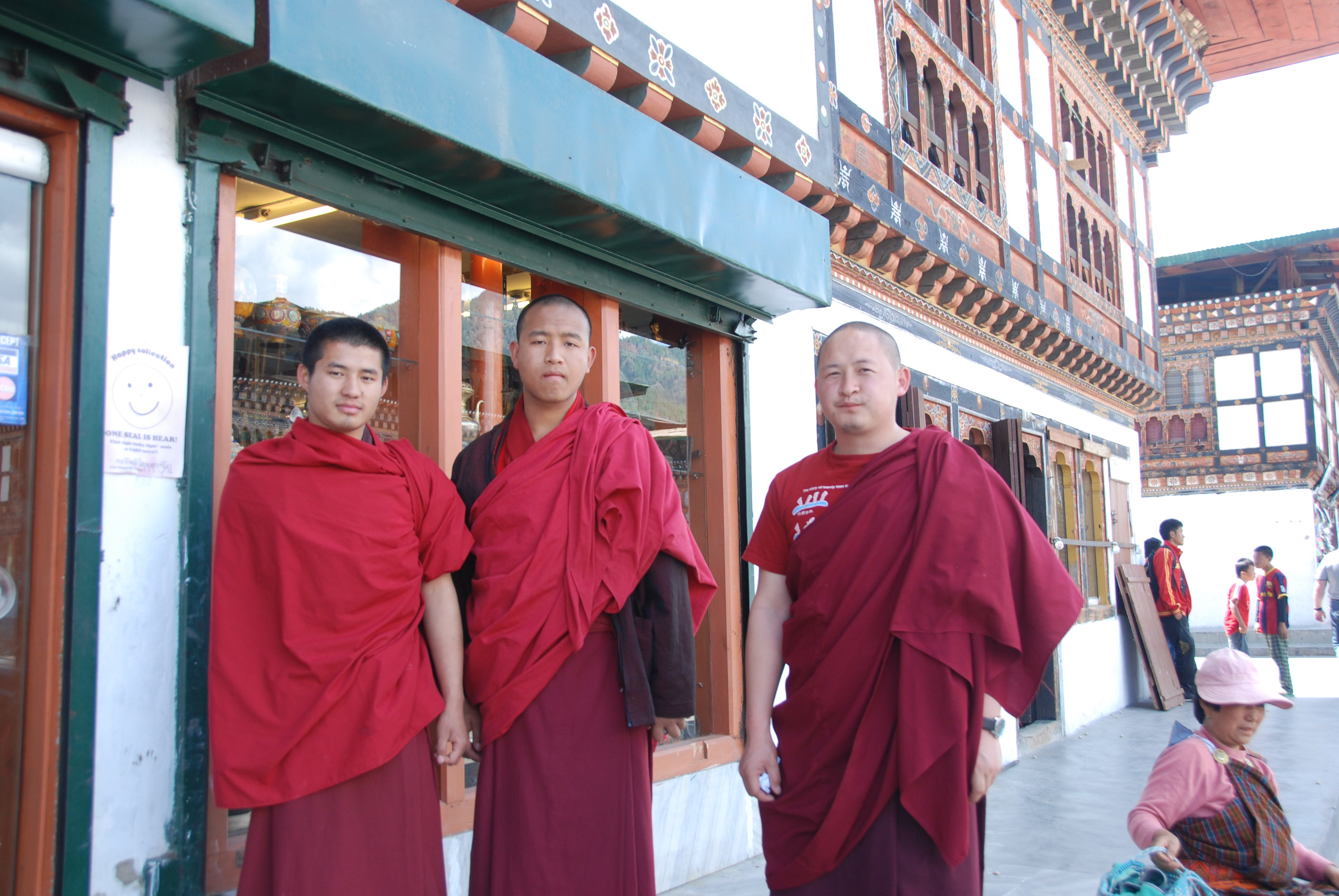
Reaching Bumthang takes real effort, a full day's drive east from Punakha over the Pele La and Yotong La passes, with a pause in Trongsa along the way. That distance is part of why Bumthang feels so different from the rest of Bhutan's western circuit: four connected valleys such as Jakar, Choekhor, Tang, and Chhume holding an unusually dense concentration of sacred sites and a slower, more rural pace than Paro or Thimphu ever quite reach. Wide buckwheat fields and old wooden farmhouses replace the terraced rice paddies found further west, a visible sign of how much the landscape shifts by the time the road finally descends into the valley.
Jakar Dzong, perched above the valley's main town, anchors the region much as Rinpung Dzong does in Paro, though with a noticeably quieter, less visited atmosphere. Its name, meaning "castle of the white bird," comes from a founding legend involving a white bird landing on the site, an origin story typical of the layered mythology that surrounds nearly every religious site in Bumthang.
Kurjey Lhakhang holds one of Bhutan's most significant relics: a rock cave where Guru Rinpoche is said to have left the imprint of his body while meditating, anchoring Buddhism in the valley centuries before it spread across the rest of the country. A tall cypress tree just outside the temple, said to have sprouted from Guru Rinpoche's walking stick, still stands today. Nearby, Jambay Lhakhang ranks among Bhutan's oldest temples, believed to date to the 7th century and built as one of 108 temples meant to pin down a mythical demoness obstructing the spread of Buddhist teachings across the Himalayas, her left knee, according to legend, positioned precisely beneath this temple.
Mebartsho, the Burning Lake, offers a different kind of story: a forested gorge along the Tang River where the treasure revealer Pema Lingpa is said to have plunged into the water holding a lit butter lamp, resurfacing with hidden spiritual treasures while the flame remained burning. Strings of small clay offerings and prayer flags line the gorge today, marking one of the valley's most atmospheric, least crowded stops.
Bumthang is also home to the Tangbi Mani Festival, held each autumn at Tangbi Lhakhang, a temple founded in 1470 by the 4th Shamar Rinpoche. Far smaller and more local than Bhutan's larger Tshechus, the festival centers on the Mewang fire blessing ceremony, where villagers leap through open flame to burn away the past year's misfortune, drawing farmers and families from across the valley rather than international crowds.
Beyond its temples, Bumthang has its own culinary identity, shaped by its cooler climate and buckwheat farming. Local specialties like buckwheat pancakes, Bumthang style cheese, and Red Panda beer, brewed nearby, give the valley a distinct flavor rarely found elsewhere on a Bhutan itinerary.
Practical Notes
Altitude: Bumthang sits at approximately 2,650 meters (8,694 feet), similar to Thimphu, with cool evenings even in warmer months.
Days needed: Two full days allow time for Jakar Dzong, Kurjey, Jambay Lhakhang, and Mebartsho without rushing.
Best time to visit: Autumn brings the Tangbi Mani Festival and the clearest mountain views; spring and early autumn both offer comfortable travel conditions.
Getting there: Reaching Bumthang requires a full day's drive from Punakha or Thimphu, typically seven to eight hours, making it best suited to longer Bhutan itineraries of eight days or more.
Gangtey and Phobjikha Valley: A Sanctuary for Nature and Stillness
Most of Bhutan's valleys are narrow, river carved gorges. Phobjikha, also known as Gangtey, is the exception: a wide, U-shaped glacial bowl in the Black Mountains that opens onto broad wetlands and open horizons rarely found elsewhere in the country. The shift in landscape alone makes it one of the more distinctive stops on a Bhutan itinerary, a deliberate change of pace after the narrower valleys of Paro, Thimphu, and Punakha, with grazing yaks, scattered farmhouses, and a stillness that sets it apart from the busier stops elsewhere on the route.
Gangtey Goemba, perched on a ridge above the valley floor, has watched over Phobjikha since 1613, when it was founded by Gyalse Pema Thinley, grandson of the revered treasure revealer Pema Lingpa, fulfilling a prophecy Pema Lingpa himself is said to have made generations earlier. As the main seat of the Nyingma school's Pema Lingpa tradition, the monastery remains an active spiritual center rather than a historical relic, and its ridge top position offers some of the clearest views over the wetlands below.
The wetlands are protected for good reason. Each winter, hundreds of endangered black necked cranes migrate from the Tibetan Plateau to roost in Phobjikha, arriving in November and remaining until they depart again in February. According to local tradition, the cranes circle Gangtey Goemba three times in flight both on arrival and before departure, a pattern communities here regard as a gesture of respect toward the monastery. The valley marks their arrival each November 11th with the Black-Necked Crane Festival, blending conservation awareness with masked dances and folk performances.
Below the monastery, the Gangtey Nature Trail offers one of Bhutan's easiest and most rewarding walks, winding roughly ninety minutes downhill from a mani wall near the monastery to the valley floor, past farmhouses, blue pine, and open wetland views the entire way, with the monastery visible on its ridge for much of the descent. The Black Necked Crane Information Center at the base of the trail rounds out the visit, explaining the conservation work protecting both the cranes and the valley's unusual ecosystem, including the decision to bury local power lines underground to reduce the risk of bird collisions.
Because Phobjikha sits outside the standard western circuit, it draws a noticeably different crowd than Paro or Thimphu, travelers specifically seeking quiet, nature, and photography rather than dzongs and festivals. The valley rewards unhurried time more than any checklist of sights, whether that means a slow walk along the nature trail or simply sitting with the view from Gangtey Goemba's ridge.
Practical Notes
Altitude: Phobjikha sits at approximately 2,900 meters (9,514 feet), Bhutan's highest common stop, with noticeably cool evenings year round.
Days needed: One full day covers Gangtey Goemba and the Gangtey Nature Trail comfortably.
Best time to visit: November through February is best for crane sightings, while spring and summer bring lush green wetlands without the cranes present.
Getting there: A private vehicle covers the roughly 2.5 hour drive from Wangdue Phodrang, typically added as a detour on longer central Bhutan itineraries.
Haa Valley: Bhutan's Best Kept Secret
Haa Valley was the last district in Bhutan opened to foreign visitors, remaining closed until 2002 despite sitting barely two and a half hours from Paro. Once a key commercial route linking Bhutan to Tibet and Sikkim, the valley's strategic position near the border kept it off limits for decades. That late opening is a large part of why it still feels genuinely undiscovered, a valley where traditional life continues with little of the tourism infrastructure found elsewhere in the country.
Reaching Haa means crossing Chele La Pass, Bhutan's highest motorable road at nearly 3,988 meters, strung with prayer flags and offering clear day views of both Mount Jomolhari and Jichu Drake before the road descends into the valley. The crossing alone ranks among the more dramatic drives in the country, a fitting introduction to a region defined by dramatic, largely untouched alpine scenery.
At the valley floor, the twin temples of Lhakhang Karpo, the White Temple, and Lhakhang Nagpo, the Black Temple, form Haa's spiritual center. Both date to the 7th century and are said to be part of the same legendary network of 108 temples built in a single day by Tibetan king Songtsen Gampo to pin down a demoness obstructing the spread of Buddhism, the same story tied to Kyichu Lhakhang in Paro and Jambay Lhakhang in Bumthang. Local legend holds that a white dove and a black dove, sent out from the same source, each marked where their respective temples should stand.
What sets Haa apart culturally is how visibly older, pre Buddhist traditions persist alongside Buddhist practice. Ap Chundu, the valley's protective deity, is still honored annually with processions and offerings rooted in animist belief predating Bhutan's conversion to Buddhism, a living reminder that Buddhism layered onto existing local traditions here rather than replacing them outright. Villages throughout the valley maintain distinctive architecture and customs shaped by relative isolation, and hiking between them, past yak herders and terraced fields, offers a far more candid look at rural Bhutanese life than more visited valleys tend to allow.
Accommodation and dining options remain limited by design, with a handful of homestays and boutique properties rather than hotel chains, which suits a valley built for slower, quieter travel rather than a packed sightseeing schedule.
Practical Notes
Altitude: Haa Valley sits at approximately 2,700 meters (8,858 feet), with Chele La Pass reaching nearly 3,988 meters (13,083 feet) en route.
Days needed: One to two days allow time for both temples, a walk through the valley, and the drive over Chele La Pass.
Best time to visit: Spring and autumn offer the clearest mountain views from Chele La Pass; summer brings the valley's own local festival.
Getting there: A private vehicle covers the roughly 2.5 hour drive from Paro over Chele La Pass, typically added as a day trip or overnight detour.
How to Plan Your Bhutan Itinerary
No two Bhutan itineraries look exactly alike. Some travelers want to see the country's most famous landmarks in just a few days, while others prefer to slow down and explore Bhutan's quieter valleys at a more relaxed pace. The right itinerary for you depends on how much time you have, what you're most interested in, and whether you're drawn to cultural sightseeing, scenic landscapes, festivals, or a deeper journey into the kingdom's remote corners.
Here's a breakdown of how to plan your trip based on the number of days you have.
4 to 5 Days: A Brief Introduction to Bhutan
This is the ideal length for first time visitors with limited time who still want to experience the country's essential highlights. A short trip like this closely matching the Bhutan Short Tour focuses on Bhutan's western valleys like Paro and Thimphu, with Punakha added on if your schedule allows.
Highlights typically include:
Tiger's Nest Monastery, Bhutan's most iconic sight, perched dramatically on a cliffside above Paro
Buddha Dordenma, the giant bronze Buddha statue overlooking Thimphu
Memorial Chorten, a peaceful stupa and one of the most visited religious sites in the capital
Rinpung Dzong, a striking fortress monastery in Paro
Local markets and everyday Bhutanese culture
Even in a short window, this itinerary gives you a genuine taste of Bhutan's spiritual and cultural identity.
6 to 8 Days: Explore Bhutan Beyond the Highlights
With a few extra days, the pace slows down, and the itinerary opens up. This is a wonderful option for travelers who want more than just the headline sights; a better balance between sightseeing and nature, with room for genuine cultural immersion.
A 6 to 8 day trip usually covers Paro, Thimphu, Punakha, and Phobjikha Valley and often includes the following:
Crossing Dochula Pass, famous for its 108 chortens and Himalayan views
Spotting black necked cranes in Phobjikha Valley (winter months)
A farmhouse experience, giving a glimpse into rural Bhutanese life
Village walks through valleys rarely covered on shorter trips
This length works well for those who want to slow down without committing to a longer journey.
9 to 12 Days: Discover Central Bhutan
For those who want to go deeper, 9 to 12 days is enough time to continue east past the western valleys into central Bhutan; a region with far fewer tourists and a strong sense of spiritual heritage.
This itinerary typically includes:
Trongsa, home to Bhutan's largest dzong and the ancestral seat of the royal family
Bumthang Valley, considered the spiritual heart of Bhutan, dotted with ancient monasteries
Rural villages and scenic mountain drives along the way
Traditional festivals, depending on the season
This is a strong choice for someone who wants a more complete understanding of Bhutan's history, religion, and rural life; not just its most photographed sites.
12+ Days: A Complete Bhutan Journey
For photographers, culture enthusiasts, and repeat visitors, 12 or more days allow for a full journey combining both western and central Bhutan with room to explore places most travelers never see. Longer itineraries often add the following:
Haa Valley, one of Bhutan's most untouched and least visited regions
Hidden villages and remote monasteries off the main tourist routes
Nature trails and opportunities for wildlife spotting
Cultural festivals, where the calendar allows
A slower overall pace, with less time spent driving each day
This itinerary is for people who want to experience Bhutan fully, not just efficiently.
Choose Your Itinerary Based on Your Interests
If You Want... | Recommended Trip |
Bhutan's highlights | 4 to 5 Days |
Culture & Nature | 6 to 8 Days |
Spiritual Bhutan | 9 to 12 Days |
Complete Bhutan Experience | 12+ Days |
The Best Experiences to Have While Exploring Bhutan
Bhutan isn't a country you simply visit; it is one you experience. Beyond the landmarks and itineraries, what stays with you most are the moments: a sunrise over snow capped peaks, the sound of monks chanting inside a centuries old dzong, or a home cooked meal shared with a Bhutanese family. Here are the experiences that capture the true spirit of exploring Bhutan.
Hike to Tiger's Nest Monastery
No experience defines Bhutan quite like the hike to Paro Taktsang, or Tiger's Nest Monastery. Clinging to a sheer cliffside nearly 3,000 feet above the Paro Valley, this sacred site is one of the most photographed monasteries in the world and one of the most meaningful to reach on foot. The trail winds through pine forest before opening up to panoramic views of the valley below, with the monastery itself appearing almost suspended in air. It's a pilgrimage site for Buddhists and a bucket list hike for travelers alike. Starting early in the morning is best, both to beat the crowds and to catch the monastery bathed in soft morning light.
Watch Sunrise Over the Himalayas
Few things compare to watching the sun rise over the Himalayas from one of Bhutan's mountain passes. Dochula Pass, with its 108 chortens set against a backdrop of snow capped peaks, is one of the most popular spots, while Chele La Pass offers some of the highest and most dramatic mountain views accessible by road. Gangtey, tucked within the glacial Phobjikha Valley, offers a quieter, more intimate version of the same magic. Clear mornings in autumn and spring give the best visibility, turning the eastern Himalayan range into a wall of gold and pink light; a moment worth waking up early for.
Explore Ancient Dzongs
Bhutan's dzongs are more than historic fortresses; they're living centers of religion, governance, and community life. Punakha Dzong, set at the confluence of two rivers, is widely considered the most beautiful in the country, while Rinpung Dzong in Paro and Tashichho Dzong in Thimphu remain active seats of both monastic and administrative life. Trongsa Dzong, the largest in Bhutan, holds deep significance as the ancestral seat of the royal family. Wandering through their courtyards, you'll find monks going about daily rituals alongside centuries old architecture; a rare chance to see history still very much in use.
Experience a Traditional Tshechu Festival
A Tshechu is Bhutan at its most vivid: masked dancers in elaborate costumes performing ancient stories of good triumphing over evil, accompanied by traditional music and the presence of the entire local community. These Buddhist festivals are deeply spiritual occasions as much as they are colorful spectacles, drawing villagers from surrounding valleys dressed in their finest traditional dress. For photographers, it's an unmatched opportunity to capture Bhutanese culture in motion. Because Tshechus follow the Bhutanese lunar calendar, timing your trip around one takes some planning, but it's well worth building your itinerary around.
Stay in a Traditional Farmhouse
For a more profound look at everyday Bhutanese life, nothing compares to a night in a traditional farmhouse. Built from rammed earth and timber, these homes offer genuine Bhutanese hospitality, including home cooked meals made with vegetables grown just outside the door and an evening spent by the fire learning about local customs. Many farmhouses also offer a traditional hot stone bath, heated with fire warmed river stones and infused with local herbs, believed to ease sore muscles after a day of hiking. It's a slower, more personal side of Bhutan that few travelers get to see and one that often becomes a trip's most memorable night.
Walk Through Traditional Villages
Beyond the main tourist circuit, Bhutan's villages offer a quieter, unfiltered glimpse into rural life. Haa Valley remains one of the least visited regions in the country, while Bumthang and the remote village of Ura showcase traditional stone and timber architecture largely untouched by modern development. Gangtey, set within the wide, glacial Phobjikha Valley, blends village life with stunning natural scenery. Walking through these communities, past farmhouses, prayer flags, and terraced fields offers a rhythm of life that feels worlds away from anywhere else and a reminder that Bhutan's charm often lies well beyond its major landmarks.
Taste Authentic Bhutanese Cuisine
Bhutanese food is bold, spicy, and deeply tied to daily life. Ema Datshi, chili peppers stewed in melted cheese, is considered the national dish, while red rice and Phaksha Paa, a pork dish cooked with dried chilies and radishes, are staples on most tables. Suja, or butter tea, is a warming, savory drink offered as a gesture of hospitality throughout the country. Sampling these dishes at local markets or family run eateries is one of the simplest and most rewarding ways to connect with Bhutanese culture and often leads to conversations with locals eager to share more about their food traditions.
Discover Bhutan's Nature Trails
For visitors who want to slow down and take in Bhutan's landscapes on foot, the Gangtey Nature Trail through Phobjikha Valley is one of the most rewarding short walks in the country. The route winds through pine forest and open meadow, with sweeping views across the glacial valley below. Beyond Gangtey, gentle forest walks throughout central and western Bhutan offer chances for bird watching and spotting native wildflowers in bloom, particularly in spring. These trails require no technical hiking experience, making them an easy way to experience Bhutan's natural beauty at a relaxed, unhurried pace.
Spot Rare Wildlife
Bhutan's strict conservation policies have made it a haven for rare and endangered species. Every winter, Phobjikha Valley welcomes migrating black necked cranes, a sight considered sacred by local communities and celebrated with its own festival. Further afield, Royal Manas National Park and Jigme Dorji National Park protect some of the country's richest biodiversity, home to elusive species alongside a wide range of Himalayan birds and native flora. Even without deep trekking into these parks, keen eyed travelers can spot a surprising amount of wildlife simply by keeping watch during valley drives and village walks.
Capture Bhutan's Scenic Landscapes
Bhutan rewards people who take the time to really look: strings of prayer flags fluttering across mountain ridgelines, terraced rice paddies catching the afternoon light, and traditional villages framed against dramatic peaks. Mountain passes and rivers offer constantly changing scenery throughout the day, but it's the golden hour, shortly after sunrise and before sunset, when Bhutan's landscapes feel most cinematic. Whether you're a serious photographer or simply want a few great memories, keeping your camera close throughout the day, not just at the major sights, is the key to capturing Bhutan at its best.
Visit Local Markets
The Thimphu Weekend Market is one of the best places to see everyday Bhutanese life up close. Vendors from across the region gather to sell fresh produce, handwoven textiles, and handmade crafts, offering a lively contrast to the country's quieter monasteries and valleys. It's also a great place to buy authentic souvenirs, like woven scarves and local incense, directly from the makers. A wander through the market's stalls is a simple, low key way to round out a day of sightseeing with a dose of authentic local color.
Experience Bhutan's Spiritual Atmosphere
Beyond any single site, what many visitors remember most about Bhutan is its atmosphere: the quiet hum of prayer wheels turning, the flicker of butter lamps inside dimly lit temples, and the low chant of monks in prayer. Temples and monasteries throughout the country welcome visitors into these moments, offering rare pockets of stillness. Taking time to simply sit and observe, rather than rush from site to site, often becomes the most meaningful part of a trip; a reminder that Bhutan's spirituality isn't just something to see but something to feel.
Every journey creates different memories.
No two trips to Bhutan look the same. The valleys you visit, the people you meet along the way, and the pace at which you travel all shape a completely different journey. Some travelers leave with memories of a sunrise over the Himalayas, others with the taste of a home cooked meal in a farmhouse kitchen, and others still with the sound of chanting monks echoing through an ancient dzong. Whichever experiences you choose, exploring Bhutan is less about checking off a list and more about slowing down and letting the kingdom's rhythm shape your journey.
Practical Travel Tips for Exploring Bhutan
A little preparation can make your journey through Bhutan smoother and more enjoyable. From understanding local customs to knowing the best time to visit, these practical travel tips will help you make the most of your Bhutan adventure.
Currency & Payments
The Bhutanese Ngultrum (BTN) is the local currency.
Indian Rupees are widely accepted, though higher denominations may be restricted.
Carry some cash for rural areas.
Credit cards are accepted mainly in hotels and larger shops.
ATMs are available in major towns like Paro and Thimphu.
SIM Card & Internet
Local SIM cards are available at Paro Airport and in most towns.
The main providers are B-Mobile and TashiCell.
Mobile data is available across most tourist destinations.
Wi Fi is offered by most hotels, though speeds vary.
Dress Code
Dress modestly when visiting monasteries and dzongs.
Cover your shoulders and knees.
Remove hats before entering temples.
Comfortable walking shoes are recommended.
Photography Etiquette
Photography is usually allowed outdoors.
Ask permission before photographing local people.
Photography may be prohibited inside temples and monastery interiors.
Always follow your guide's instructions.
Respect Local Customs
Walk clockwise around stupas and prayer wheels.
Spin prayer wheels clockwise.
Speak quietly inside religious sites.
Remove your shoes where required.
Show respect to monks and worshippers.
Cash vs Cards
Carry small denominations.
Rural shops often accept cash only.
Cards work mainly in larger hotels and businesses.
Inform your bank before travelling internationally.
Altitude & Health
Most popular destinations sit at a moderate altitude.
Stay hydrated throughout your trip.
Walk at a comfortable pace, especially in the first few days.
Higher passes may feel cooler with thinner air.
Pack any personal medications you may need.
Best Time to Explore Bhutan
Spring is considered one of the best Times to visit Bhutan, as the season offers blooming rhododendrons and pleasant weather.
Autumn brings clear Himalayan views and major festivals.
Winter is quieter, with fewer visitors and migratory black necked cranes.
Summer is lush and green, with occasional monsoon rain.
Budget & Tour Costs
Bhutan tour costs vary by season, duration, accommodation, and group size.
Budget for optional activities, souvenirs, and personal expenses.
Understand what's included before booking.
Packing Essentials
Layered clothing
Rain jacket
Sunscreen
Sunglasses
Reusable water bottle
Power adapter
Personal medications
Camera
Your Bhutan Story Is Still Unwritten
Somewhere between the prayer flags snapping in the wind at Dochula Pass and the final breathless steps up to Tiger's Nest, Bhutan stops being a destination on a map and becomes something you carry with you.
Everyone who has made this journey has their own version of that moment. For some, it's the smell of woodsmoke and butter tea in a farmhouse kitchen, the family's grandmother laughing at their attempt to say kuzuzangpo. For others, it's standing at the edge of a mountain pass at dawn, watching the Himalayas catch fire in the first light, saying nothing at all because nothing needs to be said. For others still, it's the low, steady chant of monks inside a centuries old dzong, a sound that seems to slow time itself.
This is the thing about Bhutan that no itinerary can fully capture: it isn't really about the places on the list. It's about who you become in them. The kingdom has a way of asking you to slow down, to walk instead of rush, to watch instead of photograph, to sit with a cup of suja and be somewhere, rather than just visit it. Few places in the world still ask that of their guests, and fewer still make it so easy to say yes.
Nepal Nomad has covered the practical side of planning: where to go, when to go, what it costs, and what to pack. But none of that is really the point. It's the scaffolding that lets the actual story happen: yours. The valley you didn't expect to fall for. The conversation with a stranger that turns into the best part of your trip. The photograph you never take because you're too busy watching it happen.
Bhutan doesn't hand you a story. It hands you the conditions for one and then quietly steps back. What you do with those conditions, which villages you wander into, which festivals you happen to catch, and which mountain you watch the sun rise over, is entirely up to you.
So when people ask what Bhutan is like, the honest answer is it depends on the story you're there to find. Yours is still being written, one journey at a time.
Explore Bhutan's must visit destinations, from Paro and Thimphu to Punakha and Bumthang, with travel tips, highlights, and itineraries.